Showing posts with label KJ Taylor. Show all posts

Tuesday, 12 December 2017

Preview chapter: The Last Guard by KJ Taylor

Following up on my review of The Last Guard by KJ Taylor, the first book in a new series set in the author's griffin universe (The Fallen Moon Trilogy and The Risen Sun trilogy are set in the same world), I have a sample chapter to share with you all. First, in case you don't feel like clicking through to my review, the blurb and then the sample is under the cut. And just so you're not surprised, note that it isn't from the first chapter...


Southerner Sergeant Kearney "Red" Redguard is the last of a disgraced family, and a loyal guardsman. And with a murderer stalking the streets, the city guard is his city's best defense.
But in the North, King Caedmon Taranisäii is gathering his army, and the cruel Night God prepares for the downfall of the South. A new dark griffin roams the land, warning of the war to come.
Betrayed and sent on the run, Red must fight to save his homeland.
But it may already be too late...


Monday, 27 November 2017

The Last Guard by KJ Taylor

The Last Guard by KJ Taylor is the first in a new trilogy, The Southern Star, set in the same universe as The Fallen Moon trilogy, which I reviewed on this blog — The Dark Griffin, Griffin's Flight and Griffin's War. There is also a second trilogy, The Risen Sun, which falls between The Fallen Moon and  The Southern Star, which I haven't (yet) read.

Southerner Sergeant Kearney "Red" Redguard is the last of a disgraced family, and a loyal guardsman. And with a murderer stalking the streets, the city guard is his city's best defense.

But in the North, King Caedmon Taranisäii is gathering his army, and the cruel Night God prepares for the downfall of the South. A new dark griffin roams the land, warning of the war to come.

Betrayed and sent on the run, Red must fight to save his homeland. But it may already be too late...

The Last Guard features new protagonists, as far as I know, and a new story arc. It follows on from the events in the first two trilogies, but a lot of those events are now considered (recent) history. To explain context, some of the key events of the Fallen Moon trilogy were mentioned and I think the same is true of the Risen Sun trilogy, although that was, of course, harder for me to spot. I felt like there were enough hints about the earlier events that I wanted to go back and read the missing trilogy to fill in the gaps. However, no crucial information was missing from The Last Guard and the book worked by itself as a story. My verdict is: you don't have to have read the earlier books/series to enjoy The Last Guard, but there will be extra layers of significance (or more quickly apparent significance) if you have.

On to the actual story! The bulk of the book follows Red, a city guard who is very good at his job and takes pride in it. The story starts with a few strange crimes in the city that draw Red's attention and soon escalates to something a bit more extreme, as hinted in the blurb. Red is soon fighting for his life, his city and his country as everything he'd gotten used to in life comes crashing down around him.

I liked Red as a character and the few times the point of view shifted to other characters I always felt a bit impatient to get back to Red. Not that the other characters were boring or anything, but the main story very much moved with Red. I wouldn't be surprised if that balance shifted a bit in the next book, though I won't spoil why I think that. We also get to know a few of the griffin characters on both sides of the growing conflict. I found it interesting to compare the griffin-human relationships with, for example, the dragon-human relationships in other books like the Temeraire series by Naomi Novik. I think the idea of griffins would appeal to fans of dragons, but they come with a different background and, of course, less mythological baggage.

I recommend this book to fans of epic fantasy and of the author's earlier griffin series (The Fallen Moon and The Risen Sun trilogies). It's certainly in a similar vein to the first series and fans of Taylor's other books will find much to enjoy in the continuing events taking place in that world. That said, this first book stands alone as an introduction to a new series without requiring the earlier books to make sense. It's not a bad place to start and if you read The Last Guard and find yourself wanting to know more about the world, you can always go back and read the earlier books without having to wait for the second Southern Star book to come out.

3.5 / 5 stars

First published: December 2017, Black Phoenix Publishing Collective
Series: The Souther Star trilogy, book 1 of 3 (with the series itself being the third of three so far, following the Fallen Moon trilogy and the Risen Sun trilogy)
Format read: eARC (PDF)
Source: provided by the publisher
Challenges: Australian Women Writers Challenge

Thursday, 11 August 2016

Interview with KJ Taylor (Snapshot 2016)

This interview is one I conducted as part of the 2016 Australian Speculative Fiction Snapshot. You can read and introduction to the project here and follow the rest of the reviews that will be posted over the first two weeks of August at the Aus SF Snapshot blog.


K.J.Taylor is a cynical, world-weary 60 year old woman stuck in the body of a 30 year old. She went to highschool at Radford College, where she wrote her first novel, The Land of Bad Fantasy, and sold it to Scholastic without telling them she was 18 years old. She then went on to complete a Bachelor of Communications at the University of Canberra, where she wrote her second novel, The Dark Griffin. She now holds a Masters of Information Studies and has a part time job as an archivist. She once wrote a movie script which was rejected by an actual Hollywood agent, and currently lives in a yurt with the world's laziest rat as a housemate.


You had a lot of books come out last year (five of them!) — what was that like? Were you run off your feet doing promo all year?

I had a heck of a lot of publicity stuff to do, yes! Two blog tours in quick succession, with a short deadline to answer a bunch of interview questions or write a suitably entertaining blog post. Since they were e-book only I didn’t get to do any signings, sadly. I also had two audio trailers made, plus I commissioned some artwork (money well spent!).

True story: At the San Diego ComicCon in 2011 I sat on a panel with some other authors, and one of the questions was “what do you think about ebooks?” I answered that I was no problem with them, but joked that “only problem is you can’t autograph an ebook!” At the signing afterward three different fans asked me to sign their e-reader covers, and I did so saying “well, that shut me up”.


It looks like you have more books on the horizon. Can you tell us a bit about them? (And will their release be more spread out, or do you have more busy times ahead?)

I’m currently in the process of publishing the next three books of the Cymrian Saga – a series that began with probably my most well-known book, The Dark Griffin. The original publisher decided not to continue with the series because they’re changing their focus away from fantasy, but I was able to find a new home for it at Satalyte Publishing. The next book in the series, The Last Guard, is currently slated for release in late September this year – in hardcover, softcover, and ebook, with cover art and internal illustrations by the extraordinarily talented Sydney-based artist Amber Goodhart (https://www.facebook.com/misshartart).

For those who have read the previous six books, the story now continues with the tale of Kearney “Red” Redguard, who made an appearance in The Shadow’s Heart as a boy. Now a grown man, Red must fight for his people, the Southerners, as King Caedmon Taranisäii of the North makes good on his promise to invade the South. And the massive dark griffin Kraego, son of the Mighty Skandar, has plans of his own. The sequels to The Last Guard are called The Silent Guard and The Cursed Guard, and their release dates have yet to be decided, but most likely they’ll come out sometime next year.

I’ve also recently been contacted by a University professor in Queensland, whose students are starting up a new publishing label. He asked if I had an unpublished short novel they could edit and publish. I sent him a book for younger readers I had written called The Price of Magic, and they’ve accepted it for publication. The Price of Magic is set in a world where the disabled have magical powers. The more severely disabled they are, the more powerful their magic is. The protagonist, a chirpy boy named Pip who has a gammy leg, is apprenticed to one of the most powerful mages in the world: a woman named Seress. When an rogue mage threatens the entire world, only Seress has the strength to stop him – but she suffers from severe clinical depression. How can you save the world when some days you can’t even get out of bed? It’s up to Pip to find the answer.

And yes I did my research! Not being depressed myself, I did plenty of reading up on the subject while also drawing on my own experiences in dealing with severely depressed people. I hoped that The Price of Magic would help to inspire people dealing with depression, as well as anxiety, physical disability, and terminal illness. The magic in the book was also intended as a metaphor for art – the idea came to me when I was sitting in the waiting room to see a counsellor (I had had a severe nervous breakdown) and found myself thinking “why are artists always such troubled people? It feels as if the more brilliant you are, the more screwed up you are”.


Broken Prophecy came out swinging hard against the idea of prophecies and destiny as seen in fantasy fiction. Last Snapshot, in 2014, you told us the anti-hero in The Fallen Moon trilogy came about because you had grown disenchanted with heroic characters. Are there any other fantasy tropes that you would like to subvert/punch in the face? 

Oh boy, here we go. I’ll just make a list.

  • Entire races/species classified as automatically Evil (honestly, this trope really smacks of racism)
  • Beautiful Princesses (or indeed, any female character) who only exist as cheap plot devices and/or love interests to be rescued by the hero
  • Endless chapters of the characters travelling somewhere, during which absolutely nothing happens (I find travel sequences really boring to write, so 99% of the time I just summarise it in a paragraph or two if nothing important happens along the way).
  • Big Evil Villains who are evil just because and have no motivations that actually make sense. Also villains who are evil because they’re “insane”, which is a cop-out and quite frankly offensive to the mentally ill. And by “insane” I mean that the bad guy is referred to as “mad” but there’s no further explanation or specific disorder shown. He’s just doing bad things to people because he’s crazy! Actually, if I had my druthers we’d get rid of Big Evil Villains altogether and write about three-dimensional human beings who happen to have opposing goals instead.
  • Chosen Ones. Most of the time this is just a cheap shortcut to getting your protagonist involved in the plot, especially when s/he’s the subject of an infallible prophecy. It removes your main character’s agency by forcing him/her to get involved, and makes them “special” when they haven’t done anything to earn it.
  • Giving characters new abilities as the plot requires it
  • The old stories/legends always turn out to be completely true and are never distorted by political or religious agendas (GRRM does a brilliant job of subverting this one)
  • The protagonist becomes an expert fighter/wizard in a very short timeframe without explanation. You can’t become a “master warrior”, or a master anything in three months. It simply isn’t possible. Imagine picking up a plastic recorder and being instantly capable of playing a solo with the London Symphony Orchestra.
  • Beautiful = Good, Ugly = Evil. You can tell if someone is Good or Evil just by looking at them, apparently
  • Horses and other beasts of burden treated like cars. They never get tired or act out or panic when they see a snake and throw you off 
I could go on, but I should probably leave it at that. :p


What Australian work have you loved recently?

When the World Was Flat (And We Were in Love) by Ingrid Jonach. I’ve never been keen on romance novels, but I really enjoyed this one. It’s not pure romance, mind you – it’s a sci fi romance!


Which author (living or dead) would you most like to sit next to on a long plane trip and why?

William Horwood, so I could ask him endless questions about his Duncton Wood series. More people need to read that series. It’s definitely been a very big influence on me as an author.


Monday, 14 December 2015

Drachengott: Water by KJ Taylor

Drachengott: Water by KJ Taylor is the fourth and final book in the Drachengott series. This is very much a series that needs to be read in order and this last book ties everything up and resolves the major conflict of the series (and brings in some of its own conflicts).

The time has come. Rutger, Elynor, Theodor and Syn set out on their final journey - to find the fourth member of their group, the one they need to destroy the Drachengott once and for all. 

But war has come to Wendland, and with three neighbouring countries now intent on destroying its people, it could be that the Drachengott is the only defence Wendland has.

But one final weapon remains to be found, though only its name is known: the Peace Bringer ...

To begin with, Water follows the pattern of the earlier three books by introducing us to the fourth "chosen one" character. It quickly deviates from the formula by throwing disaster into the mix and switching to the points of view of the other three chosen characters. But before we get to that, the reader — or at least, this reader — has enough time to not particularly like Karmain, the new character. Part of it is the situation she's quickly thrust into and part of it is her naïveté. But, since we learnt in the third book (and are reminded at the start of this book) that her weapon is called the Peace Bringer, perhaps naïveté makes sense. But I still wanted to slap her.

When the points of view split up between the four main characters, there was some added tension, especially when we still didn't know what had happened to the others at various points. However, from the readers' point of view it was pretty clear that the chosen four couldn't die, which detracted from some of the tension. The author used this mainly to motivate some of the characters and to add some "where is everyone" mystery for the reader.

It's kind of hard to say more without spoilers because almost this entire book is one drastic conflict or another. But if you've read the first three Drachengott books, I don't see why you wouldn't pick up this last one to find out what happens. I mentioned in my review of book three that it became more complex and less linear in plot than the first two books. The same is true of this concluding volume, even more so. The switching around of points of view alone would mix things up, as would the final confrontation. But there are more obstacles standing in the path of the chosen four and their friends than they may have originally anticipated.

I enjoyed this series, especially the second half of it. Each book is quite short and together they make up a single interesting story. As I've said in my reviews of the earlier books, I really do think this series would work best as an omnibus edition. Each book is a self-contained story but does not really stand alone. Omnibus or not, I recommend this series to fantasy fans, especially those who might be interested in consuming their fantasy in smallish chunks.

4.5 / 5 stars


First published: August 2016, Harper Collins Aus
Series: Drachengott, book 4 of 4
Format read: eARC
Source: Publisher via NetGalley
Challenges: Australian Women Writers Challenge

Saturday, 5 December 2015

Drachengott: Fire by KJ Taylor

Drachengott: Fire by KJ Taylor is the third book in the Drachengott series, of four. I have previously reviewed the first two books: Drachengott: Wind and Drachengott: Earth. Fire is another short read and it continues the story in a similar vein to the earlier books.

Nils doesn't know how old he is, or where he came from. Raised to worship the Drachengott, he will soon be granted the gift of magic at his initiation - but why does he dream of flying? And why, at his journey to the mountain of the Drachengott, does he feel compelled to steal something from the giant dragon - a strange stone with hidden power locked inside it? All Nils knows is what the Drachengott promises him on that day: that one day, he will live to curse his own name: Nils Schacher. Nils the Thief...

As with the two earlier books in the series, Fire closely follows the third "chosen one" character as he acquires magic and learns about his powers and his special weapon. But unlike the earlier books, things in the wider world are heating up now and Nils's story is less linear or straightforward. And the characters from the earlier books play a larger role in Fire.

By the latter half of this book I was more excited about the plot and characters (especially the overarching plot) than I had been in the first two books. Things get more complicated and the story started to deviate from the most obvious path. And the characters finally figured out something that had been obvious to the reader from the start (but which they couldn't've known earlier), so that was nice. I am going to pick up the last book straight away, to see how it all shakes out.

I still thing this whole series would be better read in a single omnibus edition. But in the meantime, if you enjoyed the first two books, definitely pick this one up. If you thought Wind or Earth were a bit slow or too uncomplicated, then I recommend giving Fire a go because it really does pick up. I am looking forward to starting the last book in the series this evening. If you're new to the series, definitely start with the first book because the overarching plot builds up book by book. They're also all quite quick reads (especially for fantasy books), if that aspect is appealing.

4.5 / 5 stars

First published: July 2015, HarperCollins Aus
Series: Drachengott series, book 3 of 4
Format read: eARC
Source: Publisher via NetGalley
Challenges: Australian Women Writers Challenge

Monday, 13 July 2015

Drachengott: Earth by KJ Taylor

Drachengott: Earth by KJ Taylor is the second book in the Drachengott series. It follows on from the first book in the series, Wind, which I have already reviewed. This sequel follows on from the events in the first book but does so by focussing on a different protagonist. The book almost stands alone, but I think the overarching plot would be completely lost without reading the earlier book, as would some of the complexity of the world Taylor has created.

Elynor von Augenstein is a Junger - a faithful worshipper of the mysterious Drachengott, with a faithful dragon servant of her own. But Elynor has secrets, and soon they will take everything from her.

A fugitive with no place to turn, Elynor sees only death in her future - but then a mysterious and beautiful woman comes into her life. A woman who is more than she seems to be, with secrets of her own - a woman who calls herself a friend to the famous Rutger Dragonsbane, and an enemy to the Drachengott himself ...

In Wind, the previous book, the instigating character leads and actively teaches Rutger for most of the story. In Earth, the instigating character more or less pushes Elynor in the right direction and leaves her to do the rest on her own. Elynor starts off as a Jünger, a magic user and follower of the Drachengott, but when she's condemned for not sticking to the whole Jünger celibacy thing, she starts to make her own way. She's also a shapeshifter, and, quite frankly, doesn't need anyone else to teach her how to do magic. Well, apart from one spell which she covets, but explaining that would be a spoiler. My point is, Elynor is a very independent and capable character from the start.

Unfortunately, that means she doesn't get to grow and evolve quite as much as a character/person throughout the story. The focus is not so much on her learning who she is (although there is an element of her working out what she believes in) but her having a goal and working towards it. In some ways that makes her feel a little underdeveloped, but I do think it makes sense given her role in the overarching story. I did feel this most keenly when [spoiler redacted] and she just goes along with it. There was a reasonable explanation, but I would have liked to have seen it explored more. (Apologies for cryptic end to paragraph there.)

Like the prequel, Earth is a quick read, telling one quarter of a larger, more epic story. I enjoyed it, with my favourite bits the random appearances of a certain character readers will recognise if they've read Wind. That more than anything, I think, served to remind me that what I was reading was a piece of a bigger picture and not quite an entire story by itself. (When it's complete I would kind of like to see this series printed in a single volume. It would feel... neat.)

I recommend Earth to readers who enjoyed Wind and want to read more of the world. If you liked Wind but didn't, for example, like the characters, then I would still recommend giving Earth a shot. On the other hand, if you want a long complex read with many layers to the characterisation etc, this is not the series for you. Go read KJ Taylor's griffin books instead. Dracchengott is very much characterised by brief and fun reads.

4 / 5 stars

First published: June 2015, Harper Collins
Series: Drachengott, book 2 of 4
Format read: eARC
Source: Publisher via NetGalley
Challenges: Australian Women Writers Challenge

Friday, 3 July 2015

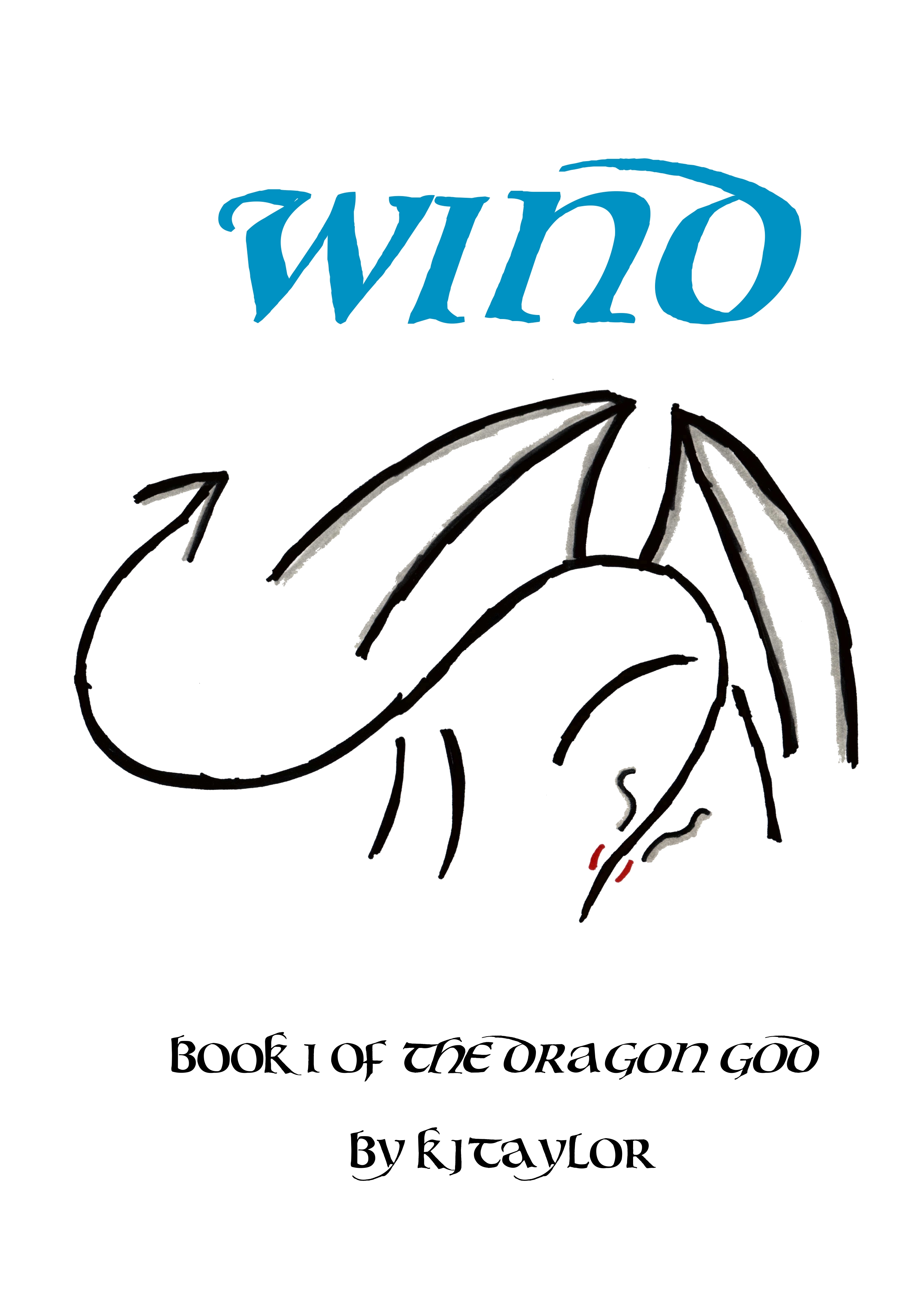
Drachengott: Wind by KJ Taylor

Drachengott: Wind by KJ Taylor is the first book in a new fantasy series which I believe is being released only digitally. But on the up side, the four instalments are being released one a month, so by the time you read this book 3 will already be in the wild. And if the first book is anything to go by, they're pretty short instalments, by fantasy book standards. Perhaps in another time, they would have been published as parts one through four of the one printed book (although that's not how the author wrote it, as she mentions in this interview from last year).

Rutger has always been a bit different. Wanting more than his current provincial life holds, he practices swordfighting, ensuring he's ready for ... he's not quite sure what. Until he meets Swanhild, an enigmatic young woman who knows exactly what she's training for - war. The two meet every day in the forest to practice magic and Rutger feels like he finally belongs somewhere. But Swanhild is hiding something. Will Rugter find out her secret before it's too late? Or will the battle they've been waiting for render secrets irrelevant?

Wind starts with a few chapters of what is, structurally, a prolonged prologue. We're introduced to a confused dragon who doesn't really know what's going on or why, but whose story turns out to be quite important to the over arching plot of the series. We also get our first glimpse of Rutger, the main protagonist. The main story, however, starts several years later with Rutger determined to avenge his brother, who died in the prologue, but lacking direction. He trains for war but has no immediate battles to fight. That is until he meets Swanhild, who introduces him to the world of magic.

Swanhild was probably a more interesting character than Rutger (not that there was anything wrong with Rutger) with her mysterious past and unknown motivations. She propels the plot along and Rutger through it. Basically, nothing much would have happened in the book if it were not for her, but she's not the main character. From the ending (no spoilers) I get the feeling the next book will have a different main character but that Swanhild will still make an appearance.

I am interested to see how the overall structure of the series plays out. Being much shorter than what I would normally call Big Fat Fantasy (BFF), Wind nevertheless shares some characteristics with those sorts of books. Although Wind told a complete story, the overarching plot is only just beginning and I am looking forward to seeing where it goes in the following books. On the other, being quite short for a fantasy book it does have a little bit less depth (and only the one main character whose point of view we don't stray from after the very beginning). The worldbuilding, however, is sufficiently present to paint a picture of the world. It's Germanic, with some obvious differences to our world like the existence of dragons and magic, and also deer as the primary mounts. (Maybe the dragons ate all the horses? ;-p ) Also giant spiders in the forest, which really had me questioning why anyone ever went into the forest if person-eating spiders were a thing they could run into. (If you're arachnophobic, don't worry, they only appear briefly.)

Anyway, Wind was a short read that had me wanting to know what happens next. I look forward to continuing the series in the near future. I would recommend it to fans of fantasy after a quick fix and/or something that they won't spend days lost in (because of the short length). Fans of Taylor's other work will find a less complex story, but still, in my opinion, an enjoyable one.

4 / 5 stars

First published: May 2015, Harper Collins Impulse
Series: Drachengott book 1 of 4
Format read: eARC
Source: Publisher via NetGalley
Challenges: Australian Women Writers Challenge

Wednesday, 6 August 2014

Snapshot 2014: KJ Taylor


K.J.Taylor was born in Australia in 1986 and plans to stay alive for as long as possible. She went to Radford College and achieved a Bachelor’s Degree in Communications at the University of Canberra, where she returned to obtain a Master of Information Studies in 2012. She now holds down a “real” job as an archivist.

She published her first work, The Land of Bad Fantasy, through Scholastic when she was just 18, and went on to publish The Dark Griffin in Australia and New Zealand five years later. The Griffin’s Flight and The Griffin’s War followed in the same year, and were released in America and Canada in 2011. The Shadow’s Heir, The Shadowed Throne and The Shadow’s Heart have now joined them in both Australia and the US.

K.J.Taylor’s real first name is Katie, but not many people know what the J stands for. She collects movie soundtracks and keeps pet rats, and isn’t quite as angst-ridden as her books might suggest.

You have serialised your new novel, Wind, posting weekly instalments on Wattpad. Can you tell us about the story and why you chose the path of serialisation?

I’ve always been interested by the different character “types” who tend to show up in stories, and one of those types is the character I call “the Messenger”. They’re not the protagonist or the villain – instead their role is to be a catalyst. They might be a mentor figure, or the protagonist’s friend, but they do things like provide valuable information, or give the hero that little extra push they need to save the day. For example, Rafiki from The Lion King is a Messenger. As a teenager, just starting out, I wrote an entire series of books about that kind of character. More recently I decided to revisit the idea, and that’s what got this new project started. The character who binds each installment together is a mystery figure who has seen the future and knows who she must find and what they have to do. I made the setting Germanic since I’ve been studying German – which I love.

When I wrote the first part, Wind, it turned out to be quite short (publishers prefer fantasy novels for adults to be about 200+ typed pages) and I was feeling pessemistic about the fantasy publishing environment generally – right now it’s very hard to sell anything new in that genre, because its rise in popularity has made it much more competitive. So I decided to go ahead and put the book out myself, with a plan to charge money for the sequels. That said, my agent has now looked at it and is about to send it off to publishers, so that plan isn’t set in stone yet. If it sells I’ll be taking it down – but for now you can read it for free!


In the Fallen Moon trilogy the main character is an anti-hero. What inspired that choice?

Actually, he was meant to be the villain. I had grown disenchanted with heroic characters, and had noticed that the villain is often more interesting. So I decided to write about one, and deliberately gave him all the traditional hallmarks – I made him pale, thin and not very masculine, gave him a tragic backstory and, in a final very unsubtle touch, I gave him the title of “Dark Lord”! It was all deliberate, and meanwhile his nemesis is a blond square-jawed orphan with the sadly all-too-common “heroic” trait of being a racist moron.

Of course, later on I found out that I’d wound up with an anti-hero, which isn’t so surprising since I couldn’t make him out-and-out evil – that would have made him too unsympathetic, and unrealistic as well. In any case, darker characters are popular at the moment – I think society has become pretty cynical as a whole, which would explain the prevalence of dark, gritty stories in both book and film. I think I came along at just the right time.

Since Fallen Moon, which I wrote in about 2006 when I was barely out of highschool, I’ve discovered that heroic characters can be just as interesting and fun to write about, so I’ve moved away from the whole anti-hero thing – while still keeping my trademark dark, cynical tone.


What’s next for you? Will you be writing sequels to Wind, more griffin books or something completely different?

Wind has three sequels, one and a half of which have been written. The griffin series is fifteen books long, and I hope to publish the remaining nine volumes eventually – I’ve promised fans that if I can’t sell them I’ll just put them out myself. Either way they’ll get to find out how it all ends. In the meantime I have a few other things out there with my agents, and am currently writing the first of an entirely new series. Obviously, I’m not one to hang about. Readers of the griffin series (which really needs an overall title – I’m considering “Chronicles of Cymria”) may be interested to know that I’m also working on a spinoff project; an urban fantasy series set in the same universe, hundreds of  years after the ending of the original series. So now the originally medieval world, which has reached its equivalent of the Renaissance by the end of the series, has progressed to having cars, phones, the Internet, big cities, and so on. But the griffins and magic are still around. I’ve written several instalments in that series, and it’s looking great.


What Australian works have you loved recently?

That’s a tricky question, since I don’t generally take note of where a book came from. Plus I have a tendency to read the same books over and over again, and don’t necessarily read “new” books as they come out. However, one recent Australian book I enjoyed was Ink, inc., written by my friend Jack Heath, who asked me to launch it for him. But I’m not just saying that to shill for a friend – I genuinely enjoyed it, which is saying something since it’s science fiction, and I don’t read a lot in that genre. Some of my other favourite Australian authors are Jackie French, Robin Klein and Gillian Rubenstein – all of whom I grew up reading.


Have recent changes in the publishing industry influenced the way you work? What do you think you will be publishing/writing/reading in five years from now?

The world of publishing is in flux right now, thanks to the increasing popularity of e-books. According to my Australian agent, book sales are down by 30% across the board, pretty much as a direct result. It’s also become a lot harder to sell a new book to the publishers, and as I’m sure you’ve noticed bookshops are shutting down all over the place. Personally, I believe this is a transitional phase. The former head of Voyager told me she believes that one day the majority of books will be electronic only, and that printed books will become a luxury item, with only bestsellers and classics being produced in that format. In other words, the cheap paperback will become a thing of the past. Since my day job is in archiving that does trouble me a little bit – I know all too well how fragile digital data is, and a lot of books could be lost in consequence. Nevertheless, I think that’s where the future lies. I explained all that to my grandmother when she grumbled to me about the state of books – but of course she didn’t want to hear it!

In all seriousness – people will always tell stories. We’ve been doing it since we evolved language. Stories aren’t just entertainment; they’re the way we pass on the things we have learned in our lives. The fastest way to teach anyone anything is to put it in the form of a story, and it’s been proven that we learn things much more quickly that way. The way in which a story is communicated really doesn’t matter. Once we passed them along orally, then we started using pictures, then we invented the written word, and after that we had movies and TV, and more recently video games. All forms of storytelling are valid – I don’t care what Luddites like Alan Moore say. Whether a story is given to you as a book, a film, or an anecdote on the bus – it’s still a story, and that’s what counts. Even if the printed novel eventually dies out, which I doubt it will during my lifetime, I won’t mind. In any case, I’ve been trying my hand at screenwriting; as a film fanatic, suceeding at that would make me very happy indeed!

 ~

This interview was conducted as part of the 2014 Snapshot of Australian Speculative Fiction. We’ll be blogging interviews from 28 July to 10 August and archiving them at SF Signal. You can read interviews at:

http://tsanasreads.blogspot.se/search/label/2014snapshot (here)
http://fablecroft.com.au/tag/2014snapshot
http://kathrynlinge.livejournal.com/tag/2014snapshot
http://bookonaut.blogspot.com.au/search/label/2014snapshot
http://www.davidmcdonaldspage.com/tag/2014snapshot/
http://tansyrr.com/tansywp/tag/2014snapshot/
http://randomalex.net/tag/2014snapshot/
http://jasonnahrung.com/tag/2014snapshot/
http://stephaniegunn.com/tag/2014snapshot/
http://helenstubbs.wordpress.com/tag/2014snapshot/
http://ventureadlaxre.wordpress.com/tag/2014snapshot/
http://mayakitten.livejournal.com/tag/2014snapshot/
http://benpayne.wordpress.com/tag/2014snapshot/ 
http://www.merwood.com.au/worldsend/tag/2014snapshot
http://crankynick.livejournal.com/tag/2014snapshot

Sunday, 3 February 2013

The Griffin's War by KJ Taylor

The Griffin's War by KJ Taylor is the final book in The Fallen Moon trilogy. That said, a sequel series in the process of being released (book two is due out in April). I have previously reviewed book one: The Dark Griffin and book two: The Griffin's Flight. This review contains some spoilers for those earlier books. Blurb from the Australian edition:

A man falls. A monster rises...

The dark griffin Skandar flies in search of his chosen human, while the wild woman Skade goes with him to find her lost love. And a young griffiner believes he can destroy his father's killer for good. But his plans for bloody vengeance may come full circle...

Huddled half-sane in a cell beneath Malvern, Arenadd Taranisäii must submit to the will of the Night God who has his soul, or be returned to the grave forever.

The Griffin's War picks up quite soon after book two left off and quickly resolves the issues left open by its prequel. Then, as expected, The Griffin's War is primarily about the war that's been brewing since book one. The stage has been set with the Southern followers of Gryphus the sun god on one side and the Northern followers of the Night God on the other. Arren, the protagonist of the series, left his mortal self behind completely in book two and is now definitely Arenadd, the Dark Lord, the Shadow That Walks, chosen one of the Night God. Erian, the chosen one of Gryphus still believes he is the one in the right and that he cannot fail to destroy his opponent.

Erian was less of a prat in this book than in the previous one. This time around, I didn't feel like he hogged too much page time but we got enough glimpses into his life and adventures to see how in another story he would be the hero not the somewhat benign antagonist. He's still a bit of an idiot though. Skade also was a more welcome edition in this book than the previous when she was introduced. She not only plays a more pivotal role, but I could see now why Arenadd cares about her, while in the previous volume it was a more a case of there not being any other options for most of the book.

My favourite thing about the series as a whole continues to be the way in which the hero's and villain's roles were swapped. I've mentioned many times that I like moral shades of grey in my stories and on that front Taylor definitely doesn't disappoint. Arenadd is fighting for freedom for his enslaved and oppressed people. Erian is fighting because Arenadd killed his father, because he believes Arenadd must be evil, and because of signs from his god. But the reader, having followed Arenadd all the way from book one, understands his motivations and can watch each driving influence evolve. We know that, despite being called "the Dark Lord" Arenadd is not a power-crazed evil villain. As one of the characters says of him (identity redacted to avoid spoilers):
"He acted as if he cared about me. He wasn't... he didn't act as if he was evil. He seemed... sad and lonely."

Although the Griffin's War concludes the trilogy well, tying up all the important loose ends, I can see which direction the sequel series might take, without reading the blurbs (and having glanced at one of them, I can see I guessed right). I look forward to reading more stories set in this world in the future.

A random aside I don't think I mentioned in my earlier reviews:  I like that although the Night God is female, she is still referred to as a god, not a goddess. Never is her gender used to demean her, not even by her opponent's followers. (I mean, they think she's evil and that they will win in their righteousness, but not because she presents as a woman.)

I highly recommend the entire Fallen Moon trilogy to fans of fantasy. In particular, I think readers who usually enjoy dragon books due to the presence of dragons will enjoy this series as the griffins are treated similarly. As I mentioned in reviews of the earlier books, the series also deals with issues of racism, slavery and oppression. And as you probably gathered from this review, it explores the ways in which we define good and evil and how even when things are literally light and dark, there is still plenty of moral middle ground. I don't recommend reading the Griffin's War without having read the earlier two books. It's definitely the kind of series which build crucially on the preceding volumes.

4.5 / 5 stars

First published: 2010, Harper Voyager Australia
Series: The Fallen Moon, book 3 of 3
Format read: Paperback, Australian edition
Source: Purchased from a real-life Aussie bookshop
Challenges: Australian Women Writers Challenge

Monday, 14 January 2013

The Griffin's Flight by KJ Taylor

The Griffin's Flight by KJ Taylor is the second book in the Fallen Moon series. You can read my review of the first book, The Dark Griffin, here. I can't discuss what The Griffin's Flight is about without mentioning spoilers for book one. So be warned, while this review doesn't contain spoilers for The Griffin's Flight, it does contain major spoilers for The Dark Griffin. Seriously, don't read on if you don't want key events at the end of book one spoiled.

At the end of book one, our main character, Arren, dies and is magically revived with a caveat: he talks, he breathes, he heals, but his heart does not beat. It's an interesting choice for a main character since, generally speaking, bringing the dead back to life is seen as evil. He's kind of a thinking zombie and while the few people who are aware of the situation agree that whatever necromancy brought him back is evil, I like that Taylor didn't use it as an excuse for more people to hate him. (Not that lots of people don't have other reasons to hate him.)

The other major character is Erian, the bastard son of Rannagon, who Arren killed in book one. In another novel, Erian might have been the hero and Arren the villain. Instead, Erian is annoying and a bit of an idiot with an overbearing, ambitious and controlling griffin dictating to him. The reader is very much set up to sympathise with Arren. Although Erian seeks revenge for his father, much like Arren sought revenge earlier, I didn't feel very much sympathy for him at all. Mostly, I thought he got a bit more page-time than entirely necessary. However, I'm quite into the idea of swapping the roles of hero and villain as Taylor has done. I've always been a big fan of moral shades of grey.

A new character, Skade, is introduced. I didn't hate her, but I suspect her potential wasn't entirely realised in this book and will hopefully come to fruition in the concluding volume. I was also a bit disappointed that Arren's friends from book one didn't feature very much. Bran and Flell feature only in the opening and the ending, however I'm confident they will play a bigger part in The Griffin's War, so I'm looking forward to that.

The Griffin's Flight moves away from the exploration of racism that was The Dark Griffin; it's still there, but it's much less the main theme. In fact, thematically there isn't a single overarching theme tying everything together in The Griffin's Flight, which partly makes it feel a little middle-book-syndrome-y. Which isn't to say I found it boring or pointless, just that it was linking two disparate parts of the story: Arren's life as it falls apart in the first book, and the coming titular war of book three (The Griffin's War).

I very much enjoyed the continuation of Arren's story in The Griffin's Flight. I recommend the series to all fans of "big fat fantasy" books. I don't recommend reading book two without having read book one, however. It's definitely the kind of story that should be enjoyed sequentially.

4.5 / 5 stars

First published: 2010, Harper Voyager AU
Series: The Fallen Moon, book two of three
Format read: paperback
Source: a real-life Australian book shop
Challenges: Australian Women Writers Challenge 2013

Saturday, 12 January 2013

The Dark Griffin by KJ Taylor

The Dark Griffin by KJ Taylor is an excellent fantasy book, which came out a few years ago and which I can't believe I've only just read. A slightly pedantic note about the cover before I get on with my review. The cover image available just about everywhere online, including on Harper Collins' website, is slightly different to the actual published cover, with a different border and the series text in a different spot. The only proper cover images I could find were too small, so I took a photo of my own book. Which is why it's a bit crooked — sorry about that but I hate having the wrong cover.

Anyway, The Dark Griffin is a story about a griffin and a human. The griffin has an unfortunately difficult life, fighting to survive from the time it's born. I was a bit surprised when I started reading, actually, that the first two chapters are told entirely from the point of view of griffins with humans barely featuring on the periphery. Taylor pulled it off, however. In a section that had the potential to feel like a drawn-out prologue, I was captivated the entire time.

In Taylor's world, griffins are as intelligent as humans, have varying magical powers and can talk. The humans that ride them are called griffiners and learn to speak the language of the griffins. Arren is a griffiner, despite being of Northern descent. His people were, until recently, slaves in his city and he looks a bit different to the Southerners he lives among. The only reason he's allowed to be a griffiner is because his griffin bonded to him when they were both and there was nothing to be done about it.

Arren's story is very much one of racism and ostracism. Once Arren's position in society becomes slightly less assured, he quickly finds out how thin the veneer protecting him was. A lot of bad things happen to Arren and almost all of them are thanks to racism against his people. After a comfortable life as a respected citizen with some status, denying his heritage out of shame, it all comes as a bit of a shock to him when he loses (ostensibly only some of) that status. Suddenly people no longer respect him and constantly use dismissive language against him ("Oh, but he's only a member of the slave-race"). (Possibly not a book to read if you're particularly sensitive of/triggered by racism and oppression generally.) In the end, Arren's actions, taken out of a desperation the reader can entirely understand, appear to be increasingly erratic to the people around him, giving them more ammunition to use against him. There were some gut-wrenchingly tragic moments.

I also liked how the racism was not based on skin colour. The small world Taylor created was based loosely on Britain and so there wasn't room, geographically, for wildly different ethnic characteristics. It's nice to be reminded that an ethnic group doesn't have to look completely different to be oppressed. And of course, the themes of racism/oppression explored in the novel are widely relevant to modern culture.

The Dark Griffin is a compelling novel. Both the griffin and Arren suffer due to unfair circumstances they cannot be blamed for, and their parallel stories intertwine to powerful effect. Another brilliant fantasy read by a brilliant Australian author. I have read few run-of-the-mill fantasy novels (particularly BFF — big fat fantasy) by Australians, and The Dark Griffin certainly doesn't buck that trend.

I highly recommend The Dark Griffin to all fantasy fans. In particular fans of any or some of Jennifer Fallon, Glenda Larke, Rowena Cory Daniells or Naomi Novik's Temeraire books will probably probably enjoy this book. Having foreseen a burning desire to read the whole series, I already have the rest of the trilogy on my TBR shelf and intend to pick up book two straight away.

5 / 5 stars

First published: 2009, Harper Voyager AU
Series: The Fallen Moon, book one of three
Format read: paperback
Source: a real-life Australian book shop
Challenges: Australian Women Writers Challenge 2013