
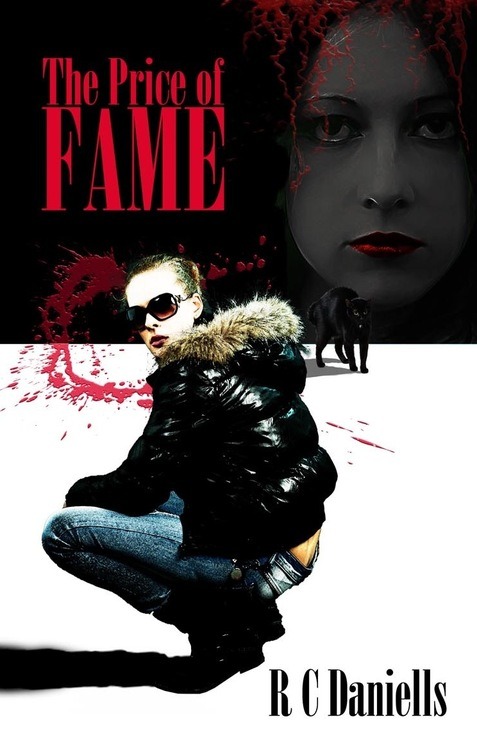
The Price of Fame is the story of Antonia, a film school graduate who moves from Queensland to Melbourne to make a documentary about the Tough Romantics, an 80s punk band whose singer was murdered just before they made it big. Accompanied by former classmate and hunk, Monty, as her camera and effects man, she begins to dig into the band's past. Her initial plan is to focus on their early creative dynamic and steer clear of the sensationalist murder angle. She even rents the house in St Kilda where the band lived before they were famous. Of course, the more she digs into the past, the more it becomes apparent there's more to the singer's murder than generally known.
As Antonia and Monty learn more, their present-day story is interspersed with a story of events in the 80s centred about, O'Toole, the taxi driver who was accused of the murder. Through his eyes we see the visceral reality of life on the Street (Fitzroy St) for the fringes of society in St Kilda. As you might expect (especially if you know anything about Melbourne and St Kilda's history), that world is full of drugs and casual violence.
Daniells has O'Toole not originate in that world but move there after his divorce. In some ways, he's not so different to the people around him, but he's different enough that he's still a bit of a tourist. This is a clever move on the author's part as it gives the reader a more easily relateable character who can report on Street conditions without being entirely a part of the scene (and neatly sidesteps any issues of authenticity compared with writing from the point of view of a Street personality).
I have a soft spot for stories set in Melbourne, my home city. I might not have spent all that much time in St Kilda, but I've walked down Acland Street and bought pastires, and been to Luna Park and ridden the same roller coaster the band rides in the book (a few safety-induced renovations later). The language Daniells uses is distinctly Australian, particularly in the slang all the characters use, which I also enjoyed.
Overall, I enjoyed The Price of Fame and read it in two sittings, finding it difficult to put down, especially once the 80s story started to unfold. It has minor paranormal elements, but they don't really become pivotal until the end and could almost be dismissed as magical realism (if paranormal elements aren't your sort of thing). This easily one of the most realistic novels (as opposed to speculative fiction) I've read this year. (Shift by Em Bailey is the only other one that competes.)
I strongly recommend The Price of Fame to anyone who enjoys mystery/crime novels, paranormal fiction and/or historical Melbourne.
5 / 5 stars
A copy of the book was provided by the author for review.


 Black Glass, debut novel by Meg Mundell, caught my eye because it was shortlisted for Aurealis Awards in both the SF and YA categories. (And being written by a woman, hence counting towards my SF Aussie Women Writers Challenge also helped.)