Showing posts with label Richelle Mead. Show all posts

Friday, 6 May 2016

Soundless by Richelle Mead

Soundless by Richelle Mead is a standalone YA novel, set in a mountainous Chinese (fantasy) village. The main labour in the village is mining and the unique premise of the story/world building is that the entire village is deaf and has been for several generations.

For as long as Fei can remember, no one in her village has been able to hear. Rocky terrain and frequent avalanches make it impossible to leave the village, so Fei and her people are at the mercy of a zipline that carries food up the treacherous cliffs from Beiguo, a mysterious faraway kingdom.

When villagers begin to lose their sight, deliveries from the zipline shrink. Many go hungry. Fei and all the people she loves are plunged into crisis, with nothing to look forward to but darkness and starvation.

Until one night, Fei is awoken by a searing noise. Sound becomes her weapon.

She sets out to uncover what’s happened to her and to fight the dangers threatening her village. A handsome miner with a revolutionary spirit accompanies Fei on her quest, bringing with him new risks and the possibility of romance. They embark on a majestic journey from the peak of their jagged mountain village to the valley of Beiguo, where a startling truth will change their lives forever…

Fei lives in an isolated and oppressed village that is forced to mine and send valuable metals down the mountain (via a pulley system) in exchange for barely enough food to survive. Due to her skill as a painter, Fei doesn't have to work in the mines and instead gets to live a life of relative luxury. However, when her sister starts to lose her sight and an accident drives her star-crossed love interest to take action, Fei finds herself taking action too. A perilous climb down the cliff side of their mountain takes the two teens on a journey that shows them the truth about the outside world and their village's circumstances. Redressing the wrongs done to their village isn't straightforward, of course.

An important thing to know about the premise of Soundless is that Fei, the main character, magically gains hearing fairly early on. Although the rest of the village remains deaf and Fei continues to sign all the time (because magic hearing does not come with magic speech recognition), it's not a book about a deaf main character. (However, as my husband pointed out when I was telling him about it, some of Fei's experiences may be similar to those of people hearing for the first time after getting cochlear implants.)

In any case, I found this a more interesting and compelling read than I initially expected. I ended up reading it in about two sittings — it's not a long read — and enjoyed the reasonably straightforward plot. I admit I wasn't sure how much of a spec fic novel it was going to turn out to be since there are minimal fantasy elements other than at the very start and end, but the ones at the end are especially fantastical.

I would recommend this to fans of YA, especially those looking for a quick read and to whom the premise appeals. I wouldn't specifically recommend it for people looking for disability in their fiction. It doesn't do a terrible job in that respect... but on the other hand there is the whole magical cure aspect for the main character. Your mileage may vary.

4 / 5 stars

First published: 2015, Razorbill
Series: Nope!
Format read: ebook
Source: Borrowed from the library (via BorrowBox)

Tuesday, 28 April 2015

The Ruby Circle by Richelle Mead

The Ruby Circle by Richelle Mead is the sixth and final book in the Bloodlines series. As would be expected in such a concluding volume, all the loose threads from earlier books are tied up, the day is saved and everyone gets to live happily ever after. That isn't a spoiler. This review is going to contain spoilers fro the previous books, however. Especially a pretty major spoiler for Silver Shadows, the fifth book in the Bloodlines series.

Their forbidden romance exposed, Sydney and Adrian find themselves facing the wrath of both the Alchemists and the Moroi in this electrifying conclusion to Richelle Mead’s bestselling Bloodlines series.

When the life of someone they both love is put on the line, Sydney risks everything to hunt down a deadly former nemesis. Meanwhile, she and Adrian becomes enmeshed in a puzzle that could hold the key to a shocking secret about spirit magic, a secret that could shake the entire Moroi world and alter their lives forever.

The Ruby Circle picks up right where the previous book left off and then throws us back into a recurring issue of the series: Jill has been kidnapped. Everyone except Sydney and Adrian get to help look for her, however, since they are still under the court's protection after the Alchemist-enraging wedding of the previous book. But then a lead presents itself that only Sydney can follow and the couple are thrown into the thick of the adventure.

As with the earlier books, this was a fun read. (Probably more fun than the previous book, actually, since there was significantly less torture.) On their way to saving Jill, Sydney and Adrian stumble across an unrelated issue (but one that does tie back to events in earlier books) which conveniently allows Mead to set up a hook for a possible third series. Less cynically, it was something that addressed some of the background spirit research that has been going on throughout the series. (I am being vague because spoilers.) And that said, I would read another series in this universe, especially if there was a more significant time jump to its beginning.

I had one objection to the writing in The Ruby Circle. There was one scene a third (ish) of the way through where a lot of crucial things happened but that was kind of a mess, flow-wise. I suspect the author had written herself into a corner with a bunch of things that had to happen for the plot to work. That said, while I thought it was messy, my husband didn't particularly notice, so your mileage may vary.

One thing I noticed — well, started to notice from Silver Shadows especially — is how this series, which started off very YA and set in a school, has ended very not YA with a wedding and spoiler-stuff. I'd say it's because the characters grew up, but not a huge amount of time passed between the first and last books. More relevantly, I think it's because the focus shifted from Jill, who is a teenager, to Sydney and Adrian who are 19 and 22, respectively. I'm not objecting to the shift, by the way, just noting it.

I have enjoyed the Bloodlines series and I would recommend it to fans of YA and to anyone who likes vampires. Fans of the earlier Vampire Academy series should also give it a shot. I hope it's obvious from the rest of my review, but I definitely don't recommend reading The Ruby Circle without having read the other books in the series.

4 / 5 stars

First published: February 2015, Penguin
Series: Bloodlines, book 6 of 6
Format read: Paper! Gasp!
Source: Pre-order from Dymocks

Saturday, 26 July 2014

Silver Shadows by Richelle Mead

Silver Shadows by Richelle Mead is the fifth and penultimate book in the Bloodlines series. I have previously reviewed the earlier books. In reverse order: The Fiery Heart, Indigo Spell and The Golden Lily (Bloodlines was pre-blog). Silver Shadows is a solid instalment in a series that has becoming more interesting (and with higher-stakes) with each book. Note that this review (and the blurb) contains spoilers for the end of the previous book, The Fiery Heart.
Sydney Sage is an Alchemist, one of a group of humans who dabble in magic and serve to bridge the worlds of humans and vampires. They protect vampire secrets—and human lives.

In The Fiery Heart, Sydney risked everything to follow her gut, walking a dangerous line to keep her feelings hidden from the Alchemists.

Now in the aftermath of an event that ripped their world apart, Sydney and Adrian struggle to pick up the pieces and find their way back to each other. But first, they have to survive.

For Sydney, trapped and surrounded by adversaries, life becomes a daily struggle to hold on to her identity and the memories of those she loves. Meanwhile, Adrian clings to hope in the face of those who tell him Sydney is a lost cause, but the battle proves daunting as old demons and new temptations begin to seize hold of him. . . .

Their worst fears now a chilling reality, Sydney and Adrian face their darkest hour in this heart-pounding fifth installment in the New York Times bestselling Bloodlines series, where all bets are off.
I really enjoyed Silver Shadows. The book alternates point of view chapters between Sydney and Adrian, with Sydney locked up in the harsh Alchemist re-education centre and Adrian on the outside trying to get Sydney out. It's a darker book than the ones that went before it, mainly because re-education involves a lot of torture. It does also highlight Sydney's indomitable spirit as she refuses to be let herself be brainwashed. My favourite part was the ways Sydney finds to fight back against the system, even while she's in the re-education centre. Adrian, on the other hand, spirals into a pit of depression and binge drinking when he can't make contact with Sydney, reverting to his former self.

Of course, Sydney doesn't spend the entire book locked up and the last... quarter, maybe, is much lighter in tone than what went before it. I found myself chuckling several times and the surprise near the end was pretty great. I wish I could talk about it more, but it's definitely a spoiler.

While the premise of the series revolves around Jill, Sydney and Adrian have always been the main characters. This is even more evident in Silver Shadows, since Jill and the rest of the gang do not get much page time. But I think there was also an element of needing to sort out a lot of Sydney and Adrian's story so that the last book could bring focus back on Jill (I'm guessing).

I highly recommend Silver Shadows for anyone whose enjoyed the Bloodlines series so far. Really that should go without saying. For those new to the series, it really is the kind of series that needs to be read in order from the start. I would not at all recommend starting with Silver Shadows or any instalment other than Bloodlines.

4.5 / 5 stars

First published: July 2014, Penguin
Series: Bloodlines book 5 of 6 (and Bloodlines is a spin-off series of the Vampire Academy)
Format read: eARC
Source: Publisher via NetGalley

Tuesday, 29 April 2014

The Immortal Crown by Richelle Mead

The Immortal Crown by Richelle Mead is the second book in the Age of X series. The first was Gameboard of the Gods, which I reviewed last year. (You should go read that review for the worldbuilding background, if you haven't already, since I won't be recapping.) I am continuing to enjoy this series a lot and am looking forward to the next instalment.
Gameboard of the Gods introduced religious investigator Justin March and Mae Koskinen, the beautiful supersoldier assigned to protect him. Together they have been charged with investigating reports of the supernatural and the return of the gods, both inside the Republic of United North America and out. With this highly classified knowledge comes a shocking revelation: Not only are the gods vying for human control, but the elect—special humans marked by the divine—are turning against one another in bloody fashion.

Their mission takes a new twist when they are assigned to a diplomatic delegation headed by Lucian Darling, Justin’s old friend and rival, going into Arcadia, the RUNA’s dangerous neighboring country. Here, in a society where women are commodities and religion is intertwined with government, Justin discovers powerful forces at work, even as he struggles to come to terms with his own reluctantly acquired deity.

Meanwhile, Mae—grudgingly posing as Justin’s concubine—has a secret mission of her own: finding the illegitimate niece her family smuggled away years ago. But with Justin and Mae resisting the resurgence of the gods in Arcadia, a reporter’s connection with someone close to Justin back home threatens to expose their mission—and with it the divine forces the government is determined to keep secret.
We continue to follow the same three characters we met in the first book: Justin, Mae and Tessa. Tessa's story line is the most minor but still gives us a view of life in RUNA and some additional information about the overarching plot that the others can't access. Having started at a new school, Tessa end up working with a somewhat dodgy journalist as part of a school project about the RUNA media. I quite like Tessa, but I'm looking forward to a future book in which she plays a larger role. Although her story in this is a complete arc (with a few loose ends at the end, of course) it's a much smaller arc than the other two.

Justin plays the biggest role in the first part of the book in a point of view sense; when he and Mae are both in a scene, he is most likely to be the point of view character. I suppose that's mostly because of the ravens talking to him in his head. And because, when the two of them go on a mission to a country comprised of former bible-belt states (as far as I could tell — the city they stay near is in what was once Alabama), the women are separated from the men and not really allowed to contribute anything useful except covertly. More on that shortly. In terms of character development, Justin has changed markedly from the start of the first book (the reveal at the end of Gameboard of the Gods being a large part of that) and in this instalment he continues to accept the power of the gods, albeit with degrees of reluctance. There's a certain cognitive dissonance in his acceptance, or lack there of, of godly interference in his life. It all turns out a bit ironically for him, from the reader's point of view. Hehe.

The central arc of the story concerns Justin's and Mae's trip. While Justin finds himself tied up with miscellaneous diplomatic and religious events, Mae is stuck with the misogyny-mandated pot scrubbing and some of her own side-adventures (which are kind of spoilers). The gender politics in Arcadia (bible-belt land) are nauseating and I wouldn't wish upon anyone, but what Mead did with them was interesting, although some might argue thinly veiled (I'm not sure that I would). That said, I strongly feel that a healthy cynicism regarding religion (or at least open-mindedness and/or appreciation for ancient pantheons) is required to enjoy this book. I think if you take it (the book or religion) too seriously, this book has the potential to offend. I also don't think it's intended that way, per se. If I had to guess, I'd say the intention was to explore different societal attitudes towards religion (and to tell a good story). (She definitely tells a good story.)

One of the most interesting things about this series, is that no one knows how many volumes there will be. It means (obviously) that it's not following a trilogy arc — no middle book syndrome here — and that, for now, it will be going on indefinitely. I don't have to get sad about it all being over next year. That's not something that I've encountered too often lately (OK, possibly because I haven't read Wheel of Time, but shh).

One last thing I want to say. The epilogue. !!! Fans of certain Norse gods will no doubt be pleased. I may have been comparing certain characters to The Almighty Johnsons...

If you enjoyed Gameboard of the Gods, you should definitely pick up The Immortal Crown. The events, and especially characters, of this second book definitely build on what came before. I wouldn't recommend reading book 2 without having read book 1, but it wouldn't be as bad as with some series. I suspect the worldbuilding would be the most confusing to pick up on. There's still a month before The Immortal Crown comes out, so plenty of time to read Gameboard of the Gods if you haven't. This is a great series and I highly recommend it to a variety of SF and fantasy (and science fantasy) fans.

5 / 5 stars

First published: May 2014, Penguin
Series: Age of X book 2 of ?
Format read: eARC
Source: Publisher via Edelweiss

Tuesday, 31 December 2013

The Fiery Heart by Richelle Mead

The Fiery Heart by Richelle Mead is the fourth book in her the Bloodlines series. You can read my reviews of the second and third books: The Golden Lily and
The Indigo Spell. This is going to be a short review because it's new year's eve, not a review copy and if you've read the first three, you've probably already decided whether you're going to pick up the fourth. If you haven't read the first three, the blurb (and the rest of the review) is made of spoilers, so go do that instead.
Sydney Sage is an Alchemist, one of a group of humans who dabble in magic and serve to bridge the worlds of humans and vampires. They protect vampire secrets - and human lives.

In The Indigo Spell, Sydney was torn between the Alchemist way of life and what her heart and gut were telling her to do. And in one breathtaking moment that Richelle Mead fans will never forget, she made a decision that shocked even her. . . .

But the struggle isn't over for Sydney. As she navigates the aftermath of her life-changing decision, she still finds herself pulled in too many directions at once. Her sister Zoe has arrived, and while Sydney longs to grow closer to her, there's still so much she must keep secret. Working with Marcus has changed the way she views the Alchemists, and Sydney must tread a careful path as she harnesses her profound magical ability to undermine the way of life she was raised to defend. Consumed by passion and vengeance, Sydney struggles to keep her secret life under wraps as the threat of exposure — and re-education — looms larger than ever.
This one had a lot more romance in it than the previous books. For whatever reason (most likely that I didn't spend much time pondering the events of the previous book before beginning), this came as a bit of a surprise. It was was interesting, however, to watch the shift in dynamic between Sydney and Adrian. Allowing herself to date a vampire was always going to be a big deal for Sydney, but Mead doesn't forget to highlight the Adrian's emotional shift either.

Speaking of Adrian... this paragraph is going to be a bit ambiguous because I want to avoid spoilers. The approach Adrian (and co) takes to deal with his spirit-use side-effects turned out to be more thought-out than I expected. Although I do wonder what will happen with that in the sequel(s) since the ending did rather leave things up in the air.

Speaking of the ending, it was rather disheartening. I'm not sure I'd quite call it a cliff-hanger, since the book went on just long enough to let us know what was happening (rather than leave us guessing). But it definitely did provide a strong "golly, how will they fix this?" situation. I definitely want to know what happens next, and I'll definitely be getting my hands on the next book, Silver Shadows, which Goodreads says will be out in July 2014.

A recommended read for fans of the series. If, for some reason, you got through this review without having read the earlier books, don't start with this one, start with book one, Bloodlines. Fans of not-standard-vampire YA should enjoy this series.

4.5 / 5 stars

First published: November 2013, Penguin
Series: Bloodlines, book 4 (of, if I had to guess, possibly 6 like the Vampire Academy books)
Format read: paperback
Source: Purchased from Dymocks

Saturday, 22 June 2013

Gameboard of the Gods by Richelle Mead

Gameboard of the Gods by Richelle Mead is the first adult (as in not YA) book of hers that I've read. I wasn't sure what to expect, having only vague recollections of it being space opera (not quite). That's partly because I tend to erase blurbs from my mind between deciding to read a book and actually starting it. The blurb does do a pretty good job of describing the content.
In a futuristic world nearly destroyed by religious extremists, Justin March lives in exile after failing in his job as an investigator of religious groups and supernatural claims. But Justin is given a second chance when Mae Koskinen comes to bring him back to the Republic of United North America (RUNA). Raised in an aristocratic caste, Mae is now a member of the military’s most elite and terrifying tier, a soldier with enhanced reflexes and skills.

When Justin and Mae are assigned to work together to solve a string of ritualistic murders, they soon realize that their discoveries have exposed them to terrible danger. As their investigation races forward, unknown enemies and powers greater than they can imagine are gathering in the shadows, ready to reclaim the world in which humans are merely game pieces on their board.
The setting is a not-too-near future world without space travel (hence not being space opera, although one could make a case for space opera confined to Earth and with no aliens...) but with fancier technology, a good step above what we have now, and super soldiers. After some global strife caused by a few things, some large nations arose to govern more efficiently. The RUNA is one of them, as is the EA (Eastern Alliance), although we see less of them. Outside of these nations life is a bit harsher, less technological and more dangerous, particularly in the sense that there is much less gun control. Within these nations, people are surprisingly segregated in some regards. For example, Mae is a member of the Nordic caste — and there are other castes, like Celtic and Nipponese — which means that her family lives in a Nordic enclave of homogeneity and looks down on plebeians, ordinary people. Outside of castes reproduction is regulated based on genetic compatibility in an attempt to control/eliminate a genetic disease which castals tend to suffer from.

Among our three main characters, we have a reasonably broad representation of different groups (albeit the affluent ends of the groups). Mae is Nordic, Justin a plebeian and Tessa, his ward, comes from the "province" of Panama, which lies outside RUNA. It was interesting to be able to see the breadth of the society from each of their perspectives.

After the aforementioned global strife, the RUNA and friends started regulating religion, granting licenses only to benign cults. I've heard some people call Gameboard of the Gods a dystopia and this is honestly the only reason I can guess for that. And quite frankly, regulating religions and their powers seems like a great idea to me, even before we see some of the worrying antics they get up to in this book. (But really this is not a dystopian novel. The government isn't evil, the people aren't oppressed, and the plot does not seem to be leading up to a revolution or the need for one.) The most interesting thing about the religious regulations is that, as it turns out, the gods are real. Most people aren't aware of that, and this fact is central to the plot. The gods work similarly to in Pratchett's Small Gods, but with bigger gods from various cultures, for those of you who've read that.

I particularly enjoyed the writing in Gameboard of the Gods. Unlike Mead's YA novels, there is less witty banter in the dialogue — but not none — and the story deals with more adult matters such as politics and casual sex. However, just because it's written in a slightly more serious style does not prevent it being a very compelling read. If anything, I'd say it's better written than the Bloodlines books (which are similar to but fresher in my memory than the Vampire Academy books) in terms of style at least. I was expecting to read it alternately with another book, but I ended up being so drawn in I had difficulty putting it down.

Gameboard of the Gods was an excellent read. I recommend it to fans of science fiction and science fantasy. The fantasy element comes solely from the existence of the gods and otherwise this would be a science fiction novel. I'm not usually particularly enamoured of science fantasy, but this one really worked for me. I would suggest that liking or not Mead's YA books bears little relevance to liking Gameboard of the Gods. If the blurb and what I've talked about sounds appealing to you, definitely give this one a read. Although it's the first of a series, it's quite self contained. I am looking forward to reading the next book, but I'm not dying of cliffhanger. Actually what I'm hoping for is more info on the Decline and how northern America acquired some of its castes (some seem obvious extensions of ghetto-like cultural groupings, but some seem a bit random to me, like the Nordic or Celtic ones). Hopefully it won't be a terribly long wait until book 2.

5 / 5 stars

First published: June 2013, Penguin (US and Aus and probably rest of English regions)
Series: Age of X book 1 of ?
Format read: eARC
Source: the publisher, via NetGalley

Sunday, 10 February 2013

The Indigo Spell by Richelle Mead

The Indigo Spell by Richelle Mead is the third instalment in her Bloodlines series. You can read my review of the second book, The Golden Lily, here. This review contains minor spoilers for the earlier books in the series.

Sydney the Alchemist in charge of the small group protecting a teenaged moroi vampire (the living and not evil kind of vampire) who happens to be the moroi queen's half sister. In the course of hiding incognito at a human school, many minor crises have popped up for Sydney to deal with. The Indigo Spell is no different. In fact, it continues to build on the events of the earlier books, adding layers of plot which will probably stick around in future books.

It's not something I noticed when I read The Golden Lily, but from the first book, Bloodlines, Mead has been adding background plot elements which have persisted in the subsequent books with more relevance than the main (fairly self-contained) action. Arguably, the main plot of The Indigo Spell is the plot line that leads to the climax but there is so much else going on — in a good way — that one could argue for another thread being the most important. The world throws a lot of mostly urgent stuff at Sydney and, in true Sydney fashion, she manage to balance all the emergencies at once.

The Indigo Spell focusses heavily on Sydney's issues with the Alchemists, secrets and magic, with some significant contributions from Adrian and Ms T the history teacher witch. But the other characters aren't forgotten about. I liked how Mead had them running up to Sydney with their problems every few chapters and, even though Sydney didn't spend much time fixing them, it let us keep up with what they were doing.

The set-up from the end of the previous book pays off well (ambiguity to avoid spoilers). One of the complaints I had about The Golden Lily (which I apparently forgot to mention in my review) was that Sydney failed to notice/work out a few obvious things until it was more convenient to the plot because she was so busy with everything else. I felt that again in The Indigo Spell, but to a lesser extent. This time it was only one thing she didn't realise until later and there were better plot reasons for it. On the other hand, another thing I was expecting her to make the connection regarding didn't happen at all but I can only assume it will come out in a future book. Or maybe I'm guessing wrong. Ambiguous paragraph is ambiguous. Sorry.

I think The Indigo Spell can be enjoyed by itself, but works better as part of the series read sequentially. I recommend it to fans of YA who have enjoyed Richelle Mead's other books or who are looking for something a little bit different from a book that also involves vampires. I eagerly await the next instalment (especially after the set-up dropped in at the end — plenty of room for new shenanigans!).

4.5 / 5 stars

First published: February 2013, Penguin Australia
Series: Bloodlines, book 3 of ?
Format read: eARC, on Kobo
Source: Publisher via NetGalley

Sunday, 17 June 2012

The Golden Lily by Richelle Mead

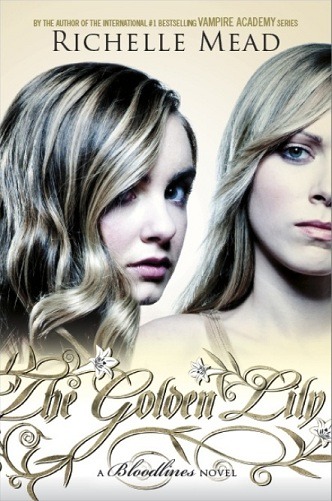
The Golden Lily by Richelle Mead is the second Bloodlines book, a series set in the same world as the Vampire Academy books.

I felt that The Golden Lily was tighter and had a bit more depth to it plot-wise than the first book, Bloodlines. A big part of this, I think, was that Meade had the chance to set up some of the characters and situations in the previous book. Sure we already knew most of the main characters in Bloodlines, but the plot was more high-school shenanigans (with a dangerous undertone, of course). In The Golden Lily, I felt like part of an overarching plot was set up and at the end I had a clearer idea of where the series was going (particularly given the title of the next book…).

The characters, especially Sydney, continue to be developed in The Golden Lily. There were some hilarious moments associated with her love interest (a new character) and her coming to terms with the world of dating. Mead also used the opportunity to draw some interesting parallels between Sydney’s love-life and other characters’. It was entertaining watching her struggle with understanding that aspect of people while excelling in all other areas.

Dimitri, central in the Vampire Academy books, plays a role in The Golden Lily and it was fascinating seeing him through someone else’s eyes. In the Vampire Academy books, I couldn’t help empathising with Rose’s feelings for him but Sydney is relatively ambivalent towards him (beyond him being a part of her team) and I enjoyed seeing this different perspective.

I am looking forward to reading the next instalment, The Indigo Spell, which comes out in February 2013. I would recommend this book to anyone who has enjoyed Bloodlines or the Vampire Academy books. It’s not as essential to read Bloodlines before reading The Golden Lily as it is with other series, but the series would definitely work better in order. It’s definitely not necessary to read the Vampire Academy series before the Bloodlines books. If you felt a bit meh about Bloodlines, I’d still suggest giving The Golden Lily a go, since I feel it is a stronger book.

4.5 / 5 stars