

A split-second decision, a single time-skip. The world that you know, gone in a blink.
Now a sharp and adept time-skipper, Scout jumps years ahead to find the world transformed. Technology has accelerated and the people she knows have grown up, or disappeared. Most pressing, the government that she was trying to escape has used the time to prepare for the return of the time skippers. Caught between finding the mother she left behind and time-skipping ahead with Mason, a series of events lead Scout deeper into the tunnel than ever before.
The only way out is by the strength of her love and the power of her mind. The illusion of time has one more surprise, one with the power to change everything.
As you probably gathered from my preamble, I enjoyed this book a lot. One of my favourite things about it is that Scout, the main character, is pretty smart and doesn't make stupid decisions for no better reason than to further the plot (a YA pet peeve of mine). In fact, whenever I thought "she should do blah" to solve whatever problem she was facing, she generally did or did something even more clever. That's not to say that the book was predictable, just that obvious smart courses of action weren't conveniently ignored by the protagonist.
I mentioned in my review of the first book that I didn't think the government quite counted as dystopian because almost everyone (who wasn't in Scout's position) was basically doing OK. In this book, which is mostly set a bit further in the future than we see in the first book, the repressiveness of the government took a turn for the worse and definitely feels more dystopian. Whether or not Scout (and friends) will be directly addressing that beyond just trying to keep themselves safe is unclear. Although it's more dystopian than the first book, it's not following the obvious beats of a YA dystopia (yet — I suppose the third book could change that).
On the topic of not following obvious beats, there were a few time travel beats that I thought this second book might end on and to be honest, until the very end I kind of wanted it to end that way. But once the end game was playing out, it became clear that the book wasn't going to end quite the way I expected. There is another cliff hanger, though (that bit I did expect).
In my review of the first book I didn't talk much about time travel because I didn't want to give that aspect of the story away. This second volume is very much more of a time travel narrative, so I think it should be mentioned. One of the things that I think makes this series so successfully compelling is that it took two unrelated, solid ideas — everyone being chipped and time travel — and combined them to make a story greater than the sum of its parts. It helps that the portrayal of being chipped is done in a relatively fresh way (like when Scout has trouble crossing the road without a chip), and that the method of time travel is novel and both constrained (jumping forward, not moving from where you were and arriving naked) and liberal (anyone can learn to do it).
Finally, Scout has a very close relationship with her mother, which doesn't change when the whole time travel thing starts. Scout's mother isn't conveniently out of the way or kidnapped, does worry about her, and is a motivator for Scout to do various things. Her mother's strong presence is balanced by the fact that Scout has a lot of freedom, especially for a 14 or 15 year old, but I appreciate her not being orphaned or neglected from the outset.
To reiterate, I enjoyed Split Infinity a lot and would whole-heartedly recommend it and the first book to fans of character-driven YA and science fiction. Although there is a romantic element in the books, it was actually stronger in the first book than the second, and isn't very prominent overall (and wow did I appreciate the fact that Scout didn't do anything to stupid for cute boys). I am eagerly awaiting the last book in the series, alas I think I'll be waiting about a year to read it.
5 / 5 stars

 First published: May 2016, Hardie Grant Egmont
Series: Lifespan of Starlight book 2 of 3
Format read: Paper!
Source: Purchased (from Big W...)
Challenges: Australian Women Writers Challenge, Aussie Science Fiction Reading Challenge


 Blackout by Mira Grant is the final novel in the Newsflesh trilogy. I have previously reviewed
  Deadline is the second book in Mira Grant’s Newsflesh trilogy. You can read my review of the first book,
 Hal Junior: The Missing Case by Simon Haynes is the second of his Hal Junior books, although they stand alone and reading order isn’t important. The Hal Junior series is itself a spin-off of Haynes Hal Spacejock novels for adults.
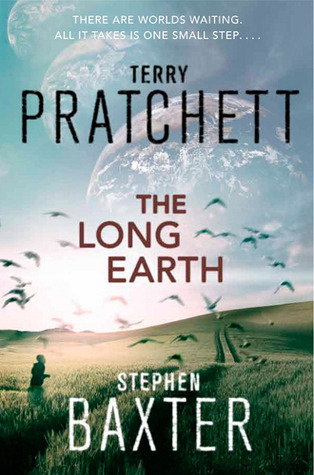 The Long Earth is a collaboration between Terry Pratchett and Stephen Baxter. I didn’t expect to enjoy it as much as I did. My favourite Pratchett books are hands down some of the Discworld novels. My experience with an armful of Baxter books is that he tends to over write this science and tends to reuse similar characters. So I wasn’t sure what to expect. Mainly I was hoping for Pratchetty characters and an interesting story.
 ~
~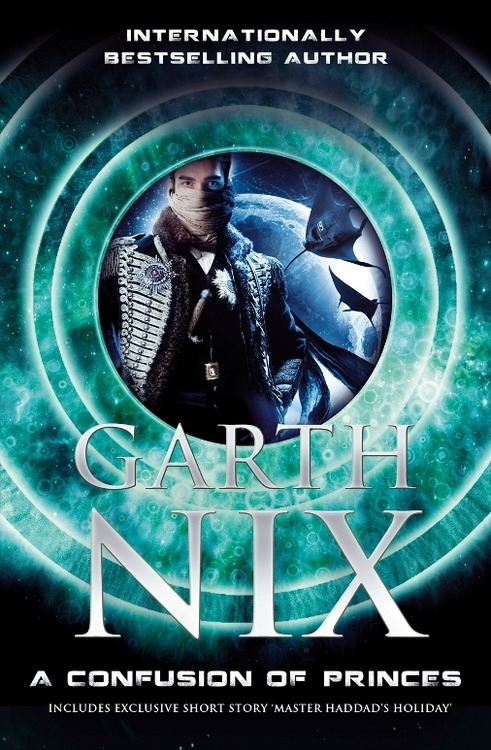 A Confusion of Princes is the first book by Garth Nix that I’ve read, despite his being an Australian author of some note. After reading it, his other books have moved up on my mental TBR list.
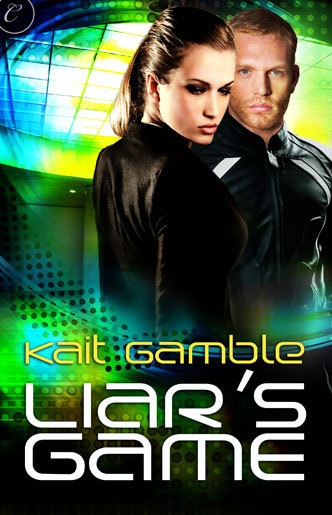 Liar’s Game by Kait Gamble is a new novella out from Carina Press on July 2nd. A copy was provided to be from the publisher via Netgalley. The official blurb summarises quite well, so I thought I’d start by including that.
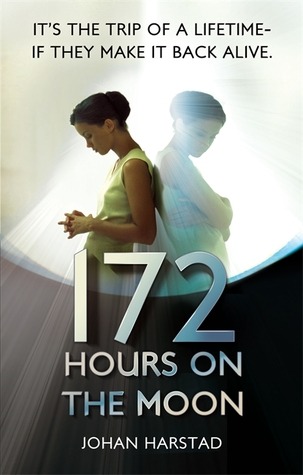 172 Hours on the Moon by Johan Harstad is a recently released YA book that was originally published in Norwegian in 2008. I enjoyed it quite a bit and I think it would make an excellent movie. Hopefully, someone in Hollywood notices it and makes it happen.
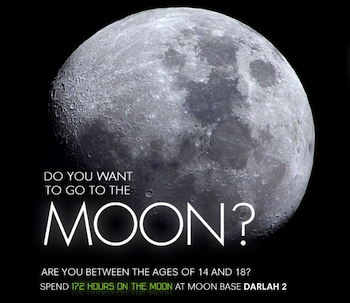 So. Despite the rather lengthy critical discussions above, I quite enjoyed 172 Hours on the Moon. I read it in two sittings and would recommend it to SF fans, especially those who don’t mind a bit of non-scientific horror in the fiction (talking about the mysterious evil now, not the actual science). The production values of the physical book were also nice. There were illustrative images interspersed throughout the novel including things like maps of the base, NASA photos of the moon, and the promotional lottery poster (see right).
 Polymer by Sally Rogers-Davidson is a science fiction story which I would categorise as adventure. Apart from being in first person, it reminded me of pulpy SF adventure stories from way back when. Except with a female protagonist and more female issues than would ever have come up in those books.
 Unlike
  and I think it was her debut novel. If you enjoyed Spare Parts, give Polymer a go. It’s a very different setting, but there are some similarities in outlook (relatively cheery).
 When We Have Wings by Claire Corbett is set in a vaguely near future Sydney where the rich can fly thanks to having wings implanted on their backs.
 I listened to the audiobook (from Audible) version The Moon is a Harsh Mistress by Robert A Heinlein. It wasn’t an especially pleasant experience and not just because it was so drawn out now that my commutes are only 25 minutes long.
 Bumped is set in a near future where a fertility virus means that people become infertile at around the age of 18. To keep the human race from being wiped out, American culture has become obsessed with teenage pregnancy (and trying to get the highest birth rates in the world).
 Thumped picked up around eight and a half months after Bumped left off and is a very quick read; I got through it in an evening.
 Black Glass, debut novel by Meg Mundell, caught my eye because it was shortlisted for Aurealis Awards in both the SF and YA categories. (And being written by a woman, hence counting towards my SF Aussie Women Writers Challenge also helped.)