Showing posts with label contemporary. Show all posts

Sunday, 28 March 2021

On Fragile Waves by E Lily Yu

On Fragile Waves by E Lily Yu is a novel about Afghani refugees making their way to Australia, with overtones of magical realism. It follows a family as they journey in a dangerous boat and spend time on Nauru, in one of Australia’s off-shore detention centres.

Firuzeh and her brother Nour are children of fire, born in an Afghanistan fractured by war. When their parents, their Atay and Abay, decide to leave, they spin fairy tales of their destination, the mythical land and opportunities of Australia.

As the family journeys from Pakistan to Indonesia to Nauru, heading toward a hope of home, they must rely on fragile and temporary shelters, strangers both mercenary and kind, and friends who vanish as quickly as they’re found.

When they arrive in Australia, what seemed like a stable shore gives way to treacherous currents. Neighbors, classmates, and the government seek their own ends, indifferent to the family’s fate. For Firuzeh, her fantasy worlds provide some relief, but as her family and home splinter, she must surface from these imaginings and find a new way.

My one hesitation when deciding to read this book was that the author was American. But On Fragile Waves reads as impeccably researched. It follows a family, from the point of the daughter aged around 10, as a lot of terrible things happen to them during their journey and after. 

If you know anything about Australia’s offshore detention system, you’ll expect this to be a pretty bleak book, and it is. Moments of darkness are interspersed with Firuzeh telling stories to herself and to her younger brother. Those stories and Firuzeh’s memories of a friend she made on the way provide the fantastical element that put this book on my radar (that and the author). But mostly the book is set in the real world, and the harsh reality of being a refugee doesn’t end just because they reach Australia. 

This was a moving read and I recommend it to anyone that isn’t explicitly looking for a light and fluffy read. It’s a book that deals with racism and trauma and even though it’s not long, I didn’t find it to be a quick read.

4 / 5 stars

First published: February 2021, Erewhon Books
Series: No
Format read: eARC
Source: Publisher via NetGalley

Saturday, 26 January 2019

#ReadShortStories that almost all come from the same book (11 to 15)


It feels strange to review an autobiographical essay, even if it's in an anthology with a few of them and surrounded by fiction. I have mostly gotten around this by not doing it. If you want to know my thoughts on the autobiographical essays in Meet Me at the Intersection, you will have to wait for my full review of the anthology, which should be coming very soon.


School of Hard Knocks by Amra Pajalic — A Bosnian girl moves to Australia and starts high school in a rough suburb, where she is bullied. Another autobiographical story. Source: Meet Me at the Intersection edited by Rebecca Lim and Ambelin Kwaymullina

Autumn Leaves by Wendy Chen — A nice, if bittersweet, story about a Chinese family in Melbourne around the time of Federation. I quite liked it. Source: Meet Me at the Intersection edited by Rebecca Lim and Ambelin Kwaymullina

How to Be Different by Michelle Aung Thin — An autobiographical essay about being different, especially as a young child in primary school. Source: Meet Me at the Intersection edited by Rebecca Lim and Ambelin Kwaymullina

The Last Stop by Alice Pung — This story wasn’t at all what I expected. Told from the point of view of a bogan or “feral” teenage boy who enters a competition for a laugh and wins a Rotary Club trip to China. Discovering that the ordinary high school kids in China are just like him significantly changes his world view and opens his eyes to racism. A really good read, in the end, though you had to get past some racism near the start to appreciate the change in the character’s perspective. Source: Meet Me at the Intersection edited by Rebecca Lim and Ambelin Kwaymullina

The Princess of the Perfume River by Aliette de Bodard — A very short story about a couple who had been separated by the investigation of an alien artefact attempting to reunite. Source: http://dailysciencefiction.com/hither-and-yon/the-numbers-quartet/aliette-de-bodard/the-princess-of-the-perfume-river

Tuesday, 22 January 2019

#ReadShortStories in mixed batches (6 to 10)


The status of my short story reading for this second batch is that I am nearing the end of Meet Me at the Intersection edited by Rebecca Lim and Ambelin Kwaymullina and that I am continuing to mix it up a bit with miscellaneous stories. 


DNA by Melanie Rodriga — A story about a queer teenage girl and her interactions with her family and one of her teachers. I found it to be a slightly unusual story, full of direct questions and teen anger but not as many answers as I might have expected. Source: Meet Me at the Intersection edited by Rebecca Lim and Ambelin Kwaymullina

Almitra Amongst Ghosts by Rafeif Ismail — A kind of depressing story about not fitting in due to race, religion and queerness, all at once. Written in a lovely style. Source: Meet Me at the Intersection edited by Rebecca Lim and Ambelin Kwaymullina

Forestspirit, Forestspirit by Bogi Takács — An excellent story that brought together many different ideas. Thoughtful, gentle and brilliant while dealing with some heavy concepts like alien invasion and super soldiers. Source: http://clarkesworldmagazine.com/takacs_06_15/

Cosmic Spring by Ken Liu — Ken Liu could make the heat death of the universe fascinating. Which is exactly what he did in this story. I loved it. Source: http://www.lightspeedmagazine.com/fiction/cosmic-spring/

The Other Son by Omar Sakr — An autobiographical story about a father’s death and meeting a half brother for the first time, told by the middle eastern author.  Source: Meet Me at the Intersection edited by Rebecca Lim and Ambelin Kwaymullina

Wednesday, 16 January 2019

#ReadShortStories to kick off 2019 (1 to 5)


A mixed bag of stories in this batch, although most of them are from Meet Me at the Intersection edited by Rebecca Lim and Ambelin Kwaymullina, an anthology I am approaching the end of. I've also thrown in a few miscellaneous stories since I have quite the backlog of free-floating stories awaiting my attention (as in, not part of an anthology or collection).


Trouble by Kelly Gardiner — A story of non-conforming girls in 1950s Melbourne. I enjoyed the local colour even if the end was not quite as I had hoped/shipped. Source: Meet Me at the Intersection edited by Rebecca Lim and Ambelin Kwaymullina

Sweet as Sugar Candy by Seanan McGuire — For a story billed as ruining marshmallows, it wasn’t quite what I expected. I’m not sure it was marshmallows, per se, that were “ruined” or the source of the horror. In any case, despite expecting something strange to happen I was a little surprised when it did. A delightful read. Source: Seanan McGuire’s Patreon

Planet of the five rings by Marissa Lingen — A funny flash story about first contact that I found quite unexpected (but was probably quite topical when it was first published). Source: https://www.nature.com/articles/549302a

Sheer Fortune by Jordi Kerr — A more Australian story that I would have expected from a short summary of it, with some strong New Zealish elements thrown in via the second character. Shifters, lesbians, high school. A nice read.  Source: Meet Me at the Intersection edited by Rebecca Lim and Ambelin Kwaymullina

Telephone by Yvette Walker — A timey-wimey story in which the main character receives a phone call from her teenage self. As she talks to this version of herself that had been trying to call and LGBT support hotline, she reflects on her life and how she got to where she is now (happily living with her wife). A sweet story, overall. Source: Meet Me at the Intersection edited by Rebecca Lim and Ambelin Kwaymullina

Wednesday, 9 January 2019

Fangirl by Rainbow Rowell

Fangirl by Rainbow Rowell is a book I've been meaning to read for a while. Some time ago (within the past two years, I think) I acquired the audiobook and now, this past week, I finally had a long car journey in which to listen to it. If you were wondering, the round-trip of driving was only about 41 minutes short of the whole book, so that's pretty convenient.

Cath is a Simon Snow fan.

Okay, the whole world is a Simon Snow fan..

But for Cath, being a fan is her life—and she’s really good at it. She and her twin sister, Wren, ensconced themselves in the Simon Snow series when they were just kids; it’s what got them through their mother leaving. Reading. Rereading. Hanging out in Simon Snow forums, writing Simon Snow fan fiction, dressing up like the characters for every movie premiere.

Cath’s sister has mostly grown away from fandom, but Cath can’t let go. She doesn’t want to.

Now that they’re going to college, Wren has told Cath she doesn’t want to be roommates. Cath is on her own, completely outside of her comfort zone. She’s got a surly roommate with a charming, always-around boyfriend, a fiction-writing professor who thinks fan fiction is the end of the civilized world, a handsome classmate who only wants to talk about words... And she can’t stop worrying about her dad, who’s loving and fragile and has never really been alone.

For Cath, the question is: Can she do this? Can she make it without Wren holding her hand? Is she ready to start living her own life? Writing her own stories?

And does she even want to move on if it means leaving Simon Snow behind?

So. This is a YA (or new adult, perhaps, since it's set in college) novel about a girl who writes fanfiction starting college and navigating that while also dealing with various family and fandom issues. The original work she writes fanfiction of clearly inspired by Harry Potter, as is the general structure of the fandom community. And using that analogy, Cath writes immensely popular Harry/Draco slash and Fangirl is set just before the last book in the series comes out. (Actually, one thing that really bothered me was a throwaway mention of Harry Potter which absolutely cannot coexist in the same world as Simon Snow. The world cannot support both fandom in the same way. Anyway. Throwaway line, as I said, but one that definitely should have been edited out.)

Overall this is a contemporary romance story, dotted with a lot of geekiness. It's also a coming-of-age story about the first year of college for Cath and her twin sister Ren (but mostly focussing on Cath as the only point of view character). It dealt with some hard-hitting issues, liberally interspersed with fanfic-writing issues, which could easily be seen as trivial, but were clearly very important to Cath. The way in which all the issues were presented worked together to make this a book that was sufficiently upbeat (without being saccharine) to listen to on a long car journey. I'm sure I would have also enjoyed it in paper (and probably gotten through it in fewer hours) but it worked well as an audiobook.

I recommend Fangirl to geeky YA readers, especially those with at least a passing awareness of Harry Potter fandom. (That's how I'd classify myself, by the way. I have never gotten into reading or writing fanfiction, but most of my friends have at one point or another, and I'm pretty sure I got all the jokes.) On the other hand, my mother, who was forced to also listen to Fangirl in the car, had no knowledge of fanfiction and still enjoyed the book. It has broad appeal. I am somewhat interested in reading Carry On, a book based on the fic Cath was writing in Fangirl, but not enough to rush out and buy it immediately.

4 / 5 stars

First published: 2013, St Martin's Press
Series: No, although there is a related book (Carry On, supposedly the fanfic Cath is writing in Fangirl, which has spawned its own series)
Format read: Audiobook
Source: Audible (freebie for signing up)

Tuesday, 1 January 2019

#ReadShortStories, that are intersectional, as the year draws to a close (211-215)

For all that this post is going up in the new year, this are the last short stories I read in 2018. That brings my short story total up to 215 stories, which I'll go into more detail (and stats) in a dedicated roundup post. In the meantime, these stories all come from Meet Me at the Intersection, an anthology edited by Rebecca Lim and Ambelin Kwaymullina. So far, it's been a lot more contemporary/realist and less spec fic than I usually read.

Dear Mate by Kyle Lynch — A distressing story, in some ways, about a young person who wants a job but has little idea how to get one. Although I didn’t realise how young he was until near the end, which did make it a bit less distressing. Source: Meet Me at the Intersection edited by Rebecca Lim and Ambelin Kwaymullina

Embers by Ezekiel Kwaymullina — A sad, short poem about dyslexia. Source: Meet Me at the Intersection edited by Rebecca Lim and Ambelin Kwaymullina

Harry Potter and the Disappearing Pages by Olivia Muscat — An essay/memoir about the author going blind at the start of high school and the frustrations of being disabled in modern society. Source: Meet Me at the Intersection edited by Rebecca Lim and Ambelin Kwaymullina

Fragments by Mimi Lee — The story of a young Chinese Australian dealing with her grandfather’s death and a difficult family situation. This was an interesting read but in some ways (the mental illness ways more than the grief ways) felt like it ily scratched the surface. I wouldn’t have minded it being longer but I can see why it made sense to leave it where it was. Source: Meet Me at the Intersection edited by Rebecca Lim and Ambelin Kwaymullina

Stars in our Eyes by Jessica Walton — A wonderful story about geeky teens and adults that made me laugh. Certainly the most fun story so far. Source: Meet Me at the Intersection edited by Rebecca Lim and Ambelin Kwaymullina

Monday, 24 December 2018

#ReadShortStories that are mostly poems (206 to 210)

A transitional batch here. And a poetry heavy one. I finished off Uncanny Issue 22 (at last) and started reading Meet Me at the Intersection, an Australian anthology edited by Rebecca Lim and Ambelin Kwaymullina and featuring stories about a variety of minority identities.


Lorelei by Ali Trotta — A lovely poem about love and other things. Source: https://uncannymagazine.com/article/lorelei/

What Grew by Sarah Gailey — I really liked this poem. It’s part body horror surrounding regular pregnancy and part fantastical. Source: https://uncannymagazine.com/article/what-grew/

Okuri Inu, or the sending-off dog demon by Betsy Aoki — I am not sure exactly what this poem is about. My first thought was depression, but perhaps not. Source: https://uncannymagazine.com/article/okuri-inu-or-the-sending-off-dog-demon/

Night Feet by Ellen van Neerven — A story about a teenaged girl playing soccer. And a bit how poverty and family circumstances are hurdles to that end. I expect the story would be more exciting for people who are into soccer, which I am not. Source: Meet Me at the Intersection edited by Rebecca Lim and Ambelin Kwaymullina

Dream by Graham Akhurst — A poem with formatting that didn’t work on my phone screen and was much more powerful when I was able to read it on the iPad. It’s also the kind of poem that becomes clearer with subsequent readings. Source: Meet Me at the Intersection edited by Rebecca Lim and Ambelin Kwaymullina

Saturday, 15 December 2018

Marry Me Mischa McPhee by Kate Gordon

Marry Me Mischa McPhee by Kate Gordon is a contemporary Christmas romance novella. It's not my usual genre (seeing as I'm not a fan of Christmas nor Romance) but I was drawn in by the promise of a queer romance and not too much Christmas. Also, I enjoyed Girl Running, Boy Falling, so why not.

When Maddy discovers a love note scrawled on the toilet cubicle wall at work, she decides to go on a quest to find out who wrote it and to see if, just maybe, it was intended for her.

This sweet Christmas holiday romance set in Hobart, Tasmania, is just the thing you need to ease into the festive season this year. BYO cup of hot chocolate and slice of cake!

This was a quirky fun read with a diverse cast and a bisexual protagonist. I admit that part of my amusement when reading this book was at some of the silly things Maddy did or didn't notice other people doing. In some books this sort of thing annoys me, but it worked well in this one since it was very clear when and with what Maddy was being distracted.

Although we only see Maddy over a short period, we get enough background context to see how much she's grown as a person over the past few years. Her mix of confidence and insecurity underscores this, also, her general character traits mesh well with the story and its development. And I was amused with how she kept going back and forth on the gender of the mystery person she was trying to track down.

This was a fun read and I recommend it to anyone who likes light and fluffy romance stories with a bit of a Christmas theme. I'm not about to immerse myself in the genre, but I enjoyed reading Marry Me Mischa McPhee and it made me laugh a few times. I will certainly be keeping an eye on Gordon's future output.

4 / 5 stars

First published: December 2018, Twelfth Planet Press
Series: No.
Format read: ePub
Source: ARC from Publisher
Disclaimer: Note that the author and publisher are friends of mine. Nevertheless, I have endeavoured to write an unbiased review.

Monday, 1 October 2018

Girl Running, Boy Falling by Kate Gordon

Girl Running, Boy Falling by Kate Gordon is a contemporary YA novel set in small-town Tasmania. It seems that most of the non-spec fic YA books I read are on the depressing side of things, and this is no exception! It's a quick read, but one that's both thoughtful and a bit heavy. I found it difficult to put down and inhaled it in less than a day.

Do you ever look at the sky and think that’s where we belong? Like maybe the world is the wrong way around and we’re meant to be up there, floating?

Sixteen-year-old Therese lives in a small town on a small island. Her Aunt Kath calls her Tiger. Her friends call her Resey. The boy she loves calls her Champ. She’s a lot of different things for a lot of different people.

Therese has always had her feet on the ground. She’s running through high school, but someone in her life is about to fall …

And when he does, her perfect world falls with him. For the first time in her life, Therese can’t stand being on the ground.

Girl Running, Boy Falling is a raw read about a girl and boy— who are beautifully flawed.

Girl Running, Boy Falling is written from the point of view of Tiger, who starts off the book going through usual teenage stuff, perhaps slightly amplified by her family situation and lower-than-average self-esteem. She doesn't feel like she has her life together, despite presenting as a bit of a workaholic to others, and I found her and her friends to be a mixture of relatable and frustrating.

Gordon does a good job of setting up the background for Tiger and Wally before shattering Tiger's world. While I suspected what was coming, it didn't happen quite when I expected and that increased the impact for me. And increased my sympathy for Tiger and her friends. After that I found myself connecting to Tiger more strongly and found her reactions very believable. As I have already said, I had difficulty putting the book down, all the way through.

It's very tempting to make a comparison of this book with Looking for Alibrandi by Melina Marchetta, so I will, briefly. Girl Running, Boy Falling could be the new generation's Looking for Alibrandi, dealing with some similar issue but also updated with issues more relevant to teens of the twenty-teens than the nineteen-nineties when Alibrandi was published. But aside from sharing a theme or two, Girl Running, Boy Falling is it's own book that tells its own story and deals with difficult issues in its own way. It's also about teenagers at an Australian public school, which I've recently come to learn is not all that common in Australian YA, so that may be an additional point of attraction for some readers.

Overall, Girl Running, Boy Falling is excellent and I highly recommend it to fans of contemporary YA and anyone interested in the Australian setting. It's well written and gripping and I will definitely be reading more of Gordon's books at some point in the future.

4.5 / 5 stars

First published: October 2018, Rhiza Edge
Series: No
Format read: eARC
Source: Review copy from author
Disclaimer: Note that the author is a friend. Nevertheless, I have endeavoured to write an unbiased review

Wednesday, 11 July 2018

Fence issue 1 by CS Pacat and Johanna the Mad

Fence Issue 1 written by CS Pacat and illustrated by Johanna the Mad is the first issue in what looks to be an ongoing comic book series about fencing teenagers. I picked it up as part of a Humble Book Bundle of comics ("Summer Reading List by BOOM! Studios") and I didn't realise that this was only the first issue when I started reading. (I see now that the first collected volume isn't quite out yet, alas.)

Sixteen-year-old Nicholas Cox is an outsider to the competitive fencing world. Filled with raw talent but lacking proper training, he signs up for a competition that puts him head-to-head with fencing prodigy Seiji Katayama...and on the road to the elite all-boys school Kings Row. A chance at a real team and a place to belong awaits him—if he can make the cut!

There's not much too say about a single issue that hasn't already been summarised in the blurb, so this will be a short review. I'm not generally a sport fan, but I have previously enjoyed things like Yuri on Ice, and a few teen gymnastics shows the names of which escape me. I expect Fence will join that list if I keep reading it, which I would like to. The obvious parallel of (to be revealed but with some cues already, including the author's track record) queer characters suggests to me that this will work well for fans of Yuri on Ice.

It's hard to form a conclusive opinion in just one issue, but this one presented an interesting opening to a story I would like to see more of. As I said, the collected volume isn't out yet, but I am interested in picking it up and reading more of this story. I would particularly recommend fans of Yuri on Ice have a look at this one.

4.5 / 5 stars

First published: 2017, Boom! Studios
Series: Fence, issue #1 of ongoing series
Format read: PDF
Source: Humble Book Bundle: Summer Reading List by BOOM! Studios

Sunday, 11 March 2018

Before I Let Go by Marieke Nijkamp

Before I Let Go by Marieke Nijkamp is a non-genre YA book about a girl dealing with her best friend's death. I picked it up after hearing good things about it and thanks to having enjoyed the author's first, unrelated, book, This Is Where It Ends.

Best friends Corey and Kyra were inseparable in their snow-covered town of Lost Creek, Alaska. When Corey moves away, she makes Kyra promise to stay strong during the long, dark winter, and wait for her return.

Just days before Corey is to return home to visit, Kyra dies. Corey is devastated―and confused. The entire Lost community speaks in hushed tones about the town's lost daughter, saying her death was meant to be. And they push Corey away like she's a stranger.

Corey knows something is wrong. With every hour, her suspicion grows. Lost is keeping secrets―chilling secrets. But piecing together the truth about what happened to her best friend may prove as difficult as lighting the sky in an Alaskan winter...

This is a story about Corey dealing with her grief in the immediate aftermath of her best friend's death. Having moved away and gone to boarding school seven months earlier, this is her first trip back to the small town she still thinks of as "home". She wants to understand why Kyra killed herself, especially so close to Corey's originally planned trip back. When Corey arrives in Lost, the town is acting a bit strangely towards her and the more she learns the less happy she is with the answers she finds.

I don't want to spoil anything, but I think I saw this marketed as a thriller — and This Is Where It Ends certainly was one — but it isn't. I mean, there are weird and creepy aspects and there's a little bit of action, but I would class it as straight contemporary fiction more than anything else. I enjoyed it despite my usual preference for speculative fiction. It dealt pretty well with Kyra being bipolar, although the story was told from Corey's point of view and involved her and others coming to terms with (or not) Kyra's diagnosis. There were also queer characters and Corey herself is asexual, which is unusual and nice to see in a YA book.

The other big character in this book was the setting. This is a story that would not have worked — that could not have been told the same way — if it had not been set in a very small town. The inhospitable arctic setting of the town, which the in habitants have made their own, also contributed a lot to the overall vibe of the book. In fact, I actually really liked what the author did with a few scenes: writing them out as stage directions and dialogue to shift the impact and play with the reader's (and Corey's) perception of reality. It was an interesting device I haven't seen before. I thought it was strange at first, but it grew on me and made sense overall.

Before I Let Go isn't a happy novel, but it also wasn't as depressing as I expected it to be (but your perceptions may vary). It's main focus is on a particular set of ableist reactions to mental illness and it explores these well. It's a story of friendship and grief and a very isolated town. If that sounds like your kind of thing, or if you enjoy contemporary YA generally, then I highly recommend this book. I read it very quickly and will certainly be keeping an eye out for the author's future books.

4.5 / 5 stars

First published: January 2018, Sourcebooks Fire
Series: No
Format read: Hardcover *gasp*
Source: Purchased from Dymocks

Wednesday, 23 March 2016

The Incredible Adventures of Cinnamon Girl by Melissa Keil

The Incredible Adventures of Cinnamon Girl by Melissa Keil is a YA book from the author of Life in Outer Space. As with the earlier book, The Incredible Adventures of Cinnamon Girl contains many spec fic themes — mostly superhero comics in this case — but is actually a contemporary YA story.

Alba loves her life just as it is. She loves living behind the bakery and waking up in a cloud of sugar and cinnamon. She loves drawing comics and watching bad TV with her friends. The only problem is shes overlooked a few teeny details. Like, the guy she thought long gone has unexpectedly reappeared. And the boy who has been her best friend since forever has suddenly gone off the rails. Even her latest comic book creation is misbehaving. Also, the world might be ending-- which is proving to be awkward. As doomsday enthusiasts flock to idyllic Eden Valley, Albas life is thrown into chaos. Whatever happens next, its the end of the world as she knows it. But when it comes to figuring out her heart, Armageddon might turn out to be the least of her problems.

The main story is that Alba and friends have just finished school. Some of them are waiting to hear their marks and/or what uni courses they got into — Alba is trying very hard not to thing about her art school interview. And in the meantime, what starts off as an ordinary small country town summer is happening in the background.

The ordinariness of the summer does not last long, though, quickly turning into a metaphor for Alba's fear of change (leaving town, growing up, etc) as rumours of the impending apocalypse gain traction. After a Channel 31 middle-of-the-night psychic predicts that Alba's home town of Eden Valley will be the only safe place when the world ends with the new year, a surprising number of people flock to Eden Valley to wait out the apocalypse. As well as the expected crazies (who even watches late night Channel 31?) some old friends also make it back into town to throw Alba's life into further disarray.

I enjoyed this book. It was a quick read — I read most of it in a day (after starting it the night before) — and a pleasant way to spend a lazy Sunday. The story is peppered with superhero references as Alba reads comics and draws her own. Each chapter is also prefaced by one of Alba's illustrations of Cinnamon Girl and friends/enemies. Even though this is very much a contemporary real-world novel, I expect it will appeal to spec fic readers, especially fans of comics.

I highly recommend The Incredible Adventures of Cinnamon Girl to fans of YA and comics. Readers who enjoyed Keil's Life in Outer Space will probably also enjoy this book. They have similar geeky but not technically spec fic sensibilities. And of course, readers who enjoy Australian settings in their YA should also give this book a shot.

4.5 / 5 stars

First published: April 2016, Peachtree Publisher (US) / 2014, Hardie Grant Egmont (Aus)
Series: no
Format read: eARC of US edition
Source: Publisher via NetGalley
Challenges: Australian Women Writers Challenge

Tuesday, 1 September 2015

Cloudwish by Fiona Wood

Cloudwish by Fiona Wood is contemporary YA novel about a Vietnamese-Australian girl at the start of year eleven. Born to parents who came to Australia as refugees and who still live in a Housing Commission flat, she's on a scholarship to a fancy private school. It's a situation ripe for the exploration of cultural and class divides.

For Vân Ước Phan, fantasies fall into two categories: nourishing, or pointless. Daydreaming about Billy Gardiner, for example? Pointless. It always left her feeling sick, as though she'd eaten too much sugar.

Vân Ước doesn't believe in fairies, zombies, vampires, Father Christmas - or magic wishes. She believes in keeping a low profile: real life will start when school finishes.

But when she attracts the attention of Billy Gardiner, she finds herself in an unwelcome spotlight.

Not even Jane Eyre can help her now.

Wishes were not a thing.

They were not.

Correction.

Wishes were a thing.

Wishes that came true were sometimes a thing.

Wishes that came true because of magic were not a thing!

Were they?

This is the first book I've read by Fiona Wood, although I was very keen to read Wildlife, and I still intend to. (Stay tuned.) It's about Vân Ước's first few weeks (monthish?) in year eleven. She has to navigate the tricky landscape of strict parents, an increased workload, conflicted feelings about her future, the cultural clashes that come from living in a white-Anglo-centric culture while not being Anglo, and boys.

Her relationship with her parents was probably the most interesting story within this book. They are typically strict and uncompromising in their desire for Vân Ước to do well at school and have a good and affluent life like they couldn't. They have strong aspirations for her to become a doctor and make enough money for them all to live in a nice house in Kew. But they also don't speak English very well and so rely on Vân Ước to be their language and cultural translator, whether that involves school forms or doctor's instructions. Vân Ước realises she lives in a different world to her parents, not just because she goes to a private school now, but also because she speaks English like a native while her Vietnamese is not as good as her parents'. They can communicate, but the question of whether they can ever truly understand where the other is coming from is raised. This is further exacerbated by the fact that they haven't spoken to Vân Ước much about their experiences getting to Australia/escaping Vietnam and Vân Ước feels like this is a barrier between them. As Vân Ước's relationship with them, and especially her mother, shifts throughout the book as she learns more. If anything I was hoping that story would keep going a bit longer when the book ended because I really wanted to know what happened next.

The story, however, is framed around Vân Ước's boy drama, as you may have gathered from the blurb. In the first class of the year she idly wishes that the popular boy she has a crush on would like her back and then is shocked when he appears to. The romantic storyline was amusing and a nice twist on the whole boy/girl thing since Vân Ước spends a lot of time doubting its veracity. I didn't especially like or dislike Billy, her love interest, but he fit into the story well as privileged rich boy with a bit more depth under the surface.

The one thing that annoyed me about this book was that Wood got a key detail of the IB programme wrong. We know that Vân Ước studies English, French, Physics, Maths and Art and we are giving to believe she's also taking Chemistry. Since her parents want her to be a doctor, it would make sense that she'd take the necessary Chemistry to put off confronting her parents about wanting to become an artist, which seems in character. And chemistry is mentioned a few times. But the problem is, you can't do two sciences and an art in IB. You have to give up an art to do the second science. And she doesn't have a humanity. So it's kind of a minor thing, but the fact that she does art is pretty crucial to the plot and the fact that the author overlooked this detail really bothered me since she'd got other details like CAS and TOK right. And I realise it's an annoyance that probably won't bother most people, but irritated me enough to write a ranty paragraph. YMMV.

On the topic of random details, I absolutely loved that Vân Ước had a lot of angst about casual clothes day. Although my problems weren't quite as acute as hers, I didn't have a huge amount of non-school uniform clothes when I was in high school and it was always a balance of trying to remember what I wore last time and what would be the most acceptable thing to wear this time. (If you're wondering, I am 100% pro school uniforms and find it weird that other countries don't have them.)

Cloudwish was an excellent read and I highly recommend it to all YA fans, especially fans of real world, contemporary stories. I always love reading Australian-set stories, especially ones which feature Melbourne, my home city. (Although that can also be a bit of a detriment since I'm a little baffled as to where the imaginary school is — pretty sure the walk to Kew is shorter so why didn't she sit for those scholarships? Ahem.) If you enjoy realistic YA then definitely read Cloudwish. I will definitely be reading Wood's other books.

4.5 / 5 stars

First published: September 2015, Pan Macmillan
Series: Sort of? Set in the same universe/school as Wildlife and Six Impossible Things but with a different main character. In that sense, book 3 of 3 but since I read it first that's not an important attribute
Format read: eARC
Source: Publisher via Netgalley
Challenges: Australian Women Writers Challenge

Thursday, 29 January 2015

Rebels by Accident by Patricia Dunn

Rebels by Accident by Patricia Dunn is a contemporary YA novel about an Egyptian-American girl whose father sends her to stay with her grandmother in Egypt after she gets into (normal teenager) trouble at home.
When my first party ends in jail, I think things can’t possibly get worse. But then my parents send me to my grandmother in Cairo, and I’m sure my life is over. My sittu is Darth Vader’s evil sister, and I’m sure the only sites I’ll get to see in Egypt are the rooms in her apartment.

Turns out she’s not so bad. We ride camels by the pyramids and ice skate at a mall.

As Sittu says, “Sometimes a moment can change your life.” But it can change the life of a country too. When a girl named Asmaa calls the people of Egypt to protest, I find myself in the middle of a revolution, running from tear gas and guns.

Oh yeah, and I meet the cutest guy I’ve ever seen. Fall in love for the first time. And have my first kiss.
I have some mixed feelings about this novel, I think mostly stemming from the fact that I don't read a huge number of non-speculative contemporary YA. The story starts with Mariam in jail because the party she went to with her best friend, Deanna, was busted by police. Her somewhat conservative father panics and decides to ship her (and Deanna) off to Egypt to stay with his mother. Mariam has spent her life hearing stories about how horribly strict her grandmother (sittu) is and expects to spend her whole time in Egypt locked inside and not allowed to do anything. Her friend is much more optimistic and excited about trip.

They get to Egypt a couple of days before the 25th of January 2011, which is when a revolution began (you might remember seeing it on the news, particularly when the internet was cut off). Anyway, when the girls arrive, they are confronted by a more oppressive environment than Mariam was prepared for but also a more liberal grandmother.

This is a type of coming-of-age story, although perhaps "accepting yourself" is a more accurate description. Mariam feels out of place in New York where most of the other kids at school are racist and mean and the teachers are often unintentionally (or so it seemed to me) racist. Growing up in the US post-9/11, she doesn't feel that being Muslim or Egyptian is anything to be proud of and she just wants to fit in and be normal. Having her parents send her away for going to a party does not strike her as something that will help her fit in.

In Egypt Mariam learns a lot more about her sittu than she learnt from her father's reminiscences and learns to be proud of being Egyptian. The title is probably a bit stronger than actual events in the book, but it has a nice ring to it. Suffice to say the protests that kick-off the revolution play a part in the story. The "mixed feelings" I mentioned at the start of the review are mostly over the ending, so I won't spell them out here.

One last thing I want to mention that I wasn't particularly expecting is Deanna's disability. She is unable to move the muscles in her face which govern facial expression (I think from birth), so she can't smile or frown, etc. Deanna and Mariam partly bonded over the fact that they're both weird outsiders as far as the other kids at school are concerned, and it means that although it's for different reasons, Deanna can empathise a lot with Mariam's self-loathing. The fact that Deanna comes from a very different background (single, liberal, lawyer mother) provides a nice counterpoint to Mariam's family background.

I highly recommend Rebels by Accident to fans of contemporary YA and in particular anyone looking for a good diverse read would do well to give this one a shot.

4.5 / 5 stars

First published: December 2014, Sourcebooks Fire (First published 2012)
Series: No
Format read: eARC
Source: Publisher via NetGalley

Monday, 19 January 2015

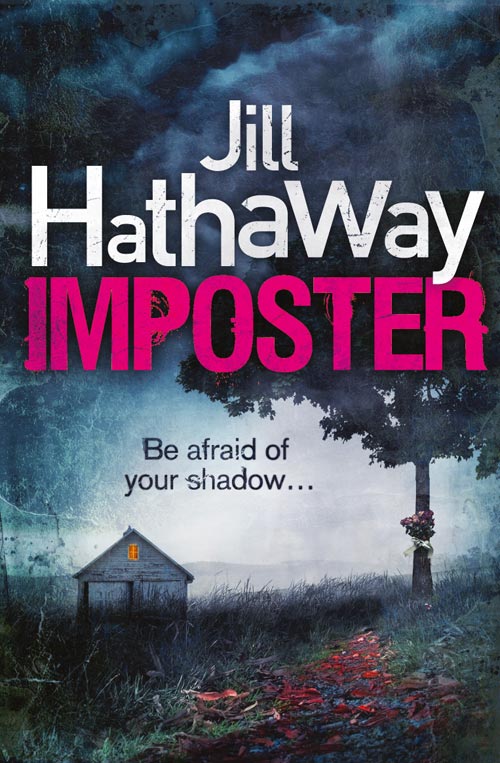
Imposter by Jill Hathaway

Imposter by Jill Hathaway is the sequel to Slide, which I read back in 2012. The series (or duology, I suppose) is about a girl who can "slide" into other people's heads and see what they're doing and (spoiler for the first book) take control of their actions temporarily.
What if a killer took control of you?

Vee Bell’s gift (or curse) of “sliding”—slipping into the mind of another person and experiencing life, briefly, through his or her eyes—has been somewhat under control since she unwillingly witnessed the horrific deaths of her classmates six months ago.

But just as things are getting back to normal, Vee has a very bizarre experience: she loses consciousness and finds herself in a deserted area, at the edge of a cliff, with the broken body of the boy who took advantage of her on the rocks below.

As Vee finds herself in stranger and stranger situations with no memory of getting there, she begins to suspect that someone she knows has the ability to slide—and that this “slider” is using Vee to exact revenge on his or her enemies.
I have to say, Slide was too many books ago for me to remember much about it other than the premise and that I enjoyed it. Luckily, the recap at the start of Imposter was both unobtrusive and sufficient to orient me to the world and characters again. The story in Imposter is set about six months after Slide which, I'm pretty sure, puts it in the same school year. But instead of worrying about prom, like Vee belatedly realises everyone else has been, Vee worries about loosing consciousness at an inopportune moment. But then, instead of blacking out and sliding into someone else, Vee starts blacking out and doing things she can't remember, almost as though she's the one being controlled by another slider.

The gist of the plot is Vee trying to work out what's happening to her while dealing with the creepy guy that tried to rape her at Homecoming (the dance) and her late mother's long-lost sister, who comes visiting out of the blue. The book deals with sexual assault between teenagers a bit, but does not delve into the issue in a huge amount of depth. Hathaway showed us some different responses from victimised girls and their friends but I felt like the message she was trying to convey got lost somewhere along the way. The story pulled its punches too much, in that respect. It's easy enough to agree that "that guy is a dangerous jerk", but then another character starts feeling sorry for him because of his family situation and I didn't feel Imposter went into enough depth on that aspect.

It wasn't a very long book and certainly not one that was at all difficult to read (I mention sexual assault but neither of the girls mentioned actually know what happened and you certainly don't see it on the page). The different plot lines are intertwined nicely and there was even one slightly surprising revelation. I did think that near the end everything wrapped up a bit too quickly. The neat ending was appropriate, but some plot elements were glossed over a bit too quickly, I found.

Anyway, Imposter was a fun light read which made a nice break from more serious short stories I've been reading lately. The series overall is enjoyable, quick and easy to read, but with a few darker streaks (people do have a tendency to die or almost die and the first book was about murder). I recommend it to fans of YA looking for something to fill in some time.

4 / 5 stars

First published: 2013, Harper Collins
Series: Slide book 2 of 2 (or at least, I can't find any evidence of further books)
Format read: iBooks ePub
Source: Purchased from iTunes a while ago

Tuesday, 13 January 2015

Between the Lives by Jessica Shirvington

Between the Lives by Jessica Shirvington is a stand-alone YA speculative fiction novel. I picked it up as a break from awards reading and accidentally stayed up till the wee hours reading it in one sitting (well, lying-in-beding).
For as long as she can remember, Sabine has lived two lives. Every 24 hours she Shifts to her ′other′ life - a life where she is exactly the same, but absolutely everything else is different: different family, different friends, different social expectations. In one life she has a sister, in the other she does not. In one life she′s a straight-A student with the perfect boyfriend, in the other she′s considered a reckless delinquent. Nothing about her situation has ever changed, until the day when she discovers a glitch: the arm she breaks in one life is perfectly fine in the other.

With this new knowledge, Sabine begins a series of increasingly risky experiments which bring her dangerously close to the life she′s always wanted... But just what - and who - is she really risking?
This was an enjoyable read. It starts out a little pedestrian as we get to know Sabine but soon becomes interesting. Sabine's two lives — in what seem to be parallel universes — are generally archetypal apart from the fact that there's two of them. In one life her family is struggling to get by, living in Boston, putting on a bit of a tough goth façade, and in the other life she comes from a wealthy family with a large suburban house with a pool and an unlimited supply of clothes. Up until the opening of the book, any physical alternations to her body carried over between worlds, so she had to be careful about apparently unexplainable injuries and leaves her hair long since she can't think of a hairstyle that would suit both lives (and dye doesn't travel over, lol). Having to live each day twice is exhausting and gets tedious but she can't see a way out.

The story starts when she breaks her arm in the poor life only to have the break not travel with her to the rich life. For the first time in her lives, physical changes are not carrying over. That her first impulse is to experiment and verify that all types of physical changes are immune made me quickly warm to her. I mean, she was a bit reckless, but at least she was methodical and probably braver than I would have been.

The story got really interesting when Sabine's experiments landed her in the psych ward because her parents thought she was suicidal and delusional (the latter because she told them about her other life). From there, the novel briefly examines the isolation and deprivation of rights of psych patients, particularly ones who have been committed, all while rich Sabine has to try to hold her life together while knowing her other life is falling apart.

Rich Sabine's life isn't perfect either. Her parents are divorced, her brothers are a bit mean to her and she can't stand having to kiss her boyfriend, despite him being "perfect" on paper. These obviously amount to fewer problems than she has in her other life, but she isn't particularly happy despite trying to convince herself that she should be. I was at one point wondering how much like Sliding Doors it was going to end up being, but it turned out to be pleasantly unique (even if the very end was a smidge predictable). Although the start of the book is level, the ending sequence was gut-wrenching in both lives. I really couldn't put it down until it was over.

I highly recommend Between the Lives to fans of YA both contemporary and speculative. The speculative element is minor enough that it could be categorised as pure contemporary (and I think it was by the publishers) but there's a distinctive "what if" science fictional vibe to it which should also engage fans of speculative fiction.

4.5 / 5 stars

First published: 2013, Harper Collins AU
Series: Nope.
Format read: Paper
Source: Purchased in Australia, probably on sale in a physical bookshop, I've forgotten
Challenges: Australian Women Writers Challenge, Australian Science Fiction Reading Challenge

Saturday, 22 November 2014

No Need to Reply by Jodi Cleghorn

No Need to Reply by Jodi Cleghorn is a collection of flash stories. They are not speculative fiction — I felt that was important to say up front. For that reason, they are also not the kind of thing I usually read but they were a pleasant enough way to pass the time. The blurb summarises the theme of the collection better than I can:
Experimental in style, structure and form, the eight stories explore the pain and euphoria of finding your voice. From a man confronting the price of a lie and a woman wrestling with the legacy of her mortality, to a young girl lost in a war of misunderstandings, the collection delves into conversations that define the struggle to be heard.
This is actually a difficult form to review. I swore off individually reviewing flash stories (like I would a short story collection) last year which doesn't leave much to say. The stories are all flash pieces, of similar length and none are super-short short stories. They are also all some amalgamation of mood and character pieces, deftly balancing the two sides of that coin.

The stories are mostly sad, but for a variety of reasons. The opening and titular story, involving letters, was my favourite and a strong opening for the collection. In all her stories Cleghorn gradually reveals character and then deftly illuminates the situation, previously ambiguous. I did write a brief note for each story, mostly as a memory aid for myself and not as a review, which I include below in case you are interested.

I would recommend this collection to fans of contemporary fiction, particularly of the contemplative/literary variety. It's short on pages — how long could eight flash pieces really be? — but not on emotional heft. A thoughtful read.

~

No Need To Reply — Unopened letters

It Could Be — Friendship contemplation over a dirty sink

Squeeze Box — War veteran remembering his wife

Holding On — Woman visiting a lover in London

Olives — A woman’s conversation and contemplation over olives

Shuffling — A Tarot reading over Skype (or whatever)

Wishing, Happily Ever After — A day at the beach from a child's perspective

Closure — Basically what the title says (includes poem)

4 / 5 stars

First published: October 2014, eMergent Publishing
Series: No
Format read: ePub
Source: Purchased from author's website
Challenges: Australian Women Writers Challenge

Friday, 24 October 2014

Zac & Mia by A J Betts

Zac & Mia by A J Betts is a contemporary YA novel about two teens with cancer. That said, I feel obliged to point out that the similarity with The Fault In Our Stars doesn't go much further than that. (But clearly, comparisons will be continue to be inevitable for any books with teenagers and cancer for some time yet.)
The last person Zac expects in the room next door is a girl like Mia, angry and feisty with questionable taste in music. In the real world, he wouldn’t—couldn’t—be friends with her. In hospital different rules apply, and what begins as a knock on the wall leads to a note—then a friendship neither of them sees coming.

You need courage to be in hospital; different courage to be back in the real world. In one of these worlds Zac needs Mia. And in the other Mia needs Zac. Or maybe they both need each other, always.
The first thing I want to talk about is the clever way in which the story is told with regards to point of view. The first third ("Part One: Zac") of the story is told from Zac's point of view, the second third ("Part Two: And") is told from alternating points of view and the final third ("Part Three: Mia") is told from Mia's point of view. On the one hand, this means that for most of the book it feels like Zac is the more central character — because he comes first — but on the other hand I've decided it was an effective way to tell Mia's story. Zac's story is much more straightforward and we learn just about everything we need to know about him up front. Mia, conversely, starts off as a mystery only glimpsed from Zac's restricted hospital room and it wouldn't make sense to present her any other way.

Australian cover (Text Publishing)
Zac is the more easily likeable character, whereas when we first meet Mia she comes across as a petulant teenager who doesn't realise how lucky she is (to have a relatively easy to deal with cancer). It's not until we get to the last third that we really learn enough about Mia's past to understand where she's coming from. I had tried, while reading, to reserve judgement until we knew all the details about her and I'm glad I did. It would have been so easy to hate her for all sorts of reasons (and honestly I'm a bit surprised Zac put up with her issues so willingly). Having said that, I suspect that if the genders had been swapped there would be a lot less male-Mia bashing on goodreads.

I enjoyed Zac & Mia. It was a quick read which I wasn't keen on having to put down. Zac's bits, in particular, were quite amusing at times and Mia's bits touched on some difficult issues. It was also nice to see how very Australian the setting was. I read the US edition so there were some "translations" (can anyone tell me what the "corn dog" bit was in the original? Were they just talking about dodgy petrol station hot dogs? But don't they also say "hot dog" in the US? I have to know!) but it was still an undeniably Australian book. The Perth and olive farm settings were particularly strong and made me want to visit Perth (which I will be next year, so yay). Except one thing confused me about the farm: there's a lot of climbing through windows, none of which seemed to have fly-screens. WTF? Does Western Australia magically have fewer insects than the rest of the country? It wasn't something that bothered me unduly, it was just... odd.

So I highly recommend Zac & Mia to fans of contemporary (non-spec fic) YA. I would also recommend readers not be too quick to judge Mia. While I wouldn't say this was a happy read — it is about kids with cancer — it wasn't as depressing as, say The Fault in Our Stars and the source of the depressing bits wasn't necessarily cancer. (Although, yes, OK, the cancer part was depressing as well.) It's also not a romance story, though there is a small underlying romantic thread.

4.5 / 5 stars

First published: 2013 Text Publishing, US edition September 2014 Houghton Mifflin Harcourt Children's Book Group
Series: No, standalone.
Format read: eARC of US edition
Source: Publisher via NetGalley
Challenges: Australian Women Writers Challenge

Monday, 1 September 2014

Afterworlds by Scott Westerfeld

Afterworlds by Scott Westerfeld hooked me when I read the extract in NetGalley's Buzz Books compilation. The second chapter was excellent (the first was more of a prologue) and when the extract left me hanging (as, I suppose, all good extracts should), I absolutely had to get a hold of it. Luckily, I was able to get a review copy and devour it in a few days. Blurb from Simon & Schuster's website because it's better than the goodreads one:
Believing is dangerous.

Darcy Patel is afraid to believe all the hype. But it’s really happening—her teen novel is getting published. Instead of heading to college she’s living in New York City, where she's welcomed into the dazzling world of YA publishing. That means book tours, parties with her favorite authors, and finding a place to live that won't leave her penniless. It means sleepless nights rewriting her first draft, and struggling to find the perfect ending . . . all while dealing with the intoxicating, terrifying experience of falling in love—with another writer.

Told in alternating chapters is Darcy’s novel, the thrilling story of Lizzie, who wills her way into the afterworld to survive a deadly terrorist attack. With survival comes the responsibility to guide the restless spirits that walk our world, including one ghost with whom she shares a surprising personal connection. But Lizzie’s not alone in her new calling—she has counsel from an extremely hot fellow spirit guide, who is torn between wanting Lizzie and warning her that . . .

Believing is dangerous.
As the blurb suggests, Afterworlds is really two novels in one. Darcy is a teen writer who got an incredible book deal for the YA novel she wrote in her last year of high school during NaNoWriMo (although, actually, I'm pretty sure NaNoWriMo is never referred to directly, but she wrote it all in November, so one makes assumptions). Because of the book deal (and the giant pile of money that came with it), she puts off going to college and instead moves to New York to do revisions and write the sequel she's under contract for. Her story is about writing and about growing up.

Every alternating chapter is a chapter from Darcy's novel. Darcy's novel is a paranormal YA with pscyhopomps and mythology borrowed from Hinduism. It's pretty dark, mostly dealing with death, ghosts and the afterworld. I think if the two novels in one were taken apart, then the fictional (-er) story could stand alone but Darcy's story probably couldn't. But putting two stories together like this allows Westerfeld to explore the process of writing and various issues that can arise. Darcy's story would not have worked without having the chapters she and the other writers were discussing there for us to read.

In exploring the process of writing, a lot of different issues arise. On the more mundane side of things, Darcy finds herself thrown into the world of adults straight out of high school and with little preparation. She worries about fitting in, being seen as a real writer and whether her book was a fluke. At the same time, she meets other writers mete out advice, support and offer friendship. And discussion about books, her book and the process of writing. Some of the issues they discuss are whether it's OK for Darcy to appropriate bits of her parents' religion (when she herself is an atheist) and base a character more on a Bollywood actor than the religious figure, and the dilemma of having made her protagonist white while she herself is Indian. Darcy also runs into the interesting problem of having the people she meets assume she's older than she is (for a long time, she doesn't tell anyone she's only 18) and treating her as such, especially by making assumptions about her already been to college. Stuff like that, which only contributes to Darcy's imposter syndrome.

The other thing the double story allows Westerfeld to do is explore the mind of the writer which leads to certain choices in their books (something, I think, which is particularly applicable to a writer's first book). The version of Darcy's novel that we are privy to is the final version that eventually gets published. But part of following Darcy's story is her rewrites and the dilemmas she has along the way. The opening chapter seems to have been the only constant thing as we hear second hand accounts of overly "Disney" scenes that Darcy removes and her endless search for a new ending. The latter was particularly interesting; we hear a lot about the endings she doesn't choose but we don't find out what ending she did write until we actually got to the end of the book and read the last chapter. It also allows for some discussion of what publishers want from authors and books and why.

There were also several answers to the much maligned question of "where do you get your ideas?" We learn fairly early on where Darcy got some of the key ideas for her novel and as the story progresses, we also learn about where the other writer-characters get various types of ideas from, where it's OK to borrow ideas from and from where one shouldn't borrow ideas. (And there's a really hilarious bit at the end when Darcy finds out something about the story she thought she was writing <spoiler redacted>.) And, of course, some of the authors may or may not bear some resemblance to certain real-life people...

Because this book deals so much with the nature of writing, I suspect writers and other book-world people will probably enjoy it more than the average reader who doesn't spend much time contemplating where books come from. I know that aspect definitely enhanced my enjoyment. I thought the two storylines fed off each other quite nicely. When one was moving a bit slowly, something exciting was happening in the other and vice versa. I've spent most of this review talking about Darcy the writer and not about Lizzie the fictional (-er) character, who plays just as important a role and has as much page time and character development. Lizzie's story is compelling and, in terms of YA tropes, reasonably uncommon — and it is her exciting first chapter (officially chapter 2) that hooked me — but it's not overly remarkable. What makes Afterworlds remarkable is the nested nature of Lizzie's narrative. By itself it would have been a quick fun read (although I should note that Afterworlds is roughly the length of two shortish YA books, so it's not that pared down), but with the other story it's a fascinating deconstruction of the YA genre and the writing process.

I highly recommend this book to writers and people interested in the book industry. Fans of YA, especially fans with writing aspirations will, I think, find much to enjoy here. I suspect readers with no interest in the writing process or readers looking for only one of contemporary YA (slash new adult for Darcy's story) or dark paranormal YA will be disappointed. This is not a straightforward book.

5 / 5 stars

First published: September 2014, Simon Pulse (Simon & Schuster)
Series: I don't think so
Format read: eARC
Source: publisher via Edelweiss

Friday, 25 April 2014

With Zombies by Michael F Stewart

With Zombies by Michael F Stewart is the final volume in the Assured Destruction trilogy. If you haven't read the earlier books or my reviews of the earlier books, Assured Destruction and Script Kiddie, probably best to skip this. Unless you want to be spoiled, in which case, please do. Also, I have a new spoiler function, which I'll be using for the first time. So if you do want to be spoiled for With Zombies, hover your mouse over the dark grey boxes below (or highlight, if you want to be low-tech). The spoiler won't be hidden if you're reading this in an email or an RSS feeder (or Tumblr dashboard), so you might want to consider clicking through, unless you don't care about spoilers.
The final book in the Assured Destruction series!

Jan Rose may already be expunged from the police department's High Tech Crime Unit. Her mother's hospitalized, and Assured Destruction's on the cusp of bankruptcy. But Jan doesn't wait on anything, she seeks out the customers who used to keep the family business afloat. That's when everything starts to go wrong.

A computer virus--aka the Zombie Worm--threatens not only her school and Shadownet, but the entire city. A skull with a chain running through its socket links a powerful gang to her former customers, and holds the secrets to why her father left and the identity of her mother's boyfriend.

To save her family and the business, Jan must determine who is friend and who is foe. And decide what type of hacker she wishes to become: Gray, white, or black. Not only her life hangs in the balance.
Oh my goodness, this book was awesome. I mean, I enjoyed the first two books but in this final volume everything really comes together. The previous two books had fairly stand-alone stories which dealt with a few events that wrapped up by the end of the book. In contrast, With Zombies builds on all the storylines that have gone before, including a few things that weren't obviously part of any over-arching story. And that was great, it was nice to see everything come together. But it wasn't the real strength of this concluding volume, or at least, not the only strength. The title, by the way, can be taken to mean a few different things, the most obvious being the zombie worm (virus) that's plaguing Ottawa.

The easiest thing to discuss is how this concluding volume raised the stakes and had more excitement in it and so forth. In many ways, this is also the least interesting thing to discuss — although I did enjoy the twists and somewhat shocking turns the story took. The best bits were the continuation of how the author dealt with Jan's mum's MS and the sensibly realistic consequences Jan suffers after the events of the first two books.

In my review of Script Kiddie, I said that the most pressing reason for me to read the third book was to find out what happened to Jan's mum (Tina) after her health took a turn for the worse. Tina's health is, indeed, a very big, looming issue in With Zombies. It's written almost as a background issue — since Jan is the main character, not her mum — but Jan is only 16–17 (she has a birthday somewhere during the book) and still needs parental supervision to guide her. On the other hand, being a teenager, she does thing she can be fairly independent. And like a fairly normal teenager, she's reluctant to rely on her mum's new (ish) boyfriend.

Trying to look after herself, keep the family business afloat, not miss any more days of school (so that she doesn't have to repeat the semester), visit her mum in hospital, make friends with and learn from hackers, and deal with a virus that has infected everyone's computers... Jan bites off more than she can chew. The fact that she's still having PTSD flashbacks to the traumatic events of the first two books (being kidnapped, fighting off and nearly shooting a paedophile) is a nice, realistic touch but doesn't help her state of mind. I really really liked the realistic portrayal of consequences.

<spoiler, mainly concerning illnesses>
Combining all that with not enough sleep and yet another traumatic event, it's hardly surprising that Jan suffers from an episode acute stress disorder and ends up in the psych ward. Really, it's perfectly logical. And better yet, there's no stigma, in this book, attached to mental illness. Once her friends realise what happened etc, they're perfectly understanding and supportive of her. Jan's main reaction to being in the adolescent psych ward is wanting to see her mum and getting out to get on with fixing things. Her mum's time in hospital for catatonic depression is similarly treated. Everyone worries about whether she'll be OK without stigmatising the depression part. It was a really refreshing take.

Also, both before and after her mum's hospitalisation, it was clear that although the MS made it harder for Tina to do things (like walk), she was still capable and had raised a smart teenager with little help. And, without spoiling too much, being ill and in a wheelchair does not stop her from saving the day. I cheered.
<end spoiler>

The last main thing I want to talk about is Jan's character growth. In the first two books she makes a lot of suboptimal decisions (they weren't all that bad) and doesn't think everything through. Things work out, but only just. In the third book, she starts off doing the same — the third book picks up only an hour or so after the second book, so it would be strange if she didn't — but after things come to a head, she is forced to learn to accept help. And then, after realising that she really doesn't have to do everything alone, she even learns to plan more than two steps ahead. Yay, Jan.

I didn't realise until I got to the end and saw the acknowledgements, but apparently both book three and the omnibus edition (as a stretch goal) are the result of a Kickstarter campaign. Especially given the minor cliff-hanger at the end of book two, I was a bit surprised by this. Of course, I'm glad it was funded and glad I saw it on NetGalley and decided to read it. I've given each instalment a different number of stars but since I'm up to the last one, I feel like I can also give a rating to the omnibus as a whole. The whole series is greater than the average of its parts (see what I did there) and I'm giving the omnibus 4.5 / 5 stars.

I highly recommend this series to fans of geeky contemporary fiction, YA and cyberpunk — although there's nothing speculative or futuristic in it. I would also recommend it to anyone interested in reading good representations of disability, chronic illness and mental illness. I'm honestly having difficulty thinking of other books that treat mental illness without social stigma. I was pleasantly surprised by this series, and if I had any geeky teenagers in my life, I would be foisting it upon them all.

5 / 5 stars

First published: March 2014, Non Sequitur Press
Series: Assured Destruction, book 3 of 3
Format read: omnibus edition (review copy)
Source: publisher via NetGalley