Showing posts with label crime. Show all posts

Saturday, 30 November 2019

Keep Calm and Kill the Chef by Tansy Rayner Roberts

Keep Calm and Kill the Chef by Livia Day is the third book in the Café La Femme series of cosy culinary crime novels. Chronologically, it follows on from A Trifle Dead and Drowned Vanilla, but in practice you don’t have to have read the earlier books to follow this one.

Scones, tea, and a stabbing…

When Tabitha Darling entered Cafe La Femme in a reality TV show hosted by an infamous “bad boy” Chef, she never expected to be a suspect in his murder.

When Xanthippe Carides quit working in a cafe to become a private detective, she never expected one of her first cases would be keeping Tabitha out of jail…

These two friends have a mystery to solve, and only one of them is telling the whole truth.

Keep Calm and Kill the Chef is told from two points of view and two timelines: we get Tabitha's point of view from before the murder and Xanthippe's from after the murder. Since Tabitha is a potential suspect in the eyes of some of the police (though otherwise a sympathetic character), and Xanthippe is investigating the murder, this sets up an interesting dynamic, especially since they're best friends. I also enjoyed the way in which this setup conveyed information to the reader — in pieces from both ends of the timeline.

Because the plot of this book is centred around a reality TV cooking competition show, there are more descriptions of ridiculous food (for various definitions of ridiculous) than the previous books in the series, and fewer descriptions of more realistic foods. This worked better for me personally since I have a lot of food problems and descriptions of delicious desserts I can't eat were less fun for me than descriptions of ridiculous desserts that most people won't get the opportunity to eat. What kind of ridiculous? Well let's just say the cover is only the half of it.

I don't usually read crime or mystery books, but I like this series for its light-heartedness (most of the time) and the geekiness of the characters. If you enjoy cosy crime books, particularly those set in locations less frequently seen in fiction (Hobart, in this case) and especially if you liked the earlier books in the series, I highly recommend Keep Calm and Kill the Chef.

4.5 / 5 stars

First published: September 2019, Twelfth Planet Press
Series: Cafe La Femme, book 3 of 3 (so far...)
Format read: ePub
Source: Bought as a Kickstarter add-on
Disclaimer: The author is a friend, but I have endeavoured to write an impartial review

Saturday, 24 November 2018

The Subjugate by Amanda Bridgeman

The Subjugate by Amanda Bridgeman is a science fiction crime novel and the first book of the author's that I've read. Although it has intrinsic science fiction elements, it felt a more like a crime book with most of the story revolving around a series of religiously-charged rape-and-murders of women.

Two troubled homicide detectives race to find a serial killer in a town filled with surgically reformed murderers, in this captivating near-future SF thriller.

In a small religious community rocked by a spree of shocking murders, Detectives Salvi Brentt and Mitch Grenville find themselves surrounded by suspects. The Children of Christ have a tight grip on their people, and the Solme Complex neurally edit violent criminals - Subjugates - into placid servants called Serenes. In a town where purity and sin, temptation and repression live side by side, everyone has a motive. But as the bodies mount up, the frustrated detectives begin to crack under the pressure: their demons are coming to light, and who knows where that blurred line between man and monster truly lies.

This was very much a crime novel with the trappings of science fiction. Yes, some of the science fictional elements were essential parts of the plot, but the murder-solving part of the story would have worked just as well without them, with only minor tweaks. The premise of religiously-motivated murders in a small and insular religious town would have worked just as easily with an ordinary prison next door instead of a brain-washing facility. The idea of brain washing criminals to make them contributing members of society is an interesting one to explore, but I didn't feel that this book explored it in much depth. The impracticality of the system was only touched upon, ditto the morality. In the end it felt more like window-dressing than an integral part of the story.

When I was reading, I thought this book started out OK with a tolerably interesting premise an a seemingly rapid pace. But it wasn't long before I started to feel bogged down in the repetitive writing style (a lot of people spent a lot of time looking at things and each other in various ways) and not that interested in the plot. Sure, the murders needed to be solved and the culprit wasn't super obvious (there was a small pool of possibilities but it seemed like they all had roughly equal means and opportunity for much of the book), but the protagonist spent a lot of time being distracted by less likely possibilities and also her own past problems.

(Also, a thing that annoyed me quite a bit was that the author talked about AR (augmented reality) and VR (virtual reality) but then fixated on AR when it was quite clear from the story that VR was what was actually happening. And then there were the haptic VR suits which made no sense as described. The gory details of how they could even function as described were completely skipped over (and given how many other extraneous details we got, that seemed particularly egregious). The whole section with the detectives investigating in "AR" struck me as both sloppy writing and a bit gratuitous.)

As you can probably surmise from the rest of this review, I did not enjoy this book. By the end, it was a trial to finish. Even ignoring the plot and science fictional aspects I mentioned above, a stronger editorial hand would have made a big difference. I can't recommend this book, but I'm sure less picky readers who enjoy reading crime could find something to enjoy.

2.5 / 5 stars

First published: November 2018, Angry Robot
Series: Don't think so
Format read: eARC
Source: Publisher via NetGalley

Monday, 17 July 2017

Matters Arising From the Identification of the Body by Simon Petrie

Matters Arising From the Identification of the Body by Simon Petrie is a science fiction crime novella set on Titan. It follows a public investigator looking into the suicide of a young woman who opened her own helmet and exposed herself to Titan's atmosphere.

Tanja Morgenstein, daughter of a wealthy industrialist and a geochemist, is dead from exposure to Titan's lethal, chilled atmosphere, and Guerline Scarfe must determine why.

This novella blends hard-SF extrapolation with elements of contemporary crime fiction, to envisage a future human society in a hostile environment, in which a young woman's worst enemies may be those around her.

Scarfe's job is investigate the suicide and the reasons leading up to it. It's told as a police procedural with a solid science fictional setting as a back drop. Petrie has written several stories set on Titan (see my reviews of his short story collections, Rare Unsigned Copy and Difficult Second Album) but I got the impression that this version of Titan was more populated and hence the story is probably set a bit further into the future than those other stories.

As expected, the scientific background is something Petrie gets spot on in this novella. As well as a well-developed setting, I appreciated the additional layers to Scarf's life. She wasn't solely focussed on her job, she also had a family and a back story that wasn't directly related to her job or this particular case, which I appreciated. Matters Arising From the Identification of the Body was fully fleshed out, for all that it was a novella and didn't take me very long to read.

As far as the crime aspect went, I pretty much only read speculative fiction crime so my opinion is a little coloured by that. This ticked all my boxes though. The mystery elements were intrinsically tied to the science fictional setting and the "solution" followed logically from what the reader had been presented with. I did guess one aspect of the resolution, but not the full explanation, which was handled well, in my opinion.

I highly recommend Matters Arising From the Identification of the Body to fans of science fiction and mystery/crime stories. It is both a procedural and science fiction, but I expect it will appeal more to fans of the latter genre than the former. This was also a more series story than Petrie's other mystery series set on a space elevator, which is significantly more tongue-in-cheek. I am looking forward to reading more stories about Scarfe and set on Titan.

4.5 / 5 stars

First published: June 2017, Peggy Bright Books
Series: Yes. The first in a series that will have at least one more instalment (there was an excerpt at the end of the book)
Format read: ePub
Source: Review copy courtesy of the author
Challenges: Australian Science Fiction Reading Challenge

Friday, 19 June 2015

The Blackmail Blend by Livia Day

The Blackmail Blend by Livia Day is a novelette set in between the novels A Trifle Dead and Drowned Vanilla. For maximum enjoyment it's probably best read after A Trifle Dead although it doesn't really contain any significant spoilers.

Six romance writers
Five secrets
Four poison pen letters
Three stolen manuscripts
Two undercover journalists
One over-complicated love life
Way too many teacups and tiny sandwiches

This shouldn't be a recipe for mayhem and murder, but Tabitha Darling has been burned once before and she knows the signs that she's about to fall into another crime scene. At least she doesn't have to worry about love triangles any more. Right? RIGHT?

The Blackmail Blend features our favourite desert-making amateur detective, Tabitha, as she organises and caters a regency high tea for a romance book launch. But of course something has to go horribly wrong and it may or may not have something to do with Stewart's grudge against the author. Before long, there's a mystery to solve and food to feed potential sources of information.

If you've read Livia Day's other books, then you know what to expect from The Blackmail Blend: a fun, food-based mystery. If you haven't read the other books, this story will give you a good idea of what to expect. It's obviously much shorter, and unlike the novels does not quite involve a murder. But it's the same style and, although there aren't any recipes, it has the same fixation on food. So if you're curious about Livia Day's books and maybe aren't sure if you'd like them, definitely give The Blackmail Blend a shot. The ebook also includes the first few chapters of A Trifle Dead to give you an even better idea of what you'd be getting into.

The Blackmail Blend was a fun read and I would recommend it to all fans of cosy mysteries. Especially anyone looking for a quick read. It fits in neatly between the two novels and has made me even more excited to read the next book in the series when it eventually comes out.

4.5 / 5 stars

First published: June 2015, Twelfth Planet Press
Series: A Culinary Crime mystery, story 1.5 out of 2 novels so far
Format read: eARC
Source: Publisher
Disclaimer: The author and the publisher are friends but I have endeavoured to write an impartial review.
Challenges: Australian Women Writers Challenge

Monday, 18 May 2015

Veronica Mars: Mr Kiss and Tell by Rob Thomas and Jennifer Graham

Veronica Mars: Mr Kiss and Tell by Rob Thomas and Jennifer Graham is the second in a two-book deal of Veronica Mars books. I reviewed the first book here. Although the mysteries are technically self-contained, the books do follow sequentially from the TV show, movies and each other. I would not recommend reading Mr Kiss and Tell without having consumed the previous cannon. A central part of the story harks back to the season 2 episode "Nobody Puts Baby in a Corner" and the events that culminate in "Donut Run" (also season 2). I had the soundtrack of the former episode playing in my head for a disturbing amount of Mr Kiss and Tell.

The Neptune Grand has always been the seaside town’s ritziest hotel, despite the shady dealings and high-profile scandals that seem to follow its elite guests. When a woman claims that she was brutally assaulted in one of its rooms and left for dead by a staff member, the owners know that they have a potential powder keg on their hands. They turn to Veronica to disprove—or prove—the woman's story.

The case is a complicated mix of hard facts, mysterious occurrences, and uncooperative witnesses. The hotel refuses to turn over its reservation list and the victim won’t divulge who she was meeting that night. Add in the facts that the attack happened months ago, the victim’s memory is fuzzy, and there are holes in the hotel’s surveillance system, and Veronica has a convoluted mess on her hands. As she works to fill in the missing pieces, it becomes clear that someone is lying—but who? And why?

I had mostly stylistic objections to the first book, which you can read about here, and while they still apply to this second book, I think the prose became a bit smoother and less jarring. Of course, that could also be a combination of fewer characters needing to be introduced for the first time and my getting used to it, but I think there was actual improvement. The only writing thing that particularly bothered me was the prologue which was very tedious to read. It featured a random guy finding the unconscious victim and very strongly followed the trope of random by-standers finding a body that is so common at the start of crime shows. It was never a thing in the Veronica Mars TV show, though, so it bothers me a bit that it has become a thing in the books (the first book also had people discovering a crime had been committed, but since there was no body it felt less noticeably like a trope).

There are a few other differences to the first book. First, there are some chapters from Keith Mars's point of view, who is off on a side quest relating to the sheriff elections held at the end of the book (he's not running in them, though, so it's not quite a season 3 finale all over again). We also see more of Logan, who was physically absent for the whole first book but is now back on shore leave. Both of these — the focus on other events in Neptune and the stronger focus on other areas of Veronica's life — add to the emotional impact of Mr Kiss and Tell in a way that was absent in Thousand Dollar Tan Line. The nostalgia surrounding the victim (as in, the fact that her and Veronica's paths have crossed before) also helped with that. There were some great lines where said character tells Veronica what she was thinking when certain TV events took place, which we only ever saw from Veronica's point of view in the show.

The book ended in a way that really makes me want more Veronica. I don't particularly care in which medium that takes place. I'd settle for another book (right now there are no book deals on the horizon, as far as I can tell) or happily take another TV series or movie, so long as whatever it is follows on sequentially from Mr Kiss and Tell. Give us more Veronica!

In my review of Thousand Dollar Tan Line, I recommended the book to Veronica Mars fans and also non-fans who enjoy crime/mystery books. A similar recommendation stands for Mr Kiss and Tell, although I'd strengthen it a bit and say fans will probably enjoy it more. If you like Veronica Mars but were a bit turned off by the first book, definitely still give this one a go.

4 / 5 stars

First published: January 2014, Allen & Unwin (Australian edition)
Series: Veronica Mars, book 2 of 2 books (and a move and 3 seasons of TV)
Format read: Paper!
Source: I think I bought it in Target because it was so cheap.

Thursday, 14 May 2015

Veronica Mars: The Thousand Dollar Tan Line by Rob Thomas and Jennifer Graham

Veronica Mars: The Thousand Dollar Tan Line by Rob Thomas and Jennifer Graham is a direct sequel to the Veronica Mars movie, picking up the story about two months after the end of the movie. I'm pretty sure this is the first time I've consumed something that continued the cannon in a completely different medium. (I know Whedon did that with comics after Buffy/Angel and Firefly/Serenity, but I haven't actually read those.) It was a strange experience, especially since many of the characters came with actors pre-visualised in my mind. Note that this review contains spoilers for the movie and minor spoilers for the TV show.

Ten years after graduating from high school in Neptune, California, Veronica Mars is back in the land of sun, sand, crime, and corruption. She's traded in her law degree for her old private investigating license, struggling to keep Mars Investigations afloat on the scant cash earned by catching cheating spouses until she can score her first big case.

Now it's spring break, and college students descend on Neptune, transforming the beaches and boardwalks into a frenzied, week-long rave. When a girl disappears from a party, Veronica is called in to investigate. But this is no simple missing person's case; the house the girl vanished from belongs to a man with serious criminal ties, and soon Veronica is plunged into a dangerous underworld of drugs and organized crime. And when a major break in the investigation has a shocking connection to Veronica's past, the case hits closer to home than she ever imagined.

It was a strange experience switching media, but even with that the characters and dialogue (including Veronica's inner monologue, though this was less distinct than in the show/movie) were spot on. And continuity-wise, everything was perfect — and I say this as someone who has practically memorised the TV series, I've watched it so many times.

The setting of Neptune is the darker, grittier setting we encountered in the movie, rather than the slightly less depressing setting of the TV show. But this also makes sense since we're thrown into Veronica's life only two months after the end of the movie. On the other hand, I found some of the descriptive passages a bit jarring and ended up semi-involuntarily skimming over them as I got into the book. For a start, describing characters I already know the appearance of from seeing them on TV was dissonant; while not inaccurate, they were generally not how I would have described the same characters, so it was off-putting. There was approximately the same amount of description for every character we meet, which was also a bit weird. I personally don't think appearances are terribly important in books in most circumstances. I tend to forget them as soon as I read them which, admittedly isn't relevant in this case. But generally, beyond knowing who Veronica is talking about when she spies dirty blond dreadlocks amid the crowd, I just don't think it's important. The fact that it was the same amount of description each time just felt so formulaic as well.

The only time I thought the description came close to being appropriate was when places were being described. Especially when it came to the kinds of settings that Veronica had to pay close attention to, such as the hotel room she was searching for clues. That said, there were still a few times when I thought the setting description also veered into too-much territory.

If this wasn't a Veronica Mars book, I definitely wouldn't be tempted to pick up the next one. The writing just wasn't up to stylistic scratch compared with what I normally read. However, it is a Veronica Mars book, which means it comes with built-in affinity for the characters and their stories. Also the snarky dialogue we've all come to know and love. So it's from that perspective that I will be reading the next book while the characters are still fresh in my head. If I hadn't bought the next book already and was forced to either wait or decide to fork out money right now, I also might not have bothered, but here we are. I recommend The Thousand Dollar Tan Line to fans of Veronica Mars and, separately, fans of crime/thriller books who aren't familiar with the show. For fans, reading the book without having seen the movie would be a risky prospect. For non-fans, there might be a few missed references, but as far as I noticed most references to past events were explained succinctly on the page.

3.5 / 5 stars

First published: 2014, Allen & Unwin (Australian edition, obviously)
Series: Veronica Mars, first book of two so far, sequel to the TV show (3 seasons) and movie. Sort of stands alone but definitely reads better if taken as a sequel.
Format read: Paper! *gasp*
Source: A physical bookshop

Friday, 31 October 2014

Drowned Vanilla by Livia Day

Drowned Vanilla by Livia Day is the second Culinary Crime novel, following A Trifle Dead which I reviewed last year. I think Drowned Vanilla is a bit less geeky, but I think I enjoyed the twists and turns of the mystery more. This isn't spec fic, by the way, it's firmly realistic crime/mystery.
It’s the beginning of a hot, hot summer in Hobart. Tabitha Darling is in love with the wrong man, and determined to perfect the art of ice cream. Playing amateur detective again is definitely not on the cards—not even when her friends try to lure her into an arty film noir project in the historical town of Flynn.

But when a young woman goes missing from a house full of live webcams, and is found drowned in the lake outside Flynn, Tabitha is dragged into the whole mess— film crew, murder victim, love life and all.

There were two girls using the internet pseudonym French Vanilla, and only one is dead. So where is the other one? Why is everyone suddenly behaving like they’re in a (quite specific) Raymond Chandler novel? And how the hell did the best kiss of Tabitha’s life end up on YouTube?

Even ice cream isn’t going to get them out of this one.
This is another mystery story in the same vein as A Trifle Dead. If you enjoyed that book, definitely read Drowned Vanilla. I believe this is what's known as a cosy mystery. Tabitha is called up by a friend of a friend to help find a girl who's mysteriously disappeared. The disappearance turns out to be only the beginning (of course) and soon Tabitha is haring back and forth across the Tasmanian country side trying to get to the bottom of things — or trying unsuccessfully not to get more involved.

As well as the mystery elements, the story involves Tabitha's quest to make all the ice cream flavours (except vanilla) and inflict them on her friends (several recipes included). And her ongoing love-life confusion. The love triangle set up in the first book continues to be a source of angst for her and slight confusion for the reader (or, well, me anyway). I don't find it an annoying addition to the story, but I found her choices odd (I'm on Team The Other One, is what I'm saying).

But basically, Drowned Vanilla was an excellent book and I pretty much read it in two sittings. There were only two things I didn't like: the dearth of dairy-free frozen deserts (somewhat inevitable), and the fact that the Greek family celebrated Christmas in December (with no comment as to why, which made me a bit sad). I feel confident most readers won't be bothered by either of those elements.

Drowned Vanilla is a gripping and entertaining read and I recommend it to anyone who likes crime novels, banter and/or Tansy Rayner Roberts' other writing. If you enjoyed A Trifle Dead, I don't think you'll be disappointed.

4.5 / 5 stars

First published: October 2014, Twelfth Planet Press
Series: Culinary Crime/Cafe La Femme book 2 (of 2 so far. On going series of stand-alones)
Format read: Paper (gasp!)
Source: Pre-ordered from TPP website
Disclaimer: Friends with people involved in producing this book, nevertheless I have endeavoured to give an unbiased review, as always.
Challenges: Australian Women Writers Challenge

Friday, 26 July 2013

The Changeling Detective by Phillip Berrie

The Changeling Detective by Phillip Berrie is a short novel about a private investigator who can change his appearance (shocking revelation based on the title, I know). It was first self-published in 2011 and has recently been picked up by Hotspur Publishing. The latter edition is the one I read. Blurb:
For a private detective, being able to change your face is a distinct advantage. The Changeling Detective thought he was unique, a mutant of sorts, like those he had read about in comics when he was younger. However, when he becomes the focus of a vile-smelling crime boss with similar abilities and meets a genuine witch, the Changeling Detective has his whole world turned upside down.

An urban fantasy/detective noir story in an Australian setting with elements of crime, horror, witchcraft and deep-time science fiction.
Above all, I would call this an action-packed read. There is a mystery element to it, of course, but it ends up focussing mostly on the origins of the detective rather than on an unrelated crime as it first looks like it might. For that reason, I'd be inclined to label it more urban fantasy than crime, although I imagine sequels might swing in the other direction. For lack of a better descriptor, I'll refer to the detective as John for the rest of this review (not his real name but one of the aliases he was using).

John is very much the only central character in this story. There are other characters present in the narrative, of course, but they all play second fiddle. Ruth, the love interest/sidekick is a fun character and provided a — I hesitate to say normal — non-shapeshifter perspective. There wasn't that much room with everything else going on for a lot of time spent dwelling on their relationship but the building blocks were certainly there. There is quite a bit of potential for sequels to develop it further.

The bad guy, Newman, was adequately dangerous and somewhat confusing, in a good way. A reasonable part of the story focussed on John trying to work out why Newman was trying to kill him. Let's just say it wasn't the reason he originally thought. And I liked that the answers left some back story to explore in sequels (which are hopefully forthcoming).

All in all, The Changeling Detective was a fun read. It's more or less what it says in the title. I recommend it to urban fantasy fans after a quick read, particularly one with a lot of action. Oh, and I should mention it's set in Canberra, which may be a selling point for those sick of New York and other American cities (or is that just me?).

4 / 5 stars

First published: 2011, this edition June 2013, Hotspur Publishing
Series: Yes. Book 1 of ?
Format read: eARC
Source: courtesy of the author
Disclaimer: Although the author is a friend, I have attempted to write an unbiased review.

Monday, 24 June 2013

A Trifle Dead by Livia Day

A Trifle Dead by Livia Day is the first crime book by renowned fantasy author Tansy Rayner Roberts. Since I love her fantasy books, I was expecting to enjoy A Trifle Dead. What I didn't particularly expect was to read it in a single evening (including staying up in bed until it was over). And I don't even like food.
Tabitha Darling has always had a dab hand for pastry and a knack for getting into trouble. Which was fine when she was a tearaway teen, but not so useful now she’s trying to run a hipster urban café, invent the perfect trendy dessert, and stop feeding the many (oh so unfashionable) policemen in her life.

When a dead muso is found in the flat upstairs, Tabitha does her best (honestly) not to interfere with the investigation, despite the cute Scottish blogger who keeps angling for her help. Her superpower is gossip, not solving murder mysteries, and those are totally not the same thing, right?

But as that strange death turns into a string of random crimes across the city of Hobart, Tabitha can’t shake the unsettling feeling that maybe, for once, it really is ALL ABOUT HER.

And maybe she’s figured out the deadly truth a trifle late…
Needless to say, I really loved A Trifle Dead. Tabitha is plucky and keeps sticking her nose into police business. It's just as well that she knows just about all of the police force, thanks to her father being the former superintendent, and can ply them with delicious café food.

I really loved the picture the author painted of Hobart. I've only visited Hobart once, but I had no difficulty imagining the various settings. It also made me want to move to visit Hobart again. The setting also extended to numerous pop-culture references, from obscure super heroes to Tumblr and Twitter. They made me smile many times. It's also this aspect of geek culture that I think makes this crime novel particularly accessible to a lot of spec fic fans (compared with some other miscellaneous crime novel). It also makes it a very "now" book, but I'm not convinced that's a bad thing.

There's a bit of a love triangle in A Trifle Dead but unlike in many other books (admittedly many of which are YA, but still), Tabitha does not spend very much time angsting about boys, or even thinking that much about them while more important things are happening. And the love triangle wasn't used to generate tension — that's what the plot was for. I was left with the overwhelming sense that this is how actual adults people might behave. This is how you love triangle.

On the topic of the crime aspect, I didn't guess whodunnit before it was revealed, although once it was, all the hints from earlier fit nicely into place. Which is mostly what I want out of a mystery. (It's no fun if you work it out far earlier than the characters and then have to heckle the page over their slowness.)

A Trifle Dead is a delightful read. I enjoyed it immensely and could not put it down. I highly recommend it to pretty much everyone. I'm sure crime fans will enjoy it if the blurb appeals, but because of the pop culture references I suspect it will have higher appeal to spec fic fans than other crime novels. I am eagerly awaiting the next book in the series.

5 / 5 stars


First published: March 2013, Deadlines (Twelfth Planet Press)
Series: Café la Femme book 1 of ?
Format read: PAPER ZOMG
Source: Purchased at Continuum!
Challenges: Australian Women Writers Challenge 2013

Thursday, 28 February 2013

The Opposite of Life by Narrelle M Harris

The Opposite of Life by Narrelle M Harris is the author's first published novel starring Lissa and Gary. I recently reviewed its sequel, Walking Shadows. I have to warn you, this review is coming from the position of having read the second book first and I can't avoid comparing the two.
Lissa Wilson has seen more than enough death in her family, so when people start being savagely killed whenever she has a night out in Melbourne with her beautiful new boyfriend, she’s determined to investigate and to make the killing stop. Even when she realises the murders must be the work of a vampire.

Things had been looking up for this librarian and 21st century geekgirl, but the murders make her remember why she prefers books to people. People leave you. People can die.

She finds herself teaming up with the painfully awkward Gary to get to the undead heart of the matter. But there are more challenges in store than Gary’s appalling fashion sense.

The Opposite of Life introduces Lissa and Gary and the vampires of Melbourne. It's a somewhat darker book than Walking Shadows. There's a lot more death in it — the story centres around a series of murders and Lissa has the poor fortune to discover several of the bodies. The associated trauma, of course, leads her to be somewhat less than chipper and besides that she has a lot of other emotional baggage to come to terms with. And since Lissa meets Gary for the first time part way through the book, there's less opportunity for entertaining interactions between them. I liked that in Walking Shadows they were well established as friends.

The vampire mythos in Harris's world is refreshing in not being overly romanticised. Vampires don't feel much because they're dead. Their brains also don't work as well and they get firmly entrenched in old habits. Modern technology has made it harder for them to not draw attention to themselves and so they're not generally inclined to run around killing people willy-nilly (any more).

Harris juxtaposes the numb emotions of the vampires with humans, mostly various members of Lissa's family, who don't want to feel any more and deal with it using more conventional means (drugs, alcohol, etc). It is the appeal of not feeling which is the lure to vampirism for some of the characters in this story, not just eternal life and youth, but the promise that it will hurt less to live an undead life. An interesting notion and not one that comes up too often in vampire fiction. Not that there aren't a lot of jaded vampires around, but often they're that way thanks to their longevity.

I enjoyed The Opposite of Life quite a bit and I look forward to reading more Lissa and Gary stories in the future. I enjoyed Walking Shadows a bit more, though, mainly because it was cheerier and caused more laughs. I highly recommend this series to anyone looking for less conventional vampire fiction. An excellent panacea for the reader sick of Edward Cullens and (YA-ified) Lestats.

4 / 5 stars

First published: 2007, Pulp Fiction Press
Series: Lissa and Gary, book 1 of ? (two so far)
Format read: ePub on my iThings
Source: Booki.sh, who have recently started allowing publishers to sell DRM free ePub files as well as their existing read in the cloud thing
Challenges: Australian Women Writers Challenge

Tuesday, 8 January 2013

After the Darkness by Honey Brown

I picked up After the Darkness by Honey Brown for a few reasons. First, I'd heard very good things about her debut novel Red Queen (which I still want to read but have yet to get my hands on), second, it was only $3 on iBooks, third, it sounded like something I could count towards my new Aussie Horror Reading Challenge and finally, I read the sample and had to keep reading. This review contains vague, non-essential spoilers.

After the Darkness is the story of married couple with three kids, Trudy and Bruce, told from Trudy's point of view. On the way home from a holiday away from the kids down the Great Ocean Road, the couple stop at a small art gallery on a whim. The art is creepy and Trudy has a bad feeling the entire time they're there. A feeling that's entirely vindicated when the owner-artist drugs and assaults them. They escape and the bulk of the narrative is about them dealing with the repercussions of what happened in the gallery.

There is a lot of interesting psychology in this book. Bruce was victimised (and fair warning: tortured and sexually assaulted, mostly off the page) to a greater extent than Trudy and had a harder time coping with it after the fact. Which isn't to say that Trudy didn't have post-traumatic stress flashbacks. Initially, though, Trudy was the one that had to hold everything together. A nice change from the woman being the greater victim. In that respect, it's also a story about how the patriarchy society makes it harder for men to express their feelings and talk about their vulnerability. I strongly feel that if their victim-roles had been reversed, the story of their respective coping would have played out very differently.

Although the book is called After the Darkness, it's really about how hard it is to leave the darkness behind. This paragraph, just as they're making their escape, highlights the early struggles they face:
The terror actually heightened as we left. The open garage gaped behind us. My body grew rigid. It was difficult to steer or accelerate. I think a part of me knew even then that we weren't leaving, not really. Some things you don't escape from.
It's also about how darkness is often contagious, touching on the way in which abuse victims often go on to re-enact their trauma as a way of coming to terms with it. And the hopelessness that comes with fearing for your life. And having to relate to people in a life you have to pretend is normal. This line illustrates that sentiment nicely, when Trudy is trying to relate to her friends again:
Brutality somehow managed to make a mockery of everything that was not brutal.
The prose in After the Darkness was lovely. From the beginning, before anything bad happens, when I knew Brown was sprinkling in a bit of mundane normality for later comparison, I was immediately engaged. Trudy and Bruce started off as a happy couple, which deteriorated into a traumatised couple later on. However, I liked that their experience didn't drive a wedge between them. They hadn't suffered in the same way, but they didn't drift apart in their suffering. Indeed, the fact that the other was the only one who could come close to understanding what happened, kept them close.

It's debatable how much of a horror book this is and how much psychological drama or thriller. But there's a lot of the feeling of creeping dread (which I think is my new favourite term for describing horror), and many horrific elements, coming both from within and without, so I would definitely class it as horror. Which isn't to say readers of crime or contemporary books won't enjoy it and count it within their genres.

I highly recommend After the Darkness to anyone after a creepy read. I read it quite quickly and found it difficult to put down. I think it will appeal broadly to readers of several genres, particularly those that enjoy their creepiness and psychological drama in a contemporary Australian setting.

4.5 / 5 stars

First published: January 2012, Penguin Australia
Format read: ebook
Source: iBookstore (link)
Challenges: Australian Women Writers Challenge 2013, Aussie Horror Reading Challenge


Tuesday, 18 September 2012

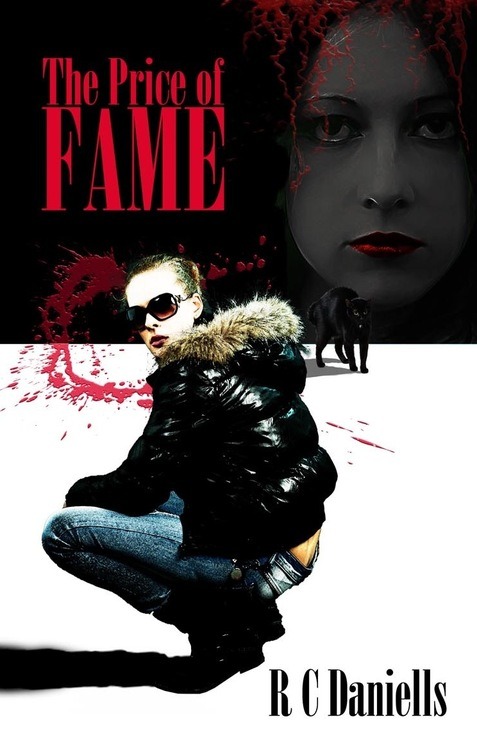
The Price of Fame by RC Daniells

The Price of Fame by RC Daniells is epic fantasy writer Rowena Cory Daniells' first foray into paranormal crime. Just as her fantasy books are intense and difficult to put down, so was The Price of Fame.

The Price of Fame is the story of Antonia, a film school graduate who moves from Queensland to Melbourne to make a documentary about the Tough Romantics, an 80s punk band whose singer was murdered just before they made it big. Accompanied by former classmate and hunk, Monty, as her camera and effects man, she begins to dig into the band's past. Her initial plan is to focus on their early creative dynamic and steer clear of the sensationalist murder angle. She even rents the house in St Kilda where the band lived before they were famous. Of course, the more she digs into the past, the more it becomes apparent there's more to the singer's murder than generally known.

As Antonia and Monty learn more, their present-day story is interspersed with a story of events in the 80s centred about, O'Toole, the taxi driver who was accused of the murder. Through his eyes we see the visceral reality of life on the Street (Fitzroy St) for the fringes of society in St Kilda. As you might expect (especially if you know anything about Melbourne and St Kilda's history), that world is full of drugs and casual violence.

Daniells has O'Toole not originate in that world but move there after his divorce. In some ways, he's not so different to the people around him, but he's different enough that he's still a bit of a tourist. This is a clever move on the author's part as it gives the reader a more easily relateable character who can report on Street conditions without being entirely a part of the scene (and neatly sidesteps any issues of authenticity compared with writing from the point of view of a Street personality).

I have a soft spot for stories set in Melbourne, my home city. I might not have spent all that much time in St Kilda, but I've walked down Acland Street and bought pastires, and been to Luna Park and ridden the same roller coaster the band rides in the book (a few safety-induced renovations later). The language Daniells uses is distinctly Australian, particularly in the slang all the characters use, which I also enjoyed.

Overall, I enjoyed The Price of Fame and read it in two sittings, finding it difficult to put down, especially once the 80s story started to unfold. It has minor paranormal elements, but they don't really become pivotal until the end and could almost be dismissed as magical realism (if paranormal elements aren't your sort of thing). This easily one of the most realistic novels (as opposed to speculative fiction) I've read this year. (Shift by Em Bailey is the only other one that competes.)

I strongly recommend The Price of Fame to anyone who enjoys mystery/crime novels, paranormal fiction and/or historical Melbourne.

5 / 5 stars

A copy of the book was provided by the author for review.

Friday, 6 April 2012

Mercy by Rebecca Lim

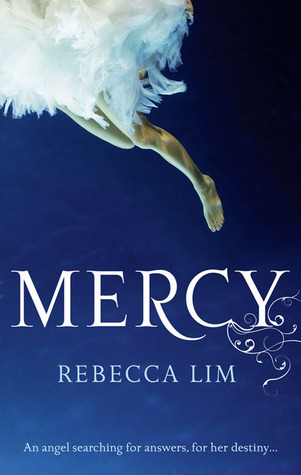
Mercy by Rebecca Lim, is a YA book about Mercy, an angel (or something like that, it’s not entirely articulated, despite what the blurb says). She is forcibly thrust into random girls bodies and forced to take over their lives. She never knows where she’ll wake up, who she’ll have to be or why. This time, she wakes up as Carmen, a star soprano singer in a high school choir. The choir is visiting the town of Paradise for a concert and preparations and Mercy/Carmen finds herself billeted with the family of a girl who disappeared two years previously.

Although everyone else assumes the missing girl is dead, her twin brother believes she is alive and hasn’t given up searching for her. Mercy realised that he’s probably right and joins him in his search and attempts to work out who the culprit is.


Although this is a YA book, it reminded me a bit of serial killer books I’ve read in the past (Michael Marshal [Smith] springs to mind), but that’s possibly more a reflection of the dearth of crime novels I’ve read. Nevertheless, I found something appealing about Mercy’s attempts to work out who did it and try to get inside the criminal’s mind. That aspect of the novel was dark in a different way to, for example, YA dystopias. It was about the darkness inside one person than the darkness of an oppressive society or a war.


Lim has a more poetic writing style than most other YA books I can think of. Also, written in first person, Mercy spends more time philosophising than other YA characters that spring to mind (possibly because she’s not really a teenage girl). She also spends time wondering who and why she really is, who the mysterious probably-angels that she dreams about are and so forth. I didn’t find those parts as exciting as the who kidnapped the girl parts and at times they got a bit tedious.


On the other hand, I enjoyed the parts where she didn’t care what the bitchy girls thought of her/Carmen and didn’t respond as insecurely as Carmen would have. There was pleasure to be derived from watching the bitchy popular girl squirm. Oh, and Mercy isn’t a terribly kind person, which, if anything, added to her character, in my opinion.


Overall, Mercy is a well-written book. I’ll be picking up the sequel although my impression is that almost all the supporting characters will have changed. Hopefully Mercy’s character will be enough to carry off the dramatic change (according to the blurb and Shaheen’s review).


4 / 5 stars

Saturday, 10 March 2012

Thief of Lives by Lucy Sussex

Thief of LivesThief of Lives, by Lucy Sussex is part of Twelfth Planet Press’s Twelve Planets collection. I have previously reviewed other Twelve Planets, Nightsiders by Sue Isles and Bad Power by Deborah Biaccotti.


Thief of Lives is a collection of four short stories without common setting. I have to admit, this collection was closer to literary realism than I usually read. Thematically, women are central to all the stories in a variety of different ways. Karen Joy Fowler eloquently explains what Sussex writes about in the introduction:


Fantasy, history, crime. The relationship of women to men. The relationship of women to women. The relationship of the writer to her subject.


Alchemy


The first story in this collection is set in ancient Babylon. It’s about the best perfumier in the city, one of the first chemists in the world. She is watched, throughout her life by an immortal who has singled her out the smartest person in Babylon and is fascinated by her mind.


The Fountain of Justice


This story can be most accurately described as crime. It’s set around underworld shootings in an Australian city (I would guess Melbourne, but I don’t think it ever said), and told from the point of view of a legal aid.


The Subject of O


This story is about the main character’s understanding of her sexual experiences, when she starts to see them in a new light.


Thief of Lives


The titular story was my favourite of the bunch. The main character is PA to a successful urban fantasy novelist who has been sent to Bristol to conduct some research. While there she discovers a psychic vampire preying on the town; a creature who sucks the life out of its victims before committing their lives to paper. It’s a fascinating exploration of writers drawing inspiration from their surroundings that interweaves reality and fantasy.


~


Twelfth Planet Press has been putting out some really excellent collections with their Twelve Planet series and I suspect I may end up buying and reading all twelve as they come out. (Four down, one to go and seven more yet to be published…)


4 / 5 stars