Tuesday, 13 March 2012

Australian Women Writers Reading and Reviewing Challenge - Roundup 1


For those of you keeping track, you may have noticed that my purple progress bar on the left has filled up all the way, which means I have reached one of my goals for the Australian Women Writers Challenge. Of course, I’m not going to stop here. For a start, my science fiction challenge is incomplete and for an end, I’m going to keep reading books by Australian women regardless, so I might as well continue keeping track in the spirit of the year.

So consider this the first roundup post of the year. I’m not sure how many I’ll end up with. At least three, I suppose (one for SF and probably another fantasy/misc one), but who knows what the rest of the year will bring.

Also, I know I’ve called it “Fantasy/Misc”, but really all the books on this list have some fantastic elements. A breakdown by subgenre would go something like this:

YA Fantasy

  • EonaEonEon and Eona by Alison Goodman — although as per my discussion in the review, I think they’re borderline YA/adult

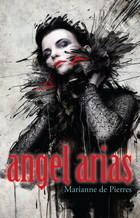
  • Angel Arias by Marianne de Pierres — has science fictional elements but gothic fantasy sensibilities

Urban Fantasy
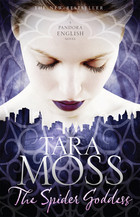
  • Spider GoddessBlood CountessThe Blood Countess and The Spider Goddess by Tara Moss — set in New York with vampires and other paranormal beings. You can’t get more urban than that

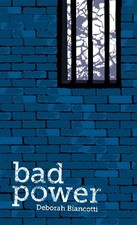
  • Bad Power by Deborah Biancotti — superheroes and most of the stories were set in Sydney

More difficult to classify fantasy

Hoodwink

  • Hoodwink by Rhonda Roberts — it’s more noir crime time travel fiction, but I didn’t include it in my SF challenge because technology/other SF aspects aren’t central to the story at all
Debris

  • Debris by Jo Anderton — sort of steampunk except instead of further evolving steampunk tech, magic was discovered and used industrially
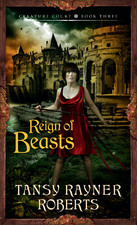
  • Reign of Beasts by Tansy Rayner Roberts — I’d call it high fantasy, but my personal definition of high fantasy doesn’t overlap with many other people’s. Also, it’s set in fantasy sort-of-Rome, so no pseudo British/French/German castles/knights/etc, which I’m told is refreshing (I tend to avoid a lot of traditional fantasy for reasons I’m not about to go into)
  • Thief of Lives by
    Lucy Sussex — two stories were fantasy, two were, um, what’s the word for non-genre? Contemporary? Literary? I don’t know. Well, one was crime (but not a mystery).
Books read in order with review links:

  1. Eon by Alison Goodman (review)

  2. Eona by Alison Goodman (review, same page as above)

  3. Hoodwink by Rhonda Roberts (review)

  4. Debris by Jo Anderton (review)

  5. The Blood Countess by Tara Moss (review)

  6. The Spider Goddess by Tara Moss (review)

  7. Bad Power by Deborah Biancotti (review)

  8. Reign of Beasts by Tansy Rayner Roberts (review)

  9. Thief of Lives by Lucy Sussex (review)

  10. Angel Arias by Marianne de Pierres (review)
I’m pretty pleased that I’ve reviewed all the books so far. In the past, I haven’t really got into the swing of writing reviews so I wasn’t sure how that aspect of the challenge would go. I’m glad to report it wasn’t at all a chore.

Neither, of course, was reading the books. Really, for this category, this was less of a challenge than an excuse to buy some books. My SF challenge is more challenging, but mainly because there are fewer books to choose from (and more of the fantasy books are RIGHT THERE on my shelf already).

Here’s to the next ten books!

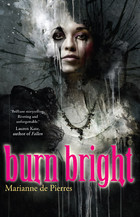
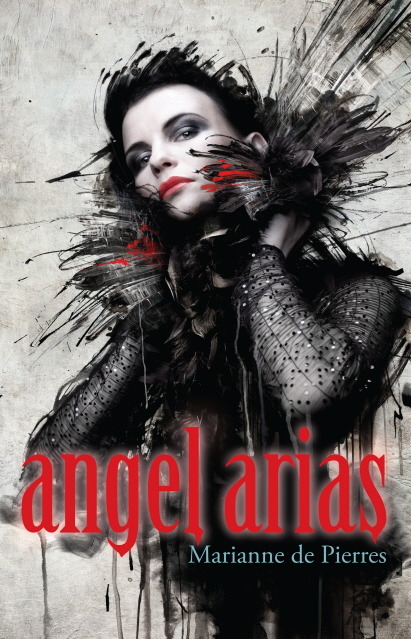
Angel Arias by Marianne de Pierres

Angel Arias by Marianne de Pierres is the sequel to the excellent YA gothic novel Burn Bright. Here is the blurb for Burn Bright from the series website burnbright.com.au (that .au is important, by the way):


Retra doesn’t want to go to Ixion, the island of ever-night, ever-youth and never-sleep. Retra is a Seal – sealed minds, sealed community. She doesn’t crave parties and pleasure, experience and freedom.

But her brother Joel left for Ixion two years ago, and Retra is determined to find him. Braving the intense pain of her obedience strip to escape the only home she’s ever known, Retra stows away on the barge that will take her to her brother.


When she can’t find Joel, Retra finds herself drawn deeper into the intoxicating world of Ixion. Come to me, whispers a voice in her head. Who are the Ripers, the mysterious guardians of Ixion? What are the Night Creatures Retra can see in the shadows? And what happens to those who grow too old for Ixion?


I really enjoyed Burn Bright and gave it 4.5 stars when I read it. My favourite aspects were Retra’s guts — she trains herself to endure pain to escape her ultra-conservative family! — and the world. Reading Angel Arias now, after having read a few other dystopian novels like Divergent (by Veronica Roth), I was struck by how much more organic the dystopia in de Pierres’ Night Creatures is. For example, in The Hunger Games, the inherent set up of the society leaves a lot of people miserable and, in my opinion, means that a revolution was inevitable, whether or not Katniss was present for it (to be fair, this is also implied in the books). However, in the mainstream society in the Night Creatures books, people on the surface aren’t so much oppressed as deeply religious and conservative. Yes, there’s more going on below the surface that we don’t learn about until later but still, aside from the odd geography, it feels like the sort of society that could arise naturally.


Sure, not everyone is happy, especially not some of the teenagers, but that’s why they run away to Ixion, to party in an endless night. In many ways, running away from familial restrictions is a very typical response and doesn’t feel at all forced. Even the secret messages in the music and in the banned propaganda is exactly the sort of thing teenagers would be into. Of course, not everything is as it seems (or there wouldn’t be much story) but it felt more plausible than, for example, the artificially divided society in Divergent.

Angel Arias picks up soon after Burn Bright left off. Retra, now calling herself Naif, scratched the surface of her world in Burn Bright and what she saw wasn’t quite what she expected. Now, she is determined to find out what’s going on and why.


I started reading Angel Arias about a year after I read Burn Bright and it took a little while for me to catch up with what was happening (mostly, I’d forgotten everyone’s names, so there were a few confused chapters in which I had to relearn who was who). There’s not many words wasted on introduction, so I recommend not waiting too long between books. (And the ending to Burn Bright should encourage you to pick up the next book quickly anyway.)


Angel Arias has more prolonged action than the first book and sort of less mystery. What I mean is, for most of the book, the same mysteries (about the world and about some the characters’ motivations) remain and the story focuses more on what I would loosely term an adventure. Some new characters are introduced and a vague (and non-YA-standard — Naif isn’t the apex) love triangle is set up.


I found the action portions of the novel (that is to say, all of it) well paced; it certainly had me turning the page and wondering who would get to the end of it unscathed. I was surprised at how much of the truth (probably) we learnt about the world by the end. I was expecting more mysteries to remain undiscovered until book three. That made it feel a little bit like Angel Arias was filling the gap between books one and three without spending quite as much time dwelling on the issues of identity and pleasure which were central to Burn Bright. On the other hand, that makes me hopeful that perhaps some of the other questions subtly hinted at in Angel Arias will be central to book three. I look forward to spending more time in the world.


I enjoyed Angel Arias but strongly recommend reading it after Burn Bright and not as a standalone. Book three, possibly called Blaze Dark, will hopefully be out by the end of the year (official release date TBC).


[Side note: I was originally going to count this towards the SF Australian Women Writers Challenge, because Burn Bright struck be as being more science fictional than magical, however. While I stand by that assessment, I feel the overall sensibilities aren’t strongly technological so I’ve decided to count Angel Arias towards my fantasy/misc AWWC.]


4 / 5 stars

Saturday, 10 March 2012

Thief of Lives by Lucy Sussex

Thief of LivesThief of Lives, by Lucy Sussex is part of Twelfth Planet Press’s Twelve Planets collection. I have previously reviewed other Twelve Planets, Nightsiders by Sue Isles and Bad Power by Deborah Biaccotti.

Thief of Lives is a collection of four short stories without common setting. I have to admit, this collection was closer to literary realism than I usually read. Thematically, women are central to all the stories in a variety of different ways. Karen Joy Fowler eloquently explains what Sussex writes about in the introduction:


Fantasy, history, crime. The relationship of women to men. The relationship of women to women. The relationship of the writer to her subject.


Alchemy


The first story in this collection is set in ancient Babylon. It’s about the best perfumier in the city, one of the first chemists in the world. She is watched, throughout her life by an immortal who has singled her out the smartest person in Babylon and is fascinated by her mind.


The Fountain of Justice


This story can be most accurately described as crime. It’s set around underworld shootings in an Australian city (I would guess Melbourne, but I don’t think it ever said), and told from the point of view of a legal aid.


The Subject of O


This story is about the main character’s understanding of her sexual experiences, when she starts to see them in a new light.


Thief of Lives


The titular story was my favourite of the bunch. The main character is PA to a successful urban fantasy novelist who has been sent to Bristol to conduct some research. While there she discovers a psychic vampire preying on the town; a creature who sucks the life out of its victims before committing their lives to paper. It’s a fascinating exploration of writers drawing inspiration from their surroundings that interweaves reality and fantasy.


~


Twelfth Planet Press has been putting out some really excellent collections with their Twelve Planet series and I suspect I may end up buying and reading all twelve as they come out. (Four down, one to go and seven more yet to be published…)


4 / 5 stars

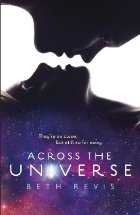
Across the Universe by Beth Revis

Across the UniverseI picked up Across the Universe by Beth Revis after hearing lots of good things about it. I suspect these high expectations contributed in part to my not enjoying it quite as much as I’d hoped I would.

The premise of the story is: a generation ship is being sent to another planetary system. It will take 300 years to get there so the colonists are cryogenically frozen for the duration. One of the main characters, Amy, an American teenager from our near future, is coming along on the ship because her parents are crucial to the colonisation effort.


But Amy is woken up not on their new home, but fifty years before they land. Someone has tried to kill her by unplugging her. But why? Other frozen people aren’t as lucky as Amy when they’re mysteriously unplugged. Who is trying to kill the colonists and why? It’s bad enough that she’s on a ship with planetfall so distant, now Amy is desperate to find out who the murderer is before her parents are unplugged.


The other main character is Elder, around Amy’s age and destined to be future leader of the generation ship. He is under the tutelage of the current leader, Eldest, who is mean, dictatorial and has little faith in Elder’s leadership abilities. Like Amy, Elder also wants to find the murderer and prove to Eldest that he will be a good leader.


I wasn’t expecting this book to be quite as much of a dystopia as it was. I don’t want to spoil anything, but when she wakes up, Amy finds herself in a very different world, and not just because it’s a spaceship. All the people we relate to as normal are dubbed crazy and relegated to the psych ward and all the allegedly normal people act more or less like mindless drones. Why? Until Amy comes along, it doesn’t occur to Elder to question the state of things, but once he does, his perception of society quickly unravels.


Some interesting aspects of society are examined inAcross the Universe, for example what can happen when the dissemination of information and human history is strictly controlled. At one point, Amy is attacked and I thought the way that was handled in the text was very well done. She was traumatised and doesn’t just shake it off like a few too many books would have had her do.


On the other hand, one aspect that irritated me a little was related to Eldest being an unlikeable person and obviously a dishonest leader. I very much felt it was unnecessarily to compare him to Hitler to emphasise how unworthy of being admired he was. Yes, it also served the purpose of showing how Earth’s history had been re-written, but that was done elsewhere with other historical figures, so it just felt like lazy writing to invoke Hitler.


Although some aspects, like the above, were a bit heavy-handed, I enjoyed the general exploration of the sociological ramifications of the generation ship society. There were some secrets aboard ship that, as a reader familiar with dystopian concepts, I worked out before the main characters, but at no time were these drawn out tediously, which was nice.


One thing that really peeved me, however. It was the blatantly wrong science Revis chose to make vital to the plot. It made me angry. I can’t explain it without spoilers, but if you don’t mind being spoiled, I wrote a ranty detailed blogpost about it at my SF Writers’ Guide to Space blog.


Overall, I’m undecided as to whether to read the sequel. On the one hand, I am interested to read about the sociological implications of the events towards the end of the first book. On the other hand, I suspect my blinding rage against the sciencefail might mar the experience a little. It is remotely possible that Revis could redeem some of the science, but I don’t have much faith in that. I might decide after a) reading some reviews of A Million Suns and b) waiting a bit for the fury to die down.


3.5 / 5 stars

Thursday, 1 March 2012

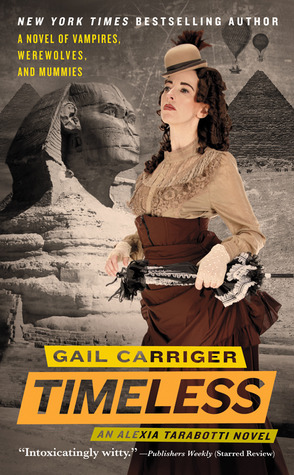
Timeless by Gail Carriger

Timeless is Gail Carriger’s fifth and final instalment in the Parasol Protectorate series and what a delightful read it has been. For those of you unfamiliar with the setting, the Parasol Protectorate series is set in a Victorian steampunk London (mostly) in a world openly populated by vampires, werewolves and ghosts (the supernatural). Alexia, the main character, is a preternatural which means that her touch temporarily cancels out supernatural abilities and their accompanying immortality. And she probably doesn’t have a soul.

SPOILER WARNING: Minor spoilers in the form of which characters are alive/undead at the start of the fifth book after their lives/undeaths were threatened in previous books. Also a bit of a spoiler for part of the ending of Heartless, the previous book, which I will indicate with SPOILERCAPS. No spoilers for Timeless itself, however.


~


The cover proclaims that Timeless is “a novel of vampires, werewolves, and mummies” and it does not lie. We again meet Alexia and all our favourite characters from the earlier books and are introduced to Alexia’s daughter, Prudence, who is now two years old and quite the entertaining little toddler.


What I found most surprising was how much of the over-arching plot from the earlier books was pulled into this conclusion. Hanging threads I hadn’t even really noticed were hanging were neatly tied together along with seeds planted in earlier books. At the same time, this volume turns Alexia’s adventures into the perfect stage for Carriger’s next series in the same universe (Parasol Protectorate Abroad, due out in the latter part of next year), which I believe will follow Prudence at least in part.


So now, after mysteries which were simmering beneath the surface in the earlier books are brought to the fore, I am simply dying to know what happens next.


There is a lot of interesting character development in Timeless, in particular we see Biffy step further into the spotlight and gosh he is quite adorable. He is easily my favourite character in Timeless and I hope that when Carriger revisits the Parasol Protectorate world we’ll see more of him (which seems likely, really). I can’t say more without spoilers, but as my husband will attest, Biffy scenes frequently caused me to voice miscellaneous sounds of adoration.


~


THE NEXT PARAGRAPH CONTAINS A SPOILER FOR THE END OF HEARTLESS. YOU SHOULD BE SAFE IF YOU JUST SKIP IT. HELPFUL TILDES ARE HELPFUL.


~


Another interesting and slightly more subtle character development we see is Akeldama’s in his new role as Prudence’s adopted father. At first it seems as though things are ticking along as usual at the Akeldama household, but towards the end we see interesting new depths to the character whether he wants us to or not.


~


THE MINOR SPOILER IS PAST, YO.


~


Have I mentioned I heart Biffy to bifs bits?


Anyway, Timeless is a hilarious manner-punk read in which, among other things, Alexia discovers that having a magic toddler can make propriety quite challenging. And that you can’t get a decent cup of tea in Egypt. I laughed out loud several times, I was moved by the sombre parts, wailing in disbelief at one point, and made many Biffy-adoring noises.


If you haven’t started reading the Parasol Protectorate books, I can’t imagine why not. Who doesn’t like hilarious steam-/manner-punk? If you have kept up with the series, get out and get your hands on Timeless by whatever (legal!) means necessary. It’s a satisfying conclusion to the series and an enticing set up for the next. And, quite frankly, don’t you want to read more of Alexia’s adventures?


5 / 5 stars

Monday, 27 February 2012

The Best Science Fiction of Isaac Asimov: As Chosen by the SF Grand Master Himself

This is not a proper review.


Most of you probably don’t know that I collect Isaac Asimov’s fiction. It all started when I read my mum’s copy of Foundation at the age of 12 and now, after much trawling of second hand bookshops (and a small amount of buying new copies of his still in print books — actually, I think I only have 6 new books: the Foundation trilogy because my mum’s was falling apart, Nemesis, Forward the Foundation and Gold, a posthumous short story collection) I have fifty odd Asimov books. On my shelf (which I would photograph if it wasn’t in another country), the books are arranged by first publication date and divided into short story collections and novels. And, as I have just ascertained, 40% of my Asimov books are short story (/novelette/novella) collections.


Asimov was very prolific in his lifetime, writing many short stories. And yet, it is often the same stories which keep getting collected (or anthologised). So when I find a collection I don’t already own, I’m always sceptical as to how many new-to-me stories it will contain (which doesn’t stop me acquiring it… twice I’ve bought a collection in which I’d already read all the stories). Happily, The Best Science Fiction of Isaac Asimov as chosen by the grand master himself did contain some new stories which I will talk about shortly. It also contained autobiographical notes about why he liked the stories and what compelled him to write each one. I always find these autobiographical notes, which turn up in quite a few of his collections, fascinating. Even if I had read all the stories before, I would have been keen to get this collection just for these notes.
The stories I hadn’t read previously fell into two categories: nice short stories I hadn’t come across before, and terrible, terrible pun flash stories. Really dreadful puns at the end of stories which were otherwise not bad so long as you ignored the last line. (And one was a reference to some before-I-was-born pop culture and went straight over my head.)


Obituary


There was one really stand out short story I wanted to talk about: “Obituary”. This story was first published in 1959 and is about the wife of an also-ran physicist. Asimov mentions in the introduction that this was one of his favourite stories but that when it was published it elicited not a single reaction.


I would have welcomed even a thumbs-down gesture, or a Bronx cheer—just something to indicate that they read it at least. But—nothing.


My theory is is that “Obituary” was ahead of its time and so, perhaps, people weren’t sure how to react to it. When reading I guessed that maybe it was written in the 70s (the collection being published in the late 80s) and the original publication of 1959 surprised me.


Why? Well, “Obituary” is somewhat of a feminist story.


The protagonist’s husband is a physicist who never quite got the recognition and acclaim he deserves (he keeps on not getting credit for his work). The story opens after he leaves the university, sets up his own laboratory and starts working in secret. All prompted by reading the obituary of one of his colleagues; he wants to finally get some recognition for something.


Working in his private lab, he makes his discovery, then fires his assistants and forces his wife to help him to ensure secrecy. He has an elaborate plan to gain not only acclaim in his field, but also world wide fame.


Throughout all this, he is emotionally abusive to his wife (going as far as threatening to kill her if his plan falls through). Given that the story is told in first person from the wife’s point of view, I suspect this was not a theme oft explored in 50s SF (although what do I know? Please correct me in the comments if I guessed wrong). Despite being in a threatened position, the protagonist has agency and, y’know, her own thoughts beyond those ascribed by societal gender roles. At no point is she a damsel in distress.


All this made it the kind of story that particularly appeals to me. (And, no spoilers, but the end, while not exactly a surprise, was well played out.)


~


I want to add a final note about Asimov as a writer. I may have started reading his books because they were there, but I’m glad I kept reading them, especially during some of those formative years. Asimov’s books might not be populated with a plethora of female characters, but what female characters he did write, while still somewhat a product of their times, tended to be competent, have agency and brains and not be damsels in distress. (Arkady in Second Foundation, Susan Calvin in several robot stories, the Soviet scientist whose name I’ve forgotten in Fantastic Voyage II: Destination Brain…) And his books weren’t racist, which, it turns out, is rare among classic SF, especially any involving the USSR. (For example, two authors who have made me ill with their racism are Lester del Rey in Step to the Stars and Greg Bear in Eon — Bear’s women in Eon also weren’t real people which didn’t help.)


So, not quite being a proper review, I don’t want to give a star rating to The Best Science Fiction of Isaac Asimov. It doesn’t seem fair given I skipped (rereading) more than half the stories. I’ll ending by saying Asimov is great and if you haven’t read any of his books, you should. I recommend starting with Foundation or just about any collection of short stories.

Sunday, 26 February 2012

Reign of Beasts by Tansy Rayner Roberts

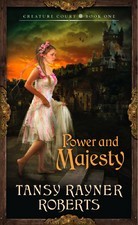
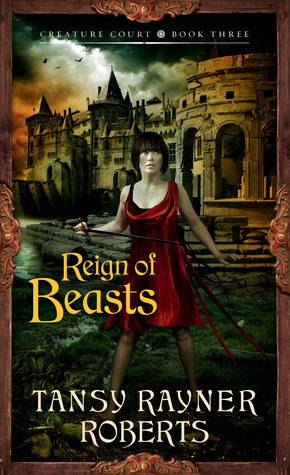
Reign of Beasts, by Tansy Rayner Roberts, is the final instalment of the Creature Court trilogy. The series is excellent and a testament to how fantastic a writer Roberts is.

It’s not the kind of series where you can pick up the third (or second) book without having read the first two. Luckily for me, I read book one — Power and Majesty — and book two — The Shattered City — when they came out (roughly six months apart, I think). It’s a bit hard to review a third book without saying something about the other books and the series as a whole.

Power and Majesty introduced us to the day world and three friends who, between them, make dresses and garlands for the city’s many celebrations. Then we meet the Creature Court and their dysfunctional night world. It also had a particularly memorable opening of a naked youth falling out of the sky. (How’s that for a hook?)

The following is copied from my LibraryThing review of The Shattered City, which I wrote immediately after I finished reading.

Velody is struggling to keep the two aspects of her life separate: by day she makes dresses and by night she leads the Creature Court in the battle against the sky. It’s bad enough that most of the Creature Court would sooner tear each other apart than help each other. Now the sky is stepping up it’s assault on the city, making it harder for Velody to keep her two worlds separate. It isn’t long before the two worlds start bleeding together.

A secret war is being fought every nox between the Creature Court and the sky. The day folk have no idea it’s happening, but if the Creature Court isn’t careful, then normal people die. If the Creature Court loses the battle, then the whole city will be destroyed.
Dresses, violence, flowers, blood and sex. What more do you want?

This book doesn’t beat around the bush with the action and the reader is quickly launched into the midst of the story. Unlike the first book, there wasn’t a need for setting up the world or back story quite so much, so I felt it had good consistent pacing, whereas book 1, Power and Majesty, was a little slow at the start.

Two things really stood out for me with this book. The first was the juxtaposition of the day world with the events of the night (or nox as it is referred to). During the day we see Velody and her two friends making dresses and garlands and the Duchessa presiding over the never-ending festivals of the day world. During the nox, Velody and her Creature Court fight the sky which is trying to swallow up the city. The days are ordinary (or at least, as ordinary as days get in fantasy books) and the nox are full of violence, sex and blood, often simultaneously. The writing switches between the two flawlessly, even when the two worlds start to collide.

The other stand-out excellent aspect of the book was how unflinchingly the author doled out cruelty to her characters. Building on the troubled pasts established in book one, The Shattered City takes it to the next level by pushing all the characters harder and further and mercilessly inflicting emotional pain on them. It was very well done.

Overall, this was an excellent read and I highly recommending to anyone who didn’t hate the first book. And if you haven’t read the first book, what are you waiting for?

And that brings me to Reign of Beasts. I really felt this series improved with each book. Where the first two books were spent building the world and setting up all manner of conflicts, in the final instalment Roberts meticulously dismantles her world. It’s quite masterfully done and I will be surprised if Reign of Beasts doesn’t win any awards.

Throughout the series, Roberts sets up a variety of conflicts of all magnitudes. In the first book the challenge for Velody seems to be overcoming prejudice, expectations and the established group dynamics to become the first female Power and Majesty. While this bleeds into the second and third books, priorities shift and by the end of Reign of Beasts we learn who the true enemy really is. (No spoilers, but it takes a lot of twists and turns to get there.)

Roberts has populated her world with a variety of strong, wilful, petty, manipulative, animalistic, brutal, loyal characters who all elicit our sympathy at some point and our distaste at others. They are all far from perfect, yet none are quite pure evil. (Incidentally, of the three original girls, Rhian was my least favourite in Reign of Beasts and Delphine, unexpectedly, my favourite.)

A review of Reign of Beasts would be incomplete without some comment on the structure of the novel. There are two simultaneous time lines running through the book, the main one in the “present” immediately following on from The Shattered City, and the other recounting events from the Creature Court’s (pre start of main events) past. All the threads were expertly woven together to enhance the present story and convey interesting (as well as relevant) backstory.

The Creature Court trilogy is definitely worth a read for all fans of fantasy. It’s dark and brutal and pretty dresses are relevant to the plot.

5 / 5 stars

Wednesday, 15 February 2012

Bad Power by Deborah Biancotti

This book is part of Twelfth Planet Press’s “Twelve Planets” series. It is a collection of five short stories all set in a common world. I bought the ebook version and it’s also available in paperback and for Kindle.

Bad Power is set (mostly) in modern Sydney in a world where some people have an inexplicable power: talking to dead people, seeing the future, immortality, and a few less common powers. And, although most of the protagonists have super powers, none of them are heroes (well, with one possible exception).


A few words about each of the stories:


Shades of Grey


The first thing that struck me about Biancotti’s writing when I started reading this story was the cinematic quality of the mental images it conjured up. The opening story grabbed me from the first paragraph and thrust me into the collection.


In “Shades of Grey” we meet Esser Grey, a wealthy businessman who recently discovered his power and is testing the limits (and not really finding any). We also meet detective Palmer, a recurring character throughout the collection who keeps being given the weird cases. (I enjoyed the continuity of seeing Palmer in later stories and also the mentions of Grey later on.) This story really sets the scene for the rest of the collection.


Palming the Lady


In this story, a young medical student, Matthew Webb, goes to the police and is directed to detective Palmer. He is being stalked by a homeless woman who knows where he’s going to be and gets there before he does. But his future isn’t he only future she sees.


Web of Lies


We meet Matthew again, this time just after his father’s death when he and his mother and discovering how to live again, free from the old man’s dictatorship. They both struggle with it in different ways and both learn there is more power in their family than they had realised.


As a side note, Matthew is mentioned in passing the last two stories. After the tumultuous stories in which he played a central role, it was nice to read that he had a slightly more stable future ahead of him. A neat way of letting us know that it was all OK in the end.


Bad Power


This is the only story not set in modern Sydney and also the only one written in first person. It also stood out for me as being the one story with a less thoroughly described setting — I was slightly confused about the time period it was set in, but turns out my first instinct was correct.


It’s a story about someone with a self-described “bad” power and about the horrible things people do to each other. This was easily the most horrific story in the collection and, for that reason, my least favourite. However, the link the previous and subsequent stories made it a relevant and integral part of the collection. I think without this story, the whole collection would have felt slightly more bland. (And it does make a good title for the collection as a whole.)


Cross That Bridge


This was the story that, when I heard a brief description on Galactic Suburbia, made me want to read the whole collection. Max works for the police. His power is the ability to find lost children, even when there is no discernible trail. As one might imagine, people find his talent creepy and he is constantly under suspicion.


~


It’s hard to choose a favourite story in this collection. Aside from “Bad Power”, they read almost like chapters from the same book (except with resolutions and different protagonists). The idea of normal people discovering superpowers isn’t a new one (cf Heroes), nor is the idea of an organisation such as the Grey Institute hinted at in the background throughout the collection (cf X-Men, Union Dues, etc). However, Biancotti pulls the world off uniquely and fascinatingly.


I really enjoyed the exploration of human nature and the wildly different coping mechanisms the powered characters employ. My favourite take home message? Power is not always empowerment.


4.5 / 5 stars

Monday, 13 February 2012

Wanted: One Scoundrel by Jenny Schwartz

Originally posted here.


I stumbled upon this book quite by accident after following a link that took me to the author’s website. When I saw she had written a steampunk novella set in Australia, how could I possibly resist buying it? I didn’t really need the added incentive of being able to count it towards the Australian Women Writers Challenge. And before you argue, steampunk counts as science fiction because of the technological and scientific sentiment inherent in (the characters) inventing new old tech.


Wanted: One ScoundrelWanted: One Scoundrel by Jenny Schwartz is set in and around the Swan River colony — mostly in Perth and Fremantle. The protagonist, Esme, is the daughter of a gold prospector and inventor who struck it rich relatively recently. She is also a suffragette spearheading a political party with the goal of giving women and non-Anglos rights and votes.
The story opens with her realisation that, since her main political opponent has somehow arranged for all political debates to take place at gentlemen’s clubs, she needs a male spokesperson to be a figurehead leader. Unfortunately, all her present male supporters are too busy with their own affairs to devote sufficient time to actually leading a political party. So, with the aid of her captain uncle, she set about finding herself a newly arrived scoundrel (“fresh off the boat” — would that there weren’t other connotations to that phrase) whom she intends to pay to be her puppet.

Enter Jed. A conveniently unknown American recently arrived from England with her uncle’s (steam-powered) ship. Jed quickly agrees to be the front-runner for her political party and a friendship/attraction blossoms between them (well, it is also a romance story).

Esme’s main rival is an old-money easterner (insofar as there is any aristocracy in pre-federation Australia, he seems to be a prime example). Unlikeable to the bone, he doesn’t seem to realise that Esme finds his desire to prevent anyone that isn’t male, white or rich (or, really, anyone that isn’t him or his friends) from voting abhorrent. He started off merely an arrogant prat, but this escalated for the climax in an exciting way, I thought. (No spoilers.)

The steampunk elements are scattered throughout the story. For example there are the steam powered boats that make it to Swan River from England in a matter of weeks, not months, miscellaneous minor steam-powered contraptions and even forays into electricity and magnetism (Tesla gets a very brief mention, too). From a scientific point of view, I found no obvious faults, although I’m a little sceptical of the kangaroo-inspired land vehicle mentioned at one point.

As I implied at the start, the thought of a steampunk story set in Australia made me very keen to read this and I was not disappointed. I hereby encourage more Australian authors to write Australian steampunk. Steam + gold rush allows for a wealth of material to draw from.

Speaking of the gold rush, being an easterner myself, I only really know a bit about Victoria’s gold rush, and next to nothing about Western Australia’s (arguably, I know more about Western Australia’s current mining boom than any of the past). It was nice to read about a slightly different gold rush. I liked that Schwartz put in a significant Indian population in Perth (cf Chinese miners in Victoria).

The writing was ever so slightly clunky in places, mostly when there was an instance of head-hopping (between Esme and Jed) within the same scene. I also found the story got more amusing as it went along — after a slightly uneventful beginning — and I really enjoyed the climax and ending. It had me laughing out loud a few times in the second half. I loved Esme, who was strong, progressive (obviously) and kept her head in trying circumstances. Overall, I recommend this to anyone with a passing interest in steampunk or Australian history.

4 / 5 stars.

Thursday, 2 February 2012

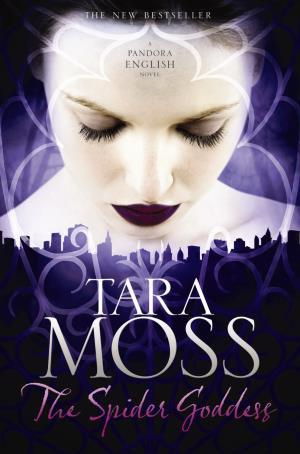
The Spider Goddess by Tara Moss

The Spider Goddess is the second book in Tara Moss’s Pandora English series. I started reading it immediately after finishing the first book, The Blood Countess (gosh aren’t those iBooks links at the back of the book to the next in the series handy?), which I have reviewed here.


The Spider Goddess is a fun, quick read in a very similar vein to The Blood Countess. Pandora English is a supernaturally gifted assistant at a New York magazine who is only starting to discover and develop her powers. She lives with her preternaturally youthful great aunt in a supernaturally resonant (or something like that) mansion apartment in a mysteriously enshrouded suburb of Manhattan.


Once again, we meet Luke, her hansom civil-war soldier ghost friend and watch her run-ins with some of the evil (but cheerful) vampire supermodels from the first book.


The main way in which this book differs from the first are: the different villain (a spider goddess, as the cover suggests), and the overarching plot progression. The background plot moves slowly, which suggests to me that Moss plans on writing many more Pandora English books before she’s done. I have absolutely no objection to this and look forward to reading them all.


The foreground plot, however, moves quickly from strange happenings in the background to creepy (-crawly) discoveries and then the climax. If anything, I felt the book was too short. I had stopped paying attention to the page numbers down the bottom when I reached the climax and thought I had more to go. It made me wonder why the bad guy villain was dying already, until I realised I was actually close to the end. So, really, the worst criticism I have is that I didn’t want it to end.


A nice thing about this series is that it is heavily populated with a broad range of mostly strong female characters. From the main character, to her great-aunt/mentor to the villains and her bosses at work. It’s nice to see. (Half or so of the male characters are love interests, I think.)


Overall, it was just as fun as the first book, although I think I enjoyed the first book slightly more for non-specific reasons of taste. Also, if you’re uncomfortable reading about hordes of spiders, this may not be the book for you.


Finally, although part of a series, I think this book stands alone fairly well. However, it does contain a few spoilers for the first book. Reading in order would maximise enjoyment of the earlier book, but reading out of order wouldn’t compromise enjoyment of this book, in my opinion.


4 / 5 stars