Friday, 6 April 2012

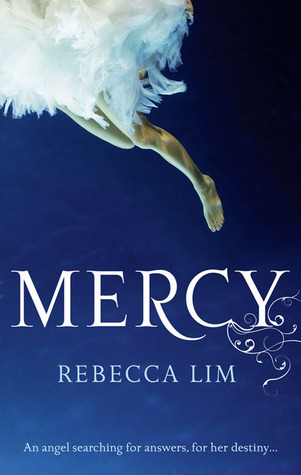
Mercy by Rebecca Lim

Mercy by Rebecca Lim, is a YA book about Mercy, an angel (or something like that, it’s not entirely articulated, despite what the blurb says). She is forcibly thrust into random girls bodies and forced to take over their lives. She never knows where she’ll wake up, who she’ll have to be or why. This time, she wakes up as Carmen, a star soprano singer in a high school choir. The choir is visiting the town of Paradise for a concert and preparations and Mercy/Carmen finds herself billeted with the family of a girl who disappeared two years previously.


Although everyone else assumes the missing girl is dead, her twin brother believes she is alive and hasn’t given up searching for her. Mercy realised that he’s probably right and joins him in his search and attempts to work out who the culprit is.


Although this is a YA book, it reminded me a bit of serial killer books I’ve read in the past (Michael Marshal [Smith] springs to mind), but that’s possibly more a reflection of the dearth of crime novels I’ve read. Nevertheless, I found something appealing about Mercy’s attempts to work out who did it and try to get inside the criminal’s mind. That aspect of the novel was dark in a different way to, for example, YA dystopias. It was about the darkness inside one person than the darkness of an oppressive society or a war.


Lim has a more poetic writing style than most other YA books I can think of. Also, written in first person, Mercy spends more time philosophising than other YA characters that spring to mind (possibly because she’s not really a teenage girl). She also spends time wondering who and why she really is, who the mysterious probably-angels that she dreams about are and so forth. I didn’t find those parts as exciting as the who kidnapped the girl parts and at times they got a bit tedious.


On the other hand, I enjoyed the parts where she didn’t care what the bitchy girls thought of her/Carmen and didn’t respond as insecurely as Carmen would have. There was pleasure to be derived from watching the bitchy popular girl squirm. Oh, and Mercy isn’t a terribly kind person, which, if anything, added to her character, in my opinion.


Overall, Mercy is a well-written book. I’ll be picking up the sequel although my impression is that almost all the supporting characters will have changed. Hopefully Mercy’s character will be enough to carry off the dramatic change (according to the blurb and Shaheen’s review).


4 / 5 stars

Thursday, 5 April 2012

Short Stories


I bought a Kobo Touch ereader on my way home from a distant trip. Partly because it’s hard to have an 8 hour layover without buyingsomethingother than necessary food (I also bought a giant box of Jelly Belly jelly beans at half the price of duty free, whoo), and partly because carrying paper books to read on long-haul flights is tedious. For one thing, they weigh more and take up more room and, for another, being shoved in my bag leads to more damaged covers (sacrilege!) than leaving them at home. Also, I have a terrible tendency to choose the wrong sort of books to take on flights, but I’m not blaming that on the dead trees.

Usually I read ebooks on my iPhone or iPad (on the go vs at home when hubby isn’t using it) and that’s not going to change. I have absolutely no problem reading on backlit screens and, hey, my iPhone still has more pixels than the Kobo making it smoother on the eyes. So why did I buy a Kobo? Battery life. It takes 24+ hours to fly from Europe to Australia and neither iThing can survive that many hours of near constant use (even in airplane aeroplane mode) and still have juice for emergencies upon arrival. Sure, I could bet on not reading the whole way — perhaps trying to sleep or availing myself of inflight entertainment — but sleep doesn’t always happen and not all flights have TVs in seats, especially overnight flights (and out of 24+ hourssome of that has to be overnight). So I bought a Kobo, which I just spent too many words justifying.

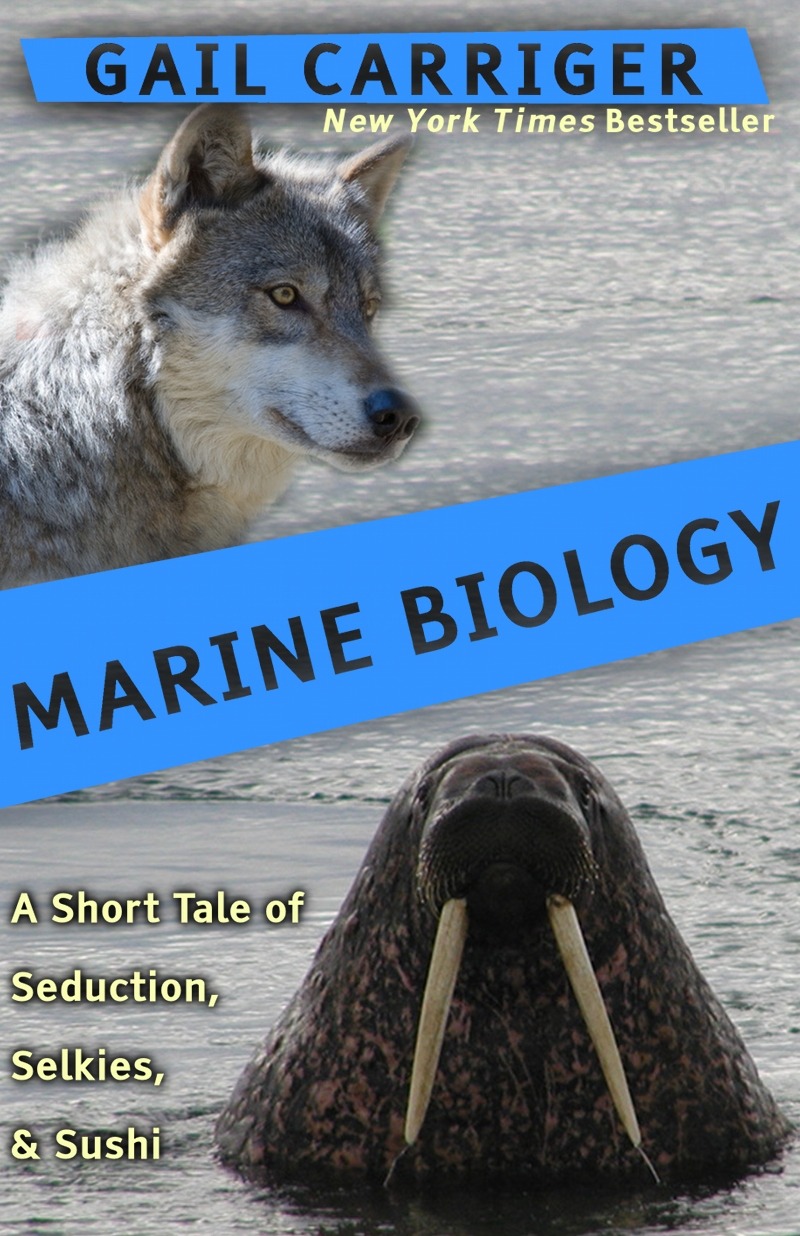
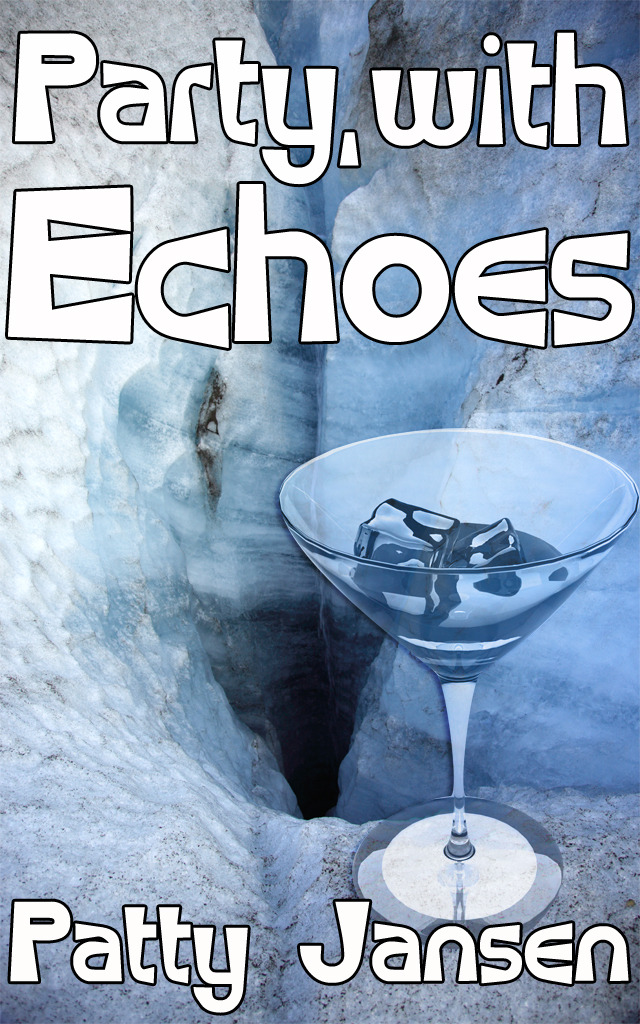
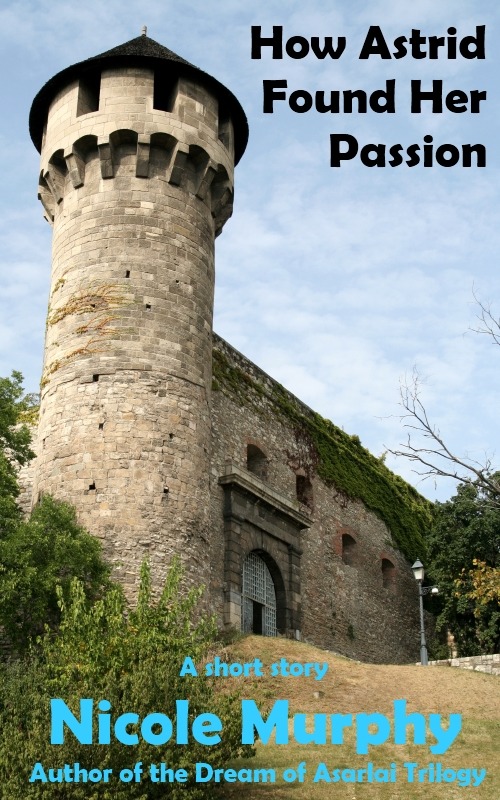
I wanted to test out my new Kobo but didn’t want to commit to reading an entire novel on it. After loading all my books on it (well, most of them; I discovered I don’t have the best ebook backup/filing system) I thought why not read some short stories that I’ve downloaded or bought and not got around to? The covers above are the stories I’ve read in the past couple of days.

“Grandeur” by Jo Anderton

This is a prequel teaser for Debris(see my review here). It gives a bit of a taste of the world and the characters, particularly the main character, Tanyana. Of course it contains no information crucial to the story in Debris, but I found it an interesting backstory. You can download it free as a PDF from the author’s website.

“Marine Biology” by Gail Carriger

This is a great story with adorable characters. Alec, the main character, is an in-the-closet werewolf who really doesn’t fit in with his pack. There are also merpeople and selkies. It’s similar in sensibilities to Carriger’s Parasol Protectorate books, but set in the modern world and with marine supernaturals included. (Side note: the cover works particularly well on the black and white Kobo e-ink screen.) You can buy it for 99 US cents on Smashwords.

“Party, With Echoes” by Patty Jansen

This is a science fictional deep-sea adventure set on Europa. It has weird alien bacterial colonies and an ice cave. Fun, quick read. You can download it free (for now?) on Smashwords.

“How Astrid Found Her Passion” by Nichole Murphy

A fantasy story about an Australian woman who gets mysteriously transported to a magical kingdom and inadvertently tangled up in a local dispute between mages and a lord. Another fun, quick read. You can also download this story free (for now?) on Smashwords.

Wednesday, 4 April 2012

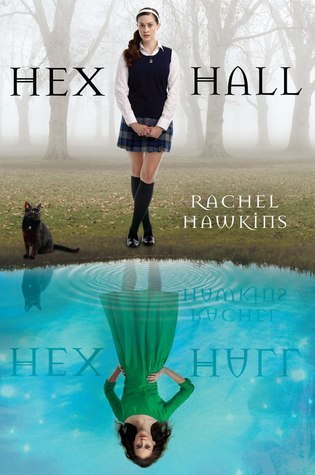
Hex Hall by Rachel Hawkins

I admit part of the reason I picked up Hex Hall by Rachel Hawkins was because of the smashing cover. This is one of the few times I’ve preferred the US cover to the Aus/UK one (see small Aus/UK cover below on the left). The other reason was — thanks to jet lag — I felt like an easy/fun YA read.

And what a fun read it was. I wasn’t expecting Hex Hall to be quite as laugh-out-loud funny as it was. From the prologue, in which we learn just why Sophie is sentenced to the supernatural reform school, to a plethora of sarcastic comments, I was sniggering or laughing every few pages.


The story is told in first person from the point of view of Sohpie, a witch who did one too many spells in front of humans. But she was raised by her human mother after her parents broke up and didn’t get to speak to her father until she came into her powers. Before arriving at school, she had never met any other supernaturals (the school has witches, shapeshifters (including werewolves), faeries and vampires) and knows very little about their society. She quickly manages to antagonise the three bitchy witches, but at least she’s room-mates with the only vampire student so they can be outcasts together.


Then things start to go wrong. A student is attacked and Sophie’s new vampire friend is the prime suspect. Sophie doesn’t believe her friend did it, but everyone else does. No one will listen when Sophie starts looking for the real culprit.

As I said at the start, this was a really fun book. Without getting overly gloomy, it touches on racial tension (faeries and shapeshifters don’t really get along, hopefully something that will be explored more in the sequels) and fear of the unknown (humans who find out about supernaturals tend to get homicidal on them). And of course, there’s the whole being an outcast element. Actually, it was nice that the vampire girl was more of an outcast than Sophie started off being. Too many books have the Chosen One also being a complete outcast. At least while Sophie has elements of Chosen One-ness, it’s mainly the bitchy coven that hates her straight away, not the whole school.


Did I mention funny? I’ve ordered the second book, Demonglass, from Book Depository and look forward to reading it.


4.5 / 5 stars

Monday, 2 April 2012

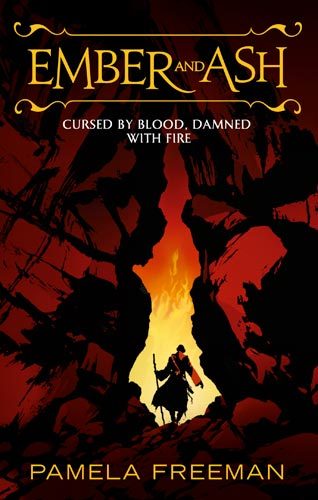
Ember and Ash by Pamela Freeman

Ember and Ash by Pamela Freeman is a set twenty years after the events at the end of the Castings Trilogy (Blood Ties, Deep Water and Full Circle). It is technically a sequel, and some of the characters from Castings do pop up again, but it very much stands alone. I think the main thing one would miss from not reading Castings, is a deeper exploration of the past colonial racism and oppression. Oh, and there are some spoilers for who survives the world almost ending in Castings, although not all the prominent Castings characters rate a mention.
A few words on comparisons with the Castings Trilogy first. Castings is a story about colonial invasion, ongoing racial oppression and revenge. It’s much more violent than Ember and Ash and found some aspects (there was a lot of — realistic — sexual violence) very haunting. In terms of social world building, parallels between the Travellers, the oppressed original inhabitants of the Domains, can be drawn to just about any displaced indigenous peoples. However, in Ember and Ash there is less overt racism and, while still relevant, race plays a less life-defining role.

Ember and Ash is more a story about places and the powers that reside in different landscapes. The Ice King, who made some background appearances in Castings, is much more prominent, ditto the Power of Fire. It’s also a story about how tenuous the status quo can be and how legal equality does not necessarily translate to social equality, especially when things start to go wrong.
This is the kind of book you can’t read too quickly lest you don’t absorb all of it. (By corollary, I probably shouldn’t have read it on long-haul flights and while travelling, but I have an unfortunate tendency to pick the wrong books to take on aeroplanes.) Freeman’s writing style is somewhat literary, dwelling on magical symbolism as much, if not more, than action. In some ways, it reminds me of Margo Lanagan’s Tender Morsels, but in style more than content. There was also a lot of lovely imagery, some of it bordering on metaphorical.

The story opens with Ember’s marriage ceremony going awry when the Power (spirit/god) of Fire makes an appearance and takes back the gift of fire until such time as Ember makes the long journey to Fire Mountain. And incidentally, he incinerates her husband. And so begins the quest. Aided by Ash, her sort-of-cousin-but-technically-nephew-and-not-by-blood-anyway, and a few other friends, relatives and guards, she sets off. Meanwhile, the people left behind — her father the Warlord, her mother the seer — are left to organise some means of surviving the not-as-distant-as-it-previously-seemed winter without any fire.

I very much liked Ember as a character. Raised to be a Warlord’s wife by her father and skilled in negotiation, her Traveller mother makes sure Ember knows other practical skills as well. Ash starts off thinking of Ember as his silly highborn cousin who cares only for a good marriage. As the story progresses and Ember is given the chance to prove herself on their journey, he comes to respect her intelligence and character. It was very well done and an interesting transition to watch.

I enjoyed Ember and Ash, but I think I liked Castings more. In the end, despite a similar style, they are structured very differently with different aspects of world-building as story foci. On the other hand, Ember and Ash was more consistently enjoyable since, unlike Castings, it didn’t have interludes of miscellaneous cameo characters between PoV character chapters. In Castings those broke up the flow a bit, despite it all coming together at the end. The romantic plot line in Ember and Ash is unconventional (I don’t think I can explain how without spoilers) but more prominent than any in Castings.

Ultimately, I think more nuance will come through in Ember and Ash if you’ve read Castings before it, but Castings is not for the faint of heart and not necessary to enjoy Ember and Ash.

4.5 / 5 stars

Sunday, 25 March 2012

Power Unbound by Nicole Murphy

Power Unbound, by Nicole Murphy, is the second book in the Dream of Asarlai trilogy. You can read my review for the first book, Secret Ones, here.

Where Secret Ones followed Maggie and Lucas, Power Unbound shifts to following Ione, Maggie’s best friend, and Stephen, a gadda who is about to sit for the highest test of power. Although there are a few scenes in Austin, Texas, most of this novel is set in Ireland. Despite the shift in character focus, the overarching plot continues on from the first book, featuring more prominently, and all the characters we like from the first book pop up again.


Ione is unique among gadda for having particularly weak power, despite coming from an old and powerful family. She came to terms with it long before the story started and spends her time working as a computer programmer. She’s also a widow and has a young (10 or 11 year old) son to look after. It would be easy to say that Ione offers more depth of character than Maggie did, but I think what really makes this story better is Murphy’s development as a writer. (And the fact that Lucas’s past in the first book wasn’t exactly straight forward.)


The whole novel hangs together better and I found it more enjoyable. The romantic plot line is less linear and, while we know that the two characters will end up together (it is paranormal romance, after all), the obstacles in their way felt less artificial. It was more about them being silly than external circumstances, which I liked.


The fantasy plot line was more action-packed than in Secret Ones. The danger was greater and the stakes were higher. Also, more progress was made working out who’s been behind all the evil shenanigans. Unlike the first book, it felt less like the relevant characters were flailing around not getting anywhere. (To be fair, in the first book the trouble was quite different in nature and didn’t initially seem to be connected to the overarching plot.)


The end of Power Unbound set up the final book in the trilogy quite well. Unfortunately, I have to wait a few months before I can read it (I want a matching paper set, not the ebook), but I definitely want to know what happens next and how everything is resolved. Oh, I should also mention that while the overarching plot follows on from Secret Ones, I think it’s possible to read Power Unbound by itself. It contains some spoilers for the first book, but doesn’t actually rehash all the details, so you could still read the first book afterwards. Of course, it’s better to read them in order but if, for example, you’re particularly interested in the Ditmar eligible works which include Power Unbound and the third book, Rogue Gadda, you could probably get away with skipping Secret Ones.


Overall, Power Unbound was an enjoyable read. I definitely recommend it to fans of paranormal romance.


4 / 5 stars

Saturday, 24 March 2012

Secret Ones by Nicole Murphy

Secret Ones is Nichole Murphy’s debut novel, published by Harper Voyager (Aus) in 2010. It’s a paranormal romance novel set in Ireland and rural New South Wales. Being a paranormal romance, rather than straight urban fantasy, the romantic plot line was significantly more prominent than what I usually read, which was an interesting change of pace.

The main character, Maggie, is one of the gadda, a race of magic-wielding people who look human, but aren’t (and can’t interbreed). Generally, the gadda start their magic training at the age of thirteen, then progress through levels of examinations as they gain more control of their powers. Maggie, however, didn’t want to start when she was thirteen. She stubbornly chose to finish her ordinary human schooling before entering the gadda world at eighteen. Even after joining the ranks of magic users, she continued to pursue human studies, slowing down her magical studies. The result is that, refreshingly, she isn’t a teenager (it’s possible I’ve been reading too many YA urban fantasy novels with be-all and end-all romantic plotlines) and nothing that happens is particularly unrealistic in terms of her reactions and how she deals with it etc. (And of course, there are more sex scenes than in YA.)


The male lead is a physicist (entirely biased yay!) who crosses the heroine’s path when he takes a research position in Australia at her grandfather’s university. Smart, smoking hot and with a dark past, he makes an excellent foil for Maggie and, to an extent, offers an outsider’s perspective on the gadda.


I found the structure of Secret Ones different to other urban fantasy books I’ve read (admittedly, I can only think of one other paranormal romance book I’ve read recently, so it could just be me). The romantic plot line seemed to be more or less tied up before the climax of the fantasy storyline happens a bit suddenly and then there are more ramifications than I expected. Which isn’t to say the novel was badly paced; quite the contrary, in fact. I didn’t feel bored at any point and there weren’t any paragraphs I wanted to skip. It was just different to what I’m used to.


Secret Ones is book one in a trilogy, but the other two books, Power Unbound and Rogue Gadda focus on other characters. That means that, while the overarching plot isn’t resolved, there was no cliff hanger at the end. Sometimes it’s nice not to feel like the world will end if you don’t pick up the next book straight away. …That said, I think I will pick up Power Unbound next.


I found Secret Ones to be an enjoyable, light read. I recommend it to anyone who feels like a bit of paranormal romance or urban fantasy.


3.5 / 5 stars

Sunday, 18 March 2012

Torn by Amanda Hocking

Torn is the second book in Amanda Hocking’s Trylle Trilogy. You can read my review of Switched, the first book, here.


Torn picks up the same day Switched left off. It carries on much in the same vein, except that instead of Wendy being new to the world of the Trylle and kept in the dark, she quickly learns more pieces of relevant back story. A few new characters are introduced, but the strength of this book is in developing existing secondary characters and unfurling the world’s history.

An aspect I found interesting was Hocking’s development of Wendy’s romantic prospects, something I didn’t quite notice until I was more than halfway through Torn. In Switched, while Wendy seems to have a small crush on every appropriately-aged boy, there’s only one relationship that she’s particularly invested in (romantically) and that seems to go anywhere. In Torn, she continues collecting crushes on all the appropriately-aged boys (actually, only one new one is introduced, but still). However, the romantic plotlines are less straightforward than what I’ve seen in other YA books. This is not a case of her having to choose between two options. For a start, there are three options. But more seriously, her choice isn’t between boy A and boy B who both have things to recommend them. It’s a choice combining duty, love, availability, how well the boy treats her and a few spoilery factors. It’s also not a final choice, this been only book two of three, but I like the added complexity and the way in which it’s explored. Once I picked up on it, Torn  became much more interesting.


It also helped that the book seemed to encourage sensible romantic choices. Unlike Twilight (it always comes down to Twilight, doesn’t it?), when one of the boys keeps pushing her away for her own good, she doesn’t sulk and throw herself off a cliff, she gets annoyed (and, OK, sulks a bit, but that’s understandable) and moves on. This quote, a piece of advice given her by her mother, sums up the series’ attitude well:


“I don’t need love or a man to complete me, and someday you’ll find that’s true for yourself. Suitors will come and go, but you will remain.”


Given that she’s seventeen, the attitude of “your life isn’t made or lost based on one romantic relationship” is healthy and refreshing.


Overall, I found Torn just slightly less exciting than Switched. I’m not sure I can quite put my finger on a single reason why, but it was still very enjoyable. I look forward to reading the third book when it comes out.


4 / 5 stars

“I didn’t think there were real trolls.” I furrowed my brown, trying to remember what Finn had told me about trolls before. “I thought they were just myths.”

“Really? After everything that’s happened? So you pick and choose what mythology you believe in?”


Torn, Amanda Hocking (review)

Saturday, 17 March 2012

Switched by Amanda Hocking

For those of you that don’t keep up with book/publishing news (or that have been living under a bookless rock), Amanda Hocking is one of Amazon’s self-publishing success stories. She sold a pile of self-published Kindle ebooks on Amazon — enough to quit her day job — and then last year snagged a publishing contract with a traditional publisher (Pan Macmillan). They are re-releasing some of her self-published books and, as I understand it, also publishing new books of her later in the year.


Switched is the first book in the Trylle Trilogy, the re-released trilogy (my copy, if you’re wondering, is a Tor ebook from Book Depository). From what I’ve read on Amanda Hocking’s blog, the traditionally published editions aren’t significantly different from the originals, especially story-wise, but are better edited with some extended/reworked scenes and each book contains a short story set in the same world. The funny thing is, I knew most of the above without having any idea, beyond YA fantasy, what Hocking’s books were about.


Trolls. Instead of vampires or werewolves or [insert over-used supernatural creature here], the Trylle Trilogy is about a seventeen year old girl who learns that she isn’t human but a changeling troll (or Trylle in polite society). Well, at least that explains why her human mother tried to kill her when she was six.

I was quite taken by Switched from the start. Wendy, the narrator, has a compelling voice and, although it’s not a comedy, the book was unexpectedly funny. Wendy has fairly definite ideas about who she is, even after she accepts that she’s a Trylle with some magic powers. Those ideas tend to conflict with what other people want and expect from her, which is a source of a lot of the tension in the book.


I was quite pleased when the opening was a bit of anti-Twilight; Wendy is appropriately creeped out by the strange boy at school staring at her and when he watches her at night, labels him a stalker. It’s a healthy response that I felt I could get behind. (Of course, it turns out there’s a reason the strange boy is being strange, but it was still nice to see Wendy react appropriately. Unlike Bella.)


Wendy didn’t exactly have an easy childhood, particularly with her mother being institutionalised after trying to kill her. She never fit in at any of the schools she was ultimately kicked out of and had never quite managed to make friends. That part might be standard fare for secretly magic children, but, far from locking her in a cupboard under the stairs, her brother and aunt have always been good to her. They are a large reason why she doesn’t want to leave her old life, even when faced with the promise of magic powers and confusingly alluring boys.


I liked that from Wendy’s very first step into the new world of the Trylle, not everything is sunshine and roses. It’s a nice change from the everything-looks-peachy-on-the-surface-but-something-is-dodgy-underneath-it-all trope.


Ultimately, Switched is a fun, well-paced and funny read. I’ve picked up the second book, Torn, to read straight away (though unfortunately the third book, Ascend, isn’t out for a few weeks). On the other hand, if you’re after a deep exploration of the nuances of the human condition, perhaps pick up some Vonnegut instead.


4.5 / 5 stars

Thursday, 15 March 2012

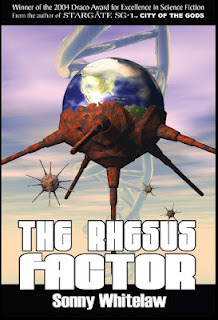
The Rhesus Factor by Sonny Whitelaw

The Rhesus Factor by Sonny Whitelaw has been sitting on my harddrive for a few years, waiting for me to finally get around to reading it. The Australian Women Writers Challenge gave me the push I needed to pick it up. The Rhesus Factor can be downloaded as a free pdf from Whitelaw’s website (you have to click on the link in the left menu).


In essence, The Rhesus Factor is an eco-thriller. Set in the near future when the Gulf Stream has stopped, climate change is decidedly noticeable and drug-resistant epidemics are sweeping the Earth. Since it was written about ten years ago, some of the technology of our very near future isn’t quite here (no space planes to hop across the pacific in a matter of hours, not even for the US Airforce) but some of her predictions are eerily true. There was a throwaway paragraph that included severe bushfires in southern Australia and Brisbane flooding, for example. Granted, those aren’t exactly outlandish predictions, and the Gulf Stream is still with us, but still, some of the crazy weather Whitelaw describes doesn’t feel like it’s as outlandish as it would have been ten years ago.


There was also this great line about the US congress which predicts a situation that has become slightly old news now:


“So you voted in a Democratic President—but hedged your bets with a Republican Congress that will not entertain any motion to install a fair and equitable health care system.”


Sound familiar?


Anyway, back to the story. The Rhesus Factor follows a handful of characters through dramatic* climate change, the discovery of a virus which is on track to sterilising 99% of humanity, terrorist attacks, and assorted other emergencies. Some of the characters are clearly there to demonstrate consequences to ordinary folk, but most of them play some sort of governmental role (including scientific research) in mitigating the damage. A nice touch, I thought, was that almost all of the characters were quite competent and none of the disasters were because of any one person stuffing up. They were all just sort of inevitable.


My favourite character, and the one I felt was the most developed, was Kristin: an Australian marine engineer, initially based in Vanuatu, who has the unfortunate luck to be present for almost all the on-page explosions. (There are a lot of explosions.) Her back story, complete with an ex-boyfriend who has the emotional intelligence of a wet rag, is well drawn and she’s not one of the people who knows everything up front, so it was nice to discover some of what was going on as she did. She also had a strong “Australian, no-nonsense” pragmatism which helped keep up the pace of the book (not that it was ever in any danger of dragging).


Another enjoyable character to read was the Australian Prime Minister. I suspect half the reason I liked him is because the world would be a better place if we had more political leaders that cut through bullshit and did what needed to be done. The other half is that his scenes — particularly some of the comments he makes when not in front of the press — were some of the most amusing and did a good job of diffusing some of the inherent doom of the novel. The most unbelievable aspect of both his character and the US President is that, before becoming politicians, both were scientists with ecology-related (I forget the specifics) PhDs. I just don’t really buy that they got elected, especially the President, but it’s a good thing for their world that they did.


I also enjoyed Australia being so central to many of the events taking place. Other prominent settings were Vanuatu and the US, but while the US was obligatory (greatest impact of Gulf Stream failure, powerful government), the Australian scenes were more lovingly carved. From the outback, down to Kristin complaining about Canberran weather.


The Rhesus Factor is a fast-paced, thriller crammed with one disaster after another. Set in the near future in a world a little bit more disease-ridden, with a slightly more altered climate than ours, it will keep you flipping/tapping the pages to find out what happens next. I should warn you though, Whitelaw set out to present a realistic picture of the near future. The only fabricated factor is, as the title will tell you, the Rhesus factor which acts as a catalyst for some disasters and an also-ran for others. There is no quick-fix offered in the novel and the ending isn’t exactly a happy one — though it is somewhat hopeful. Nevertheless, it’s an entertaining and, if you’re into getting science out of your fiction, an educational# one.


4.5 / 5 stars


* I say dramatic because the Gulf Stream failed. It’s not quite Hollywood dramatic, if you’re wondering.


# Actually, The Rhesus Factor is available as a free pdf because at one point it was cited by an Australian MP in Queensland parliament for its realistic and alarming predictions.