Monday, 4 August 2014

Snapshot 2014: Simon Petrie


Born and raised in New Zealand but now, like Phar Lap, claimed by Australia, Simon Petrie has had numerous stories published, in venues such as Redstone SF, Murky Depths, Sybil's Garage, and elsewhere. Many of his stories are collected in Rare Unsigned Copy: tales of Rocketry, Ineptitude, and Giant Mutant Vegetables (Peggy Bright Books, 2010). He is a member of the Andromeda Spaceways publishing collective and the Canberra Speculative Fiction Guild, and has twice won NZ's Sir Julius Vogel Award: in 2010 for Best New Talent, and in 2013 for Best Novella / Novelette (Flight 404, Peggy Bright Books, 2012).


You’ve recently had an anthology you edited with Edwina Harvey come out. The title and theme are Use Only As Directed. Is there a story behind the inspiration for the theme?

Insofar as there’s a story, it starts back in the closing months of 2006, when I’d just rekindled my interest in writing fiction after a quarter-century hiatus and had, in the process, discovered the burgeoning local publishing scene. Keen to be a part of this, I wrote not one but two stories specifically crafted for the particular 17th-century spacefaring worldbuilding of the new New Ceres webzine and submitted them in eager anticipation, to have them summarily rejected in due course. They weren’t very good stories—but their signal failing was that they weren’t stories that I could send anywhere else, either. It was a formative experience for me: tight themes can be a real straitjacket.

Slushreading for ASIM reinforced this message, too. I don’t think anyone who slushreads can long remain ignorant of trends in anthology themes. After you’re read three Machine Of Death 2 rejects in a row, you start to spot a pattern ...

The above considerations have naturally coloured my experiences as an editor of anthologies. And it’s worth mentioning that Use Only As Directed is the third such, and follows the precedent set by the other two. My first anthology, also co-edited with Edwina Harvey, was Light Touch Paper, Stand Clear (Peggy Bright Books, 2012), and we pretty much agreed we didn’t want to place too many obstacles in the way of the authors’ imaginations. Last year, with Robert Porteous, I co-edited Next (Canberra Speculative Fiction Guild)—again, it was a case of trying to leave the theme sufficiently broad to permit as many interpretations of genre as possible. So this time around, because this was the second anthology Edwina and I had done together, we felt a clear necessity to keep faith with Light Touch Paper by adopting a similarly loose theme for Use Only As Directed, and I’m really pleased with the variety of stories that our wonderful authors have given us as a result.


You’ve written a lot of short stories over the years and many of them were collected in Rare Unsigned Copy. Are there any stories that stick out to you as having been particularly memorable to write?

Often, the ones which are most memorable are those which have a difficult birth.

The standout of these is possibly ‘Running Lizard’, my were-raptor story from Rare Unsigned Copy, for which I wrote the initial grisly murder-investigation scene across a couple of lunch hours at work sometime in 2008. I then did nothing with it for over a year—I’d just been word-doodling at the time, sketching out a scene for which I had no further plans—until one evening I was trawling through my fiction folder, saw a filename I didn’t immediately recognise, and started reading. I couldn’t even remember having written it at first, but got caught up in wanting to tell the rest of the story ... which meant, of course, that I needed to work out what was the rest of the story. There’s a moment in it—I’ve always been sceptical of those authors who say that their characters sometimes surprise them, because obviously that’s just bullshit, I mean the author’s the one sitting at the keyboard dictating the characters’ actions ... but I swear, that scene where Charlotte goes back to her car ‘to get some rope’, I didn’t know what was going to happen next, but she did ...

The other story that I particularly despaired of ever getting finished was ‘Flight 404’, which again came about in a somewhat unorthodox way. I was in the living-room with my daughter one day when she suddenly announced, without preamble, “They’re dead. They’re all dead.” I hadn’t been paying attention, but, as I think you’ll admit, it didn’t sound good ... so I looked up, to see that she was indicating the vase of flowers on top of the TV cabinet. But the apocalyptic nature of her statement niggled at me, I had the germ of a story idea; and ultimately, after a lot of blind alleys, a terrific amount of self-doubt, and more rewriting than I care to remember, it was done.

I’ll mention a third memorable story, which stands out for a different reason. Writing’s usually a solitary game, but sometimes we can let others play in our sandpits. Within the past year, I’ve co-written a story (which I can’t name, because it’s currently under blind review) with Edwina, and I’m sufficiently pleased with the process and the result that I’m hoping we can repeat it when the opportunity presents itself. There’s still lots to learn about the collaborative process, but the great thing about trying your hand as a writer is that there are always new directions to explore if you know where to look for them.


What are your future writing plans? Do you intend to keep writing mainly short fiction, or do you think you might try your hand at some longer works, like another novella or maybe even a novel?


It’s still common advice, I think, for would-be writers to start out with short fiction and progress to longer material as they get their eye in. It works very well for some people, whose bent is towards the short form, but others are natural-born novelists and really struggle until they’re let loose on something with a bit of room to sprawl.

I’ll definitely continue with short fiction, because (a) I like the scope it gives for the exploration of a wide variety of SF ideas and settings and (b) I honestly don’t yet seem to be ready to ‘graduate’ to novel-length material—which is not to say that I haven’t made attempts at the latter. But I think the tendency for me is still to gravitate towards a reasonably compact frame for my stories, even though it is stretching out gradually over time. It’s no longer quite the exception for me to write something of novelette length, or longer—I’ve written three of those in the past nine months or so, and as I say the will is there to write novels. Just to get the ambition off my chest, as it were, I want to finish a novel that completes the story of Charmain Mertz’s homecoming after Flight 404—there are some really crunchy ideas I want to throw into that, about sexuality and religion and tolerance and family and belonging and interstellar politics, all wrapped up in a ten-generation-old mystery and a murder rampage; I also want to complete a humorous first-contact novel in which a ship crammed with gifted specialists travels via FTL to the Galactic core to intercept the source of a SETI signal that, as yet, no-one has satisfactorily been able to decipher; and, in what I think of as ‘novel writing by stealth’, I’ve been writing a sequence of short stories set on Saturn’s smog moon, Titan, which introduce the characters who will feature in my Titan novel Wide Brown Land, when I get around to writing more than the first three proper chapters of it. And there’s a novella, Panumbra, that I must get around to finishing sooner or later–it’s set in the dense-interstellar-cloud milieu of a couple of my earlier stories, but hopefully avoids ending up being quite as bleak as they were.

Having said all that ... the next thing I have coming out is the follow-up, as it were, to Rare Unsigned Copy. My second short-fiction collection is to be called Difficult Second Album, it’s once again edited by Edwina Harvey and published by Peggy Bright Books, and assuming all goes to plan, it’ll be out at the start of October. It’s subtitled more stories about Xenobiology, Space Elevators, and Zombies in Love, and if that doesn’t tell you more than you wanted to know about it, it has a new Gordon Mamon murder mystery novella, a new and very nasty Titan story, as well as stories about comet mining, fridge whispering, interplanetary freight delivery, choosing the raygun that’s right for you, and the mating habits of spacefaring squid. There’s plenty of hard science fiction in there, some whimsy, some action, and a couple of puns. Three, tops. Honest. (Carefully uncrosses fingers behind back.)


What Australian works have you loved recently?

I’m going to be shamelessly partisan, and say at the outset that the list has to include those stories I edited or co-edited myself, for Next, The Back Of The Back Of Beyond, and Use Only As Directed. Outside of those volumes, much of my reading time over the past year or so seems to have been swallowed up by the 2013 Fantasy Short Story reading for the Aurealis Awards, and so that’s very much coloured what has stuck in my mind. I read a lot of good, and often very good, stories for the AAs. I suppose some that particularly stood out for me were Jay Kristoff’s ‘The Last Stormdancer’, Kim Wilkins’ ‘The Year of Ancient Ghosts’, and Thoraiya Dyer’s ‘After Hours’. I also very much enjoyed Claire Corbett’s When We Have Wings ... and I’m sure I’ve forgotten other books or stories I should have mentioned at this point, but the nature of these questions is that I never seem to function well in attempting to answer them.


Have recent changes in the publishing industry influenced the way you work? What do you think you will be publishing/writing/reading in five years from now?

It’s perhaps not exactly what you had in mind ... but the shift towards e-books has meant that, as someone who dabbles in layout and typesetting, I’ve had to learn how to format e-books as well as books for print.

I think e-publishing, and self-publishing, have changed things quite dramatically over the past five years, and I would imagine that change will continue, though I’ve no idea exactly how it will proceed. I do definitely like the idea that there seems to be more of a niche for novellas (novellae?), in this new read-it-onscreen world, because I think that can be liberating both for writers and for readers—the more scope there is for variety, the better. Bring it on!

I don’t know that any of this has much affected the way I work as a writer, though—I don’t think I’m the sort to follow trends in fiction, which probably reflects itself in my (lack of) sales ... I write the stories it occurs to me to write, in the way it seems to make the most sense at the time, and if people enjoy reading them, that’s great.

What will I be writing five years from now? Hopefully, the final chapter of my third novel ... or the start of a new short story. Who can tell?

Now, where did I leave the keys to that time machine?

~

This interview was conducted as part of the 2014 Snapshot of Australian Speculative Fiction. We’ll be blogging interviews from 28 July to 10 August and archiving them at SF Signal. You can read interviews at:

http://tsanasreads.blogspot.se/search/label/2014snapshot (here)
http://fablecroft.com.au/tag/2014snapshot
http://kathrynlinge.livejournal.com/tag/2014snapshot
http://bookonaut.blogspot.com.au/search/label/2014snapshot
http://www.davidmcdonaldspage.com/tag/2014snapshot/
http://tansyrr.com/tansywp/tag/2014snapshot/
http://randomalex.net/tag/2014snapshot/
http://jasonnahrung.com/tag/2014snapshot/
http://stephaniegunn.com/tag/2014snapshot/
http://helenstubbs.wordpress.com/tag/2014snapshot/
http://ventureadlaxre.wordpress.com/tag/2014snapshot/
http://mayakitten.livejournal.com/tag/2014snapshot/
http://benpayne.wordpress.com/tag/2014snapshot/ 
http://www.merwood.com.au/worldsend/tag/2014snapshot
http://crankynick.livejournal.com/tag/2014snapshot

Snapshot 2014: MC Planck


After a nearly-transient childhood, he hitchhiked across the US and ran out of money in Arizona. So he stayed there for thirty years, raising dogs, getting a degree in philosophy, and founding a scientific instrument company. Having read virtually everything by the old masters of SF&F, he decided he was ready to write. A decade later, with a little help from the Critters online critique group, he was actually ready. He was relieved to find that writing novels is easier than writing software, as a single punctuation error won't cause your audience to explode and die. When he ran out of dogs, he moved to Australia to raise his daughter with kangaroos.

You have a new novel coming out very soon, Sword of the Bright Lady, the first in a series and due out in September. What can you tell us about this new fantasy series?

Publishers' Weekly described Sword of the Bright Lady as a tale of modern idealism in a gritty medieval world, which is quite perceptive. I didn't set out to do that - I just wanted to write an adventure story - but by putting a modern person into a classic fantasy world, it was necessarily unavoidable. At least for me.

When I started playing Dungeons and Dragons, I was outraged to discover that unleveled people - that is, ordinary mortals - were effectively scenery. They existed to be eaten by monsters and rescued by heroes. I spent a lot of games trying to change that political equation, much to the consternation of the other people at the gaming table. The protagonist of my book, being a modern educated person, has the same reaction I imagine all of us would have to realities of medieval fantasy life: shock and a good dollop of horror, along with a powerful desire to change things. In addition he has to survive nefarious plots and hideous monsters, of course.

Your previous novel, The Kassa Gambit, was more science fiction rather than fantasy. What did you find were some of the differences in writing across the different genres? What were some of the similarities?

My definition of SF is "real people in an unreal world," meaning you change the laws of physics and see how people would adapt; and F is "unreal people in a real world," meaning the story is about archetypes rather than individuals. By that standard, Sword of the Bright Lady is actually an SF book despite the presence of swords, magic, and (eventually) dragons. It's not so much a story about the Hero's Journey as it is a story about WTF what if magic was real?

Presumably, your next few books will be sequels to Sword of the Bright Lady. Do you have any other writing plans after that?

I am working on an SF about a super-intelligent dog. It's also kind of a Greek tragedy. Eventually I would like to write a sequel to The Kassa Gambit, because there are some threads in that book that lead to interesting places.

What Australian works have you loved recently?

I am going to take a huge cheat here and admit that the last Australian books I was really over the moon about are Song of Scarabaeus and Children of Scarabaeus. In fact, I liked the first draft of Song so much I married the author.

Have recent changes in the publishing industry influenced the way you work? What do you think you will be publishing/writing/reading in five years from now?

The publishing world is changing a lot, but people still want to read stories, and for the most part they're still willing to pay for them, so I am pretty sure I will still be writing in any conceivable future. The biggest effect of the new marketplace is that none of my books will ever come out as mass market paperbacks. That space has been taken over by ebooks. I grew up reading paperbacks I could put in my back pocket, and I am a little disappointed that I'll never write one.

As for 5 years for now, I hope to still be writing various stories in the world of Sword; that entire book is from a single person's perspective, and yet there are so many other interesting viewpoints and adventures. I also want to write an Elizabethean romance about giant ants, but my agent gives me funny looks when I bring that one up.

 ~

This interview was conducted as part of the 2014 Snapshot of Australian Speculative Fiction. We’ll be blogging interviews from 28 July to 10 August and archiving them at SF Signal. You can read interviews at:

http://tsanasreads.blogspot.se/search/label/2014snapshot (here)
http://fablecroft.com.au/tag/2014snapshot
http://kathrynlinge.livejournal.com/tag/2014snapshot
http://bookonaut.blogspot.com.au/search/label/2014snapshot
http://www.davidmcdonaldspage.com/tag/2014snapshot/
http://tansyrr.com/tansywp/tag/2014snapshot/
http://randomalex.net/tag/2014snapshot/
http://jasonnahrung.com/tag/2014snapshot/
http://stephaniegunn.com/tag/2014snapshot/
http://helenstubbs.wordpress.com/tag/2014snapshot/
http://ventureadlaxre.wordpress.com/tag/2014snapshot/
http://mayakitten.livejournal.com/tag/2014snapshot/
http://benpayne.wordpress.com/tag/2014snapshot/ 
http://www.merwood.com.au/worldsend/tag/2014snapshot
http://crankynick.livejournal.com/tag/2014snapshot

Sunday, 3 August 2014

Snapshot 2014: Trudi Canavan


Trudi Canavan lives in Melbourne, Australia. She has been making up stories about people and places that don’t exist for as long as she can remember. While working as a freelance illustrator and designer she wrote the bestselling Black Magician Trilogy, which was published in 2001-3 and was named an ‘Evergreen’ by The Bookseller in 2010. The Magician’s Apprentice, a prequel to the trilogy, won the Aurealis Award for Best Fantasy Novel in 2009 and the final of the sequel trilogy, The Traitor Queen, reached #1 on the UK Times Hardback bestseller list in 2011. For more info, visit www.trudicanavan.com.


The first book of your new series, Thief's Magic, came out not too long ago. It's about an industrial revolution powered by magic, which is a bit of a departure from the settings of your other books. What made you want to explore that particular setting?

At Aussicon 4 I saw a panel on exploring other potential something-punks than Steampunk and Cyberpunk. I got to thinking about what magic-punk might look like. What if magic was used instead of coal? What if it had a grimy residue like coal? Tyen's came together as a separate story, at first - a 'one day I'll write this' novel. But while hashing out the synopsis for my next series I realised it needed a second story thread, and since that was set in a multiple-world scenario I could easily add Tyen's story to it. As it turned out, the magic systems blended very well, and the two very different worlds give the setting contrast and texture.


Last year you had a Doctor Who novella come out in conjunction with the 50th anniversary celebrations, Salt of the Earth. Can you tell us how that came about? Also, did you get to choose which Doctor to write about?

When the email first turned up, on a Friday, my first reaction was doubt, because I've not written tie-in fiction and time travel and science fiction aren't what I usually write. I decided to think about it, and by the end of the weekend I had a rough plot idea and setting. The process was very different to what I'm used to, with approval processes for each stage of story development. I wound up writing a story that could use almost any doctor and companion and left it to them to decide. I was happy when they chose Jon Pertwee, though not too sure about Jo Grant as I couldn't remember much about her. So I borrowed as many dvds as I could of the third doctor's series featuring Jo, listing 'Third Doctorisms' and facts about Jo in order to get their 'voices' right.


I assume your current plans are to finish up the Millenium's Rule Trilogy, but do you have any plans beyond that? Can you tell us something about future books?

Bookwise, I'm planning to write another trilogy in the Black Magician Trilogy world. I'd also like to do a short story collection in future. And in my 'one day I'll write this' list there's a young adult horror novel that's been patiently waiting for me to find the time to write, as well.


What Australian works have you loved recently?

I gave Jane Routley some feedback on a small novel recently that was a lot of fun, and I enjoyed Alan Baxter's dark fantasy, Realmshift. I'm lucky to find the time to read 15 or so books a year, and a few of those are manuscripts, yet I keep buying books as if I read three times as fast so my to-read pile is enormous.


Have recent changes in the publishing industry influenced the way you work? What do you think you will be publishing/writing/reading in five years from now?

Actually, not much has changed in the way I work, but some things have changed in the way I interact with fans and other writers. I get my own swag printed and arrange some publicity events. I'm not going to as many conventions now, but I aim to get to a pair of Supanovas a year. Social media has taken over from blogging and forums - and I like it much better! The only way any of this has affected how I write is to make sure the first chapter of a book is a good length for a reading, and I keep an eye out for good quotes to put on bookmarks.


 ~

This interview was conducted as part of the 2014 Snapshot of Australian Speculative Fiction. We’ll be blogging interviews from 28 July to 10 August and archiving them at SF Signal. You can read interviews at:

http://tsanasreads.blogspot.se/search/label/2014snapshot (here)
http://fablecroft.com.au/tag/2014snapshot
http://kathrynlinge.livejournal.com/tag/2014snapshot
http://bookonaut.blogspot.com.au/search/label/2014snapshot
http://www.davidmcdonaldspage.com/tag/2014snapshot/
http://tansyrr.com/tansywp/tag/2014snapshot/
http://randomalex.net/tag/2014snapshot/
http://jasonnahrung.com/tag/2014snapshot/
http://stephaniegunn.com/tag/2014snapshot/
http://helenstubbs.wordpress.com/tag/2014snapshot/
http://ventureadlaxre.wordpress.com/tag/2014snapshot/
http://mayakitten.livejournal.com/tag/2014snapshot/
http://benpayne.wordpress.com/tag/2014snapshot/ 
http://www.merwood.com.au/worldsend/tag/2014snapshot
http://crankynick.livejournal.com/tag/2014snapshot

Saturday, 2 August 2014

Snapshot 2014: Jo Spurrier


Jo Spurrier was born in 1980 and has a Bachelor of Science, but turned to writing because people tend to get upset when scientists make things up. Her interests include knitting, spinning, cooking and research. She lives in Adelaide and spends a lot of time daydreaming about snow.


The final book in your Children of the Black Sun trilogy came out a few months ago. How does it feel to finally have the full trilogy out in the world?

It was very emotional to get to the end of this story. I listen to music when writing and as I was finishing the manuscript for North Star I found myself playing a lot of break-up songs. That’s really how it felt to me, not an acrimonious split, but an inevitable parting of ways. I sometimes call my characters my imaginary friends (albeit ones that I torture relentlessly), and it feels like I’ve had to say goodbye to them in order to move on to other things. I do miss them, and catch myself wondering how they’re doing, but then I remember they’re probably fine now that I’ve stopped doing horrible things to them.


The whole Children of the Black Sun trilogy deals with, among other things, the thoughtful story arc of Isidro loosing the use of his arm. Unlike a lot of stories, the warrior is not sidelined out of the story nor magically healed. Can you share your thoughts about this sort of representation?

As a disabled person, it always bothered me when characters would suffer life-altering illness or injury only to have it magically healed, or to have them shuffled out of the story — to me it seemed to invalidate those characters’ sacrifices and cheat them of the consequences of their actions, whether those consequences were deserved or not; as well as brushing off the repercussions of suffering a severe injury, what it means to the sufferer as well as those around them. With Children of the Black Sun I deliberately set out to find out what would happen when Isidro and those close to him were forced to live with the consequences of his sacrifice to protect Cam. He remains at the centre of his own story, he doesn’t get to retire gracefully from the action because of his injury and no-one’s going to go easy on him because he can’t fight the way he used to. He still has the same challenges and dangers to face as everyone else, he just has to find another way to deal with them.


Now that the whole Children of the Black Sun trilogy is finished and out in the world, what have you been working on? What can readers expect to see next from you?

And now for something completely different! I wanted to work on something with a completely different set of world rules and character constraints. My next story is set in a world that combines elements of India and ancient Greece, in the post-cataclysmic aftermath of a failed industrial revolution. I’m interested in what happens when a fantasy world reaches the technological age, and I suppose what I have in mind could be considered steampunk, though I’m consciously trying to avoid a lot of the steampunk tropes. In any case, I have been reliably informed that it can’t be steampunk unless it has some link to Victorian Britain, which this story definitely does not have. It’s about refugees and displaced people, about what happens when the fabric of society unravels, and what people are capable of when they have nothing left to lose.


What Australian works have you loved recently?

I’ve been re-reading The Eternal Frontier by Tim Flannery, which follows the natural history of North America over the last 65 million years. If it seems an odd choice, it’s because I’ve found it hard to focus on a novel while looking after my baby, and it’s a book I can open to any page and start reading when I have a few minutes to spare.


Have recent changes in the publishing industry influenced the way you work? What do you think you will be publishing/writing/reading in five years from now?

To be honest it hasn’t changed my methods — I’m not especially flexible or fast in the way I write, and I seem to be incapable of telling a story in less than about 540K words, so the ability to instantly publish online hasn’t had much effect on me. The biggest change has come from having my son near the start of this year! In five years I’ll probably (hopefully!) be finishing off the series I’ve talked about above, and with regards to reading I expect will have mostly made the switch to e-books. What I’d love to see is a method of buying e-books that also supports local and independent booksellers. Publishers and booksellers, please find a way to make this happen!

 ~

This interview was conducted as part of the 2014 Snapshot of Australian Speculative Fiction. We’ll be blogging interviews from 28 July to 10 August and archiving them at SF Signal. You can read interviews at:

http://tsanasreads.blogspot.se/search/label/2014snapshot (here)
http://fablecroft.com.au/tag/2014snapshot
http://kathrynlinge.livejournal.com/tag/2014snapshot
http://bookonaut.blogspot.com.au/search/label/2014snapshot
http://www.davidmcdonaldspage.com/tag/2014snapshot/
http://tansyrr.com/tansywp/tag/2014snapshot/
http://randomalex.net/tag/2014snapshot/
http://jasonnahrung.com/tag/2014snapshot/
http://stephaniegunn.com/tag/2014snapshot/
http://helenstubbs.wordpress.com/tag/2014snapshot/
http://ventureadlaxre.wordpress.com/tag/2014snapshot/
http://mayakitten.livejournal.com/tag/2014snapshot/
http://benpayne.wordpress.com/tag/2014snapshot/ 
http://www.merwood.com.au/worldsend/tag/2014snapshot
http://crankynick.livejournal.com/tag/2014snapshot
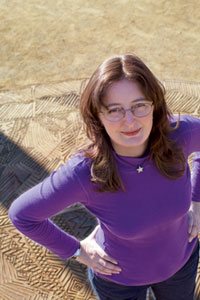
Snapshot 2014: Justine Larbalestier


Justine Larbalestier is an Australian-American novelist. Her forthcoming novel is Razorhurst which will be out in Australia in July and in the USA in March 2015. Her previous solo novel was the award-winning Liar. She also edited the collection Zombies Versus Unicorns with Holly Black. Justine lives in Sydney, Australia where she gardens, boxes, and watches far too much cricket.

Your latest novel, Razorhurst, has just been released. It’s set in 1930s Sydney with a supernatural element. What was the most interesting and/or unexpected thing you learnt while researching this book?

That a common slang term for a prostitute during the 1930s was "chromo." No one knows why. I used it because how could I not?

You’ve previously published two academic books and many essays on the history of science fiction, among other things. Do you have any plans to write more academic work, or are you focussing primarily on fiction?

My scholarly career ended in 2003. I do not miss it. My heart has always been with fiction.

Your website explains that you usually work on several novels at once. Which one do you currently think is most likely to be finished first and can you tell us a bit about it?

I can tell you about it very vaguely. I've learned that if I talk about a novel in any detail before there's a first draft it does not go well. I also can't outline a book until I've finished writing it.
That said, my next novel will be out late 2015. It's a contemporary about an Australian boy who moves to New York City with his family, falls in love, and, um, has to figure out how to deal with evil.

What Australian works have you loved recently?

A: Larry Writer's Razor: Tilly Devine, Kate Leigh and the razor gangs which was the spark that led me to writing Razorhurst. Without it my book wouldn't exist. I've also been re-reading all of Ruth Park and Kylie Tennant's books and they're even more wonderful than I remembered. Too many of Tennant's books are out of print. That needs to be remedied.

Have recent changes in the publishing industry influenced the way you work? What do you think you will be publishing/writing/reading in five years from now?

You'd go mad if you let the paroxysms and dramas of the publishing industry affect your work. I've done a great deal of research on the 1930s in Australia and the USA and publishing was in crisis back then too. I sometimes think publishing has always been in crisis.

When I write I don't think about any of that stuff; I just write. Five years from now I'll be doing the same thing. Writing, reading, talking about writing and reading with my friends. I have had many different publishers in my career. I imagine I'll have many more. But whatever happens I will continue to write. I have been writing fiction since I was able to write and before that I told stories. Nothing that happens in the publishing industry will change that. 

 ~

This interview was conducted as part of the 2014 Snapshot of Australian Speculative Fiction. We’ll be blogging interviews from 28 July to 10 August and archiving them at SF Signal. You can read interviews at:

http://tsanasreads.blogspot.se/search/label/2014snapshot (here)
http://fablecroft.com.au/tag/2014snapshot
http://kathrynlinge.livejournal.com/tag/2014snapshot
http://bookonaut.blogspot.com.au/search/label/2014snapshot
http://www.davidmcdonaldspage.com/tag/2014snapshot/
http://tansyrr.com/tansywp/tag/2014snapshot/
http://randomalex.net/tag/2014snapshot/
http://jasonnahrung.com/tag/2014snapshot/
http://stephaniegunn.com/tag/2014snapshot/
http://helenstubbs.wordpress.com/tag/2014snapshot/
http://ventureadlaxre.wordpress.com/tag/2014snapshot/
http://mayakitten.livejournal.com/tag/2014snapshot/
http://benpayne.wordpress.com/tag/2014snapshot/ 
http://www.merwood.com.au/worldsend/tag/2014snapshot
http://crankynick.livejournal.com/tag/2014snapshot

Friday, 1 August 2014

Snapshot 2014: Simon Haynes


Simon Haynes was born in England and grew up in Spain, where he enjoyed an amazing childhood of camping, motorbikes, air rifles and paper planes. His family moved to Australia when he was 16.

Simon divides his time between writing fiction and computer software, with frequent bike rides to blow away the cobwebs. His goal is to write fifteen  Hal books (Spacejock OR Junior!) before someone takes his keyboard away.

Simon's website is www.spacejock.com.au.


You’ve just released the seventh Hal Spacejock book, Big Bang. With this latest novel, you initially released it in serialised form. How did this different release method work out for you and do you think you will be doing it again?

Hal 7 was my 12th novel, and I desperately needed a new challenge. I've always been a chronic rewriter, fiddling with scenes, changing the plot, messing about with characters and so on. But at the end of the day, who cares if a fruit salad has a dollop of vanilla or chocolate ice-cream on top? I found myself dithering over irrelevant details, when I could have been writing more novels.

So, the serial. I planned 10 parts of approximately 7500 words each. I promised I would have the next part ready before I published the previous one, which meant people knew it wasn't just going to fizzle out. This also gave me the opportunity to revise the previous part if changes arose during the writing of the current one.

And it worked. I found myself looking forward instead of back. I wrote quickly, I had no trouble with subplots or fiddly details, and the reviews for book seven have been great.

The only problem was when I reached part ten. Everything had gone so well for parts 1-9 that I decided to publish part nine before I finished the novel. Then I discovered I needed to write about 15,000 words for part ten, to do the rest of the book justice. That took far longer than expected, which meant everyone had to wait for the final part. I've had fans writing to me, politely asking whether the next Hal book will also be a serial. When I reply that it won't be, they seem very happy.

Now, the thing with the serial was that I found it easy to motivate myself to write and publish 7500 word parts. Since I finished Hal 7, I've hardly written a word (again). So, perhaps I need to write in serial form, but just not publish any of the parts until they're ALL done.


As well as the original English, Hal Spacejock is available in French. How did that come about and did you have much contact with the translator?

The translator, Albert Aribaud, instigated the whole thing. He contacted me several years ago, and I referred him to the publisher. Cut a long story short, Albert and I collaborated on the translation between us, and I released the resulting novel as an ebook. Riviere Blanche will be releasing the paperback later this year.

Apart from Hal Spacejock in French, Bastei Lubbe recently released the first two novels in German as 'Ein Roboter namens Klunk' (Hal 1) and 'Helden Heulen Nicht' (Hal 2). This is a traditional publishing contract, organised by the original Hal Spacejock publisher, Fremantle Press. The interesting thing is that the German publisher picked up on a little in-joke of mine. That is, they released the first Hal Spacejock book with the title 'A robot named Clunk', recognising that the entire series is actually about Clunk the robot, not Hal Spacejock.

Over the years people have occasionally posted reviews saying that Hal is a jerk and a little shallow, while Clunk is far more interesting. No kidding. Anyway, it's good to see that ten years after Hal Spacejock was published, someone saw through that little ruse.

Then there's Hal Junior … the first novel has been translated into Italian by Lia Desotgiu, and was recently published as an ebook. I have the layout for the paperback edition on my screen right now, and will be publishing that later today after I finish this interview.

Lia contacted me a year or so back after I blogged about translations, and I was highly impressed with her lengthy resume. She's translated a huge number of famous AAA computer game titles, including one of my all-time faves, Elder Scrolls IV: Oblivion. Lia is also keen to translate Hal Junior 2 and 3.

A french translation of Hal Junior: The Secret Signal, also by Albert Aribaud, is nearing completion and should be published soon.

What I'd really like is a native Spanish speaker for a Spanish translation of my works. I'm fluent in Spanish but not to the degree needed, and I'd love to read my work in that language. So … if anyone's interested, contact me and we can discuss details.


As well more Hal Spacejock (and Hal Junior?) books, it looks like you’re planning another spin off series about Harriet Walsh. Can you tell us a bit about that?

The Peace Force was mentioned in the first Hal Spacejock novel, and the idea was that they're the police of the future Galaxy, although with a more military approach to crime fighting. They have a reputation for ruthlessness and brutality, hence 'Peace' Force.

Anyway, Harriet Walsh is a Peace Force officer, and she's a tough, independent character. She seemed to hit a nerve with readers, and I remember one Hal fan emailing me to ask for a short story or novella featuring Harriet. I toyed with the idea, then decided to write a novel instead.

The problem is, writing a futuristic police procedural is hard. Imagine a future where you point a gadget at a bloodstain or a fingerprint, and the suspect is immediately identified and located. E.g. their car stops mid-traffic, the doors lock, and a large transport drone flies out to scoop the car up and deliver the suspect to the nearest station. All while the detective is still sipping coffee at the crime scene.

I don't quite have the same problem in the Hal novels, because he's broke and can't buy any cool gadgets. He can barely afford fuel, and when he finally buys a mobile phone he discovers Galactic Roaming charges would cripple him for about 40 years.

I found a solution for this problem in Harriet Walsh, but I've not yet got my teeth into writing the thing. And, in the meantime, the siren call of Hal Spacejock 8: Shaken and Stirred, has pulled me in.
By the way, the Hal Junior series is set 10-12 years after Hal Spacejock, and features Harriet Walsh as the mother. (A lot of people got the idea Hal Junior is just Hal Spacejock as a kid. Including me, when I first started writing The Secret Signal. However, Hal Jnr worked much better as a new character.)


What Australian works have you loved recently?

I confess I haven't read anything at all for the past two years. About a year ago I got into board gaming by accident, and it's become a major passion. Like many, I suffered through Cluedo and Monopoly as a kid, but I put all that behind me when home computers burst onto the scene in the (very) early 80's.

Looking around now, the variety of complex, interesting, challenging board games is breathtaking. Puerto Rico, Game of Thrones, Pillars of the Earth, Caverna/Agricola, Village, Shadows over Camelot, Descent, Neuroshima Hex, 7 Wonders, Battle Line, Lords of Waterdeep, Jaipur, Lost Cities, Eldritch Horror … who has time for reading? (Or writing!)


Have recent changes in the publishing industry influenced the way you work? What do you think you will be publishing/writing/reading in five years from now?

I transferred to self-published ebooks (with POD paperbacks) about 3 years ago now. The speed with which I can reach fans influenced my decision to publish Hal 7 as a serial. It also triggered the wave of translations, and I'm keen to continue with those.

I have plans for a present-day thriller, and a friend and I are planning a collaborative novel which is just a bare-bones idea at the moment. To that end I've been modifying yWriter (my free novel writing software) to add collaborative features so that two authors can work together on the same novel, in realtime. Right now it's using Google Drive to store data temporarily, which is just a stop-gap until I work out something better.

 ~

This interview was conducted as part of the 2014 Snapshot of Australian Speculative Fiction. We’ll be blogging interviews from 28 July to 10 August and archiving them at SF Signal. You can read interviews at:

http://tsanasreads.blogspot.se/search/label/2014snapshot (here)
http://fablecroft.com.au/tag/2014snapshot
http://kathrynlinge.livejournal.com/tag/2014snapshot
http://bookonaut.blogspot.com.au/search/label/2014snapshot
http://www.davidmcdonaldspage.com/tag/2014snapshot/
http://tansyrr.com/tansywp/tag/2014snapshot/
http://randomalex.net/tag/2014snapshot/
http://jasonnahrung.com/tag/2014snapshot/
http://stephaniegunn.com/tag/2014snapshot/
http://helenstubbs.wordpress.com/tag/2014snapshot/
http://ventureadlaxre.wordpress.com/tag/2014snapshot/
http://mayakitten.livejournal.com/tag/2014snapshot/
http://benpayne.wordpress.com/tag/2014snapshot/ 
http://www.merwood.com.au/worldsend/tag/2014snapshot
http://crankynick.livejournal.com/tag/2014snapshot

Thursday, 31 July 2014

Snapshot 2014: Amanda Pillar


Amanda Pillar is an awarding winning editor and speculative fiction author who lives in Victoria, Australia. She has had numerous short stories published and has co-edited the fiction anthologies Voices (2008), Grants Pass (2009), The Phantom Queen Awakes (2010), Scenes from the Second Storey (2010), Ishtar (2011) and Damnation and Dames (2012). Her first solo collection was published by Ticonderoga Publications, titled Bloodstones (2012).

In her 'free time', she works as an archaeologist.


You’ve just had a short story come out in the Kisses by Clockwork anthology edited by Liz Grzyb and short stories appearing in several other venues. In terms of writing, do you see yourself primarily as a short story writer or are there other forms you’re also working on or hoping to try out?

When I first starting writing, I only wrote novels. A few years – and a few rejections– later, I transferred over to short stories and have primarily written those for the past seven or so years. In the past couple of years, however, I began writing long fiction again. It’s a nice change, but I find it hard to swap between styles.


You’ve edited several anthologies in the past. What are your favourite aspects of the whole editing process?
I think one of my favourite parts is seeing the anthology come together; selecting those stories that seem to have really understood what I was imagining – and sometimes what I couldn’t imagine, but had to be shown. My other favourite part is working with authors, trying to help them get the best out of their stories and watching how they work and what they do.


What projects are next on the cards for you?

I’m planning the sequel to the Bloodstones anthology, tentatively titled Bloodlines. I can’t say too much more, as we’re still nailing down the guidelines. 


What Australian works have you loved recently?

Always a tough question! So many good books – by so many friends! Do I have to pick one?


Have recent changes in the publishing industry influenced the way you work? What do you think you will be publishing/writing/reading in five years from now?

As for me, since I primarily work with independent press, it hasn’t changed too much. I do see a shift towards e-publishing, but people still like to have physical books.

Five years from now, I hope I will still be working on anthologies, and I would love to see a novel of mine in print, but we’ll have to wait and see what the publishing gods have to say about that!

 ~

This interview was conducted as part of the 2014 Snapshot of Australian Speculative Fiction. We’ll be blogging interviews from 28 July to 10 August and archiving them at SF Signal. You can read interviews at:

http://tsanasreads.blogspot.se/search/label/2014snapshot (here)
http://fablecroft.com.au/tag/2014snapshot
http://kathrynlinge.livejournal.com/tag/2014snapshot
http://bookonaut.blogspot.com.au/search/label/2014snapshot
http://www.davidmcdonaldspage.com/tag/2014snapshot/
http://tansyrr.com/tansywp/tag/2014snapshot/
http://randomalex.net/tag/2014snapshot/
http://jasonnahrung.com/tag/2014snapshot/
http://stephaniegunn.com/tag/2014snapshot/
http://helenstubbs.wordpress.com/tag/2014snapshot/
http://ventureadlaxre.wordpress.com/tag/2014snapshot/
http://mayakitten.livejournal.com/tag/2014snapshot/
http://benpayne.wordpress.com/tag/2014snapshot/ 
http://www.merwood.com.au/worldsend/tag/2014snapshot
http://crankynick.livejournal.com/tag/2014snapshot

Snapshot 2014: Jay Kristoff


Jay Kristoff is a very tall author of SciFi/Fantasy from Melbourne, Australia. His first trilogy, the award winning THE LOTUS WAR is set to be published in over a dozen countries. The third book in the series, ENDSINGER, is due for publication in November 2014. Jay's new series, the SciFi thriller ILLUMINAE, which he co-authored with Amie Kaufman, is due for publication by Random House in 2015. He is as surprised about it as you are.

Jay is 6’7, has approximately 13520 days to live and does not believe in happy endings.

The last book of the Lotus War trilogy, Endsinger, is due to be released imminently. Now that your first series is done, what would you say were the most important things you learnt from the whole process?

It's hard to pick the most important. You learn a whole bunch first time out - there's nothing like getting thrown in the deep end to teach you how to swim. Probably the most important one was to treat writing like a job, not a hobby. To apply at least the same discipline you would if you were punching a clock nine to five. There are parts of this gig that are more fun than others, but every part of it is important. You need to understand the finances of it, understand publishing isn't magical rainbow lollipop land where everyone runs hand in hand down book lane. It's a business. It's a job. The best job in the world, sure, but unless you respect it, and treat it like one, you'll soon be looking for another one.

My god, that's a depressing answer isn't it. I'm lying, okay? We all sit around the book tree eating candy and playing with the bubblegum bees all day. Honest.

You’ve written a novellas and short stories set in the Lotus War world (including “The Last Stormdancer”, which won the Aurealis Best Fantasy Short Fiction Award). Do you mainly enjoy writing short fiction as a way of elaborating on an established world, or is it a form you can see yourself exploring further?

I'll do more shorts, for sure. Doing shorts to promote existing series is a cool way to explore the world you've created and get a taste of minor themes or characters, but I wrote a horror short for an antho called SLASHER GIRLS AND MONSTER BOYS earlier this year which was just a riot to write. I'd really like to do more of it. It'll just be about finding the right project and finding the time. I'm working on two different trilogies atm, time is kinda scarce :)

You are currently working on a new series, Illuminae, with fellow Aussie author Amie Kaufman. Can you tell us a bit about that story and the experience of working with a co-author?

ILLUMINAE is the most exciting thing I've ever worked on. The experience has been amazing, and we're not even into the design phase yet. The book itself is like nothing I've ever really seen. It's this collision between House of Leaves and Battlestar Galactica, with some 2001: A Space Odyssey thrown in. With kissing. We're trying to break the idea of what a book can be with it. Playing with illustration and typography, making the object of the book itself part of the narrative. I played with a few typography ideas in the LOTUS WAR - different point sizes and all caps for telepathy sequences to illustrate volume, but ILLUMINAE makes that look like kindergarten.

(Not the final cover)
It's basically the story of a refugee fleet of space ships, fleeing an invaded world. The people on board different ships are trying to get the bottom of a couple of different mysteries, but the story is told through hacked computer documents, email conversations, IMs, medical reports, security camera footage, and so on. So as these characters discover these documents and begin to unravel the secrets of what's going on aboard this refugee fleet, the reader does too. Like I say, I've never seen anything quite like it.

Co-authoring is a lot of fun. TBH, I wasn't sure I'd get into it, but it turns out it's a lot like working in a creative partnership in an advertising agency (which I did for 12 years). I wrote a blog post about it here, if folks are interested. I'd definitely recommend it, presuming you can find a partner who's style compliments yours. Amie and I have different strengths, and we're both very thick skinned and relaxed about other people playing with our words (which is essential). Plus, she's little Miss Sunshine, and I'm the Prince of fkn Darkness, so that works well.

What Australian works have you loved recently?

I'm just finishing Trudi Canavan's new one, THIEF'S MAGIC. Awesome stuff. And I got my copy signed eeeeeeee.

Have recent changes in the publishing industry influenced the way you work? What do you think you will be publishing/writing/reading in five years from now?

Yeah, for sure. I think it comes back to what I said above - treating it like a job. Doing it on the days it's hard. Clocking in, no matter what. Having a word count and treating it as sacrosanct. Everyone who does this is LUCKY to be here. You can't take it for granted. You can't sit around waiting for the muse to show up. Be your own muse. Make your own music.

In terms of the industry, a lot of folks seem to be talking about the YA bubble bursting - you can't just think of cool power for a sixteen year old girl to have, put in a cute boy and bam, get a book deal anymore. But there's always a market for awesome. Write something awesome, and it'll sell. Or be like me and get some really compromising photographs of important people in the industry and just blackmail your way in.

In terms of what I'll be writing in five years, I plan to be supreme ruler of the galaxy by then. So, probably lots of death warrants.

Not for YOU obviously, you're awesome. But some dudes gotta get got.

 ~

This interview was conducted as part of the 2014 Snapshot of Australian Speculative Fiction. We’ll be blogging interviews from 28 July to 10 August and archiving them at SF Signal. You can read interviews at:

http://tsanasreads.blogspot.se/search/label/2014snapshot (here)
http://fablecroft.com.au/tag/2014snapshot
http://kathrynlinge.livejournal.com/tag/2014snapshot
http://bookonaut.blogspot.com.au/search/label/2014snapshot
http://www.davidmcdonaldspage.com/tag/2014snapshot/
http://tansyrr.com/tansywp/tag/2014snapshot/
http://randomalex.net/tag/2014snapshot/
http://jasonnahrung.com/tag/2014snapshot/
http://stephaniegunn.com/tag/2014snapshot/
http://helenstubbs.wordpress.com/tag/2014snapshot/
http://ventureadlaxre.wordpress.com/tag/2014snapshot/
http://mayakitten.livejournal.com/tag/2014snapshot/
http://benpayne.wordpress.com/tag/2014snapshot/ 
http://www.merwood.com.au/worldsend/tag/2014snapshot
http://crankynick.livejournal.com/tag/2014snapshot

Wednesday, 30 July 2014

Snapshot 2014: Donna Maree Hanson


Donna Maree Hanson is a Canberra-based author of fantasy, science fiction, horror, and paranormal romance. She has had about 20 short stories published in various small press and ezines. In January 2013, her first longer work, Rayessa & the Space Pirates, was published with Harlequin Escape digital publishers. Occasionally, Donna writes reviews and articles and beta reads for some published author friends.

You can find out more about her on her website, Facebook or Twitter.

Thank you very much for asking me to be a part of this.

You’ve just have just signed a contract with Momentum for a dark fantasy series, Dragon Wine. Can you tell us a bit about this book?

I'm very excited about Dragon Wine as it's been a book I've been working on since 2005. In those days I entered it into the Varuna Manuscript Development Awards that Varuna did with Harper Collins and it was long listed the first time. I'd only written 25,000 words at the time and then had to write more. Alas it didn't get short listed, but I did enter again and wrote more to do that and then again, until I had to whole thing written. In the end I did make the short list but not the final cut and I won a longlines fellowship for it.

So Momentum (Pan Macmillan's digital imprint) have acquired Dragon Wine, which my agent coined as post-apocalyptic dragons. It's a dark fantasy with a science fiction setting on a nasty world where human kind is near its end and just about everyone is pretty nasty except for the few who want to save the world and make it a better place. Mixed in with that is some alien inventions, subterranean cities, lost technology (including alien technology). Salinda is the main character and she caries this sort of magical gift, the cadre, which is knowledge and power handed down from moon fall. As the story develops, it become apparent why it's called a cadre.

Momentum are releasing Dragon Wine as a series, the first being Shatterwing in September, followed by Skywatcher in October. There is more but that depends on the reception for these first two.

Considering I also have paranormal romance out under my pen name on 1 August, Dragon Wine is by comparison a little unromantic, I believe.

You’ve also had quite a few short stories published. Do you see yourself more as a short story writer or a novelist?

I love the short story form but I've always been a novelist first. It takes a lot longer to write and sell novels. Lately it's been hard to sell short stories and I find that depresses my desire to write them. On the other hand I have been selling a number of novels. I have four novels out this year, ranging in length from 55,000 to over 80,000 words. I'm no longer taking a day off a week to write so the pressure is on and short stories, while I love them and have ideas for them are just taking a back burner.

What are you working on now? What can readers expect to see from you next?

Mmm...well I'm working on another paranormal romance, then another, then a steampunk YA sequel to Ruby Heart, which my agent is currently sending around to publishers. I will have to do more work on the Dragon Wine series. I have the next instalment written, but it needs polishing. I also have another YA fantasy that just missed out on a print deal and I'm thinking I might bring the whole trilogy out next year as a self-published/indie published thing as the last round of submission hell was 16 months and it ended up be a no and well I'm a bit over the waiting, waiting and then nothing. The market is tough right now in traditional publishing and while I've been a good girl these last 12 years towing the traditional publishing line, I realise that the world has changed around me. That's why I'm embracing digital publishing because I write stories for people to read and this way they are getting an audience.

My first publication, Rayessa and the Space Pirates, a ya, sci fi action-adventure romance is still selling. Not famously or anything but it's being bought and hopefully read. BTW I've just had the sequel accepted for publication so that will be out next year.

What Australian works have you loved recently?

I've read some fab Australian stuff this year. The Lascar's Dagger by Glenda Larke. OMG, Glenda has really, really kicked butt with this. I read this and think the world building is awesome, the scope of her ideas has knocked me over. The Thief's Magic by Trudi Canavan. Again I'm intrigued to see where Trudi takes us on this one. I've also read and love, Untamed by Anna Cowan, which is a Regency romance but with a difference and local Canberran, JT Clay with her Single Girl's Guide to the Zombie Apocalypse, which was fab. I also very much enjoyed Amanda Bridgeman's Aurora Darwin.

Have recent changes in the publishing industry influenced the way you work? What do you think you will be publishing/writing/reading in five years from now?

I'm not sure the changes in the industry have changed the way I work, except to give me a new momentum and focus. I've had to change my long held values about following the traditional publishing route. I've seen how the print book market has let some writers down. Not their fault if the book shops fail and there is no one to sell the books for people to buy. There's is an adjustment going on and that is going to  continue for a while I think. Digital publishing gives both publishers and writers more freedom. It's getting down to publishers having to offer something different to both writers and readers to keep them. I'm very much interested in the digital experiment. I believe there will be print books in five years, but also a lot of digital content that 's cheaper and more readily available.

 ~

This interview was conducted as part of the 2014 Snapshot of Australian Speculative Fiction. We’ll be blogging interviews from 28 July to 10 August and archiving them at SF Signal. You can read interviews at:

http://tsanasreads.blogspot.se/search/label/2014snapshot (here)
http://fablecroft.com.au/tag/2014snapshot
http://kathrynlinge.livejournal.com/tag/2014snapshot
http://bookonaut.blogspot.com.au/search/label/2014snapshot
http://www.davidmcdonaldspage.com/tag/2014snapshot/
http://tansyrr.com/tansywp/tag/2014snapshot/
http://randomalex.net/tag/2014snapshot/
http://jasonnahrung.com/tag/2014snapshot/
http://stephaniegunn.com/tag/2014snapshot/
http://helenstubbs.wordpress.com/tag/2014snapshot/
http://ventureadlaxre.wordpress.com/tag/2014snapshot/
http://mayakitten.livejournal.com/tag/2014snapshot/
http://benpayne.wordpress.com/tag/2014snapshot/ 
http://www.merwood.com.au/worldsend/tag/2014snapshot
http://crankynick.livejournal.com/tag/2014snapshot