Showing posts with label 4 stars. Show all posts

Sunday, 28 March 2021

On Fragile Waves by E Lily Yu

On Fragile Waves by E Lily Yu is a novel about Afghani refugees making their way to Australia, with overtones of magical realism. It follows a family as they journey in a dangerous boat and spend time on Nauru, in one of Australia’s off-shore detention centres.

Firuzeh and her brother Nour are children of fire, born in an Afghanistan fractured by war. When their parents, their Atay and Abay, decide to leave, they spin fairy tales of their destination, the mythical land and opportunities of Australia.

As the family journeys from Pakistan to Indonesia to Nauru, heading toward a hope of home, they must rely on fragile and temporary shelters, strangers both mercenary and kind, and friends who vanish as quickly as they’re found.

When they arrive in Australia, what seemed like a stable shore gives way to treacherous currents. Neighbors, classmates, and the government seek their own ends, indifferent to the family’s fate. For Firuzeh, her fantasy worlds provide some relief, but as her family and home splinter, she must surface from these imaginings and find a new way.

My one hesitation when deciding to read this book was that the author was American. But On Fragile Waves reads as impeccably researched. It follows a family, from the point of the daughter aged around 10, as a lot of terrible things happen to them during their journey and after. 

If you know anything about Australia’s offshore detention system, you’ll expect this to be a pretty bleak book, and it is. Moments of darkness are interspersed with Firuzeh telling stories to herself and to her younger brother. Those stories and Firuzeh’s memories of a friend she made on the way provide the fantastical element that put this book on my radar (that and the author). But mostly the book is set in the real world, and the harsh reality of being a refugee doesn’t end just because they reach Australia. 

This was a moving read and I recommend it to anyone that isn’t explicitly looking for a light and fluffy read. It’s a book that deals with racism and trauma and even though it’s not long, I didn’t find it to be a quick read.

4 / 5 stars

First published: February 2021, Erewhon Books
Series: No
Format read: eARC
Source: Publisher via NetGalley

Monday, 28 December 2020

Defending the Galaxy by Maria V Snyder

Defending the Galaxy
by Maria V Snyder in the third and final book in the YA Sentinels of the Galaxy trilogy. I have previously read and reviewed the first two books: Navigating the Stars and Chasing the Shadows. This is absolutely not a book/series to read out of order because each book builds heavily on discoveries made in the previous books. I strongly recommend starting with book one (Navigating the Stars) if you are new to the series.

Year 2522. Oh. My. Stars.

Junior Officer Ara Lawrence here, reporting for duty. Again. It's situation critical for the security team and everyone in the base - including my parents - with a new attack from the looters imminent, a possible galaxy-wide crime conspiracy and an unstoppable alien threat. But this all pales in the face of my mind-blowing discovery about the Q-net. Of course, no one believes me. I'm not sure I believe me. It could just be a stress-induced delusion. That's what my parents seem to believe...

Their concern for me is hampering my ability to do my job. I know they love me, but with the Q-net in my corner, I'm the only one who can help the security team beat the shadowy aliens from the pits we discovered. We're holding them at bay, for now, but the entire Milky Way Galaxy is in danger of being overrun.

With battles on too many fronts, it's looking dire. But one thing I've learned is when people I love are in jeopardy, I'll never give up trying to save them. Not until my dying breath. Which could very well be today...

Defending the Galaxy finally ties up the story of Ara, the Q-net, and the looters wreaking havoc across multiple planets in the galaxy. The second book ended with a big reveal and this one opens with Ara trying to come to terms with the new information. That really sets the stage for the rest of the book, since there are several major discoveries that shift Ara's world view. As the title suggests, the book culminates in Ara and friends (including plenty of responsible adults) defending the actual galaxy. Or, at least, a handful of planets spread throughout the Milky Way.

I enjoyed this book but it was a lot more focussed on action and railing against bad guys (and against parental restrictions) than the earlier books. Even though there were a lot of discoveries and reveals here, I felt that the mystery was less important than the battle that needed to be fought. Which certainly makes sense from a narrative point of view, but it also means that I personally enjoyed the first book in this series best, though I didn't dislike this concluding volume, to be clear.

I recommend this series to fans of YA science fiction, especially those who like the idea of space travel and galaxy-sized high stakes. If you haven't read the earlier books in the series, I recommend starting with Navigating the Stars to best lead you into the story, which escalates with each book.

4 / 5 stars

First published: December 2020, Harlequin Australia YA
Series: Sentinels of the Galaxy book 3 of 3
Format read: eARC
Source: Publisher via NetGalley

Wednesday, 9 December 2020

The Thief on the Winged Horse by Kate Mascarenhas

The Thief on the Winged Horse by Kate Mascarenhas is a standalone contemporary fantasy novel. I previously read The Psychology of Time Travel, by the same author so thought I'd give The Thief on the Winged Horse a try, even though the blurb didn't immediately appeal to me.

The Kendrick family have been making world-famous dolls since the early 1800s. But their dolls aren't coveted for the craftmanship alone. Each one has a specific emotion laid on it by its creator. A magic that can make you feel bucolic bliss or consuming paranoia at a single touch. Though founded by sisters, now only men may know the secrets of the workshop.

Persephone Kendrick longs to break tradition and learn the family craft, and when a handsome stranger arrives claiming doll-making talent and a blood tie to the Kendricks, she sees a chance to grasp all she desires.

But then, one night, the family's most valuable doll is stolen. Only someone with knowledge of magic could have taken her. Only a Kendrick could have committed this crime...

As I said, I enjoyed this book more than I particularly expected to. I think the special ingredient was the author's very readable writing style. The story follows three characters linked to a magic-doll-making family empire in Oxford: two women who are discouraged from making dolls and aren't allowed to place enchantments on them, and an outsider who arrives at the start of the book, claiming to be a long-lost relative. The women are, arguably, trying to make the best of an unfair situation, and not always making the best choices in the process.

In some ways it's a book about people in crappy situations making questionable decisions — which is not generally my cup of tea — but it worked here. The characters are interesting and their interplay makes for compelling reading. The magical dolls are a bit mundane but also very creepy. The author plays off the mundanity as we are taken through discoveries and revelations of family history to disturbing events that are not dwelt upon. The author trusts the readers to make connections and doesn't spell out every little detail. The result is I spent quite some time thinking about and being horrified by a minor event that the characters in the book did not themselves interrogate fully, even as they thought through some of the practical consequences.

This was a strange and strangely enjoyable book. I picked it up on a whim and I think I liked it more than The Psychology of Time Travel, even though the subject matter of time travel inherently interests me more. I recommend it to fans of mundane fantasy and contemporary fantasy, especially those that enjoy character-driven stories.

4 / 5 stars

First published: November 2020, Head of Zeus
Series: No
Format read: eARC
Source: Publisher via NetGalley

Saturday, 24 October 2020

Over the Woodward Wall by A. Deborah Baker

Cover of Over the Woodward Wall
Over the Woodward Wall
by A. Deborah Baker is the book featured/quoted in Middlegame by Seanan McGuire, written by McGuire so that she could more easily refer to it. You absolutely do not have to have read Middlegame to read this book and, if anything, reading Over the Woodward Wall might add to your experience of reading Middlegame (but I did read them in the other order). Also, completely unlike Middlegame, Over the Woodward Wall is a children's/middle grade/pre-YA book, where as Middlegame is an adult book.

Avery is an exceptional child. Everything he does is precise, from the way he washes his face in the morning, to the way he completes his homework – without complaint, without fuss, without prompt.

Zib is also an exceptional child, because all children are, in their own way. But where everything Avery does and is can be measured, nothing Zib does can possibly be predicted, except for the fact that she can always be relied upon to be unpredictable.

They live on the same street.
They live in different worlds.

On an unplanned detour from home to school one morning, Avery and Zib find themselves climbing over a stone wall into the Up and Under – an impossible land filled with mystery, adventure and the strangest creatures.

And they must find themselves and each other if they are to also find their way out and back to their own lives.

This book is definitely not similar to Middlegame, it merely exists in the universe of that book. I cannot stress this enough. If you are looking for a similar companion novel to Middlegame, then you will be disappointed. If you are looking for a portal fantasy book featuring children from a non-specified time period finding themselves in a slightly nonsensical magical world, then this is the book for you.

I liked Over the Woodward Wall. There were a lot of interesting side characters, who added to the story. There were also some creepy villain characters that the children had to contend with. There were a variety of small lessons for children to learn over the course of their adventure, which were not heavy-handed. One thing that I was not expecting is that this ended as the start of a series. This might have been mentioned in Middlegame, but for whatever reason I had been expecting a standalone story, so that's something to keep in mind if you prefer tidy endings.

Overall, this was an interesting portal fantasy for children, especially if you hold it up against the ideas explored in Every Heart a Doorway. Over the Woodward Wall is absolutely not set in the same multiverse, and has its own unique voice more suited to the kind of book it is trying to be — one that is not juxtaposed against other ideas of portal fantasy. (That said, it put me in mind of The Wizard of Oz, but that's mainly because both are portal fantasies with a road for the protagonists to follow.) I recommend this book to readers, both old and young, who find appealing the idea of two very different children thrust into a magical world together.

4 / 5 stars

First published: October 2020, Tor.com
Series: Apparently this might be a book 1 of a continuing series (based on Goodreads)
Format read: eARC
Source: Publisher via NetGalley

Monday, 12 October 2020

Burning Roses by S.L. Huang

Burning Roses by S.L. Huang is a fantasy novella that was not at all what I was expecting it to be. I would normally blame this on my intentional forgetfulness of blurbs, but in this case, I think the blurb also buries the lede. I would describe this book as an amalgamation of Asian (Chinese) fantasy and European fairytales, with a heavier dose of the latter than I expected.

When Rosa (aka Red Riding Hood) and Hou Yi the Archer join forces to stop the deadly sunbirds from ravaging the countryside, their quest will take the two women, now blessed and burdened with the hindsight of middle age, into a reckoning of sacrifices made and mistakes mourned, of choices and family and the quest for immortality.

The story in Burning Roses follows our two protagonists, Rosa and Hou Yi, as they attempt to hunt down magical sunbirds and stop them from wreaking havoc across the country. A seemingly straightforward task, until Rosa starts questioning whether the sunbirds are sentient. As we learn throughout the story, Rosa has a dark past with talking animals

The extent to which the world was supposed to correspond to real countries was not entirely clear to me. My general impression was that most of the story was taking place in fantasy-China (or fantastical China, depending on how you want to interpret it), while Rosa has travelled all the way from fantasy-Spain to be there. Having Rosa be a traveller from foreign lands was an interesting and unexpected element. She provided a reference point for readers more familiar with European fantasy, which was the part I wasn't really expecting. In any case, the fantasy aspect of the novella was clearly the pertinent point, since the backstories of both characters have them being involved in several well-known fairytales.

I enjoyed this novella, even though it wasn't what I had expected — more fairytale than wuxia. I recommend Burning Roses to fans of fantasy stories with non-European settings, especially those that also enjoy a sprinkling of fairytales.

4 / 5 stars

First published: September 2020, Tor.com
Series: Don't think so
Format read: eARC
Source: Publisher via NetGalley

Friday, 14 August 2020

Flyaway by Kathleen Jennings

Flyaway by Kathleen Jennings is a novella from an Australian author whose short fiction I have previously enjoyed. She is, perhaps, most well-known for her artwork, including book covers such as the one for Flyaway, among others.

In a small Western Queensland town, a reserved young woman receives a note from one of her vanished brothers—a note that makes question her memories of their disappearance and her father’s departure.

A beguiling story that proves that gothic delights and uncanny family horror can live—and even thrive—under a burning sun, Flyaway introduces readers to Bettina Scott, whose search for the truth throws her into tales of eerie dogs, vanished schools, cursed monsters, and enchanted bottles.

In these pages Jennings assures you that gothic delights, uncanny family horror, and strange, unsettling prose can live—and even thrive—under a burning sun.

Going through the tags for this review, I couldn't not include "Australian gothic". This book is a tangle of fairytales brought by settlers into the unique Australian landscape, all of them twisted and variously creepy. Flyaway is, above all, a story composed of many other stories, told as flashbacks or asides. The layers are slowly peeled back as our unreliable narrator, Bettina Scott, slowly learns more of her recent past and starts to realise what she's forgotten.

The fact that part of the story is told as Bettina's memories unfurl means that we come at the main story — for lack of a better term, I mean the story most important to Bettina — from an oblique angle. We know something strange has happened, but the pieces don't come together until very close to the end. But in the meantime, Jennings keeps the reader entertained and/or horrified with the extra stories peppered throughout the narrative.

I recommend Flyaway to readers who like weird narratives and who don't mind feeling creeped out by the bush or western Queensland. I think non-Australian readers will also find much to connect with in this book, since a lot of the fairytales are recognisably based on European folklore, despite the strong presence of the Australian landscape in the book.

4 / 5 stars

First published: July 2020, Tor.com
Series: No, I don't think so
Format read: eARC
Source: Publisher via NetGalley

Saturday, 13 June 2020

To Be Taught, If Fortunate by Becky Chambers

To Be Taught, If Fortunate by Becky Chambers is a novella that I read because it's on the Hugo shortlist. I considered picking it up a few times before (most notably when tempted with a hard cover at Dublin Worldcon) but held back because I didn't enjoy Record of a Spaceborn Few and I thought this novella was set in the same universe. It is not, but if it were, then it would be set much earlier than the Wayfarer books (aside from the one event that distinguishes it as a separate universe).

In her new novella, Sunday Times best-selling author Becky Chambers imagines a future in which, instead of terraforming planets to sustain human life, explorers of the solar system instead transform themselves.

Ariadne is one such explorer. As an astronaut on an extrasolar research vessel, she and her fellow crewmates sleep between worlds and wake up each time with different features. Her experience is one of fluid body and stable mind and of a unique perspective on the passage of time. Back on Earth, society changes dramatically from decade to decade, as it always does.

Ariadne may awaken to find that support for space exploration back home has waned, or that her country of birth no longer exists, or that a cult has arisen around their cosmic findings, only to dissolve once more by the next waking. But the moods of Earth have little bearing on their mission: to explore, to study, and to send their learnings home.

The premie of To Be Taught, If Fortunate is quite straightforward: a small group of scientist-astronauts are on a multi-year mission to investigate four habitable planets and catalogue whatever lifeforms and other interesting things they find. The novella is basically a chronicle of their journey and the main interest in the book is the explanations of science and discovery. The background science did get a little tedious at times — especially at the start when the scene was being set — but overall there was a reasonable balance between duller background and exciting discoveries of weird things.

In coming to write this review I realised what, to me, set it apart from Record of a Spaceborn Few. Both books lack a fast-paced plot but To Be Taught, If Fortunate quickly establishes itself as an exploration log, whereas Record of a Spaceborn Few felt like things were about to happen, but then didn't. My favourite aspect of To Be Taught, If Fortunate is that just as I assumed nothing especially exciting would happen, something unexpected did happen. I wouldn't call it fast-paced, by any stretch of the imagination, but it worked for me. Because of this novella, I will consider reading more books from this author, which was not my stance before reading it.

Overall I enjoyed To Be Taught, If Fortunate, despite a bit of a slow start. I recommend it to readers who enjoy exploration narratives, and slower-paced stories. I think fans of Long Way To a Small Angry Planet will also enjoy To Be Taught, If Fortunate, although they are quite different books when it comes to the depth of characters (since there is less time in a novella to develop and evolve an ensemble of characters). I have not finished reading the Hugo novellas, but I expect this one will rate well.

4 / 5 stars

First published: 2019, Hodder & Stoughton / Harper Voyager
Series: No (not yet?)
Format read: PDF
Source: Hugo voter packet

Monday, 8 June 2020

The Deep by Rivers Solomon

The Deep by Rivers Solomon is a novella that I bought just before the Hugo finalists were announced, with this novella among them. The premise was what particularly grabbed my attention: the horrible and fascinating premise that pregnant slaves thrown overboard birthed a new species of merpeople.

Yetu holds the memories for her people—water-dwelling descendants of pregnant African slave women thrown overboard by slave owners—who live idyllic lives in the deep. Their past, too traumatic to be remembered regularly, is forgotten by everyone, save one—the historian. This demanding role has been bestowed on Yetu.

Yetu remembers for everyone, and the memories, painful and wonderful, traumatic and terrible and miraculous, are destroying her. And so, she flees to the surface, escaping the memories, the expectations, and the responsibilities—and discovers a world her people left behind long ago.

Yetu will learn more than she ever expected to about her own past—and about the future of her people. If they are all to survive, they’ll need to reclaim the memories, reclaim their identity—and own who they really are.

As is explained in the afterword, this novella is a piece of art in conversation with two previous pieces of art. Building on and reinterpreting the same mythology. You don’t really need to know any other background to understand the story, since each retelling (for lack of a better term) is entirely self-contained. That said, I think my understanding of events in The Deep was aided with having remembered the premise from the blurb, included above. (Regular readers may remember that I rarely pay much attention to blurbs, but this is one case where I was glad to at least remember the premise.) A key aspect of worldbuilding/history is revealed slowly in the book and I think it helped me to have an idea of the characters’ origins a bit earlier. Your mileage may vary, however.

A key idea explored in The Deep is that if societal memory and specifically memory of trauma. The situation when the story opens is like this: one member of the wajinru people is the historian and only that person holds all the memories of past wajinru and events. Everyone else has a strong tendency not to dwell on or remember anything for very long. Our protagonist, Yetu, is the designated historian and not terribly happy with the role. Apart from anything else, she finds it difficult to be the repository of historical trauma for her entire species. She also finds it hard to interact with others who have such short memories, even about their own lives. As well as exploring how intergenerational trauma should be remembered, and by whom, The Deep questions whether it should be remembered at all, as Yetu grapples with some of these issues.

The Deep was a good read, though I found it was a little slow to start and not the sort of book I could read quickly. I recommend it to people interested in the premise and, perhaps, to fans of merpeople.

4 / 5 stars

First published: 2019, Saga Press
Series: Not really, but in conversation with other works
Format read: ePub
Source: Purchased from Kobo

Saturday, 16 May 2020

Defy or Defend by Gail Carriger

Defy or Defend by Gail Carriger is a novel in her "Delightfully Deadly" novella/novel line, which feature (adult version of) characters from the Finishing School series, which started with Etiquette and Espionage. If you've read the Finishing School books, you'll remember Dimity from her school days. That said, this novel stands alone fairly well, with the few references to the past adding flavour rather than crucial plot elements. I originally thought it was a novella and was confused by the length, but clearly, I misread the cover.

A vampire hive descending into madness. A beautiful spy with a sparkly plan. The bodyguard who must keep them from killing each other.

SPY

Dimity Plumleigh-Teignmott, code name Honey Bee, is the War Office's best and most decorative fixer. She's sweet and chipper, but oddly stealthy, and surprisingly effective given the right incentives.

VERSUS KNIGHT

Sir Crispin Bontwee was knighted for his military service, but instead of retiring, he secretly went to work for the War Office. Mostly he enjoys his job, except when he must safeguard the Honey Bee.

Neither one is a vampire expert, but when the Nottingham Hive goes badly Goth, only Dimity can stop their darkness from turning bloody. And only Crispin can stop an enthusiastic Dimity from death by vampire.

In a battle for survival (and wallpaper), Dimity must learn that not all that sparkles is good, while Cris discovers he likes honey a lot more than he thought.

Defy or Defend features the "have to pretend to be married" romance trope and the "in love with each other but convinced the other doesn't like them" romance trope, neither of which were played for as many laughs as I would have expected from Carriger. Not to say that the book wasn't funny at all, but I've read funnier Carrigers. So that was unexpected and a little disappointing. But even without much laughing out loud, I still enjoyed the book.

The main (non-romance) plot is about Dimity trying to rescue a vampire hive from a particular type of maudlin madness through sheer force of redecorating. Also some social manipulation. And with the object of her affections, Sir Crispin, there as backup. Tight-fitting male dance costumes are involved. The length of the book gives plenty of room to get to know the hive members as well as the protagonists. I was pleased to come fully to grips with each vampire's eccentricity, for example, and that made the final resolution all the more satisfying.

All in all, I quite enjoyed Defy or Defend, my only complaint is that it wasn't as funny as I hoped. I recommend the book to fans of Gail Carriger's other supernatural Victoriana books. I also suggest it's a pretty good place for a new reader to dip their toes in, since the book stands alone well and introduces the particular flavour of Carriger vampires (and werewolves, but less so). It is being sold as a romance book and it's not that there's no romance in it, but it's actually pretty light and more secondary to the other plot than I expected.

4 / 5 stars

First published: May 2020, self-published
Series: Yes! Delightfully Deadly series (order agnostic) and set after the end of the Finishing School series
Format read: ePub
Source: Purchased from Kobo

Sunday, 15 March 2020

Songwoman by Ilka Tampke

Songwoman by Ilka Tampke is set during the time of the Roman invasion of Britain, around the 40s AD. It is technically a sequel to Skin, but actually both books stand alone fairly well. They follow the same protagonist, but the two stories are separate, if sequential. I read Skin during a blog hiatus, so there is only a mini review of it, alas.

Haunted by the Roman attack that destroyed her home, Ailia flees to the remote Welsh mountains in search of the charismatic war king, Caradog, who is leading a guerrilla campaign against the encroaching army.

Ailia proves herself an indispensable advisor to the war king, but as the bond between them deepens, she realises the terrible role she must play to save the soul of her country.

Set in Iron-Age Britain, Songwoman is a powerful exploration of the ties between people and their land and what happens when they are broken.

I started reading Songwoman after a day trip to northern Wales, during which a friend and I visited a few castles (built more than a millennium after this book was set), and drove through Snowdonia with some breathtaking views, even in winter. So I was excited to start reading a book set in roughly the same area. The setting of Songwoman did not disappoint. The plot, however, was a little slow.

The bulk of the story involves Ailia being part of the inner circle of Caradog's resistance army. Her personal journey is split between learning the mystical arts, her relationship with Caradog, conflict with some of Caradog's other advisors, and the actual war. The war is mostly a series of small skirmishes and recruitment negotiations, and hence felt like it moved slowly, but in a realistic way. I actually found the relationship with Caradog the most drawn out. I don't want to spoil too much, but I will say that it was interesting that he was portrayed in a way that could be read as bipolar, but that was the most interesting thing about him. I did not quite understand Ailia's emotional attachment to him, especially since I spent a chunk of the start of the book hoping a key character from Skin would make an appearance (he did not).

So on the one hand, Songwoman was a little slow — though not unpleasant to read, aside from a few brief atrocities — but on the other hand, I was actually surprised at how little time was covered in the book. Near the end, there's a scene in which Ailia returns somewhere and notes that it's been a year since she was last there, at the start of the book. I was honestly shocked that only a year was supposed to have passed. This is maybe because, as the author mentions in the afterword, a few years of historical events were compressed  into one year for expediency. However, given my other reaction, I'm wondering whether that was the best choice. That said, I actually liked certain events around the ending a lot. (Being vague to avoid spoilers.) It added an extra dimension to the story, confusing timing aside.

Anyway, I mostly enjoyed Songwoman, even though it took me a while to get through. I recommend it to fans of historical fantasy and, particularly, Welsh settings. While it makes sense to read after Skin, it's not entirely necessary. While I don't expect a sequel, I am broadly interested in the author's future works.

4 / 5 stars

First published: 2018 Text Publishing, with US edition March 2020
Series: sequel to Skin
Format read: eARC
Source: Publisher via Edelweiss

Sunday, 29 December 2019

The Dragon Republic by R F Kuang

The Dragon Republic by R F Kuang is the sequel to The Poppy War, which I previously read and reviewed. Unlike the first book in the series, which I read in only a few days, I ended up reading The Dragon Republic over almost two and a half months. It’s not because I disliked the book that I kept putting it down, rather I needed breaks to read something lighter and it didn’t quite suck me in as much as the first book. I still enjoyed it.
The war is over.

The war has just begun.

Three times throughout its history, Nikan has fought for its survival in the bloody Poppy Wars. Though the third battle has just ended, shaman and warrior Rin cannot forget the atrocity she committed to save her people. Now she is on the run from her guilt, the opium addiction that holds her like a vice, and the murderous commands of the fiery Phoenix—the vengeful god who has blessed Rin with her fearsome power.

Though she does not want to live, she refuses to die until she avenges the traitorous Empress who betrayed Rin’s homeland to its enemies. Her only hope is to join forces with the powerful Dragon Warlord, who plots to conquer Nikan, unseat the Empress, and create a new republic.

But neither the Empress nor the Dragon Warlord are what they seem. The more Rin witnesses, the more she fears her love for Nikan will force her to use the Phoenix’s deadly power once more.

Because there is nothing Rin won’t sacrifice to save her country . . . and exact her vengeance.

The Dragon Republic takes place not long after the conclusion of The Poppy War and is not the sort of book I’d recommend reading without having read the prequel. That said, I didn’t really remember much about the secondary characters when I picked this one up, but I found it not to be a huge problem. The book did a good job of orienting me and reminding me who everyone was (and if worst comes to worst, there’s a list of characters in the back, although I didn’t realise this until I finished reading).

In this book, we mostly see Rin and friends preparing for and fighting skirmishes and battles. We also see a lot of character growth from Rin, who goes from who she was at the end of The Poppy War to a more competent and assured commander towards the end of the The Dragon Republic. It’s not a painless journey, however, and some frustration at Rin possibly contributed to me putting the book aside temporarily, especially in the first half.

Overall, if you enjoyed The Poppy War, I definitely recommend reading The Dragon Republic. In many ways it’s a less intense book, but it has its moments. The overarching story is left incomplete at the end and I am expecting a third book to come, rounding this series out into a trilogy. (It doesn’t end of a cliffhanger, but a lot is unresolved.) If you haven’t ready any of this series yet, definitely start with The Poppy War, but be warned it is not a gentle read, especially not as the story progresses.

4 / 5 stars

First published: August 2019, Harper Voyager
Series: The Poppy War book 2 of 2 so far (but I think it will be a trilogy)
Format read: ePub
Source: Purchased from Apple Books

Thursday, 10 October 2019

Before the Coffee Gets Cold by Toshikazu Kawaguchi

Before the Coffee Gets Cold by Toshikazu Kawaguchi is a short-ish novel of time travel, told in four parts. Originally published in Japanese, it was recently translated into English. I picked it up because the time travel aspect interested me.

In a small back alley in Tokyo, there is a café which has been serving carefully brewed coffee for more than one hundred years. But this coffee shop offers its customers a unique experience: the chance to travel back in time.

In Before the Coffee Gets Cold, we meet four visitors, each of whom is hoping to make use of the café’s time-travelling offer, in order to: confront the man who left them, receive a letter from their husband whose memory has been taken by early onset Alzheimer's, to see their sister one last time, and to meet the daughter they never got the chance to know.

But the journey into the past does not come without risks: customers must sit in a particular seat, they cannot leave the café, and finally, they must return to the present before the coffee gets cold . . .

This is one novel but it's divided into four parts, each focussing on a different character, albeit with a lot of overlap. The story is set almost entirely in a cafe with timeless decor that has an urban legend attached to it: time travel is possible inside the cafe. Whenever customers ask about travelling back in time, however, they are quickly put off by the very restrictive rules presented to them. Before the Coffee Gets Cold is about four people who did not let the restrictive rules stop them.

This was a very gentle and character-driven read. In each section, we get to know a particular character and their motivations for wanting to time travel. And, arguably most interestingly, their reasons for accepting the limitation of the cafe's time travel capabilities. The book was written in a nuanced but not overly-dramatic tone. Although I usually prefer plot-driven and/or drama-filled stories, I found myself keen to pick this one up again each evening.

I enjoyed Before the Coffee Gets Cold and I recommend it to anyone looking for a different sort of time travel story. I've heard it has been made into a (Japanese) movie called Cafe Funiculi Funicula and I'm interested in watching it as well, though I'm not sure how easy it will be to get my eyes on.

4 / 5 stars

First published: September 2019, Picador (Japanese version first published in 2015)
Series: No
Format read: eARC
Source: Publisher via NetGalley

Sunday, 22 September 2019

Hobgoblin Boots by Tansy Rayner Roberts

Hobgoblin Boots by Tansy Rayner Roberts is a short novella set in the world of the Mocklore chronicles. It stands alone and you do not have to have read any of the other books to pick this one up. I previously reviewed Ink Black Magic and I’ve also read Splashdance Silver, but more than a decade ago, long before this blog came into existence.

At the age of thirteen, half-hobgoblin Bounty Fenetre found herself on her own, which was fine by her. There was a cute chainmail number at the smithy's she had her eye on, once she figured out how to fix it so it bared her midriff. Then Ma Fortuna adopted her and she met Luc, her new foster brother.

Four years later, at the age of seventeen, Bounty is older and wiser, and really wants to Seek Her Fortune. She and Luc ambush a hero and steal his armor, because as everyone knows, the first step to becoming a hero is to look like one. The second step is to be recognized as a hero by the world at large, which surprisingly, isn't as hard as it sounds. Mocklore is a land where magic crashes and smashes through the landscape, exploding with abrasive sounds and colors, the ideal place for a clever half-hobgoblin fosterling and a charismatic hero-in-progress to make their names.

The story follows Bounty as she grows up (reaches her late teens) and goes off to seek her fortune. First with her adopted brother, then alone. She encounters a variety of fantasy world scenarios and experiences somewhat of a coming of age narrative.

This was a short and entertaining read. The author doesn’t shy away from mocking fantasy tropes, but without mocking the entire fantasy genre. It’s a little reminiscent of early Pratchett, or perhaps Douglas Adams, but also not quite. Roberts has a voice all her own.

I recommend this novella to fans of Roberts’ writing and particularly the Mocklore books. If you haven’t read any of that series, this is a reasonable introduction and sample.

4 / 5 stars

First published: 2004, recent re-/self-published
Series: Mocklore universe, a standalone story
Format read: ePub
Source: Tansy Rayner Roberts' Patreon or possibly newsletter
Disclaimer: Although the author is a friend, I have endeavoured to write an unbiased review

Thursday, 22 August 2019

Winter's Tale by Nike Sulway and Shauna O’Meara

Winter’s Tale by Nike Sulway and illustrated by Shauna O’Meara is an illustrated children’s book; a short novel with pictures, rather than a full-blown picture book. It is currently being Kickstarted by Twelfth Planet Press, making this one of my timeliest reviews ever. This book drew my attention for two reasons: the colourful illustrations and the Tiptree Award-winning writer of the story.

A hare in the moon.

A town with streets that won't stay still.

Hidden worlds hide within these painted walls...

Existing within these hidden worlds, outside of them, and in a world all of their own, is a child called Winter. As a baby, Winter was found in a fruit box; ever since they have been searching for a home and a family.

With an elusive blue hare as a guide, a daring new friend, and a family with their own kind of magic, Winter might finally find a place to call home: a place to belong.

Winter’s Tale is the story of Winter, a founding who has passed through a few families by the time the story starts. Unsurprisingly, Winter doesn’t feel like they belong, especially when they have to move families again. Winter is also agender (my impression from the book was that they were intersex, though that is less clear), but their sense of not belonging stems more from the series of foster families than from this fact.

The whole story has a magical vibe to it and this is especially emphasised when Winter meets their fourth family and learns about the changing landscape their house is found in. Throughout the story Winter keeps catching glimpses of a blue hare, which apparently no one else can see, and this is linked with the magical surroundings and Winter’s quest/desire to find somewhere to belong.

Overall, this was a fun read with very nice illustrations throughout. I think it would appeal to the kind of children that enjoy magical (or partly magical) stories and would work well both read to or by a child. I’m not sure I have any appropriately aged children in my life (my niece is probably a little too old by now), but if I did I would certainly buy this for them.

4 / 5 stars

First published: October 2019, Twelfth Planet Press
Series: No
Format read: Hardcover ARC
Source: Publisher
Disclaimer: I work with Twelfth Planet Press but was not involved in the production of this book

Tuesday, 13 August 2019

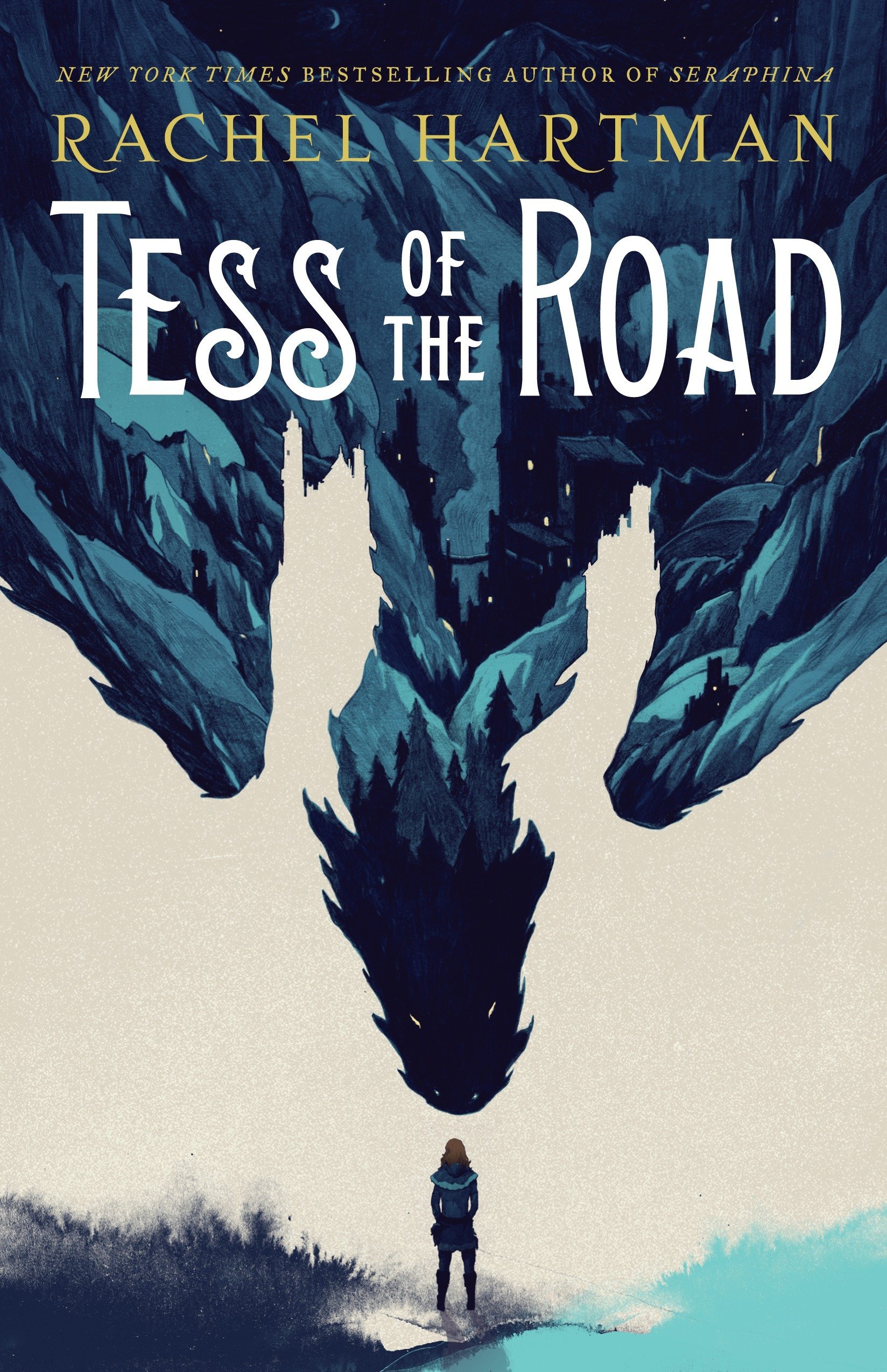
Tess of the Road by Rachel Hartman

Tess of the Road by Rachel Hartman was shortlisted for the inaugural YA Hugo award, to be awarded at the World Science Fiction Convention this weekend. That was the main reason I read it. Tess of the Road is a spin-off of a YA series that I was aware of, but which didn’t grab my attention (I think, based on what I now know, this was because the marketing and cover gave the wrong impression of the book). I started all the Hugo-nominated YA books but one, and Tess of the Road was the only one that interested me enough to keep reading (though I might come back to one or two of the others later).

In the medieval kingdom of Goredd, women are expected to be ladies, men are their protectors, and dragons get to be whomever they want. Tess, stubbornly, is a troublemaker. You can’t make a scene at your sister’s wedding and break a relative’s nose with one punch (no matter how pompous he is) and not suffer the consequences. As her family plans to send her to a nunnery, Tess yanks on her boots and sets out on a journey across the Southlands, alone and pretending to be a boy.

Where Tess is headed is a mystery, even to her. So when she runs into an old friend, it’s a stroke of luck. This friend is a quigutl—a subspecies of dragon—who gives her both a purpose and protection on the road. But Tess is guarding a troubling secret. Her tumultuous past is a heavy burden to carry, and the memories she’s tried to forget threaten to expose her to the world in more ways than one.

Tess is a teen in a world that expects people like her to be getting married and thinking of having babies. Because her family has fallen on hard times, she has spent the past couple of years working towards getting her twin sister a wealthy husband. Even though Tess is technically the older twin, scandalous events from her past have lead her family to pretend that honour falls on the other twin. This past and the way in which it was slowly explained throughout the book is what first grabbed my attention. What kept my attention was the world building and the interesting non-human races that feature.

As can be guessed from the title, Tess breaks free from the expectations of society and sets out on the road. She has a series of adventures, which make up the story and are tied together by a quest her (non-human) companion/childhood friend is undertaking. Throughout the book, we see Tess grow. She starts off as an alcoholic, but through walking and manual labour and a few other key events comes to confront and come to terms with her past.

As I said, I enjoyed this book, particularly the world building. It was on the long side and I felt it dragged a bit in the middle, exacerbating it’s length, however, it overall held my attention well, especially the opening chunk and the ending. The end made me think there might be a sequel, though I wasn’t sure if that would be the case until the very end. I would be interested in reading it. Also, having read this spin off, I am certainly considering going back to the original series about Seraphina, Tess’s sister, at some point. I recommend this book to fans of YA, coming of age stories and particularly the kind of YA which does not involve saving the world.

4 / 5 stars

First published: Random House, 2018
Series: Same world as the Seraphina series and the first book of a new series
Format read: eARC
Source: Hugo voter packet

Sunday, 28 July 2019

Abbott Vol 1 by Saladin Ahmed

Abbott Vol 1 by Saladin Ahmed collects issues #1–5 of the ongoing Abbott comics. I read it because it was shortlisted for a Hugo Award in the Graphic Novel category. I haven't been keeping up with comics recently, so I probably would not have come across it otherwise.

While investigating police brutality and corruption in 1970s Detroit, journalist Elena Abbott uncovers supernatural forces being controlled by a secret society of the city’s elite.

In the uncertain social and political climate of 1972 Detroit, hard-nosed, chain-smoking tabloid reporter Elena Abbott investigates a series of grisly crimes that the police have ignored. Crimes she knows to be the work of dark occult forces. Forces that took her husband from her. Forces she has sworn to destroy.

Hugo Award-nominated novelist Saladin Ahmed (Star Wars: Canto Bight, Black Bolt) and artist Sami Kivelä (Beautiful Canvas) present one woman's search for the truth that destroyed her family amidst an exploration of the systemic societal constructs that haunt our country to this day.

The titular character, Abbott, is a newspaper journalist working in 70s Detroit. Not only does she have to put up with racism and sexism, but some mystic cult-type magic is killing people and targeting her. Although the idea of evil cult magic stuff isn't exactly original, I found that Abbott did some interesting things with it, making it feel a bit fresh rather than clichéd. The setting also contributed to that.

I enjoyed Abbott even though I am not particularly in the mood for urban fantasy at the moment. The relationships in the comic were also well-developed, even though it was only five issues. I would recommend it to fans of Lois Lane, as well as fans of urban fantasy / horror type stories. I am interested in reading more if I come across the next volume.

4 / 5 stars

First published: 2018, Boom! Studios
Series: Yes, start of ongoing series.
Format read: PDF
Source: Hugo Voter Packet

Tuesday, 21 May 2019

Her Silhouette, Drawn in Water by Vylar Kaftan

Her Silhouette, Drawn in Water by Vylar Kaftan is a short novella about a woman imprisoned in a cave system on an alien planet. Or so it starts. She does not fully remember who she is or what her crime was, but at least she is not alone. Her fellow prisoner seems to know more than she does but is reluctant to divulge the information.

All Bee has ever known is darkness.

She doesn’t remember the crime she committed that landed her in the cold, twisting caverns of the prison planet Colel-Cab with only fellow prisoner Chela for company. Chela says that they’re telepaths and mass-murderers; that they belong here, too dangerous to ever be free. Bee has no reason to doubt her—until she hears the voice of another telepath, one who has answers, and can open her eyes to an entirely different truth.

This novella grabbed me straight away. Even though it is not very clear at first what's happening, I was drawn in my my desire to find out more about the world. I wasn't expecting the story to be about telepaths (probably because I don't pay overly much attention to blurbs), but it played out more interestingly than I would have expected. On the one hand, the plight of telepaths in this future world is central to the story since it's closely bound with the reasons for Bee's imprisonment. On the other hand, the actual conflict is backgrounded with the main focus being on Bee's personal struggle. In a society at war, we are presented with a very stark example of the personal being political.

I don't think I can say much more without spoiling the story, but I found it consistently very readable. The setting and story was a bit unusual, and at the same time the personal journey was very unexceptional in the context of fiction (aside from the parts that were). I recommend Her Silhouette, Drawn in Water to fans of soft science fiction/science fantasy — there's no avoiding the telepathy aspect of the story — and to any readers interested in personal stories with political backdrops.

4 / 5 stars

First published: May 2019, Tor.com
Series: Don't think so
Format read: eARC
Source: Publisher via NetGalley

Sunday, 3 February 2019

The Unbeatable Squirrel Girl Vol 5: Like I'm the Only Squirrel in the World by Ryan North and Erica Henderson

The Unbeatable Squirrel Girl Vol 5: Like I'm the Only Squirrel in the World written by Ryan North and illustrated by Erica Henderson is the fifth collected volume of comics. Squirrel Girl is my favourite Marvel hero and I have previously read and reviewed all the previous collected comic trades (1, 2, 3, 4). Broadly speaking, this volume brings us more of the same Squirrel Girl goodness that I have come to expect.

Everyone gets a week-long break from class, and Squirrel Girl is taking Nancy to visit her parents up in Canada! WHAT COULD POSSIBLY GO WRONG, RIGHT? Turns out, nothing! It's a great trip and nothing of note happens and our story is actually EXTREMELY DULL. Sorry everyone. No, just kidding! Our story is actually SUPER AWESOME and things get real crazy real quick once a certain super-powered villain nobody has heard of for over a decade reappears! That's right! This comic features mysteries AND Canadians AND camping, not to mention our ALREADY super-enticing focus on squirrel powers! Let's see Howard the Duck promise you THAT.

The volume contains a three-issue arc about a new super villain, which involves the excellent events depicted on the cover of this volume: Squirrel Girl throwing Tippy-Toe, who in turn throws Ant-Man. Superhero team-up gold. It also involves Canada and physics, so that's pretty cool.

The remaining two issues in the volume stand alone: we have a story told from the point of view of Mew the cat (who lives with Doreen's roommate), who ends up helping our heroes defeat the villain of the hour (and I think encounters Pizza Dog?). Then we have a special issue in which Doreen turns twenty and we get a look back at little Doreen on her fifth, tenth and fifteenth birthdays. That was an interesting look at the continuity of the current comic run (different to the continuity of the tie-in novels, for example).

Overall, this was a fun read and I recommend it to all Squirrel Girl fans who are this far behind in their reading (as I was). I don't think there's very much continuity in this volume, so only a basic understanding of Squirrel Girl is needed before reading; not all of the previous volumes need to have been read.

4 / 5 stars

First published: 2017, Marvel Comics
Series: The Unbeatable Squirrel Girl vol 5 of ongoing series, containing issues #12–16 of the 2015B run of Squirrel Girl
Format read: Trade Paperback
Source: All Star Comics, Melbourne

Wednesday, 30 January 2019

Meet Me at the Intersection edited by Rebecca Lim and Ambelin Kwaymullina

Meet Me at the Intersection edited by Rebecca Lim and Ambelin Kwaymullina is an anthology filled with intersectional Australian voices. The idea being to highlight all sorts of marginalised writers. Taken as a whole, this results in a very broad and diverse anthology. Although I am familiar with the two editors from the spec fic books they've authored, most of the stories did not have a speculative bent, although there were a few.

Meet Me at the Intersection is an anthology of short fiction, memoir and poetry by authors who are First Nations, People of Colour, LGBTIQA+ or living with disability. The focus of the anthology is on Australian life as seen through each author’s unique, and seldom heard, perspective.

With works by Ellen van Neerven, Graham Akhurst, Kyle Lynch, Ezekiel Kwaymullina, Olivia Muscat, Mimi Lee, Jessica Walton, Kelly Gardiner, Rafeif Ismail, Yvette Walker, Amra Pajalic, Melanie Rodriga, Omar Sakr, Wendy Chen, Jordi Kerr, Rebecca Lim, Michelle Aung Thin and Alice Pung, this anthology is designed to challenge the dominant, homogenous story of privilege and power that rarely admits ‘outsider’ voices.

Some of the stories were fun to read, some were intentionally uncomfortable, other fell somewhere in between those two extremes and made me think. Note that I use "stories" here in a generic sense to refer to all the pieces in the anthology, even though it included poetry and memoir. My two favourite stories gained that status for very different reasons. ‘Stars in our Eyes’ by Jessica Walton was a delightful celebration of geek culture, while including queer and disabled characters and refreshingly supportive characters. ‘The Last Stop’ by Alice Pung was not at all what I expected from the opening and is a story that firmly fell into the "made me think" category. It tells of the journey of a teen boy who starts off ignorant of Chinese culture but ends up learning that Chinese teenagers are just like him (but live in China). His experiences were starkly contrasted with those of various people around him.

I enjoyed a lot of the other stories too, but since I've written mini reviews of them all, I'll leave them for you to read below if you haven't already seen them in one of my #ReadShortStories posts. I will add, however, that I was a bit sad that the ebook I read didn't include the back cover art, since the (full) cover art is apparently also one of the intersectional pieces making up the whole. It wouldn't have been hard to include the full artwork inside the book (either near the start or at the back) and I'm disappointed that the publisher didn't bother.

Overall, this was a great read. I definitely recommend it to anyone looking to read more diverse voices or stories of Australia's chequered history. I liked how the anthology was structured, with stories grouped thematically, so that it opened with stories by indigenous people, and ended with stories of the migrant experience, with stories about characters who are queer and/or disabled (or overlapping with one of the other groups) in groups in the middle. The whole book is like a thematic rainbow, shading from one group to another, with overlapping stories in between.

~

‘Night Feet’ by Ellen van Neerven — A story about a teenaged girl playing soccer. And a bit how poverty and family circumstances are hurdles to that end. I expect the story would be more exciting for people who are into soccer, which I am not.

‘Dream’ by Graham Akhurst — A poem with formatting that didn’t work on my phone screen and was much more powerful when I was able to read it on the iPad. It’s also the kind of poem that becomes clearer with subsequent readings.

‘Dear Mate’ by Kyle Lynch — A distressing story, in some ways, about a young person who wants a job but has little idea how to get one. Although I didn’t realise how young he was until near the end, which did make it a bit less distressing.

‘Embers’ by Ezekiel Kwaymullina — A sad, short poem about dyslexia.

‘Harry Potter and the Disappearing Pages’ by Olivia Muscat — An essay/memoir about the author going blind at the start of high school and the frustrations of being disabled in modern society.

‘Fragments’ by Mimi Lee — The story of a young Chinese Australian dealing with her grandfather’s death and a difficult family situation. This was an interesting read but in some ways (the mental illness ways more than the grief ways) felt like it ily scratched the surface. I wouldn’t have minded it being longer but I can see why it made sense to leave it where it was. 4/5 30/12

‘Stars in our Eyes’ by Jessica Walton — A wonderful story about geeky teens and adults that made me laugh. Certainly the most fun story so far.

‘Trouble’ by Kelly Gardiner — A story of non-conforming girls in 1950s Melbourne. I enjoyed the local colour even if the end was not quite as I had hoped/shipped.

‘Sheer Fortune’ by Jordi Kerr — A more Australian story that I would have expected from a short summary of it, with some strong New Zealish elements thrown in via the second character. Shifters, lesbians, high school. A nice read.

‘Telephone’ by Yvette Walker — A timey-wimey story in which the main character receives a phone call from her teenage self. As she talks to this version of herself that had been trying to call and LGBT support hotline, she reflects on her life and how she got to where she is now (happily living with her wife). A sweet story, overall.

‘DNA’ by Melanie Rodriga — A story about a queer teenage girl and her interactions with her family and one of her teachers. I found it to be a slightly unusual story, full of direct questions and teen anger but not as many answers as I might have expected.

‘Almitra Amongst Ghosts’ by Rafeif Ismail — A kind of depressing story about not fitting in due to race, religion and queerness, all at once. Written in a lovely style.

‘The Other Son’ by Omar Sakr — An autobiographical story about a father’s death and meeting a half brother for the first time, told by the middle eastern author.

‘School of Hard Knocks’ by Amra Pajalic — A Bosnian girl moves to Australia and starts high school in a rough suburb, where she is bullied. Another autobiographical story.

‘Autumn Leaves’ by Wendy Chen — A nice, if bittersweet, story about a Chinese family in Melbourne around the time of Federation. I quite liked it.

‘How to Be Different’ by Michelle Aung Thin — An autobiographical essay about being different, especially as a young child in primary school.

‘The Last Stop’ by Alice Pung — This story wasn’t at all what I expected. Told from the point of view of a bogan or “feral” teenage boy who enters a competition for a laugh and wins a Rotary Club trip to China. Discovering that the ordinary high school kids in China are just like him significantly changes his world view and opens his eyes to racism. A really good read, in the end, though you had to get past some racism near the start to appreciate the change in the character’s perspective.

‘Border Crossings’ by Rebecca Lim — Another autobiographical essay, this morning me focusing on our interactions and reactions to the world, especially with respect to language.

4 / 5 stars

First published: 2018, Fremantle Press
Series: No
Format read: ePub
Source: Purchased from Apple Books

Friday, 18 January 2019

Paper Girls Vol 4 by Brian K Vaughan and Cliff Chiang

Paper Girls Vol 4 written by Brian K Vaughan and illustrated by Cliff Chiang is the fourth collected instalment of Paper Girls comics. This is the kind of comic that tells one continuous story over several volumes, so I don't recommend jumping in at volume 4 if you haven't read the previous three.

The mind-bending, time-warping adventure from BRIAN K. VAUGHAN and CLIFF CHIANG continues, as intrepid newspaper deliverer Tiffany is launched from the prehistoric past into the year 2000! In this harrowing version of our past, Y2K was even more of a cataclysm than experts feared, and the only person who can save the future is a 12-year-old girl from 1988.

This volume continues the story, as expected. This time, the girls find themselves in 1999 on New Year’s Eve when things are a little bit strange. And that’s without the giant robots and other time travellers. To me this volume felt like it was mostly running around and avoiding violence (or not, at times). It did progress the overall story but not quite as much as I would have liked. We did get to meet another future self of one of the girls, which was interesting.

While I wouldn’t say this was my favourite volume, I still enjoyed it and I still intend to read the next volume soon. This is a very sequential series and I don’t recommend staring part way through. New readers are best severed starting with volume 1. For continuing readers still invested in the story, I see no especially compelling reason to skip this issue, so read it if you haven’t already.

4 / 5 stars

First published: 2018, Image Comics
Series: Paper Girls vol 4 of ongoing series, collecting issues 16 to 20
Format read: Trade paperback
Source: Purchased from All Star Comics in Melbourne