Showing posts with label tansy rayner roberts. Show all posts

Sunday, 4 December 2022

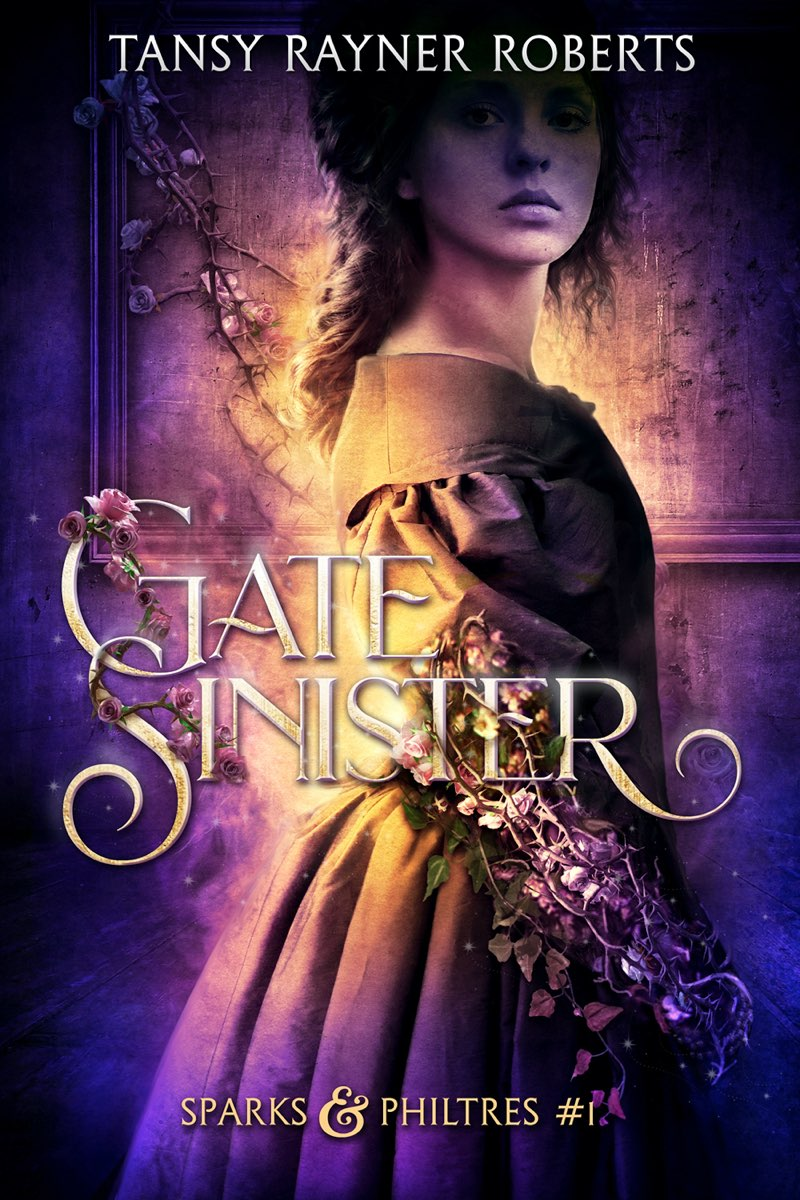
Gate Sinister by Tansy Rayner Roberts

Gate Sinister by Tansy Rayner Roberts is the first in the new novella series, Sparks and Philtres. It's set in a fae and magic secondary world based loosely on Victorian Britain (but with a Queen Isolde instead of Victoria).

Disguised as a governess, the last fairy in Britannia infiltrates the household of the Gloucester family to fulfil a vital mission on behalf of her exiled people.

On the run after offending the Royal family, two infamous magical engineers set out to commit the crime of the century on behalf of a wicked enchantress.

For one night only, the Gate Sinister can be opened between worlds, clearing the way to the long-lost Forest of Arden. For one night only, all things are possible…

This was an enjoyable and reasonably quick read. The story follows two sets of characters and it took me a little bit longer to warm to the second set, as is often the case with any piece of fiction; we get attached to the first characters we meet and then want to get back to their story as soon as possible! Of course, once both threads of the story started to come together, I found myself enjoying both sides of the narrative.

I appreciated that this novella stands alone fairly well. It does a lot of worldbuilding for later stories (I assume), but the story itself is self-contained. While our characters decide at the end to go off to do various things, it's not entirely obvious (to me, anyway) what story or path the next novella in the series will follow. That said, there are a lot of interesting possibilities and I am up for reading a story about any of them and curious about where the author will take the series.

Gate Sinister is an interesting start to what promises to be an enjoyable series. It is generally lighthearted but contains some darker themes and choices for the characters. It's a case of things getting darker the more you dwell on them, so there are some layers to the story and worldbuilding. I recommend Gate Sinister to fans of fairies, the ethics of love spells and novellas.

4 / 5 stars

First published: January, 2023
Series: Sparks and Philres, book 1
Format read: eARC
Source: the author
Disclaimer: Although the author is a friend, I have endevoured to write an unbiased review.

Friday, 3 April 2020

Short stories (1–5), a seemingly slow start, amidst much hidden reading


So this is my first #ReadShortStories post of 2020. April might seem a bit late, but in defence of my short story reading consistency, I would like to point out that until the end of March I was reading a large number of stories that were submitted to Rebuilding Tomorrow. So any time I thought about reading a short story that wasn't a submission, I felt guilty. But that's over now. The submissions have all been read and responded to (either with a rejection or a hold request, bending a higher level of global stability — if you submitted something but didn't hear back, feel free to query).

Which brings me to this first batch of stories. Without further ado:

~

Did We Break the End of the World? by Tansy Rayner Roberts — Reread in aid of editing a sequel story that will be appearing in Rebuilding Tomorrow. Source: Defying Doomsday edited by Tsana Dolichva and Holly Kench

The Frost on Jade Buds by Aliette de Bodard — A story of mindships, the threat of war and galactic foreigners. I didn’t get into this story as easily as I have some of the other Xuya stories. Source: The Dragon that Flew Out of the Sun by Aliette de Bodard

Meat Cute by Gail Carriger — A novelette prequel to the novel Soulless. You don’t have to have read Soulless or the Finishing School books to appreciate this story… but I do think it would help a lot. It’s cute and funny, as one expects from Carriger, and follows Alexia on the night of her very first meeting with Connal. Source: Stand-alone purchase

Inheritance by Emma Newman — An emotional slice of a character’s life, set before the events in Planetfall. A good read, but probably not as impactful if you haven’t read Planetfall. Source: Emma Newman’s newsletter

The Generation Gap by Emma Newman — A significant story (not a vignette) about a father who is worried that there’s something wrong with his kid. I loved the reversal and the plausibility of the resolution. I think it’s my favourite story of this series. Source: Emma Newman’s newsletter

Sunday, 22 September 2019

Hobgoblin Boots by Tansy Rayner Roberts

Hobgoblin Boots by Tansy Rayner Roberts is a short novella set in the world of the Mocklore chronicles. It stands alone and you do not have to have read any of the other books to pick this one up. I previously reviewed Ink Black Magic and I’ve also read Splashdance Silver, but more than a decade ago, long before this blog came into existence.

At the age of thirteen, half-hobgoblin Bounty Fenetre found herself on her own, which was fine by her. There was a cute chainmail number at the smithy's she had her eye on, once she figured out how to fix it so it bared her midriff. Then Ma Fortuna adopted her and she met Luc, her new foster brother.

Four years later, at the age of seventeen, Bounty is older and wiser, and really wants to Seek Her Fortune. She and Luc ambush a hero and steal his armor, because as everyone knows, the first step to becoming a hero is to look like one. The second step is to be recognized as a hero by the world at large, which surprisingly, isn't as hard as it sounds. Mocklore is a land where magic crashes and smashes through the landscape, exploding with abrasive sounds and colors, the ideal place for a clever half-hobgoblin fosterling and a charismatic hero-in-progress to make their names.

The story follows Bounty as she grows up (reaches her late teens) and goes off to seek her fortune. First with her adopted brother, then alone. She encounters a variety of fantasy world scenarios and experiences somewhat of a coming of age narrative.

This was a short and entertaining read. The author doesn’t shy away from mocking fantasy tropes, but without mocking the entire fantasy genre. It’s a little reminiscent of early Pratchett, or perhaps Douglas Adams, but also not quite. Roberts has a voice all her own.

I recommend this novella to fans of Roberts’ writing and particularly the Mocklore books. If you haven’t read any of that series, this is a reasonable introduction and sample.

4 / 5 stars

First published: 2004, recent re-/self-published
Series: Mocklore universe, a standalone story
Format read: ePub
Source: Tansy Rayner Roberts' Patreon or possibly newsletter
Disclaimer: Although the author is a friend, I have endeavoured to write an unbiased review

Sunday, 14 July 2019

#ReadShortStories all over the place (106–110)

Stories from a variety of sources in this batch. Aside from finishing off my Hugo novelette reading (stay tuned for a round up of all those stories), I listened to an audio story while travelling (possibly it was a novella, but I'm including it here) and read a paper story, so a range of formats.


Rules for the Care and Maintenance of Phoenix Eggs For Wayward Daughters by Tansy Rayner Roberts — An amusing flash/listicle story about caring for a Phoenix egg, just like it says in the title. Source: Tansy Rayner Roberts’ Patreon (and subsequently newsletter)

When We Were Starless by Simone Heller — Exquisitely detailed world building as we follow a tribe and their spiritual leader across a world unable to sustain life. Their world is very different from ours and, although the tribe is not human, they are recognisably people who have forgotten their distant past and are distrustful when confronted with a remnant of it. The story felt fantastical when I started reading but became more clearly science fiction as I read further. A very well-thought-out story. Source: http://clarkesworldmagazine.com/heller_10_18/

Into Darkness by Anike Kirsten — Implausible but sort of interesting flash. Source: https://www.nature.com/articles/d41586-019-01798-z

Let Sleeping Princes Lie by Tansy Rayner Roberts — An entertaining story in a parody fairytale world with royalty and reporters and the need to dodge stray spinning wheels. I enjoyed it. Source: http://sheepmightfly.podbean.com/e/let-sleeping-princes-lie-part-1 (also available in print)

The Last Banquet of Temporal Confections by Tina Connolly — A fantasy story about magical pastries that forcibly evoke certain memories. Well, the actual story is about the wife of the baker that makes them and the tyrannical King who has taken the throne. It was an interesting that I enjoyed even as I wondered how it would end satisfactorily. Source: https://www.tor.com/2018/07/11/the-last-banquet-of-temporal-confections-tina-connolly/


Tuesday, 18 December 2018

Tea and Sympathetic Magic by Tansy Rayner Roberts

Tea and Sympathetic Magic by Tansy Rayner Roberts is a short novella set in a new fantasy world that I believe the author is planning to come back to. I actually started reading this in the middle of the night after finishing my previous book and having a bout of insomnia. It's so short I finished it the same night and even managed to get some sleep afterwards. (Not enough, but still.)

Meet Miss Mnemosyne Seabourne, the one lady in the Teacup Isles who doesn't want to marry the Duke. Meet Mr Thornbury, a spellcracker whose job is protecting the Duke from the love charms of eligible ladies. Together, they fight elopements!

Featuring croquet, libraries, enchantresses, teacups, portals and cake.

We have a protagonist who has no interest in marrying her ducal cousin but who is unfortunately in possession of a mother who is very keen on the idea. We also have a magic steeped world, with croquet reminiscent of the Disney Alice in Wonderland cartoon (but without the Red Queen), and portals for men to travel through (but not women). And of course there's the non-landed spellcracker who Mneme finds far more interesting than the cousin her mother wants her to marry.

All in all, a very fun read. The climax was dramatic, to say the least, and the plot was exciting when it needed to be and amusing most of the time. I am certainly interested in reading more stories in this world.

I highly recommend Tea and Sympathetic Magic to fans of Roberts' other light-hearted fantasy stories. It's a new setting, but I don't think anyone will be disappointed, except, perhaps, by the fact there isn't more.

4.5 / 5 stars

First published: December 2018, via Patreon
Series: Yes? I think so.
Format read: ePub
Source: Tansy Rayner Roberts' Patreon
Disclaimer: Although the author is a friend, I have endeavoured to write an unbiased review

Saturday, 17 November 2018

Merry Happy Valkyrie by Tansy Rayner Roberts

Merry Happy Valkyrie by Tansy Rayner Roberts is a Christmas-themed novella set in a strange small town in Tasmania. I'm not usually one for Christmas-themed stories or capital-R Romance but I made an exception because I wanted something lighthearted and I am a fan of Roberts' work. As it transpired, it's heavier on the fantasy than the romance, so that worked out well for me.i

Norse myth and magic collides with a small town Tasmanian Christmas in this festive romantic fantasy!

Lief Fraser has mixed feelings about returning home to Matilda, the only Australian town where it always snows at Christmas. As a TV weather presenter, it’s her job to report on the strange holiday phenomenon… but as a local, it’s her duty to preserve Matilda’s many magical secrets.

Then pretty Audrey Astor rolls into town to shoot the ultimate romantic Australian Christmas movie with her film crew. Sparks fly, secrets unravel… and soon everyone will know exactly how Mt Valkyrie got its name.

This was a fun read. Lief is a meteorologist who has been sent to cover the freak weather that frequently strikes her home town. Except she knows that the snow in northern Tasmania in December is more due to magic than any natural meteorology. (Northern hemisphere readers should remember that it is summer during December in southern Australia.) Lief's job isn't so much to cover the strange weather but to stop anyone noticing just how strange the weather really is. And there are camera crews to dodge and carefully direct.

This was a really enjoyable tale. Aside from the inherently amusing premise of trying to hide magic snow from reporters, Lief has family obligations to feel guilty about and exes too feel awkward (or not) around. The underlying premise of why there is weird snow was also really interesting, though I won't spoil it here.

I highly recommend this novella to fans of feel-good fantasy stories. I think fans of Christmas stories will also enjoy it, but I think those who feel ambivalently or negatively about Christmas will still find much to enjoy here. It's not sappy and any Christmas cheesiness is relatively minor.

4.5 / 5 stars

First published: End of November 2018, Twelfth Planet Press
Series: No
Format read: eARC
Source: Publisher
Disclaimer: Although the author is a friend, I have endeavoured to write an unbiased review

Tuesday, 13 November 2018

Halloween is Not a Verb by Tansy Rayner Roberts

Halloween is Not a Verb by Tansy Rayner Roberts is the latest novella in the Fake Geek Girl universe. It seems to be set later than other other existing stories and, as is probably obvious from the title, is Halloween themed.

Young Aussie witches Hebe and Holly Hallow are bringing their friends home to meet their mums for Halloween! What terrible life choices will Sage and Jules make around the bonfire? Why is Ferd flipping out about poetry? What’s with all the butternut pumpkins?

Epic friendship and festive shenanigans with the magical students from Belladonna University.

Credit where credit’s due, Halloween is Not a Verb does include several discussions in how impractical Halloween traditions are when transposed to the Southern Hemisphere and the middle of spring. That said, it’s also a book about witches that embraces the tradition with the in-story debates focussed on the details. I, however, fall into the third category of people that Roberts lists in the book: the Halloween denialist/Americanisation-of-Australian-culture-is-ruining-everything category. In light of that, the rest of the review will focus on the actual story.

I think this is one of my favourite Fake Geek Girl stories. As usual, it involves more character development than you might expect for this type of ongoing series, making for an engaging read. There’s also more peril than usual (in my opinion, which is not to say the other stories have all been peril-free). It’s also tightly written with a lot of funny bits and a dearth of boring bits. The only negative thing I can say about it is that sometimes I wasn’t paying enough attention at the start of a chapter and got a bit lost as to whose point of view we were following now, but that generally because clear eventually. There are a lot of characters to follow though, so if you haven’t read any of the earlier stories this might not be the best place to be introduced to the series.

Overall this was another fun read from Tansy Rayner Roberts and exactly the kind of story I was in the mood for when I picked it up. I think it was one of the best Fake Geek Girl stories and while I don’t especially recommend it as a starting point, I do highly recommend the series as a whole to anyone who enjoys humorous contemporary fantasy. And if you have read some of the other Fake Geek Girl stories, you can jump right in to Halloween is Not a Verb.

4.5 / 5 stars

First published: October 2018, Self-published
Series: Fake Geek Girl story 4 of 4ish (excluding a prequel)
Format read: ePub
Source: Tansy Rayner Roberts' Patreon
Disclaimer: Although Tansy is a friend I have endeavoured to give an unbiased review

Thursday, 6 September 2018

Mother of Invention edited by Rivqa Rafael and Tansy Rayner Roberts

Mother of Invention edited by Rivqa Rafael and Tansy Rayner Roberts is an anthology exploring robots and artificial intelligences created by women and non-binary people, rather than the male inventors many older stories have focussed on. It contains stories covering a wide variety of ideas and settings within this theme and is a must-read if you are interested in exploring diverse robot/AI stories.

An ambitious anthology from award-winning Australian publishing house Twelfth Planet Press, Mother of Invention will feature diverse, challenging stories about gender as it relates to the creation of artificial intelligence and robotics.

From Pygmalion and Galatea to Frankenstein, Ex Machina and Person of Interest, the fictional landscape so often frames cisgender men as the creators of artificial life, leading to the same kinds of stories being told over and over. We want to bring some genuine revolution to the way that artificial intelligence stories are told, and how they intersect with gender identity, parenthood, sexuality, war, and the future of our species. How can we interrogate the gendered assumptions around the making of robots compared with the making of babies? Can computers learn to speak in a code beyond the (gender) binary?

If necessity is the mother of invention, what exciting AI might come to exist in the hands of a more diverse range of innovators?

This was a very interesting read and I was pleased with the breadth of stories and ideas presented in Mother of Invention. I have found some themed anthologies need to be broken up because of too much similarity in their stories, but that was not the case here. I admit I didn't quite read it straight through, but that was for other, mostly external reasons, not because I found it repetitive.

Overall, this was an excellent read. While not every story necessarily worked for me, I certainly enjoyed the majority of them. My three favourite stories were "Sexy Robot Heroes" by Sandra McDonald, "Quantifying Trust" by John Chu and "S’elfie" by Justina Robson. All three took very different approaches to the theme and, really, the only similarity between them is that they contain artificial intelligences. You can read more of my thoughts on these stories and all the others below, where I have included my mini reviews of the stories that I wrote as I read them.

I would highly recommend Mother of Invention to readers interested in exploring different ideas of robots and artificial intelligences, including as a vehicle for exploration of other themes such as gender, religion and creation. This is not I, Robot, filled with logic-puzzle stories, but rather is filled with stories of humanity and inhumanity, and a spectrum on both sides of that divide.

~

Mother, Mother, Will You Play With Me? by Seanan McGuire — A story about an AI child learning through games and growing up. I enjoyed it, although it wasn’t what I expected (from the title and author I expected something creepier). I liked how many different ideas it explored, and also the ending.

Junkyard Kraken by DK Mok — A roboticist builds an ocean-exploration robot after failing to get funding for it. A fun story, especially thanks to the inclusion of other AI robots, such that it can be forgiving for being a bit unrealistic.

An Errant Holy Spark by Bogi Takács — A Jewish AI growing up, learning, and trying to talk to aliens. Written in the unique style I’ve come to expect from this author, the inner voice of the AI was very different to conventional (robot/AI) tropes. An interesting story and premise, with baffling aliens.

The Goose Hair of One Thousand Miles by Stephanie Lai — A story written in the form of an annotated translation of a wuxia story. The story itself is particularly bizarre, to my eye, because of the way the robots are included and thanks to the aspects the commentary focuses on. Even so, it engages with ideas of colonialism well.

The Art of Broken Things by Joanne Anderton — An eerie story based on the really interesting premise/theme of kintsugi. I liked the idea and the way different aspects of the story meshed together, but at the same time it creeped me out a bit (mostly in a good way).

Sexy Robot Heroes by Sandra McDonald — I really liked this story. It featured a trans girl mechanic, a whole barge of girl mechanics, and androids bound to serve them. It was the right mix of sentimental and sensible.

A Robot Like Me by Lee Cope — An agender AI programmer makes an AI in their image. A lovely and slightly bittersweet story about gender. I liked it.

New Berth by Elizabeth Fitzgerald — A futuristic take on regency romance that put me in mind if Austen in tone. However, I found it a bit confusing to keep track of characters and motivations and it didn’t really work for me for that reason. I expect some readers will enjoy it more than I did.

Fata Morgana by Cat Sparks — Post-apocalyptic/war-torn Australia with fighting mechs wandering around, at least one of which is intelligent. In rough conditions the mech protects the old lady that was its creator and helps a poor settlement. I enjoyed it.

Bright Shores by Rosaleen Love — A fantastical story about robots (and one woman) living in a nuclear exclusion zone. Clearly taking cues from the Fukushima tsunami disaster, I liked the premise of the robots left behind (because they are too contaminated from dealing with radioactive material), but it lost me a bit with some of the less scientific ideas.

Quantifying Trust by John Chu — A robot engineering grad student works on her design and ponders the question of trust for AI. And meets a postdoc who may or may not be an advanced AI sent from the future. I really liked this story.

Sugar Ricochets to Other Forms by Octavia Cade — A pretty weird story. On the one hand, we have a couple of women running a brothel staffed with magic automaton boys made out of sugar and cake (who often come back with parts missing in the morning). On the other hand, there is a clockwork witch made of brass I love with baby crabs lured by sugar. A compelling read, but also a strange one.

Kill Screen by EC Myers — A teenage girl makes an AI program of her recently deceased best friend. It was a bit morbid, mostly because it dealt with the question of why the friend had killed herself, but also for other reasons (spoilers). I mostly enjoyed it, but it also made me feel uncomfortable (intentionally, I assume), especially near the end.

Living Proof by Nisi Shawl — A story about an AI reproducing. The setting was quite different — a prison — and to some degree aspects of the story put me in mind of Bitch Planet. Not the overall thrust of the narrative, however, which is more about purpose from the AI perspective. Not my favourite story, but I didn’t hate it.

S’elfie by Justina Robson — A very interesting story about a world in which everyone has an AI personal assistant and what happens when they move far beyond what we currently have with Siri etc. Told from the point of view of one of these AIs, while her human is working on something in secret, I really enjoyed the incomplete knowledge of the narration.

Knitting Day by Jen White — A lovely story about knitted robots, poor working conditions and the subversion of capitalism. I enjoyed it, despite its grim setting and whimsical approach to assembly.
The Revivalist Kaaron Warren A creepy story (of course, look at the author) about a process that imbues discarded robots with the last words of the dead. Mostly murder victims. I liked it. And note it wasn’t heavy on the horror, more creepy/eerie.

Arguing with People on the Internet by EH Mann — An interesting story about an AI set loose arguing with people on the internet to unexpected consequences. Also features an asexual protagonist and engages with the concept of motherhood from a different angle. I quite liked it.

Rini’s God by Soumya Sundar Mukherjee — This story took an unusual approach. Not only was the protagonist AI interested in theological ideas but she has a hidden purpose. Which, in the context of the story was odd since it’s hard to program someone to do something when they have free will, so I found the creator’s motivation confusing from that point of view. Also, running an orphanage of AI humanoids was either sneaky or very strange, I haven’t decided which.

Tidefall by Meryl Stenhouse — Ow, my astronomy hurts. This was absolutely not a story to read at at astronomy conference, in between talks about merging stars oh em gee. So that coloured my reading of it considerably. Questionable astronomy aside, the plot and ideas didn’t really do it for me either. What seemed like it would be a really interesting idea ended up feeling a bit bland.

The Ghost Helmet by Lev Mirov — The AIs in this story are basically ghosts of soldiers whose memories became imprinted on their helmets. Our protagonist is a coder who accidentally caused the situation and now always wears her brother’s helmet so he can talk to and help her. I would have liked the story to spend some more time on the ethics of creating the helmet ghosts (is it really a good form of immortality?) but otherwise it wasn’t a bad read.

4.5 / 5 stars

First published: Kickstarter backers got it in July, general release September 2018
Series: No
Format read: ePub
Source: Kickstarter backer
Disclaimer: Although the editors, Rivqa and Tansy, are friends, I have endeavoured to write an impartial review

Sunday, 2 September 2018

#ReadShortStories about AIs and magic oh my (151 to 155)

This batch of short stories finishes off Mother of Invention — stay tuned for my full review of that anthology coming soon — and adds a few miscellaneous stories into the mix. I think I will mainly focus on finishing Uncanny Issue 22 next, but I'm not yet sure which direction I'll go in after that. There's more Uncanny waiting for me, including the Disabled People Destroy Science Fiction Issue, which I am keen to read. But I also have a lot of anthologies and collections waiting to be read, so we'll see.


Rini’s God by Soumya Sundar Mukherjee — This story took an unusual approach. Not only was the protagonist AI interested in theological ideas but she has a hidden purpose. Which, in the context of the story was odd since it’s hard to program someone to do something when they have free will, so I found the creator’s motivation confusing from that point of view. Also, running an orphanage of AI humanoids was either sneaky or very strange, I haven’t decided which. Source: Mother of Invention edited by Rivqa Rafael and Tansy Rayner Roberts

The Alchemy of Fine by Tansy Rayner Roberts — The narrative structure of this story is a bit unusual: it is told in reverse chronological order. As a result, it took me a few short chapters to get into, but I was very much enjoying it by the end. The author suggests that it would work read in reverse (so proper chronological order), and if I ever reread it I think I will do just that to see how it feels. Requires having read Fake Geek Girl at least, otherwise I don’t think it stands alone too well (since it’s basically an exploration of the characters’ back stories). Source: Tansy Rayner Roberts’ Patreon

Tidefall by Meryl Stenhouse — Ow, my astronomy hurts. This was absolutely not a story to read at at astronomy conference, in between talks about merging stars oh em gee. So that coloured my reading of it considerably. Questionable astronomy aside, the plot and ideas didn’t really do it for me either. What seemed like it would be a really interesting idea ended up feeling a bit bland.  Source: Mother of Invention edited by Rivqa Rafael and Tansy Rayner Roberts

The Ghost Helmet by Lev Mirov — The AIs in this story are basically ghosts of soldiers whose memories became imprinted on their helmets. Our protagonist is a coder who accidentally caused the situation and now always wears her brother’s helmet so he can talk to and help her. I would have liked the story to spend some more time on the ethics of creating the helmet ghosts (is it really a good form of immortality?) but otherwise it wasn’t a bad read. Source: Mother of Invention edited by Rivqa Rafael and Tansy Rayner Roberts

What Gentle Women Dare by Kelly Robson — In a very detailed setting — Liverpool 1763 — this story follows a poor prostitute as she does her job, tries to look after her child, and incidentally encounters a corpse wearing an unusual garment. This story is mostly about how crappy life is for women in her time but the speculative element makes for a very interesting ending. Source: https://uncannymagazine.com/article/what-gentle-women-dare/

Saturday, 28 July 2018

#ReadShortStories about stories. Sort of. (131 to 135)


A small departure from Mother of Invention stories in this batch, mainly to mix things up a bit and partly because I was feeling behind on my Uncanny subscription. An interesting batch here, but none that jumped out at me as favourites.


A Robot Like Me by Lee Cope — An agender AI programmer makes an AI in their image. A lovely and slightly bittersweet story about gender. I liked it. Source: Mother of Invention edited by Rivqa Rafael and Tansy Rayner Roberts

Girls Who Read Austen by Tansy Rayner Roberts — A cute story about the main character’s failure to get agreeable college roommates. Short and sweet. Source: Tansy Rayner Roberts’ Patreon

Restore the Heart into Love by John Chu — In a future with space flint and high tensions/war between China and Taiwan, a Taiwanese-American computer scientist works to preserve traditional Chinese text. An interesting take, but not my favourite Chu. (It was not helped by the baffling way Uncanny rendered the Chinese characters which did not play nice with Pocket and definitely affected my reading experience.) Source: https://uncannymagazine.com/article/restore-the-heart-into-love-2/

New Berth by Elizabeth Fitzgerald — A futuristic take on regency romance that put me in mind if Austen in tone. However, I found it a bit confusing to keep track of characters and motivations and it didn’t really work for me for that reason. I expect some readers will enjoy it more than I did. Source: Mother of Invention edited by Rivqa Rafael and Tansy Rayner Roberts

Blessings by Naomi Novik — An short and amusing story. I liked the premise and the execution wasn’t bad, but I kind of expected it to be funnier (the premise of drunk fairies fighting over blessings for a child lends itself to humour, in my opinion). Source: https://uncannymagazine.com/article/blessings/

Tuesday, 27 March 2018

#ReadShortStories ...That Are Mostly Poems (61 to 65)

An unusual batch this time around because I read all the Uncanny Issue 20 poems in a row, which I'm not sure is the best way to do it. Especially since my poetry reviewing skills a woefully underdeveloped compared with prose fiction. Maybe next time I'll read the poems between stories or something.

To cap it off and balance the relatively short poems, I went for a longer story from Tansy Rayner Roberts. A queer romcom about spy gadget scientists, it would have stood out even without the poems for contrast.

The Knight of the Beak by Sofia Samatar and Del Samatar — I have no idea how to review some poems, it turns out. Sorry. About a knight, sort of. Source: https://uncannymagazine.com/article/the-knight-of-the-beak/

The Cat’s Daughters by Nitoo Das — A lovely fantastical poem about the daughters of a cat. Told before they were born and after and involving magical deals. Source: https://uncannymagazine.com/article/the-cats-daughters/

Shadow-Song by Sonya Taaffe — Another poem that I’m not sure how to review. This one passed me by with my having only vague ideas as to what it’s about. Source: https://uncannymagazine.com/article/shadow-song/

1532 by Ana Hurtado — A bit too stream of consciousness for my taste. The lack of line breaks in this poem made it harder for me to follow (but again, probably best not to trust my opinion on poems). Source: https://uncannymagazine.com/article/1532/

Super Spy Science Secret Santa by Tansy Rayner Roberts — A super fun novelette set in an undisclosed Australian location. The protagonist is the head of a research group whose job it is to develop high-tech spy gadgets for the agents out in the field. An amusing and entertaining story about a Secret Santa design competition, hating fun, avoiding explosions and romance. Source: Tansy Rayner Roberts’ Patreon

Monday, 22 January 2018

Reading stories 11 to 15

Post title brought to you by apparently I am counting stories read this year (I mean, automatically, because spreadsheet). And because I am definitely going to run out of post titles if I don't standardise them somehow.

A mildly amusing anecdote about the first story in this batch: for reasons I'm still unclear on, the version of the story that appeared in Pocket was only the last section of story. The fact that I still thought it was a pretty good read without the first two thirds or so of the text is testament to the author's writing. But of course, when I realised the mistake (basically, when I was logging it in the spreadsheet) and did read the start of the story, I found it an even better read that delved more deeply into the issues that previously only seemed touched upon. Shocking, I know. I will have to be vigilant if I get to more stories from the same magazine.

On another note, I just subscribed to Uncanny since I've been reading a lot of their stories. Will be interesting to see how having ePubs of the whole magazine rather than saving isolated stories affects my reading experience.

Stories 11 to 15:

A Complex Filament of Light by S Qiouyi Lu — A story set in Antarctica about a person dealing with difficult feelings after a loss. Isolation, auroras and mental health. Source: http://www.anathemamag.com/a-complex-filament-of-light

Landmark by Cassandra Khaw — Lovers separated by astronomical distances try to stay in touch with technology. The extreme long-distance relationship. Dour. Source: http://clarkesworldmagazine.com/khaw_12_17/

An Account of the Sky Whales by A Que — A lovely story about flying space whales, the boyfriend of a whale researcher making the journey to collect her ashes, poachers. A meaty world, well-developed in this novelette. Source: http://clarkesworldmagazine.com/audio_06_17d/

Relentless Adaptations by Tansy Rayner Roberts — A story about a sleep-deprived new mother in a world where all fiction has been reduced to classics + gimmicks (zombies, vampires, etc). Also an apocalypse, but she’s too tired to pay much attention to that. Very amusing. Source: Sprawl edited by Alisa Krasnostein

It Happened To Me: I Melded My Consciousness With the Giant Alien Mushroom Floating Above Chicago by Nino Cipri — A vaguely amusing story. Not bad, but not interesting enough to get away with not being funny at this short form. Source: https://firesidefiction.com/it-happened-to-me-i-melded-my-consciousness-wtih-the-giant-alien-mushroom-floating-above-chicago

Saturday, 25 November 2017

Girl Reporter by Tansy Rayner Roberts

Girl Reporter by Tansy Rayner Roberts is a novella set in the same universe as her short story "Cookie Cutter Superhero", published in Kaleidoscope, and the novella Kid Dark Against the Machine. You don't have to have read the earlier stories to enjoy or understand Girl Reporter, but the characters from the earlier stories show up and provide minor spoilers for their backstories.

In a world of superheroes, supervillains, and a machine that can create them all, millennial vlogger and girl reporter Friday Valentina has no shortage of material to cover. Every lottery cycle, a new superhero is created and quite literally steps into the shoes of the hero before them--displacing the previous hero. While Fri may not be super-powered herself, she understands the power of legacy: her mother is none other than the infamous reporter Tina Valentina, renowned worldwide for her legendary interviews with the True Blue Aussie Beaut Superheroes and her tendency to go to extraordinary lengths to get her story.

This time, Tina Valentina may have ventured too far.

Alongside Australia's greatest superheroes--including the powerful Astra, dazzling Solar, and The Dark in his full brooding glory--Friday will go to another dimension in the hopes of finding her mother, saving the day, maybe even getting the story of a lifetime out of the adventure. (And possibly a new girlfriend, too.)

This novella was a positively delightful read. It blends Roberts' humour with social commentary on the state of superhero fiction and various contemporary issues, especially those surrounding representation. Additionally the novella is so Australian it hurts (in a good way). Despite the alternate universe setting, Roberts finds plenty of opportunity to engage with modern Australian culture and hark back to the Australian culture of the 80s and 90s. I expect there will be some references that non-Australians will miss, but the novella won't be the worse for it. And everything really important is explained anyway.

The other delightful thing about this novel is the upbeat and clever voice of Tina Valentina. I will always have a soft spot for snark, but it's also nice to have a protagonist who is pretty upbeat and excited about things, despite some cynicism. Also, Tina drops backstory into the narrative very naturally, whether it's superhero history or about her mother. Roberts has nailed alternate-dimension young Millennial, and I say this as a non-super-dimension older Millennial.

This was my favourite of all three stories in the "Cookie Cutter Superhero-Verse" so far. I hope there will be more. I love the setting and all the characters so far have been great. There hasn't been very much superhero fiction (that I'm aware of) set in Australia and the strong Aussie-ness of the setting really boosts the book into an even more exciting take on superheroes, rather than yet another superhero story set in New York.

I highly recommend Girl Reporter to all fans of superhero stories. It's fun and fresh and full of diversity. Being a novella, it's also a pretty quick read. I can't wait to read more books set in this world.

5 / 5 stars

First published: December 2017, Book Smugglers
Series: Cookie Cutter Superhero-Verse, third instalment of three so far. Stand-alone.
Format read: ePub ARC
Source: review copy provided by author
Disclaimer: Although the author is a friend, I have endeavoured to write an unbiased review
Challenges: Australian Women Writers Challenge

Wednesday, 8 November 2017

Unmagical Boy Story by Tansy Rayner Roberts

Unmagical Boy Story by Tansy Rayner Roberts is the second novella in the Belladonna University series. It chronologically follows Fake Geek Girl and precedes The Bromancers, although I read and both of those novellas first. They're all relatively self-contained and reading them out of order only really leads to mild character development spoilers and spoilers regarding the introduction of new characters.

One magical university, divided between the Colleges of the Real and Unreal. One pub. One indie band. A lot of drunk witches on a Friday night. One shattered friendship, due to be repaired. One Practical Mythology paper which really has to be finished by Monday... Oh, and trolls. Let’s see who survives Friday night drinks!

This is a fluffy story about a grumpy post-grad which touches on some deeper issues. Viola Vale come from a rich upper-class family who are, and consort with, important decision-makers in the magical world. And of course they look down on non-magical people. The story is about Viola coming to terms with one of her best friends (also from an upper-crusty family) having been in a magical accident that stripped him of his power. It's a story of learning understanding and acceptance and Viola's journey is quite pronounced. She goes from wanting to fix her, now unmagical friend, Chauv, to accepting him as the person he now is.

The other, slightly less significant, story of acceptance is Viola's slow-building tolerance for Chauv's new friends, flatmates and girlfriend, who are basically the Fake Geek Girl gang. She goes from generalised distain for people she sees as beneath her to grudging acceptance (but not of the music), and something approaching respect for Sage and Hebe.

All it all, this was a fun, short and relaxing read with enough depth to properly address the more serious issues that it raised. I enjoyed it and I recommend it to all fans of Roberts' writing and to fans of humorous or lighthearted fantasy and geek culture. I look forward to more instalments in the series.

4 / 5 stars

First published: 2016, self-published via Patreon
Series: Belladonna University, novella 2 (after Fake Geek Girl, before The Bromancers)
Format read: ePub
Source: The author's Patreon
Disclaimer: Although the author is a friend, I have endeavoured to give an unbiased review
Challenges: Australian Women Writers Challenge

Friday, 27 October 2017

The Bromancers by Tansy Rayner Roberts

The Bromancers by Tansy Rayner Roberts is a novella set in the Fake Geek Girl universe. I had previously read (or, well, listened to) the short story “Fake Geek Girl” on her Sheep Might Fly podcast and chose to read The Bromancers because I was in the mood for something light. I didn't realise that there was another short story chronologically before The Bromancers, "Unmagical Boy Story", but The Bromancers made perfect sense without it, albeit I was probably lacking some background on a few of the characters in The Bromancers.

Our favourite witchy rock band, Fake Geek Girl, are road-tripping to a magical music festival in a wi-fi free zone on the same weekend that the season finale of their favourite TV show drops. Can they avoid spoilers? Can Hebe, Holly, Juniper & Sage camp in tents for three days without murdering each other? Can coffee really fix EVERYTHING including missing band members, messy relationship drama and obsessive fan shenanigans?

Friendship is magic, but if you pile too much friendship on top of too much magic over one weekend, the results are bound to be explosive.

The Bromancers follows the band members of Fake Geek Girl and their friends as they go camping at a music festival. There are shenanigans, hijinks, a bit of danger and a portion of relationship drama. The title comes from a TV show the friends are highly invested in, the season finale of which just happens to coincide with the no-wifi music festival. There's a lot of cute fan-related bonding thrown into the mix.

Each chapter of The Bromancers follows a different character as they worry about the things important to them, allowing us to learn more about them. This method of storytelling also allows the reader to see various characters from the points of view of other characters, which makes for interesting juxtaposition. Overall, I would call this a cosy contemporary fantasy story.


I recommend The Bromancers to fans of Tansy Rayner Roberts’ work, especially her more light hearted fiction. I suggest reading the short story “Fake Geek Girl” (or listening to it for free on the Sheep Might Fly podcast) for a bit of context before The Bromancers, but it’s not essential. I am planning to read the short story I accidentally skipped, “Unmagical Boy Story”, soon.

4.5 / 5 stars

First published: October 2017, Self-Published
Series: Belladonna U, story 3
Format read: ePub
Source: Tansy Rayner Roberts' Patreon
Disclaimer: Although Tansy is a friend, I have endeavoured to give an unbiased review
Challenges: Australian Women Writers Challenge

Thursday, 21 September 2017

Please Look After This Angel: and other winged stories by Tansy Rayner Roberts

Please Look After This Angel: and other winged stories by Tansy Rayner Roberts is a short collection of four short stories that was originally given away to her newsletter subscribers (which is how I got it), then Patreon supporters, and soon will be available for general sale.

Even the most ordinary lives have extraordinary moments.
A breath of frozen time.
A shabby angel spotted in a bookshop, or at a party.
An ex-girfriend turned famous poet, who wants to trap you as her muse.
A lonely prisoner, weaving a tangled web to pass the time when her lover wil actually notice her.
A soldier, exhausted from the War Effort against the aliens, making an emotional connection with her enemy.

These stories have wings.

I picked this up partly because of my challenge to myself to read 100 short stories by the end of the year, and this little collection happened to be near the top of my iBooks pile of short fiction. It also lured me in by being fairly short, and hence feeling like a less daunting time investment when I'm also in the middle of a novel I don't want to put down for long (stay tuned). As usual, I have written some comments on each story as I've gone along. Because I've been partly using the comments to tweet about the stories as I read them, they may be briefer than usual (but generally longer than the tweeted versions.

~

Please Look After This Angel — A story about an ordinary life which happens to intersect with an angel a few times.

The Raven & Her Victory — A creepy, magical, Poe-inspired story about lesbians. I enjoyed it, but wow was the ending creepy and kind of surreal.

The Curse Is Come Upon Me, Cried — A weird story. A blend of fairytale, the modern world, Arthurian themes and horror. Probably my least favourite, although I liked the imps and the idea of maintaining a sense of self when you're invisible.

Of War & Wings — Steampunk angel women fighting off alien invaders in a Blitz-like London (but set earlier than WWII). My absolute favourite story of the collection. Gorgeous and terribly sad. I suspect it's an excellent fit for fans of Roberts' Creature Court trilogy.

~

I really enjoyed this collection and I recommend it to all fans of the author's work and to fans of spec fic (more on the fantasy side) stories generally. I especially loved "Of War & Wings" which had a lot of depth in worldbuilding, to make it all the more heartbreaking. I highly recommend picking up a copy of the collection when it shortly becomes available.

4.5 / 5 stars

First published: September 2017, self-published
Series: No
Format read: ePub
Source: freebie from newsletter subscription and also Patreon
Disclaimer: Although Tansy is a friend, I have endeavoured to give an unbiased review
Challenges: Australian Women Writers Challenge

Monday, 1 August 2016

Interview with Tansy Rayner Roberts (Snapshot 2016)

This interview is one I conducted as part of the 2016 Australian Speculative Fiction Snapshot. You can read and introduction to the project here and follow the rest of the reviews that will be posted over the first two weeks of August at the Aus SF Snapshot blog.


 Tansy Rayner Roberts is the author of books including the Creature Court trilogyLove and Romanpunk, & Musketeer Space, as well as the co-editor of Cranky Ladies of History. Tansy has won all kinds of awards including the Hugo (twice), the Washington SF Small Press Award (twice), various Aurealises and Ditmars, and the William Atheling for Criticism and Review (five times!). Tansy also writes crime fiction under the pen-name of Livia Day. Come and find TansyRR on Twitter & Tumblr, and listen to her on Galactic SuburbiaSheep Might Fly or the Verity! podcast.

You have recently launched a new podcast called Sheep Might Fly, where you have been reading out short stories, alternating between previously published and original works. Do you see this now as a main destination for your future short stories?


Absolutely - I started the podcast because I love reading stories (author readings are my favourite things to do at conventions) but also to justify the kinds of stories I really want to write, which aren't always easy sells to books or magazines. I love serialised stories following the same characters, I love the longer novelette/novella length, and with my Patreon running I can now justify writing those pieces from a financial/career/audience point of view. It's also nice to have a way to extend the life of my favourite previously-published stories, and maybe extending their readership - I'm not someone who loves to listen to fiction rather than read it with my eyes, but there are so many readers who do prefer this medium.

Sheep Might Fly is certainly not the only destination for my fiction - I rarely have time to write shorter pieces on spec to send out, but I write stories when solicited for projects that excite me,. I recently had "Kid Dark Vs The Machine" published on The Book Smugglers, which is a sideways sequel to "Cookie Cutter Superhero" from Kaleidoscope. But I'm currently taking a break from novel writing after I finished my last full-length manuscript, and still haven't lost too much of my writing momentum because of my podcast - those weekly deadlines are very inspiring!


Some of your work, like Siren Beat and the Cafe La Femme books written under the Livia Day pseudonym, is set in Hobart, where you live. Do you find that you are drawn to the local setting? What’s the main appeal?

It's a little bit the other way around - it took me a long time (more than a decade as a published author) to start feeling comfortable writing stories set in my own backyard. I was brought up to think of Tasmania as a literary space, rather than somewhere that genre could thrive, which held me back for a while, and I was always weirdly self-conscious about writing "local." But the more I did it, the more fun it got - especially when I can mix up the real and the unreal, as in the imaginary town I created for Drowned Vanilla, or when I threw a kraken at the Hobart docks.

The truth is, I know this space better than any other, and I'd be crazy not to use that familiarity to write it. It can be difficult, because Tasmania has such a strange liminal identity in Australian culture - you hardly ever see it on TV, and many mainlanders only experience it as a holiday destination - so what feels normal and realistic to us can feel unrealistic to them. (also like 95% of book set here are super grim and depressing, like we're living in some kind of ghost-drenched backwater... okay that's partly true but we have good coffee and quite a lot of sunshine too!) I still remember hearing my early fantasy works being criticised for having an overly English flavour to them instead of wearing their Australian identity proudly - but Tasmania has a very English side to it at times. (plus I'm half English, so that's always going to be there in my work too)


What new books and stories do you have in the pipeline? What can we expect to see from you next?

My current serial at Sheep Might Fly is "Unmagical Boy Story", which takes on the queen bee/mean girl trope and is about friendship, magic and postgraduate study. I have a story about retired assassins called "Death at the Dragon Circus" coming out in the book And Then: The Great Big Book Of Adventure Tales, from ClanDestine Press, later in the year - I love this story to bits, and excited it's finally coming out. That's another one I'm going to put on the podcast eventually because I want to write lots of sequels with dragons and trapeze artists and handsome men fixing things with tools.

Livia Day has a brand new murder mystery novel coming out towards the end of 2016 - it's called Keep Calm and Kill the Chef, and has Tabitha Darling as prime suspect in the killing of an unpopular celebrity chef during the filming of a reality cooking show. I'm changing up the usual format of these books, dividing the point of view between Tabitha and another character, so I'll be interested to see how it clicks with readers. 

We've just released The Mocklore Omnibus, with fantastic cover art by Tania Walker - this contains Splashdance Silver and Liquid Gold, my very first comic fantasy novels, first published in the late 90's. Fablecroft have done a great job at promoting my backlist, and there is still one more title to come out this year - a collection of Mocklore short stories and novellas, some previously published and some not, featuring the characters of Bountry Fenetre and Delta Void. They're a mix of adventure fiction, romantic comedy and magical mysteries.

Apart from that, there's a few exciting projects shifting around in the aether that aren't ready to be announced yet - including an anthology to be crowdfunded, a novel still looking for a publisher (Victorian fairies, mad science & love-potions-are-not-consent, anyone?), a superhero novella, and so on! 


What Australian work have you loved recently?

Just finished watching Cleverman, which is an amazing achievement - just having such overt, intelligent and political Australian science fiction on our screens feels like a win in itself, and that's without getting started on the powerful use of indigenous themes, stories and performers. It wasn't a perfect piece of television (a lot of story threads especially the white people plotlines that didn't resolve as strongly as I would have liked, and I wanted more scenes with the indigenous and hairy women in the story) but it was very well done and I hope is a precedent for Australian drama in television to offer us stories that are different and challenging and original. I'm really looking forward to Series 2.

It's cheating a bit to mention Defying Doomsday, because it's an anthology that I'm in, but honestly I think more people need to be talking about this extraordinary book of apocalypse fiction with disabled protagonists centred in every story. Not all the authors are Australian, but the editors and publisher are - I'm really glad this book exists, I'm proud to be part of it, and I think there will be a lot of stories from this book competing over awards next year.

Books I'm currently in the process of reading and enjoying include Kate Forsyth's The Rebirth of Rapunzel (essays based on her fairy tale research), and Ben Peek's epic fantasy debut from Tor, The Godless.

This one's not SF, but a shout out for Robert Hoge's Ugly, particularly the kids edition of the book - my daughter owns her own signed copy and STILL took another copy out from the school library and brought it home because she likes it so much. That's the sign of a book that has won the hearts and minds of children.

Oh and since you said work, not just books, I would like to add that I am addicted to buying Kathleen Jennings art from Redbubble, particularly the silk scarves. I even wore one to my wedding.


Which author (living or dead) would you most like to sit next to on a long plane trip and why?


I want to say Joanna Russ, but the truth is I think I'd be too scared to open my mouth and ask her any questions! So I'll go with Diana Wynne Jones, because I'd love to be able to talk to her about what her stories have meant to me over the years, and listen to anything she has to say about her characters and her writing! I'd have to make sure to take my Kathleen Jennings "I belong to Chrestomanci Castle" cushion on the plane with me. 


Tuesday, 14 June 2016

Kid Dark Against The Machine by Tansy Rayner Roberts

Kid Dark Against The Machine by Tansy Rayner Roberts is a novella published by the Book Smugglers, set in the same world as her short story "Cookie Cutter Superhero" which appeared in Kaleidoscope. If you want to be more surprised by the story, it might be better NOT to read the blurb...

Back when he was called something else, Griff knew everything about superheroes, sidekicks and the mysterious machine responsible for creating them. Now, Griff is just an average guy, minding his own business. A volunteer handyman at the Boys Home—his former home—Griff spends his days clearing out gutters and building clubhouses for the orphans at the Home. Nothing heroic or remarkable about that, right?

But all of that changes when one of the Home kids starts having weird dreams about another Machine—an evil version that churns out supervillains. Griff remembers the call of the Machine, and reluctantly decides to help the kid on his mission.

And then they waltz back into Griff's life. Those bloody heroes. Including him—The Dark—one of Australia’s mightiest and longest-running superheroes.

What’s a retired secret superhero sidekick to do?

I don't very often read blurbs before I read things and I suspect this is one of the stories where not reading the blurb first is more fun. Especially if you've already read "Cookie Cutter Superhero" and know you want more. And I think this blurb has a few too many spoilers in it.

Kid Dark Against the Machine is set in an alternate Australia where superheroes exist and, in fact, there is a machine (well, several for different countries) that manufactures superheroes. No one knows where these machines came from, but they did and they seem to be governed by a lot of esoteric rules and a degree of randomness. And what about supervillains, where do they come from?

We learn more about supervillains in this novella, but the question of how the system came about at all still remains. I, for one, am hoping that the author will provide us with some more answers in the form of stories. Or just more stories, that would also do.

I highly recommend Kid Dark Against the Machine to fans of superheroes, light-hearted fantasy and Tansy Rayner Roberts. Obviously, if you enjoyed "Cookie Cutter Superhero", then this story is for you. It features a different main character, but Solar and the other superheroes do make an appearance. I am eagerly awaiting more stories set in this world.

4.5 / 5 stars

First published: June 2016, the BookSmugglers
Series: Same world as the Kaleidoscope short story "Cookie Cutter Superhero"
Format read: ePub
Source: Purchased from the Book Smugglers
Challenges: Australian Women Writers Challenge

Friday, 10 June 2016

Singleton Short Stories

I read a few isolated short stories and thought I'd post a few words about them. So here we are.


First Kill by Jennifer Fallon is set in the same world as the Hythrun Chronicles, the Demon Child trilogy and The Lyre Thief. It features Kiam Miar, an assassin who is one of the main characters in The Lyre Thief. This story, like the title suggests, is about the young assassin's first — graduation — kill. As far as I can it's set before the events at the end of the Demon Child trilogy, but you don't have read any of Fallon's books for this story to make sense. That said, if you have read The Lyre Thief and enjoyed the character of Kiam Miar, this is a good story to read.

When I started reading, I wasn't sure how Fallon was going to make the story interesting rather than a straight recounting of Kiam killing someone. I obviously don't want to spoil it, but there is more going on than a straightforward assassination and the story showcases young Kiam's cleverness.

You can read the story on Tor.com or pick it up from your favourite ebook retailer.

~

Finnegan's Field by Angel Slatter is another Tor.com original and, being a Slatter story, how could I not read it? It was horrifying. (Intentionally so.) I will note that at one point, maybe halfway through, I caught myself thinking "Oh, but that's one horror element, the rest of the story doesn't feel that much like horror..." But then I got to the end. This story is definitely horror. Also, if you don't like reading about bad things happening to children, don't read this one. Like, really, don't. Read The Bitterwood Bible or something instead.

The story is about a little girl who goes missing one day, like children sometimes do. Unlike other missing children, she shows up again three years later. The first thing her parents notice, once she's home and safe and clean, is that she didn't grow as much as they would have expected in three years. The subsequent things her mother notices are a bit more dire and a bit more supernatural. Set in small town Australia with a helping of Irish folklore, this is an excellent read for fans of dark fantasy and horror and, of course, fans of Slatter.

You can read the story on Tor.com or pick it up from your favourite ebook retailer.

~

Glass Slipper Scandal by Tansy Rayner Roberts is an original short story podcast on Sheep Might Fly, the author's fiction podcast. I listened to all eight episodes of it in one go during a car trip, which added up to less than two hours. I was quite glad to get it all in one go since I am very much not a fan of episodic stories, especially when the episodes are so short (10-15 minutes each).

The story itself is set in a magical kingdom where Prince Charming is being forced to look for a wife and a large ball is being held. The protagonists are a relatively new journalist and one of the princesses, who has motivations beyond wanting to marry the prince. Told with Roberts' characteristic humour, this is a light-hearted tale that twists several fairytale tropes. The newspaper element also leant itself well to exaggerated proclamations of scandal, which added to the amusement. Recommended for fans of light-hearted and humorous fantasy.

You can listen to the story by subscribing to the Sheep Might Fly podcast, or by following the links here.


Friday, 19 June 2015

The Blackmail Blend by Livia Day

The Blackmail Blend by Livia Day is a novelette set in between the novels A Trifle Dead and Drowned Vanilla. For maximum enjoyment it's probably best read after A Trifle Dead although it doesn't really contain any significant spoilers.

Six romance writers
Five secrets
Four poison pen letters
Three stolen manuscripts
Two undercover journalists
One over-complicated love life
Way too many teacups and tiny sandwiches

This shouldn't be a recipe for mayhem and murder, but Tabitha Darling has been burned once before and she knows the signs that she's about to fall into another crime scene. At least she doesn't have to worry about love triangles any more. Right? RIGHT?

The Blackmail Blend features our favourite desert-making amateur detective, Tabitha, as she organises and caters a regency high tea for a romance book launch. But of course something has to go horribly wrong and it may or may not have something to do with Stewart's grudge against the author. Before long, there's a mystery to solve and food to feed potential sources of information.

If you've read Livia Day's other books, then you know what to expect from The Blackmail Blend: a fun, food-based mystery. If you haven't read the other books, this story will give you a good idea of what to expect. It's obviously much shorter, and unlike the novels does not quite involve a murder. But it's the same style and, although there aren't any recipes, it has the same fixation on food. So if you're curious about Livia Day's books and maybe aren't sure if you'd like them, definitely give The Blackmail Blend a shot. The ebook also includes the first few chapters of A Trifle Dead to give you an even better idea of what you'd be getting into.

The Blackmail Blend was a fun read and I would recommend it to all fans of cosy mysteries. Especially anyone looking for a quick read. It fits in neatly between the two novels and has made me even more excited to read the next book in the series when it eventually comes out.

4.5 / 5 stars

First published: June 2015, Twelfth Planet Press
Series: A Culinary Crime mystery, story 1.5 out of 2 novels so far
Format read: eARC
Source: Publisher
Disclaimer: The author and the publisher are friends but I have endeavoured to write an impartial review.
Challenges: Australian Women Writers Challenge