Showing posts with label patty jansen. Show all posts

Monday, 28 August 2017

Contamination by Patty Jansen

Contamination by Patty Jansen is a novella in a new series of novellas. It stands alone well enough, but I can also see how it's a good set up for an ongoing episodic series. It's near-/mid-future SF, set on  a space station in orbit around Earth.

Jonathan Bartell is a young man, just out of university, when he signs up for the position of Quarantine Officer at the Orbital Launch Station.

He is part of a crop of students who flocked to study exo-biology when bacteria were discovered on Mars, and who are now all making their living flipping burgers, because the jobs are few and hard to get. He is lucky to get a job in space, no matter how mundane.

Or so he thinks...

Gaby Larsen is a doctor at the tiny hospital at the space station, and she keeps secrets, not because she wants to keep them, but because she is too scared to share them.

Because out in space, your worst enemies are your fellow travellers.

Contamination follows Jonathan, who has just gotten a job on the Orbital Launch Station as a quarantine officer. He quickly learns that not only is space less glamorous than he expected, but that his job is even less so. He doesn't immediately hit it off with other people on the station and a few innocent missteps lead to more antagonism than he planned for. But Jonathan is determined to do his job, and that leads him down a more interesting path than he bargained for.

This was a quick read and satisfyingly scratched the itch I wanted it to. It's hard SF that deals with some social issues and sticks go near-future plausible developments. (Although how near in the future we're really going to be exploring the solar system is up for debate.) It was interesting but not especially shocking as far as plot development went. That said, there were some interesting hints of other aspects of the world, which were not at all resolved and which I expect will come up again in future instalments. I should stress that the main story was completely resolved, however.

I enjoyed Contamination and I look forward to reading the next book in the series when it comes out. I recommend it to fans of science fiction, especially realistic and solar system-based science fiction. Since it's a novella, it's also an ideal quick read for people looking for a short foray into a science fiction world between other reads.

4 / 5 stars

First published: May 2017, self-published
Series: Yes, book 1 of ? which looks to be a series of standalones
Format read: ePub
Source: Purchased from SmashWords
Disclaimer: Although I am friends with Patty, I have endeavoured to give an impartial review
Challenges: Australian Women Writers Challenge, Australian SF Reading Challenge

Sunday, 1 January 2017

Paused no longer: a recap of the last 3.5 months

Happy New Year, my lovely readers!


🍾πŸ₯‚πŸŽ†πŸŽ‡πŸŽŠπŸŽ‰

I said I would probably be back in 2017, and I am. Turns out what I needed wasn't so much a break from blogging per se, but a break from feeling obliged to read. And the space to be completely unproductive in my spare time. Or something. 2016 was hard and often crappy. Here's hoping that 2016 is an improvement.

🍾πŸ₯‚πŸŽ†πŸŽ‡πŸŽŠπŸŽ‰

In the last few months of 2016 I did not read very many books. I watched rather a lot of K-dramas and played rather a lot of board games. In total I ended up only reading 71 books in 2016. Most of them in the first half of the year. Here's a chart:


I was in Sweden for the first three months of the year, Australia for the second three months and Belgium for most of the last six months. Make of that what you will. Though I did end up seeing in the new year in Melbourne. Also, this year has had 3 summers and 3 winters, more or less. If a seasonal body clock was a thing, mine would be very confused.

🍾πŸ₯‚πŸŽ†πŸŽ‡πŸŽŠπŸŽ‰

Anyway, I wanted to say a bit about the books I read that didn't get reviews. Two of the books I read I did review and those will be going up in the next few days. I will skip those now. The other books I read were:

  • Of Power, Politics and Pesky Poltergeists by JK Rowling
  • Of Heroism, Hardship and Dangerous Hobbies by JK Rowling
  • Chimera by Mira Grant
  • Skin by Ilka Tampke
  • Romancing the Inventor by Gail Carriger
  • Poison or Protect by Gail Carriger
  • Harry Potter and the Chamber of Secretes Illustrated Edition by JK Rowling
  • Seeing Red (Ambassador 1) by Patty Jansen
  • Daughters of the Storm by Kim Wilkins — review coming
  • Mars Evacuees by Sophia McDougall — review coming

The two Hogwarts books were interesting and pretty much what I expected after reading the first one. I live in hope that one day we'll get a complete (paper) edition of all the worldbuilding and backstory that JK didn't put into the actual books. I suppose for now that's on hold because of the Fantastic Beasts movies.

Chimera by Mira Grant was the conclusion to the Parasitology which I enjoyed and which was a satisfying conclusion. When I finished it, I contemplated trying to write a review and found that I didn't have much to say that I hadn't either said in a review of the first two books or that wasn't a spoiler. So. Read that series if you like SF horror and don't mind reading about a tapeworm apocalypse. Or if you liked Newsflesh but thought there was too much US politics in it.

Skin by Ilka Tampke was a gorgeous historical fantasy set in pre-Roman Britain and featuring such side characters as Taliesin. It's probably the book I regret not reviewing the most, but it didn't happen at the time and now it's too late. It was really good, though, and I am very much looking forward to reading the sequel when it comes out (later this year, I hope). The review should have also counted towards my Australian Women Writers Challenge. Alas.

Romancing the Inventor and Poison or Protect by Gail Carriger were romance novellas set in the Soulless/Finishing School universe. The first featuring a long-awaited f/f HEA for Genevieve and the latter featuring Preshea and showing us that she's not all bad, despite being Saphronia's school antagonist. Both were fun reads, as one would expect from Carriger. Read them if you have enjoyed either of her series. I look forward to more novellas to come.

The Illustrated Harry Potter and the Chamber of Secrets by JK Rowling and Jay Kay was, obviously, the same story we all know and love with the addition of gorgeous artwork. I enjoyed it, but I think I liked the illustrations in Philosopher's Stone more. Maybe that was just because they were more novel, though. I did discover that you can line up the Diagon Alley illustrations from the two books and get a super long Diagon Alley, so that was cool.

Seeing Red by Patty Jansen is a science fiction novel I've been meaning to read for ages and finally got around to. I enjoyed it but didn't feel a burning need to read the sequel immediately. I am actually more keen to read Soldier's Duty, which is set in the same world but a different time period.

🍾πŸ₯‚πŸŽ†πŸŽ‡πŸŽŠπŸŽ‰

And as for reading goals this year. Well. I want to avoid burning out again and don't want to put too much pressure on myself and risk enjoying the reading less. Right now, it's important to me to actually enjoy the things I do since a lot of 2016 wasn't enjoyable. (Don't get me wrong, there were high points like the release of Defying Doomsday, finishing my PhD and seeing friends.) But at the same time I'm not ready to completely give up the blog. So my goal is going to be to read and review at least one book a week. I toyed with choosing a day to regularly post the review, but I'm not sure what will end up working best. Also, I hope to read more that that, but that's the bare minimum I will not hate myself for meeting. Or something.

In the meantime, keep and eye out for a few reviews next week. Two from last year and one that I've got a head start on since I ended the year very close to the end of An Accident of Stars by Foz Meadows.

Oh, and one more resolution: I plan to put down books I'm not enjoying more easily. More DNF and less feeling guilty about it. Something I've been trying to work towards for a few years now. Which means that right now I'm going to do a purge of my currently reading lists on LT and GR and move the books I'm halfway through to a DNF shelf in iBooks. Cue determination.

Wednesday, 3 August 2016

Interview with Patty Jansen (Snapshot 2016)

This interview is one I conducted as part of the 2016 Australian Speculative Fiction Snapshot. You can read and introduction to the project here and follow the rest of the reviews that will be posted over the first two weeks of August at the Aus SF Snapshot blog.


Patty Jansen lives in Sydney. She used to work as research scientist for CSIRO (budget cuts ahoy!), has run an online non-fiction bookshop and has been writing since 2003.  She dabbled a bit in short fiction, winning Writers of The Future in 2010 and selling a few stories to “pro” magazines (Baen’s Universe, Analog, Redstone SF). She first self-published the novella His Name In Lights in 2011 and self-published the first original novel, Fire & Ice, book 1 of the Icefire Trilogy, later that year. Twenty-five books later, she is a full-time writer, and could live off her writing if she didn’t have three cars and three adult kids at home and university. Her most popular books at the moment are the Ambassador books.
You can find Patty and all information about her books at http://pattyjansen.com


After many years of experience, you have become somewhat of an expert on self-publishing. Do you think you would have taken the same path with self-publishing if you had started writing ten years earlier or ten years later?

Ten years earlier…

Truth is, I self-published my first book in 1995. It was niche non-fiction and I sold every single copy I printed (no ebooks back then). In 1985, I would have been way too young.

I self-published my first fiction in 2011, which was not terribly early. In those days everyone was still adhering to this thoroughly silly mantra that if you self-published, you’d shoot your career down in flames. There were some people out there in a little corner saying “Hey, come here, the water is nice,” but I wanted to make sure I did not publish a first draft, or even a final draft of my first book, before I knew I would not be embarrassed by it later. I started with some shorter work that was out of contract. The first novel I published did, in fact, get a contract, which I chose not to sign.

In short, self-publishing always had my name on it, but I wanted to make sure I put work of acceptable standard out there. If I started right now, I would be even less inclined to go traditional. I want a career in writing and thoroughly dislike the idea of that career be on the behest of someone else’s business. My husband travels to Canberra to work every week. The plan is that he can stop doing this and we live off  my writing income. I’m about halfway there. Either I double my income, or we boot our kids out of the house.


You have been organising a lot of cross-promotions among self-published authors. Do you find this more effective than other means of promotion?

There are a lot of things that fall under the umbrella “promotion” that would not at first sight appear to do so. Getting the right cover is promotion. Getting your book in the right categories is promotion. Getting reviews is promotion. Getting people on your mailing list is promotion. Paid advertising is only a small part of it.

About a year and a half ago, there was a big push from some prominent self-published authors to build up mailing lists via Facebook ads with the incentive of giving away a first book in  a series for free in return for that person’s email on your mailing list. This has, by the way, been proven a highly effective means of promotion in case anyone reads this and goes “oh, but those people only sign up for the freebie”. Sure, some do, but you’re not interested in those people. You’re interested in the ones who buy the rest of the series.

Anyway, some people were much better at the Facebook advertising thing than I was, and all of a sudden they had giant lists without a clue what to do with them. I knew what to do with the lists, but lacked the lists, so put the two together, add some authors with giant followings on Facebook, Twitter and other social media, and you have a pretty powerful promotion engine. On the first weekend of each month, over 100 authors make their books free or 99c, I put them on a page and we go kill the internet with it.

It’s been surprisingly effective, has given me a can-do community of people I can go to for help of any kind, and it’s a lot of fun.


Tell us a bit about your upcoming releases. What can we expect to see from you next?

Currently, I’m about two weeks off finishing the Moonfire Trilogy, the sequel series to the Icefire Trilogy. This is post-apocalyptic fantasy turned into almost-hard SF. After that, I will write at least one book in the Ambassador series, maybe more depending on how the wind blows.

I write about five full-length books per year, and like I did in 2016, I want to start something new in 2017. I might finally take the plunge and start my Urban Fantasy series that will be based on the area where I live (Sydney’s North Shore), councils, corruption, murder and were-possums. I guess I’ve been threatening to write this thing for long enough now, and I should actually go and do it.


What Australian work have you loved recently?

I read more non-fiction than fiction these days, but I’ve read Glenda Larke and have Kate Forsyth on my TBR pile. Other than that, I read a lot of ebooks, and kinda baulk at some ebook prices of newly released books. As consequence, I’ve bought a lot more self-published than traditionally published, and none of those are Australian, especially in my genres.


Which author (living or dead) would you most like to sit next to on a long plane trip and why?

I am terrible, terrible at fangirling. I would just prefer to read my favourite writer’s books (it’s C.J. Cherryh, by the way) and not know her as person and find out that she’s not what I’d imagine her to be. I really don’t like talking with writers about their books. I tried and it’s just soooooo awkward. 

That said, I would *love* to sit next to Kim Stanley Robinson, because he is such an interesting person and has so many great ideas. We probably would barely say a word about his  books, though. I prefer to enjoy those in private.
I know, this is nuts.

Tuesday, 1 July 2014

Innocence Lost by Patty Jansen

Innocence Lost by Patty Jansen is the first book in the For Queen and Country fantasy series, which is not related to any of her other series. It's set in a fantastical Dutch-inspired land and is actually pretty short for a fantasy novel.
Johanna has a special gift. If she touches wood, she sees the wood's "memories". The problem is, her gift is strictly forbidden by the Church of the Triune.

The wood shows her that a fierce army is headed for the city of Saardam. Unaware of the danger, the kingdom is instead happily anticipating their annual ball and gossiping about the arrival of the mysterious crown prince whom no one has seen in years.

Johanna has to tell someone, but who and why would anyone believe her?

This was an enjoyable read. It's brevity and style made it an easy read, which was exactly what I felt like at the time. It did end on a bit of a cliffhanger, however, so fair warning for those that don't like 'em. The second book, Willow Witch, is already out, if that helps, however I suggest not reading the blurb since it does rather spoil the end of Innocence Lost.

Johanna is the daughter of a rich merchant. She doesn't like dresses and isn't keen on marrying but, as her father points out, if she doesn't marry someone, she can't inherit the business. Even better, if she marries the prince, she will be allowed to inherit in her own right, and not only through her husband. But, when she finally meets the prince, she discovers why he's been in seclusion for most of his life.

<spoiler for prince's condition, revealed about halfish way>
The prince has some sort of intellectual disability. The entire extent of his issues aren't clear, but the term bandied about the most by characters in the book was "halfwit". There are problems, of course, with his inheriting the throne and, for that matter, finding someone to marry (the fact that his father pissed off a lot of nobles doesn't help on that front either). I thought the matter was dealt with well enough and almost every cringe moment had a counterpoint.
</ end spoiler>

The other characters are Johanna's market friend, who also has magic and who spends the whole book bewitched (or something) into not being able to talk. We only really learn about her from Johanna's perspective. Well, I should say, the whole book is in close third person from Johanna's point of view. But the other central characters, Johanna's maid and her father, show more of themselves on the page by interacting more directly (and we still get Johanna's commentary on them).

The prose is easy to read and not overly flowery. There were some very memorable lines/scenes throughout. I want to share one of my two favourites (the second is a spoiler, so I won't).  It can pretty much be summarised with this quote:
Kylian said softly, “You know you’re not like any woman I’ve ever met?”

Johanna turned her head sharply to him. “Then you haven’t met any real women, only dishrags.”
I quite enjoyed Innocence Lost and I definitely want to read the sequel at some point. *eyes scary TBR pile* I recommend it for anyone after a light, non-strenuous read. I should also note that it's not YA — the main character is 24 — but it's not that far off. Also, being quite short, it's obviously much less complex, plot-wise, than BFF books.

4 / 5 stars

First published: March 2014, Self-published
Series: For Queen and Country book 1 (of 4, I think)
Format read: eARC
Source: author via NetGalley
Disclaimer: Although Patty is a friend, I have endeavoured to give an unbiased review
Challenges: Australian Women Writers Challenge

Wednesday, 11 September 2013

The Shattered World Within by Patty Jansen

The Shattered World Within by Patty Jansen is a novella set in the same universe as Trader's Honour (and others). That said, it's very much a stand-alone story and definitely doesn't require any previous reading to enjoy.
Like three space stations before it, Zhiminda Station has fallen silent. Zhyara and his crew travel to the very edge of settled space to investigate. Will they find the station dead, its corridors exposed to the vacuum of space? Will they find bodies? Will they run into the unknown killers? Or is the reason much more sinister than that?
The Shattered World Within brings us a very different society, governed by the delicate interplay of instincts and networks of trust. Except for when it isn't. Zhyara is the leader of an expedition to investigate a mining station that has failed to report in. When they arrive there, most of the populace is missing and things are very strange among those that remain. Through Zhyara's point of view we learn about the social order and ranking system that operates in his culture. It is as fascinating as it is unfamiliar. For all that the people in this story are humanoid, their behaviour sets them apart as truly alien to us.

This is also highlighted by Zhyara's family. Zhyara comes from a poor family and a undistinguished clan that lives on the outer edge of the city. He expends a lot of energy trying to help his younger brother make something of his life even though, since he became successful, Zhyara suddenly stopped being his mother's favourite. Through Zhyara's burgeoning understanding of what is going on with his brother, the reader is introduced to more conflicts within his society. I really have to applaud Jansen for the complex and other world she has created.

The other great aspect of this novella is the physical worldbuilding. Jansen sticks to science, as I've come to expect from her writing, and creates a believable universe. Without spoiling the ending, she also includes a more unusual but plausible planet, which I hope we will one day get to read more about.

A great read for fans of hard and sociological science fiction alike. Highly recommended.

4.5 / 5 stars

First published: February 2013, Giganotosaurus (my edition from SmashWords)
Series: Sort of. Earth-Gamra universe, but entirely standalone.
Format read: ePub on iPad
Source: Purchased from SmashWords
Disclaimer: Although Patty is a friends, I have endeavoured to give an unbiased review.
Challenges: Australian Science Fiction Reading Challenge, Australian Women Writers Challenge

Monday, 27 May 2013

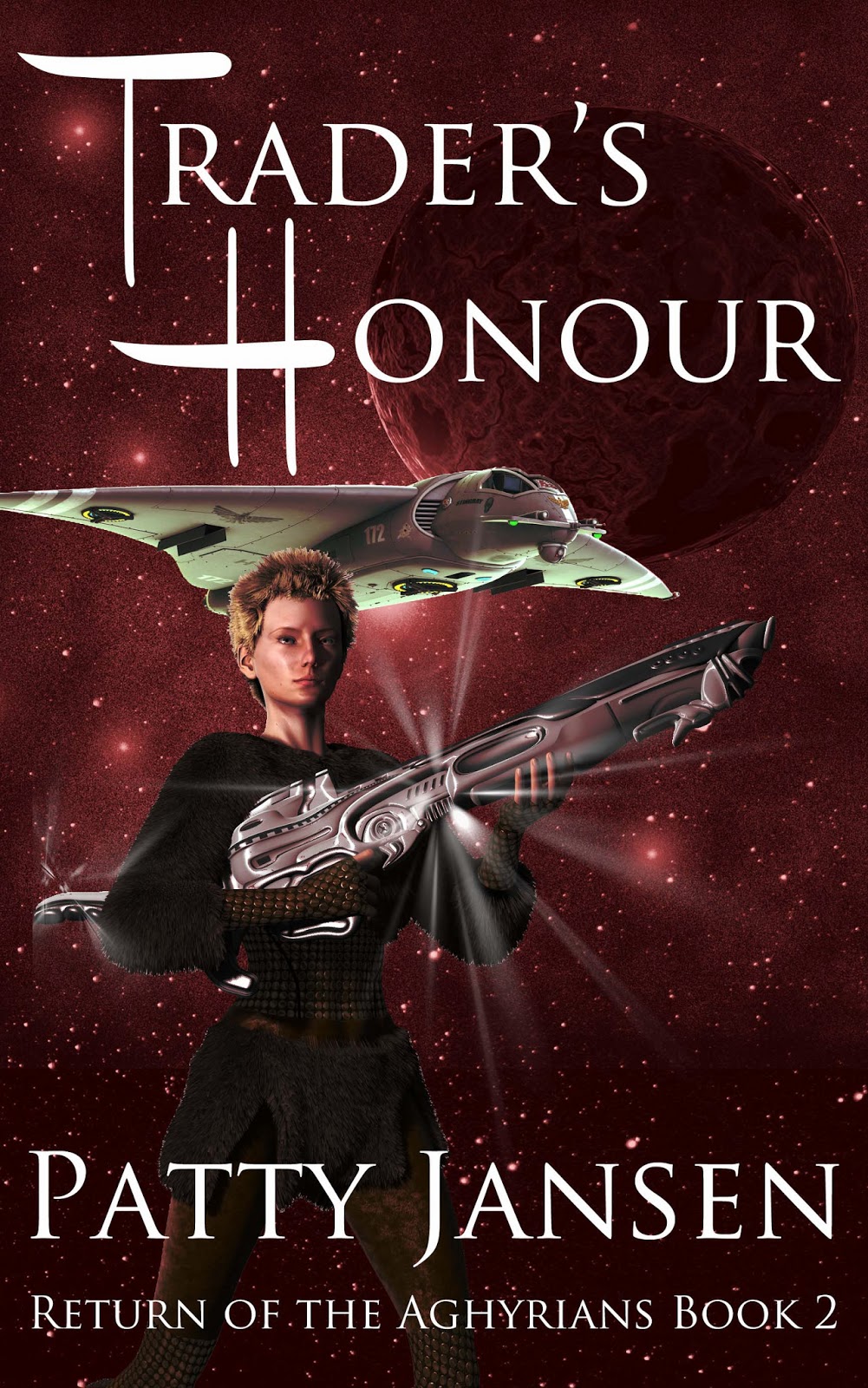
Trader's Honour by Patty Jansen

Trader's Honour by Patty Jansen is a sort of standalone sequel to Watcher's Web. It takes place mainly on the same planet and some of the same people make appearances, but the main character is new and the main part of her story is entirely separate to the character's from Watcher's Web. Abridged blurb (for length):
Mikandra Bisumar is useless to her father: she carries the curse of infertility that plagues the Endri people of Miran. Forced to work in the hospital to pay her duty to her proud nation, she dreams of becoming a Trader, one of the people who bring great prosperity to Miran.

To her surprise Iztho Andrahar, from the city's most prestigious Trading family, has agreed to take her on. That is where her troubles begin.
Her father is so angry with her that she has to leave her home. Worse, the Andrahar Traders have been accused of smuggling. Iztho has disappeared and the business license suspended.

Mikandra has nowhere to go, except try to help Iztho's brothers prove their innocence.
Mikandra has guts, something I like in a character (to the surprise of no one, heh). Instead of continuing to sit around in what she sees as a broken society, she takes steps to change her situation. First she applies for the Trader Academy, going to another Miran Trader family when her Trader aunt won't take her as an apprentice. Then, when it looks like her dreams will fall through because her sponsor family is in trouble, instead of running back to the relative comforts of home (if an abusive father can really be called a comfort), she sets out to help her sponsor's family. Helping in this case, involves travelling to another continent, when she'd never left the city before, and trying to track down her recalcitrant sponsor. Her mission turns out to be harder than she'd assumed but she sticks it out, even after being robbed on her first day there.

I enjoyed reading about Mikandra a lot. I was a bit hesitant to read Trader's Honour because I didn't enjoy Watcher's Web — I gave up about half way through mainly because I couldn't relate to the main character's reactions to her situation — but I decided to try the sample on SmashWords and was hooked. Mikandra is a very different character in a different situation. So if you haven't enjoyed Watcher's Web but the premise of Trader's Honour sounds like something you'd enjoy, I urge you to give it a shot.

Trader's Honour deals quite a bit with notions of how societies (should) work. The Mirani have two classes of people, the nobility (which includes Mikandra) and the working classes. The noble class not only limits the prospects of its women, but also believes that it's their duty to protect and care for the lower classes. As we learn quite early on, they don't do as good a job as they could. By contrast, Barresh, the other continent, is thought to be primitive and more or less useless. But when Mikandra arrives there she finds that, yes, it is very different (there's a bit of appropriate culture-shock on her part). Over time she learns that different does not mean worse, not the way the other nobles think, and starts to see a lot of potential around her. It made me think of biases against developing countries and how some are actually the world's fastest growing economies.

When the characters from Watcher's Web started showing up I felt a bit frustrated that I didn't have as much background information on them as if I'd finished the book, but it really wasn't necessary. It merely put me on the same level as Mikandra. And if I hadn't known there was another book, I'm pretty sure I wouldn't've cared.

Trader's Honour is an enjoyable science fiction read. It's low on technobabble and explicit sciencey stuff, although the worldbuilding is fairly solid. (If you're curious, Patty wrote about the worldbuilding here.) As such, I think it might also appeal to fantasy fans who don't mind a few aeroplanes and a spot of interplanetary travel in their fiction. I highly recommend it to science fiction fans.

4.5 / 5 stars

First published: April 2013, self-published
Series: Return of the Aghyrians book 2 of 2 so far, but it's a series of stand-alones.
Format read: ePub, mostly on my Kobo
Source: Review copy courtesy of the author (SmashWords link)
Disclaimer: Although Patty is a friend I have attempted to write an unbiased review
Challenges: Australian Women Writers Challenge, Australian Science Fiction Reading Challenge

Wednesday, 1 May 2013

Charlotte's Army by Patty Jansen

Charlotte's Army is a novella by Patty Jansen set in the same universe as several of her other works but which stands alone. I've previously reviewed her novel Shifting Reality and short story "The Rebelliousness of Trassi Udang" from the same universe.

Since I first heard about it, I've found the premise of Charlotte's Army interesting: an army of artificial (clone-like) soldiers were all created with the same flaw. All of them are in love with Charlotte, one of the army's senior medical staff. I was interested to see how it would all play out and what caused the flaw. The fact that it wasn't Charlotte's fault was kind of gratifying since she was quite a likeable character.

Other issues explored in this novella were how human the constructed soldiers really were. The human soldiers in the story generally treated them as second class and highly expendable citizens. Where the top brass see erasing one of their minds as nothing more than recalibrating a piece of machinery, Charlotte sees it as deleting a real person. It was an interesting dynamic.

Charlotte's Army was a quick, enjoyable read. It rounds out the world I've read about in Shifting Reality nicely (although I want to stress again that it completely stands alone). I highly recommend it to science fiction fans and anyone interested in giving the genre a go.

4.5 / 5 stars


First published: 2011, self-published
Series: Set in the ISF-Allion Universe but stands alone.
Format read: ePub on iThings
Source: Purchased from Smashwords a while ago.
Disclaimer: Although Patty is a friend I have attempted to write an unbiased review
Challenges: Australian Women Writers Challenge, Australian Science Fiction Reading Challenge

Monday, 3 December 2012

Shifting Reality by Patty Jansen

Shifting Reality by Patty Jansen is a novel set in the same universe as several of her short stories. I have previously reviewed the short story "The Rebelliousness of Trassi Udang", which is set on the same space station as Shifting Reality.

Melati is a third generation resident of New Jakarta space station. She's one of few of her class (those of Indonesian decent) to work with the ISF (International Space Force — the successor to the UN). Her job is training cohorts of engineered soldiers who are grown as children. They grow and are trained up quickly into adult workers. The story opens when something strange happens with the new cohort batch and one of them wakes up not as the mindbase Melati had programmed, but as someone completely different. The question is who and why?

Meanwhile, the ISF and tier 1 residents have a generally low opinion of the tier 2 (from which Melati came). Similarly, Melati's family and neighbours disapprove of her working for "the man", leaving Melati stuck in the middle, somewhat outcast from both cultures. All this is emphasised when trouble starts to brew and suddenly more enforcers are checking people for ID more frequently, preventing some miners (the main workers of New Jakarta) from going to work. Between that, the troubled new cohort and the baby smugglers she suspects are zeroing in on her cousin, Melati has her hands full.

I really enjoyed this novel. There were a few slightly slow patches near the start, but by about halfway I couldn't put it down, staying up late to finish reading. Melati is a great character who stands up for what she believes in an entirely plausible way. The type of comments Grandma made about being true to her roots and Melati's reaction that she didn't understand the new world they were living in rang true. I can't comment on the authenticity of the Indonesian and other cultural elements Jansen included, but the general themes of being a third generation no-longer-quite-a-migrant-at-that-point felt similar (albeit on a larger scale) to some of my own experiences.

Jansen tied together seemingly disparate several story lines into one cohesive plot well, and by the halfway-ish point I was dying to know how the remaining plot elements were going to turn out to be related. Shifting Reality stands alone, but there is definitely room for sequels and I hope we get to read more about Melati (and the characters whose fates were unknown at the end!). There were also some references in Shifting Reality which have made me move Charlotte's Army, a novella set in the same universe but earlier, up in my virtual TBR pile.

I highly recommend Shifting Reality to anyone looking for some new science fiction, perhaps with a different cultural flavour. I've read several short stories of Jansen's in the past (including this one, which I reviewed earlier this year, and my favourite from last year) and I have noticed her writing improving with time. I definitely look forward to future stories set in this universe (especially if they're about Melati).

4.5 / 5 stars

Monday, 30 July 2012

Short Stories


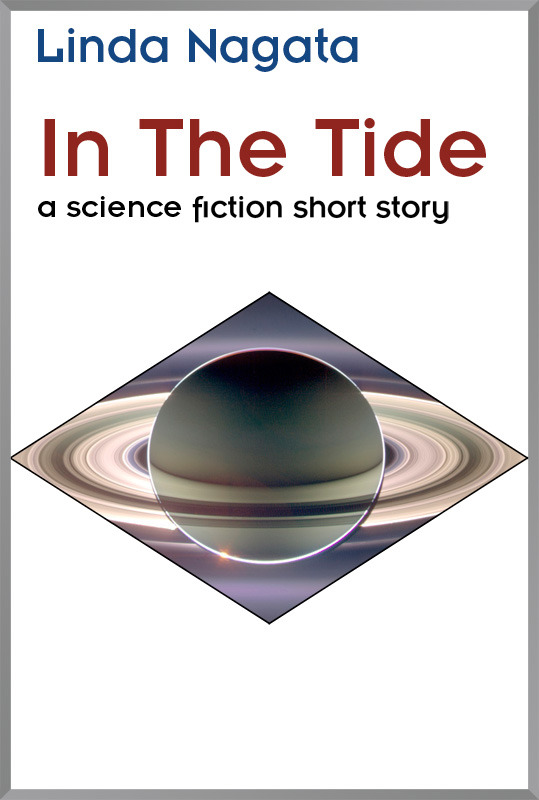
"In The Tide" by Linda Nagata

“In The Tide” by Linda Nagata

An interesting story about rogue nanobots, Saturn and genetically engineered humans. Set in a space faring world still confined to the solar system, it was nice to see some hard SF eschewing interstellar travel. You can download it free from Smashwords.


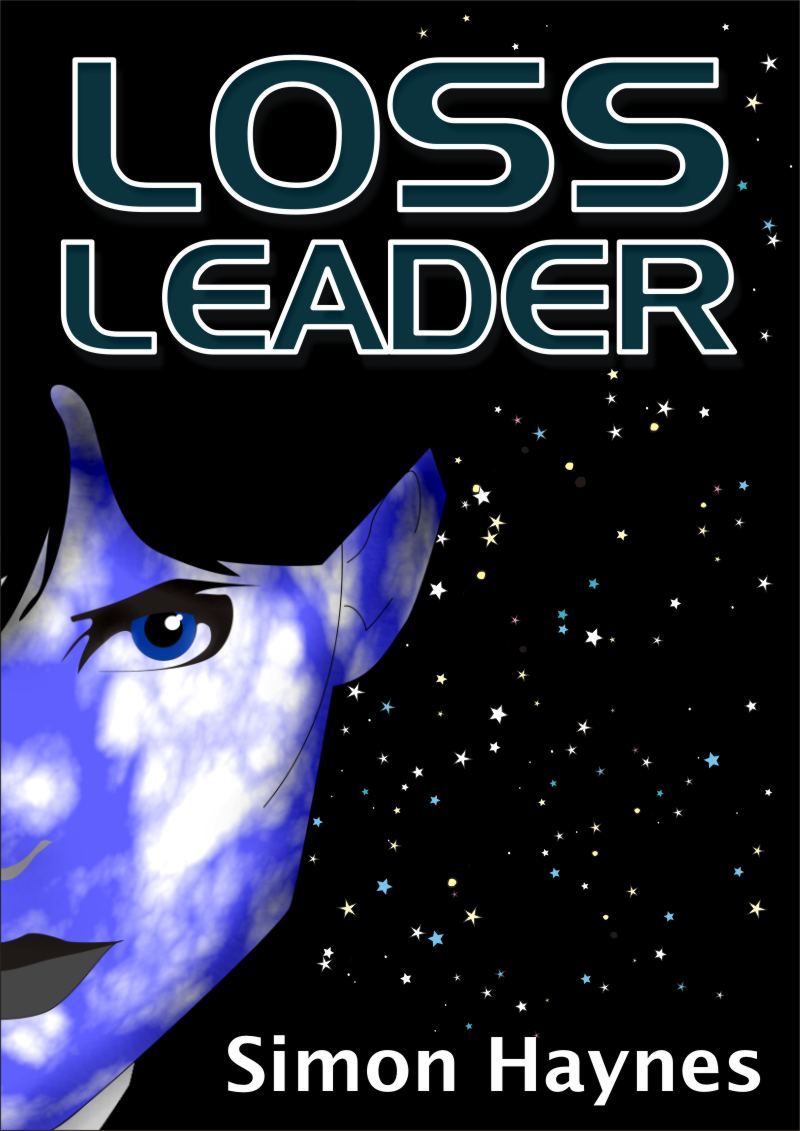
"Loss Leader" by Simon Haynes


“Loss Leader” by Simon Haynes

A story which originally appeared in an early edition of ASIM (which makes me feel like I should’ve read it before, but apparently I missed that issue). What happens when a company spends piles of money on a spaceship filled with cryogenically frozen settlers that the settlers aren’t keen on boarding? You treat the mission as a loss leader, of course. A bleakly amusing tale. You can download it free from Smashwords.


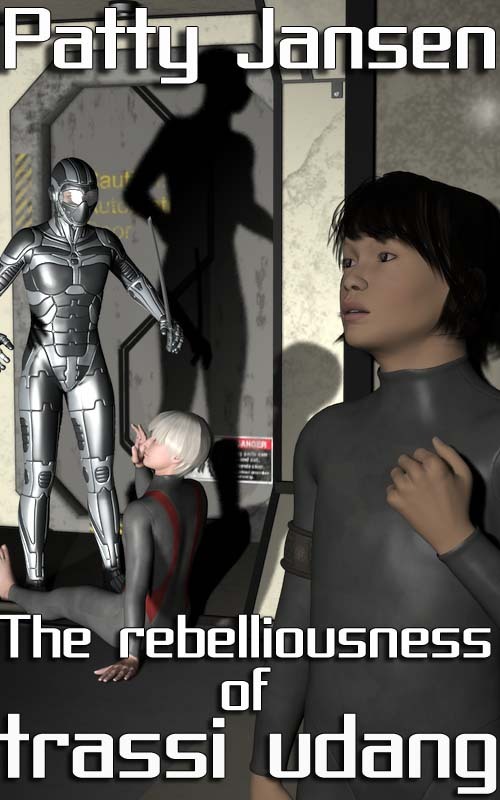
"The Rebelliousness of Trassi Udang"

“The Rebelliousness of Trassi Udang” by Patty Jansen

This is a slightly dark and sinister story set on a space station with a large Indonesian population. In the background there is war, in the foreground minor rebellion. A well drawn world and a great read. You can download it for free from Smashwords.


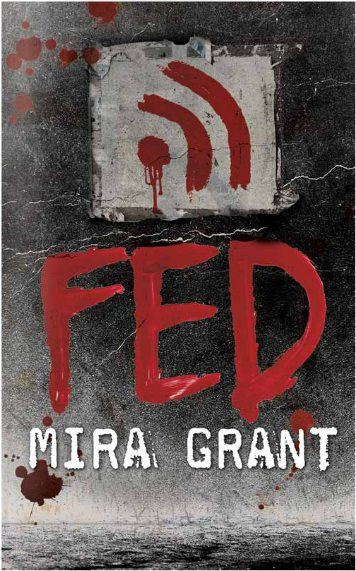
"Fed" by Mira Grant

“Fed” by Mira Grant


This isn’t strictly speaking a short story but an alternate ending to Mira Grant’s novel Feed. It’s how things would have played out if one event near the end had happened differently. If you’ve read Feed you can probably guess which event. It’s understandably a little rougher than the finished novel (and somewhat lacking in characterisation where points of view have changed from the original), but still harrowing. You can read or download it (PDF link hidden at the bottom) on this Orbit page.

Thursday, 5 April 2012

Short Stories


I bought a Kobo Touch ereader on my way home from a distant trip. Partly because it’s hard to have an 8 hour layover without buyingsomethingother than necessary food (I also bought a giant box of Jelly Belly jelly beans at half the price of duty free, whoo), and partly because carrying paper books to read on long-haul flights is tedious. For one thing, they weigh more and take up more room and, for another, being shoved in my bag leads to more damaged covers (sacrilege!) than leaving them at home. Also, I have a terrible tendency to choose the wrong sort of books to take on flights, but I’m not blaming that on the dead trees.

Usually I read ebooks on my iPhone or iPad (on the go vs at home when hubby isn’t using it) and that’s not going to change. I have absolutely no problem reading on backlit screens and, hey, my iPhone still has more pixels than the Kobo making it smoother on the eyes. So why did I buy a Kobo? Battery life. It takes 24+ hours to fly from Europe to Australia and neither iThing can survive that many hours of near constant use (even in airplane aeroplane mode) and still have juice for emergencies upon arrival. Sure, I could bet on not reading the whole way — perhaps trying to sleep or availing myself of inflight entertainment — but sleep doesn’t always happen and not all flights have TVs in seats, especially overnight flights (and out of 24+ hourssome of that has to be overnight). So I bought a Kobo, which I just spent too many words justifying.

I wanted to test out my new Kobo but didn’t want to commit to reading an entire novel on it. After loading all my books on it (well, most of them; I discovered I don’t have the best ebook backup/filing system) I thought why not read some short stories that I’ve downloaded or bought and not got around to? The covers above are the stories I’ve read in the past couple of days.

“Grandeur” by Jo Anderton

This is a prequel teaser for Debris(see my review here). It gives a bit of a taste of the world and the characters, particularly the main character, Tanyana. Of course it contains no information crucial to the story in Debris, but I found it an interesting backstory. You can download it free as a PDF from the author’s website.

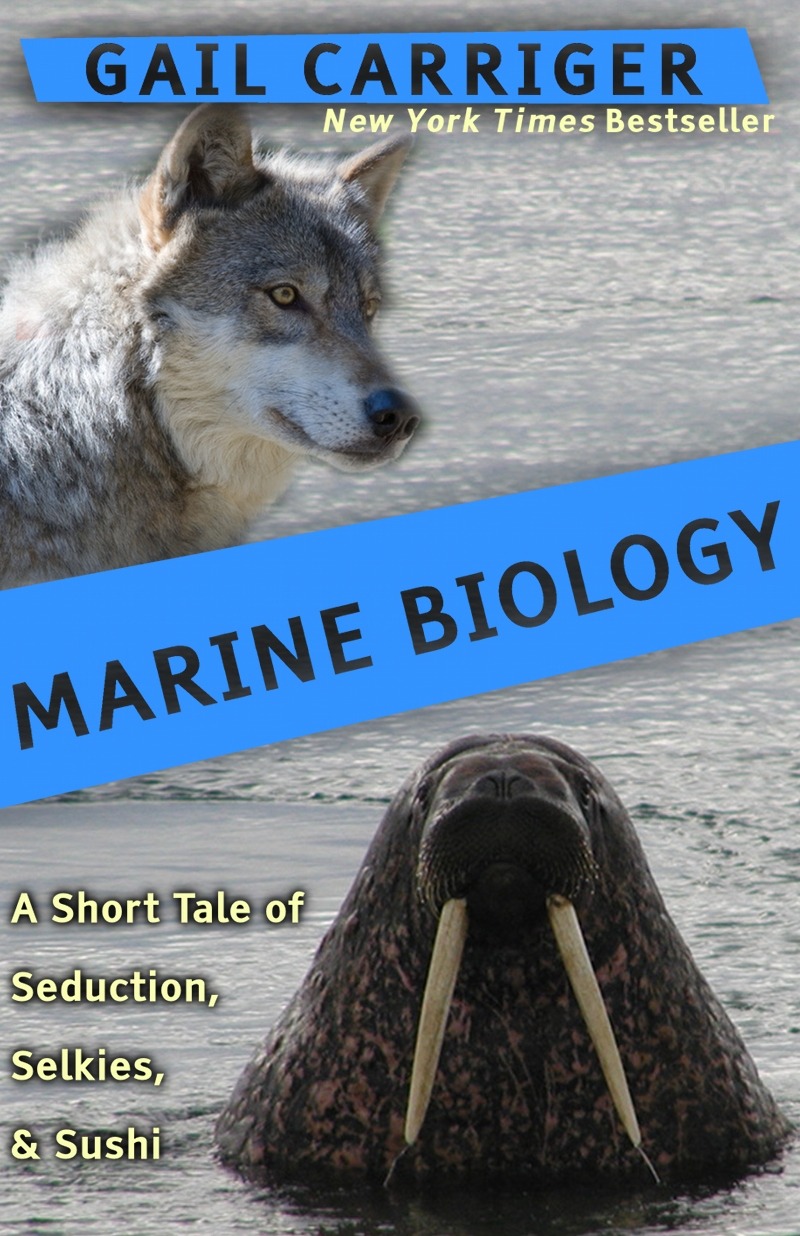
“Marine Biology” by Gail Carriger

This is a great story with adorable characters. Alec, the main character, is an in-the-closet werewolf who really doesn’t fit in with his pack. There are also merpeople and selkies. It’s similar in sensibilities to Carriger’s Parasol Protectorate books, but set in the modern world and with marine supernaturals included. (Side note: the cover works particularly well on the black and white Kobo e-ink screen.) You can buy it for 99 US cents on Smashwords.

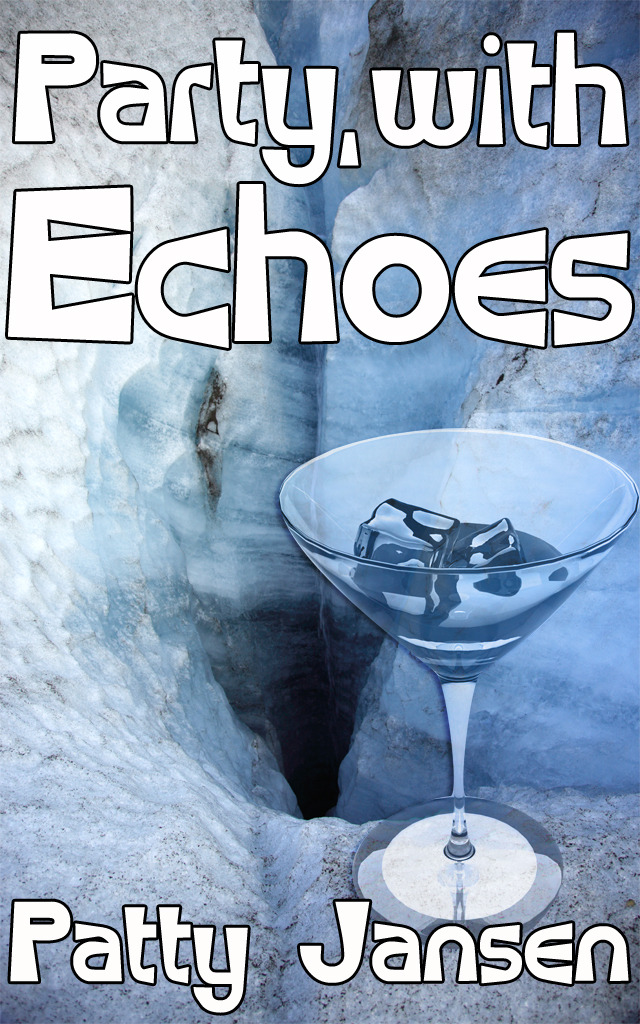
“Party, With Echoes” by Patty Jansen

This is a science fictional deep-sea adventure set on Europa. It has weird alien bacterial colonies and an ice cave. Fun, quick read. You can download it free (for now?) on Smashwords.

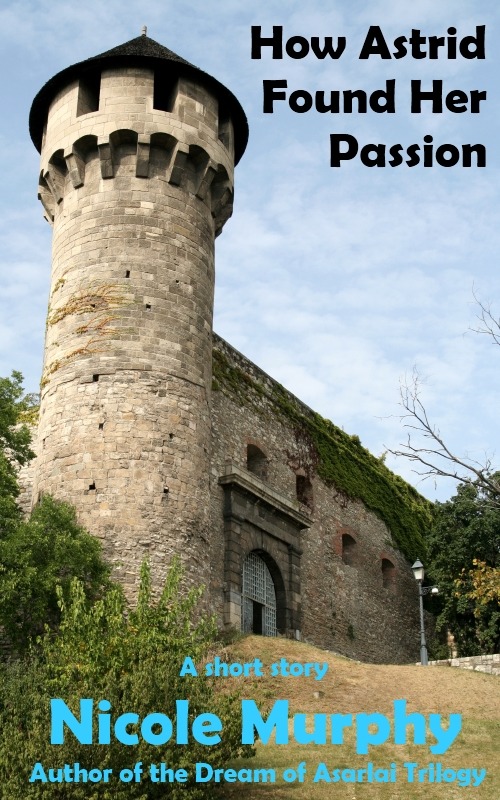
“How Astrid Found Her Passion” by Nichole Murphy

A fantasy story about an Australian woman who gets mysteriously transported to a magical kingdom and inadvertently tangled up in a local dispute between mages and a lord. Another fun, quick read. You can also download this story free (for now?) on Smashwords.