Showing posts with label vampires. Show all posts

Saturday, 16 May 2020

Defy or Defend by Gail Carriger

Defy or Defend by Gail Carriger is a novel in her "Delightfully Deadly" novella/novel line, which feature (adult version of) characters from the Finishing School series, which started with Etiquette and Espionage. If you've read the Finishing School books, you'll remember Dimity from her school days. That said, this novel stands alone fairly well, with the few references to the past adding flavour rather than crucial plot elements. I originally thought it was a novella and was confused by the length, but clearly, I misread the cover.

A vampire hive descending into madness. A beautiful spy with a sparkly plan. The bodyguard who must keep them from killing each other.

SPY

Dimity Plumleigh-Teignmott, code name Honey Bee, is the War Office's best and most decorative fixer. She's sweet and chipper, but oddly stealthy, and surprisingly effective given the right incentives.

VERSUS KNIGHT

Sir Crispin Bontwee was knighted for his military service, but instead of retiring, he secretly went to work for the War Office. Mostly he enjoys his job, except when he must safeguard the Honey Bee.

Neither one is a vampire expert, but when the Nottingham Hive goes badly Goth, only Dimity can stop their darkness from turning bloody. And only Crispin can stop an enthusiastic Dimity from death by vampire.

In a battle for survival (and wallpaper), Dimity must learn that not all that sparkles is good, while Cris discovers he likes honey a lot more than he thought.

Defy or Defend features the "have to pretend to be married" romance trope and the "in love with each other but convinced the other doesn't like them" romance trope, neither of which were played for as many laughs as I would have expected from Carriger. Not to say that the book wasn't funny at all, but I've read funnier Carrigers. So that was unexpected and a little disappointing. But even without much laughing out loud, I still enjoyed the book.

The main (non-romance) plot is about Dimity trying to rescue a vampire hive from a particular type of maudlin madness through sheer force of redecorating. Also some social manipulation. And with the object of her affections, Sir Crispin, there as backup. Tight-fitting male dance costumes are involved. The length of the book gives plenty of room to get to know the hive members as well as the protagonists. I was pleased to come fully to grips with each vampire's eccentricity, for example, and that made the final resolution all the more satisfying.

All in all, I quite enjoyed Defy or Defend, my only complaint is that it wasn't as funny as I hoped. I recommend the book to fans of Gail Carriger's other supernatural Victoriana books. I also suggest it's a pretty good place for a new reader to dip their toes in, since the book stands alone well and introduces the particular flavour of Carriger vampires (and werewolves, but less so). It is being sold as a romance book and it's not that there's no romance in it, but it's actually pretty light and more secondary to the other plot than I expected.

4 / 5 stars

First published: May 2020, self-published
Series: Yes! Delightfully Deadly series (order agnostic) and set after the end of the Finishing School series
Format read: ePub
Source: Purchased from Kobo

Monday, 20 January 2020

Bloodlust and Bonnets by Emily McGovern

Bloodlust and Bonnets by Emily McGovern is a graphic novel that caught my attention with its blurb (see below). It looked like a funny romp and the fact that the author had previous written a webcomic called "My Life As A Background Slytherin" (which I had come across before) was a point in its favour.

Set in early nineteenth-century Britain, Bloodlust & Bonnets follows Lucy, an unworldly debutante who desires a life of passion and intrigue—qualities which earn her the attention of Lady Violet Travesty, the leader of a local vampire cult.

But before Lucy can embark on her new life of vampiric debauchery, she finds herself unexpectedly thrown together with the flamboyant poet Lord Byron (“from books!”) and a mysterious bounty-hunter named Sham. The unlikely trio lie, flirt, fight, and manipulate each other as they make their way across Britain, disrupting society balls, slaying vampires, and making every effort not to betray their feelings to each other as their personal and romantic lives become increasingly entangled.

In Bloodlust and Bonnets we meet Lucy, who doesn't have much interest in being an ordinary proper Lady type person and who ends up having a bunch of dramatic adventures with Lord Byron (who's a bit useless without realising it) and Sham, who is the most interesting character in the book. The characters encounter rather a lot of violence and vampires and magic. The book has an absurd/silly fun sort of tone and lot of gallivanting around.

It was a fun read, but I felt like it lasted a bit too long. I ended up putting it down for a while when I was about half way through and taking longer than I'd like to come back to it. The issue, I think, was that it maintained the same kind of silly tone throughout and, while there was some plot and intrigue, it mostly moved along near the start and towards the end. The middle was a lot of the same sort of thing, which wasn't bad per se, just samey. Others may find that's exactly what they're looking for, but it didn't really work for me.

3.5 / 5 stars

First published: 2019, Andrews McMeel Publishing
Series: No?
Format read: PDF eARC
Source: Publisher via NetGalley

Saturday, 20 October 2018

Competence by Gail Carriger

Competence by Gail Carriger is the third book in the Custard Protocol series. I have previously read and reviewed the first two: Prudence and Imprudence. While the previous two books followed Rue as the point of view character, this new instalment alternates between Tunstell twins Prim and Percy (though we still get to see a lot of Rue, of course).

Accidentally abandoned!

All alone in Singapore, proper Miss Primrose Tunstell must steal helium to save her airship, the Spotted Custard, in a scheme involving a lovesick werecat and a fake fish tail. When she uncovers rumors of a new kind of vampire, Prim and the Custard crew embark on a mission to Peru. There, they encounter airship pirates and strange atmospheric phenomena, and are mistaken for representatives of the Spanish Inquisition. Forced into extreme subterfuge (and some rather ridiculous outfits) Prim must also answer three of life's most challenging questions:

Can the perfect book club give a man back his soul?

Will her brother ever stop wearing his idiotic velvet fez?

And can the amount of lard in Christmas pudding save an entire species?

I have generally been a fan of Carriger's books since I first picked up Soulless eight years ago (I remember because it was at Aussiecon 4) and I have now read all the books, novellas and stories set in this universe so far. Unfortunately, this one has not become a favourite. I didn't hate it, but I felt that it dragged a bit in the middle and could have been funnier and more tightly paced. I was expecting to laugh out loud and I don't think I did for the whole book.

That said, this wasn't a bad book. I still plan to read the sequel and will probably keep reading the Parasolverse novellas. It was also interesting to see more of the world outside of Europe. As the blurb reveals, this novel starts in Singapore and (more or less) ends in Peru. We already saw some of North America in How To Marry A Werewolf and so Competence fills in a few gaps. But ultimately this was a fairly character-driven story with a strong focus on Prim's relationship progression, with the other characters' relationship as side plots. The most adventurous side plot was very much a minor side plot which was a little disappointing because it could have been a bit more exciting. I live in hope that it was also acting as a set up for a future story.

I think another reason this book didn't grab me as much as I hoped was because of Prim's reticence in pursuing a relationship with her obviously end-game love interest. Overcoming fears born of societal expectations could have been interesting but I got a bit too much of a "gay panic" vibe from Prim until she finally came around. It was particularly strange given the sheer number of queer characters in the series generally and in her life specifically. I suppose their society is at the point where gay male relationships are more accepted in certain circles than lesbian ones, but still. And to be clear, it all works out fine but I didn't enjoy the journey.

Overall, I had problems with this book but I it wasn't quite bad enough for me to give up on the author. As it is, I recommend it to fans of the Parasolverse books who have read the earlier books in the Custard Protocol series but I also recommend coming into with low expectations (and hopefully you'll be pleasantly surprised).

3.5 / 5 stars

First published: July 2018, Self-published (outside of North America)
Series: Custard Protocol book 3 of 4
Format read: ePub
Source: Purchased from Kobo

Saturday, 14 January 2017

Bitten by Amanda Pillar

Bitten by Amanda Pillar is the second novel set in the Graced universe. I have previously reviewed the other novel, Graced, and one of the novellas, Captive. Although Bitten is set after Graced, they can be read in any order and the novellas aren't necessary to follow the stories in the novels.

The city of Pinton has never been safe…and now a serial killer is on the loose.

Doctor Alice Reive is the city’s coroner, and she’s determined to help find the murderer. Enlisting the assistance of the Honorable Dante Kipling and city guard Elle Brown, they race to track down the killer, before another victim dies.

Hannah Romanov – Dante’s missing twin sister – has spent hundreds of years living on an isolated mountain. But her quiet life is thrown into chaos after she discovers a baby left in the wilds to die. Hannah will do anything to ensure the infant’s survival, even if it means travelling to the worst place in the world for her – Pinton.

Bitten is a little bit of a lot of things. It has some romance in it (basically all of the key characters get paired off) but isn't a capital-R romance novel. There are murders to solve and a serial killer to catch, but it's not exactly a mystery novel or a police procedural either, despite one of the characters being a coroner. Really it's the story of a group people and how their lives intertwine during a certain period of time, which happens to also involve some murders. Because of all that, it doesn't follow any well-worn genre beats but the story threads all come together towards the end, which was the part I enjoyed most.

Being set in the same universe, the main characters from Graced do make an appearance but reading the earlier book isn't necessary for understanding Bitten. The only issue I can see with reading them out of order is being "spoiled" for who pairs off with whom in Graced, but from memory it was pretty obvious and not supposed to be a surprise. Also, there is definitely a heavier focus on the new characters introduced in Bitten, and I generally enjoyed reading their stories the most — particularly Alice the coroner, Hannah the Graced vampire and Byrne and werebear — even when I wasn't sure how they were going to intersect. They all had interesting pasts which tied the story together nicely.

I would recommend this books to fans of vampires, werepeople (not just werewolves) and magic/psychic powers. Also to fans of urban fantasy, particularly the kind set in a low-tech future.

4 / 5 stars

First published: January 2016, self-published
Series: Graced Series book 2 of 2 so far
Format read: eARC
Source: Review copy from author
Disclaimer: Amanda is a friend but I have tried to not let this influence the content of this review.
Challenges: Australian Women Writers Challenge

Sunday, 22 May 2016

The Forever Song by Julie Kagawa

The Forever Song by Julie Kagawa is the conclusion to the Blood of Eden trilogy. I previously reviewed the first two books, The Immortal Rules and The Eternity Cure. While I enjoyed the first book, I didn't particularly like the second, which is why it took me so long to get around to the third. In the end, I picked it up on a whim when I saw it in the library. In case you can't be bothered clicking on the links for the first two books, the worldbuilding premise of the series is that there have always been vampires, but when a plague threatened to wipe out humanity, the vampires, concerned about their blood supply, took over and more or less started farming humans. The main character, Allison, came from one city-farms, but was turned into a vampire at the start of book one. Anyway, the rest of this review, including the blurb, contains spoilers for the earlier books.

Vengeance will be hers.

Allison Sekemoto once struggled with the question: human or monster? With the death of her love, Zeke, she has her answer.

Monster.

Allie will embrace her cold vampire side to hunt down and end Sarren, the psychopathic vampire who murdered Zeke. But the trail is bloody and long, and Sarren has left many surprises for Allie and her companions - her creator Kanin, and her blood brother, Jackal. The trail is leading straight to the one place they must protect at any cost - the last vampire-free zone on Earth, Eden. And Sarren has one final, brutal shock in store for Allie.

In a ruined world where no life is sacred and former allies can turn on you in one heartbeat, Allie will face her darkest days. And if she succeeds, her triumph will be short-lived in the face of surviving forever alone.

THE FINAL HUNT IS ON.

When I started reading this book, I couldn't actually remember exactly why I'd disliked the second book. I did remember the cinematic fight scenes from the first book, though, and the general premise if not all of the details. It was actually very easy to pick this book up even with a three year gap since reading book two; the author does a good job of reorienting the reader at the start. And the fight scenes are, again, cinematic.

As is to be expected from a book three of a trilogy, the plot was mostly centred on the Allie and friends completing their saving-the-world mission. The story opens with Allie not caring about anything else after the death of her boyfriend in the previous book. She is travelling with her sire and Master vampire Kanin (who taught her how to fight and is all about honour and being nice to humans), and the significantly less honourable Jackal, and there is a nice rapport between the three of them, even when Allie is in the depths of despair and anger.

Although I think the prose could have been tighter, I enjoyed this concluding volume of this trilogy. I certainly liked it more than the second book, and I'm glad to have finally finished the series. In general, I'd recommend it to fans of vampires, post-apocalyptic tales and YA. If the premise sounds interesting to you, give it a go. If you got through book two but haven't read book three yet, I do recommend doing so.

3.5 / 5 stars

First published: 214, Harlequin Teen
Series: Blood of Eden book 3 of 3
Format read: Paper *gasp*
Source: Borrowed from the library

Friday, 4 March 2016

Captive by Amanda Pillar

Captive by Amanda Pillar is a novella set in the Graced universe, but at a much earlier period of story history. Although a few character names might be familiar, the two stories stand completely alone. If anything, Captive fills in some of the "historical" backstory that didn't fit into Graced, while telling its own story.
Vampires, werewolves, and the Graced are at war with their human creators, and humanity is losing. But one girl might hold the key to salvation. Held captive with her fellow humans by alpha Wolfgang and his pack of weres, Laney secretly inches ever closer to breaking were and vampire blood dependency forever.

But Laney doesn’t have long. Their numbers decimated by plague, humans are being kidnapped and reduced to livestock. And when Laney and her sister are kidnapped by a neighboring vampire clan notorious for its “farming” of humans, their only hope lies in Wolf – who doesn’t know the shocking secret Laney has gone to great lengths to conceal.

With their lives and the future of humanity in the balance, can Laney and Wolf learn to trust each other before their races cease to exist?

I enjoyed Captive quite a bit. I would go so far as to say I enjoyed the start of the novella more than I enjoyed Graced. This is probably partly because the main character is a scientist and I am biased. Where Graced was set seemingly very long after the apocalypse, so to speak, that resulted from the creation of vampires and werewolves and the subsequent wars, Captive is set much closer to that time period (but still after it).

The main(est) character, Laney, is a geneticist who had been working on "cures" for the vampire need for human blood and the werewolf need for human liver. Not, to be clear, changing their species back to human, just removing their need to farm humans. Having originally been part of a werewolf, er, farm, Laney, her sister and their fellow humans are captured by vampires in a raid. Their main goal is to survive until a way out presents itself. Unbeknownst to them, other characters are also working on rescuing them from the vampires.

I mentioned earlier that I particularly enjoyed the start of Captive. It would be more accurate to say that I enjoyed almost all of Captive but I found the ending rather abrupt. The main plot arc of escaping the vampires is resolved, but a lot of romantic (and other, spoilery) subplots are introduced near the end and I don't think this novella was long enough to give them enough space to properly develop. The time jumps at the end, to get to the second last chapter and the epilogue, didn't really help on that front. I think it would have been more enjoyable had the last portion of the book been longer. I certainly wouldn't've minded reading more of it.

Overall I liked Captive, even if I would have preferred more of it. I would recommend it to fans of Graced, but want to stress again that both stories stand alone quite well. I will certainly be reading any other novellas or novels Pillar writes set in the same world. This was almost a 4-star read, but I took off half a star for the abruptness of the ending.

3.5 / 5 stars

First published: February 2016, Momentum
Series: Same universe as Graced but with different characters and set much earlier
Format read: eARC
Source: Publisher via NetGalley 
Disclaimer: The author is a friend but I have endeavoured to write an impartial review
Challenges: Australian Women Writers Challenge

Tuesday, 28 April 2015

The Ruby Circle by Richelle Mead

The Ruby Circle by Richelle Mead is the sixth and final book in the Bloodlines series. As would be expected in such a concluding volume, all the loose threads from earlier books are tied up, the day is saved and everyone gets to live happily ever after. That isn't a spoiler. This review is going to contain spoilers fro the previous books, however. Especially a pretty major spoiler for Silver Shadows, the fifth book in the Bloodlines series.

Their forbidden romance exposed, Sydney and Adrian find themselves facing the wrath of both the Alchemists and the Moroi in this electrifying conclusion to Richelle Mead’s bestselling Bloodlines series.

When the life of someone they both love is put on the line, Sydney risks everything to hunt down a deadly former nemesis. Meanwhile, she and Adrian becomes enmeshed in a puzzle that could hold the key to a shocking secret about spirit magic, a secret that could shake the entire Moroi world and alter their lives forever.

The Ruby Circle picks up right where the previous book left off and then throws us back into a recurring issue of the series: Jill has been kidnapped. Everyone except Sydney and Adrian get to help look for her, however, since they are still under the court's protection after the Alchemist-enraging wedding of the previous book. But then a lead presents itself that only Sydney can follow and the couple are thrown into the thick of the adventure.

As with the earlier books, this was a fun read. (Probably more fun than the previous book, actually, since there was significantly less torture.) On their way to saving Jill, Sydney and Adrian stumble across an unrelated issue (but one that does tie back to events in earlier books) which conveniently allows Mead to set up a hook for a possible third series. Less cynically, it was something that addressed some of the background spirit research that has been going on throughout the series. (I am being vague because spoilers.) And that said, I would read another series in this universe, especially if there was a more significant time jump to its beginning.

I had one objection to the writing in The Ruby Circle. There was one scene a third (ish) of the way through where a lot of crucial things happened but that was kind of a mess, flow-wise. I suspect the author had written herself into a corner with a bunch of things that had to happen for the plot to work. That said, while I thought it was messy, my husband didn't particularly notice, so your mileage may vary.

One thing I noticed — well, started to notice from Silver Shadows especially — is how this series, which started off very YA and set in a school, has ended very not YA with a wedding and spoiler-stuff. I'd say it's because the characters grew up, but not a huge amount of time passed between the first and last books. More relevantly, I think it's because the focus shifted from Jill, who is a teenager, to Sydney and Adrian who are 19 and 22, respectively. I'm not objecting to the shift, by the way, just noting it.

I have enjoyed the Bloodlines series and I would recommend it to fans of YA and to anyone who likes vampires. Fans of the earlier Vampire Academy series should also give it a shot. I hope it's obvious from the rest of my review, but I definitely don't recommend reading The Ruby Circle without having read the other books in the series.

4 / 5 stars

First published: February 2015, Penguin
Series: Bloodlines, book 6 of 6
Format read: Paper! Gasp!
Source: Pre-order from Dymocks

Thursday, 6 November 2014

Waistcoats and Weaponry by Gail Carriger

Waistcoats and Weaponry by Gail Carriger is the third book in the Finishing School series. My finger slipped and I accidentally started reading it on release day immediately after purchasing. I'm not sorry.
Sophronia continues her second year at finishing school in style--with a steel-bladed fan secreted in the folds of her ball gown, of course. Such a fashionable choice of weapon comes in handy when Sophronia, her best friend Dimity, sweet sootie Soap, and the charming Lord Felix Mersey stowaway on a train to return their classmate Sidheag to her werewolf pack in Scotland. No one suspected what--or who--they would find aboard that suspiciously empty train. Sophronia uncovers a plot that threatens to throw all of London into chaos and she must decide where her loyalties lie, once and for all.
Look, if you've read the earlier books in the Finishing School series, why wouldn't you pick up Waistcoats and Weaponry? I think it's my favourite so far. If you've read some of Carriger's other books but not yet started on this series, why ever not? You should probably fix that post-haste. Especially if you like any of: steampunk; mannerpunk; trains; fans as deadly weapons (see cover).

It's always hard to review a book three in a continuity-dependent series — and I'm tempted not to — but there is one aspect I particularly want to speculate upon. There are events in this book which directly relate to events on one of the Parasol Protectorate books (not sure I should say which one) and I cannot decide which series is then a spoiler for the other. Obviously this prequel series was written second so it makes sense to read in writing order. But it also means I knew what had happened at one point before it was explained, whereas it would have seemed to come from left field for a reader not familiar with the other series. On the other hand, the events are related from very different perspectives in the two narratives, so perhaps it doesn't really matter. But it's an interesting dilemma to contemplate (or at least, I thought so).

Bumbersnoot!

Waistcoats and Weaponry is an excellent addition to an excellent series. I highly recommend both to anyone with a passing sense of humour and any speculative fiction leanings. Really, it's that good. If you've read the earlier books in the series, why are you not already reading this one?!

5 / 5 stars

First published: November 2014
Series: Finishing School book the third of four
Format read: ePub
Source: Purchased from Google Play

Saturday, 26 July 2014

Silver Shadows by Richelle Mead

Silver Shadows by Richelle Mead is the fifth and penultimate book in the Bloodlines series. I have previously reviewed the earlier books. In reverse order: The Fiery Heart, Indigo Spell and The Golden Lily (Bloodlines was pre-blog). Silver Shadows is a solid instalment in a series that has becoming more interesting (and with higher-stakes) with each book. Note that this review (and the blurb) contains spoilers for the end of the previous book, The Fiery Heart.
Sydney Sage is an Alchemist, one of a group of humans who dabble in magic and serve to bridge the worlds of humans and vampires. They protect vampire secrets—and human lives.

In The Fiery Heart, Sydney risked everything to follow her gut, walking a dangerous line to keep her feelings hidden from the Alchemists.

Now in the aftermath of an event that ripped their world apart, Sydney and Adrian struggle to pick up the pieces and find their way back to each other. But first, they have to survive.

For Sydney, trapped and surrounded by adversaries, life becomes a daily struggle to hold on to her identity and the memories of those she loves. Meanwhile, Adrian clings to hope in the face of those who tell him Sydney is a lost cause, but the battle proves daunting as old demons and new temptations begin to seize hold of him. . . .

Their worst fears now a chilling reality, Sydney and Adrian face their darkest hour in this heart-pounding fifth installment in the New York Times bestselling Bloodlines series, where all bets are off.
I really enjoyed Silver Shadows. The book alternates point of view chapters between Sydney and Adrian, with Sydney locked up in the harsh Alchemist re-education centre and Adrian on the outside trying to get Sydney out. It's a darker book than the ones that went before it, mainly because re-education involves a lot of torture. It does also highlight Sydney's indomitable spirit as she refuses to be let herself be brainwashed. My favourite part was the ways Sydney finds to fight back against the system, even while she's in the re-education centre. Adrian, on the other hand, spirals into a pit of depression and binge drinking when he can't make contact with Sydney, reverting to his former self.

Of course, Sydney doesn't spend the entire book locked up and the last... quarter, maybe, is much lighter in tone than what went before it. I found myself chuckling several times and the surprise near the end was pretty great. I wish I could talk about it more, but it's definitely a spoiler.

While the premise of the series revolves around Jill, Sydney and Adrian have always been the main characters. This is even more evident in Silver Shadows, since Jill and the rest of the gang do not get much page time. But I think there was also an element of needing to sort out a lot of Sydney and Adrian's story so that the last book could bring focus back on Jill (I'm guessing).

I highly recommend Silver Shadows for anyone whose enjoyed the Bloodlines series so far. Really that should go without saying. For those new to the series, it really is the kind of series that needs to be read in order from the start. I would not at all recommend starting with Silver Shadows or any instalment other than Bloodlines.

4.5 / 5 stars

First published: July 2014, Penguin
Series: Bloodlines book 5 of 6 (and Bloodlines is a spin-off series of the Vampire Academy)
Format read: eARC
Source: Publisher via NetGalley

Tuesday, 31 December 2013

The Fiery Heart by Richelle Mead

The Fiery Heart by Richelle Mead is the fourth book in her the Bloodlines series. You can read my reviews of the second and third books: The Golden Lily and
The Indigo Spell. This is going to be a short review because it's new year's eve, not a review copy and if you've read the first three, you've probably already decided whether you're going to pick up the fourth. If you haven't read the first three, the blurb (and the rest of the review) is made of spoilers, so go do that instead.
Sydney Sage is an Alchemist, one of a group of humans who dabble in magic and serve to bridge the worlds of humans and vampires. They protect vampire secrets - and human lives.

In The Indigo Spell, Sydney was torn between the Alchemist way of life and what her heart and gut were telling her to do. And in one breathtaking moment that Richelle Mead fans will never forget, she made a decision that shocked even her. . . .

But the struggle isn't over for Sydney. As she navigates the aftermath of her life-changing decision, she still finds herself pulled in too many directions at once. Her sister Zoe has arrived, and while Sydney longs to grow closer to her, there's still so much she must keep secret. Working with Marcus has changed the way she views the Alchemists, and Sydney must tread a careful path as she harnesses her profound magical ability to undermine the way of life she was raised to defend. Consumed by passion and vengeance, Sydney struggles to keep her secret life under wraps as the threat of exposure — and re-education — looms larger than ever.
This one had a lot more romance in it than the previous books. For whatever reason (most likely that I didn't spend much time pondering the events of the previous book before beginning), this came as a bit of a surprise. It was was interesting, however, to watch the shift in dynamic between Sydney and Adrian. Allowing herself to date a vampire was always going to be a big deal for Sydney, but Mead doesn't forget to highlight the Adrian's emotional shift either.

Speaking of Adrian... this paragraph is going to be a bit ambiguous because I want to avoid spoilers. The approach Adrian (and co) takes to deal with his spirit-use side-effects turned out to be more thought-out than I expected. Although I do wonder what will happen with that in the sequel(s) since the ending did rather leave things up in the air.

Speaking of the ending, it was rather disheartening. I'm not sure I'd quite call it a cliff-hanger, since the book went on just long enough to let us know what was happening (rather than leave us guessing). But it definitely did provide a strong "golly, how will they fix this?" situation. I definitely want to know what happens next, and I'll definitely be getting my hands on the next book, Silver Shadows, which Goodreads says will be out in July 2014.

A recommended read for fans of the series. If, for some reason, you got through this review without having read the earlier books, don't start with this one, start with book one, Bloodlines. Fans of not-standard-vampire YA should enjoy this series.

4.5 / 5 stars

First published: November 2013, Penguin
Series: Bloodlines, book 4 (of, if I had to guess, possibly 6 like the Vampire Academy books)
Format read: paperback
Source: Purchased from Dymocks

Friday, 29 November 2013

Path of Night by Dirk Flinthart

Path of Night by Dirk Flinthart is the author's longest published work (ie first novel) to date. I'm sure I've read some of his short stories before, but apparently not since I started reviewing here. Blurb:
Michael Devlin is the first of a new breed. The way things are going, he may also be the last.

Being infected with an unknown disease is bad. Waking up on a slab in a morgue wearing nothing but a toe-tag is worse, even if it comes with a strange array of new abilities.

Medical student Michael Devlin is in trouble. With his flatmates murdered and an international cabal of legendary man-monsters on his trail, Devlin's got nowhere to hide. His only allies are a hot-tempered Sydney cop and a mysterious monster-hunter who may be setting Devlin up for the kill. If he's going to survive, Devlin will have to embrace his new powers and confront his hunters. But can he hold onto his humanity when he walks the Path of Night?
Path of Night follows Devlin, a med student with bad luck. After being murdered and coming back from the dead, he discovers that a) he needs to eat a lot of food now, b) he has super senses and super speed and c) a bunch of people are trying to kill him. His side of the story is very much centred about not dying and getting through the day.

The other point of view character is Jen, a Sydney cop who starts out investigating the homicide Devlin was caught up in. From her point of view we see a bit of police internal politics, some investigation and then, well, then the story catches up with Devlin and everything gets a bit crazy.

The pacing in this novel is brilliant. It's not a short read, but even though it took me a while to get through (because life etc) it was sufficiently well-paced that it felt like it would be a quick read. It wasn't all action all the time, but there was never a dull moment. I felt I always wanted to know what happened next, even when the point of view switched away from Devlin and Jen to the characters on the other side of the equation.

This is the first book in a series, and I have to admit I wasn't sure how it would play out, in terms of setting up the next book, until I got to the end. It didn't really feel like a book one, and I say that in the best possible way. I wasn't sure who would survive or in what form the series would continue (until the end when the premise of the next book was seemingly set up).

I also loved that it was set in Sydney. Living overseas as I am for the time being, I have been really appreciating books with Australian settings. Particularly ones which feel authentic, as Path of Night does (occasional references to "sidewalks" notwithstanding). I kind of want to take a tour of those tunnels next time I'm in Sydney. I wouldn't have known they existed otherwise. The tourism bureau should pay Flinthart a commission. ;-)

Path of Night was an excellent read and I'll definitely be keeping an eye out for the next book and anything else I see of the author's. I highly recommend it to fans of urban fantasy and contemporary horror, especially the more action-filled variety. Readers looking for an Australian setting (or a non-US setting, heh) are also advised to give Path of Night a shot.

4.5 / 5 stars


First published: October 2013, FableCroft Publishing
Series: yes. Night Beast book 1 of ?
Format read: eARC
Source: The lovely publisher
Challenges: Aussie Horror Reading Challenge

Friday, 3 May 2013

The Eternity Cure by Julie Kagawa

The Eternity Cure by Julie Kagawa is the second book in the Blood of Eden series, which started with The Immortal Rules. The premise of the series is: when a virus threatens to wipe out humanity, vampires come out of hiding to protect their food supply and more or less set up "safe" areas where humans won't die of the plague (which causes rabid zombie-like creatures) and can provide uncontaminated blood for their vampire protectors.

I enjoyed The Immortal Rules a lot. I thought the writing was cinematic with just the right amount of action and tension. By contrast, when I first picked up The Eternity Cure I was very disappointed. The writing was much more pedestrian and lacklustre. After about 60 pages I put it down and read something else. When I came back to it, about six weeks later, with severely lowered expectations, I found I was ultimately still able to enjoy the book. There were some descriptive and action passages which I found myself skimming over to get to the dialogue which was more enjoyable to read.

The mundanely written action scenes were a particular let-down since there was so much action in the story. And a lot of twists. It was nice to be surprised by expected developments but by the end there had been so many twists and turns, it was wearying. It did keep me turning the pages because the tension rarely let up, but many of the developments had me groaning.

On to more positive things! The worldbuilding and plot were well thought out. Every time I though "hang on, that doesn't make sense" it would soon be explained how that particular element fit seamlessly into the plot/world. Although the ending sets us up for an obvious showdown in the last book, it also left me keen to find out how the worldbuilding questions will be resolved. (Will there be a cure for rabidism? Will humans be able to live independently from vampires on a large scale? Will Allison and friends indeed save the world?)

The characterisation was also well done. Allison continues to be a believable character and her angst about pretty much everyone else is justified and not angst for its own sake. The character that got the biggest rise out of me was Stick. In the first book, he was Allison's friend pre-vampirification, but then things change. When we encounter him in The Eternity Cure, his new situation makes him a massive prat and I really wanted to bash him over the head with something every time he appeared. He was so frustrating! But getting an emotional rise (on purpose) is a mark of good character writing.

Unfortunately, unlike in The Immortal Rules, there weren't any female characters other than Allison which was disappointing. Hopefully that will be remedied in the sequel.

I recommend The Eternity Cure to readers who enjoyed The Immortal Rules, with the caveat of not having overly high expectations. I think the story is worth continuing with despite some of this volume's shortcomings. I am looking forward to reading the last book and seeing how everything turns out. For readers who haven't picked up The Immortal Rules yet, I highly recommend doing so, particularly fans of vampires or dystopias who might be sick of the usual stuff.

3.5 / 5 stars

First published: May 2013, Harlequin Teen Australia
Series: Blood of Eden, book 2 of 3
Format read: eARC
Source: Publisher via NetGalley

Thursday, 28 February 2013

The Opposite of Life by Narrelle M Harris

The Opposite of Life by Narrelle M Harris is the author's first published novel starring Lissa and Gary. I recently reviewed its sequel, Walking Shadows. I have to warn you, this review is coming from the position of having read the second book first and I can't avoid comparing the two.
Lissa Wilson has seen more than enough death in her family, so when people start being savagely killed whenever she has a night out in Melbourne with her beautiful new boyfriend, she’s determined to investigate and to make the killing stop. Even when she realises the murders must be the work of a vampire.

Things had been looking up for this librarian and 21st century geekgirl, but the murders make her remember why she prefers books to people. People leave you. People can die.

She finds herself teaming up with the painfully awkward Gary to get to the undead heart of the matter. But there are more challenges in store than Gary’s appalling fashion sense.

The Opposite of Life introduces Lissa and Gary and the vampires of Melbourne. It's a somewhat darker book than Walking Shadows. There's a lot more death in it — the story centres around a series of murders and Lissa has the poor fortune to discover several of the bodies. The associated trauma, of course, leads her to be somewhat less than chipper and besides that she has a lot of other emotional baggage to come to terms with. And since Lissa meets Gary for the first time part way through the book, there's less opportunity for entertaining interactions between them. I liked that in Walking Shadows they were well established as friends.

The vampire mythos in Harris's world is refreshing in not being overly romanticised. Vampires don't feel much because they're dead. Their brains also don't work as well and they get firmly entrenched in old habits. Modern technology has made it harder for them to not draw attention to themselves and so they're not generally inclined to run around killing people willy-nilly (any more).

Harris juxtaposes the numb emotions of the vampires with humans, mostly various members of Lissa's family, who don't want to feel any more and deal with it using more conventional means (drugs, alcohol, etc). It is the appeal of not feeling which is the lure to vampirism for some of the characters in this story, not just eternal life and youth, but the promise that it will hurt less to live an undead life. An interesting notion and not one that comes up too often in vampire fiction. Not that there aren't a lot of jaded vampires around, but often they're that way thanks to their longevity.

I enjoyed The Opposite of Life quite a bit and I look forward to reading more Lissa and Gary stories in the future. I enjoyed Walking Shadows a bit more, though, mainly because it was cheerier and caused more laughs. I highly recommend this series to anyone looking for less conventional vampire fiction. An excellent panacea for the reader sick of Edward Cullens and (YA-ified) Lestats.

4 / 5 stars

First published: 2007, Pulp Fiction Press
Series: Lissa and Gary, book 1 of ? (two so far)
Format read: ePub on my iThings
Source: Booki.sh, who have recently started allowing publishers to sell DRM free ePub files as well as their existing read in the cloud thing
Challenges: Australian Women Writers Challenge

Sunday, 24 February 2013

Walking Shadows by Narrelle M Harris

Walking Shadows by Narrelle M Harris is actually the second novel featuring these characters, something I didn't realise until after I'd bought it. However, I can happily report that reading it without reading the prequel first in no way affected by enjoyment of it.

Lissa is a Melbournian librarian whose best friend, Gary, is a dorky vampire. Shenanigans ensue when the vampires of Melbourne start being killed in dramatically permanent ways. Lissa, concerned for Gary, can't help but stick her nose into matters to protect him.

I really loved this book. I was expecting to enjoy it after having read Harris' Showtime collection, in which the titular story featured Lissa and Gary, and it surpassed my expectations. Walking Shadows was full of amusing narration (in first person) and entertaining exchanges between Lissa and the  people in her life. I laughed out loud many times (and silently a few times when I was reading during a bout of insomnia and didn't want to wake up the husband). The fact that it was set in Melbourne didn't hurt, either.

I liked the vampire mythos Harris has used. In this world, vampires don't have to drink blood to survive, but they get a buzz if they do; the human blood moving through their system makes them feel a bit more alive and helps them think. Most of the time, they have difficulty with new concepts (hence living in the past) and can't think creatively. In short, they're less smart than humans and one of the reasons they might keep humans around is to help them with the thinking their less active synapses have trouble with. (Of course, that also means some of them are stuck in a killing for fun rut...)

Taken at face value, the main plot isn't the most surprising aspect of the book. However, Harris includes many layers to Lissa's life, beyond the vampiric associations. Despite the life-threatening situations, she continues to care about her job, sister, friends and pet dog. I liked that she retained a sense of perspective and cared that she was making people worry about her (unlike some main characters I won't mention).

I am definitely going to read the first Lissa and Gary book, The Opposite of Life, some time soon. It has moved dramatically up my "to buy" list. (I hope I can get it off Book.ish — does anyone know if their geo-restrictions care about IP addresses or only about credit cards? Rest assured you'll see me ranting on Twitter if I can't.)

Walking Shadows was an excellent read and I highly recommend it to anyone looking for highly entertaining urban fantasy. I'm tempted to say it's a light read, but that's not really true as it tackles some serious issues albeit without taking itself to seriously. I loved the characters and I particularly recommend it to people looking for somewhat non-standard vampires in an Australian setting.

4.5 / 5 stars

First published: June 2012, Clan Destine Press
Series: Yes. The second book about Gary and Lissa
Format read: ePub on my iThings
Source: Purchased from publisher's store
Challenges: Australian Women Writers Challenge

Sunday, 10 February 2013

The Indigo Spell by Richelle Mead

The Indigo Spell by Richelle Mead is the third instalment in her Bloodlines series. You can read my review of the second book, The Golden Lily, here. This review contains minor spoilers for the earlier books in the series.

Sydney the Alchemist in charge of the small group protecting a teenaged moroi vampire (the living and not evil kind of vampire) who happens to be the moroi queen's half sister. In the course of hiding incognito at a human school, many minor crises have popped up for Sydney to deal with. The Indigo Spell is no different. In fact, it continues to build on the events of the earlier books, adding layers of plot which will probably stick around in future books.

It's not something I noticed when I read The Golden Lily, but from the first book, Bloodlines, Mead has been adding background plot elements which have persisted in the subsequent books with more relevance than the main (fairly self-contained) action. Arguably, the main plot of The Indigo Spell is the plot line that leads to the climax but there is so much else going on — in a good way — that one could argue for another thread being the most important. The world throws a lot of mostly urgent stuff at Sydney and, in true Sydney fashion, she manage to balance all the emergencies at once.

The Indigo Spell focusses heavily on Sydney's issues with the Alchemists, secrets and magic, with some significant contributions from Adrian and Ms T the history teacher witch. But the other characters aren't forgotten about. I liked how Mead had them running up to Sydney with their problems every few chapters and, even though Sydney didn't spend much time fixing them, it let us keep up with what they were doing.

The set-up from the end of the previous book pays off well (ambiguity to avoid spoilers). One of the complaints I had about The Golden Lily (which I apparently forgot to mention in my review) was that Sydney failed to notice/work out a few obvious things until it was more convenient to the plot because she was so busy with everything else. I felt that again in The Indigo Spell, but to a lesser extent. This time it was only one thing she didn't realise until later and there were better plot reasons for it. On the other hand, another thing I was expecting her to make the connection regarding didn't happen at all but I can only assume it will come out in a future book. Or maybe I'm guessing wrong. Ambiguous paragraph is ambiguous. Sorry.

I think The Indigo Spell can be enjoyed by itself, but works better as part of the series read sequentially. I recommend it to fans of YA who have enjoyed Richelle Mead's other books or who are looking for something a little bit different from a book that also involves vampires. I eagerly await the next instalment (especially after the set-up dropped in at the end — plenty of room for new shenanigans!).

4.5 / 5 stars

First published: February 2013, Penguin Australia
Series: Bloodlines, book 3 of ?
Format read: eARC, on Kobo
Source: Publisher via NetGalley

Sunday, 17 June 2012

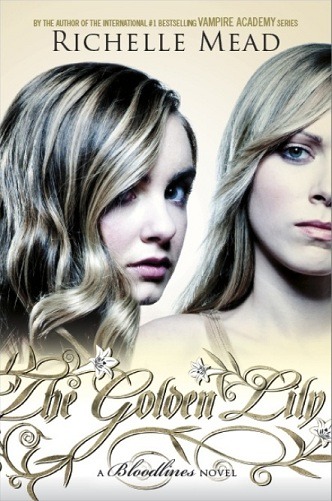
The Golden Lily by Richelle Mead

The Golden Lily by Richelle Mead is the second Bloodlines book, a series set in the same world as the Vampire Academy books.
I felt that The Golden Lily was tighter and had a bit more depth to it plot-wise than the first book, Bloodlines. A big part of this, I think, was that Meade had the chance to set up some of the characters and situations in the previous book. Sure we already knew most of the main characters in Bloodlines, but the plot was more high-school shenanigans (with a dangerous undertone, of course). In The Golden Lily, I felt like part of an overarching plot was set up and at the end I had a clearer idea of where the series was going (particularly given the title of the next book…).

The characters, especially Sydney, continue to be developed in The Golden Lily. There were some hilarious moments associated with her love interest (a new character) and her coming to terms with the world of dating. Mead also used the opportunity to draw some interesting parallels between Sydney’s love-life and other characters’. It was entertaining watching her struggle with understanding that aspect of people while excelling in all other areas.

Dimitri, central in the Vampire Academy books, plays a role in The Golden Lily and it was fascinating seeing him through someone else’s eyes. In the Vampire Academy books, I couldn’t help empathising with Rose’s feelings for him but Sydney is relatively ambivalent towards him (beyond him being a part of her team) and I enjoyed seeing this different perspective.

I am looking forward to reading the next instalment, The Indigo Spell, which comes out in February 2013. I would recommend this book to anyone who has enjoyed Bloodlines or the Vampire Academy books. It’s not as essential to read Bloodlines before reading The Golden Lily as it is with other series, but the series would definitely work better in order. It’s definitely not necessary to read the Vampire Academy series before the Bloodlines books. If you felt a bit meh about Bloodlines, I’d still suggest giving The Golden Lily a go, since I feel it is a stronger book.

4.5 / 5 stars

Wednesday, 9 May 2012

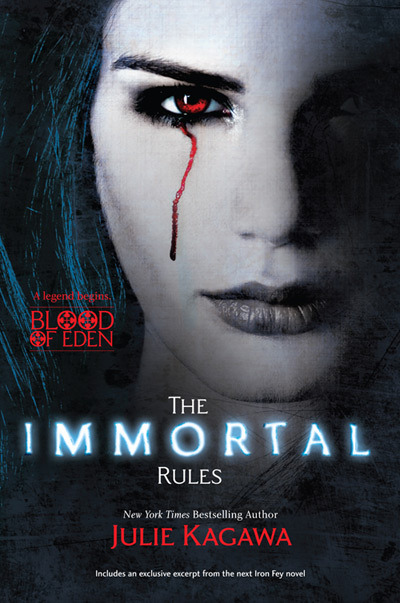
The Immortal Rules by Julie Kagawa

The Immortal Rules by Julie Kagawa grew on me as I read. It started well, but I couldn’t help but feel knowing the premise, as described in the blurb, detracted from the surprise of events near the start. However, this feeling quickly passed and by the time I finished, my overwhelming reaction was AWESOME.
The setting for The Immortal Rules reminded me of a cross between I Am Legend and the alternate Buffy universe ruled by vampires. In The Immortal Rules, Vampires have always existed on the fringes of human society but when a plague threatens to wipe out humanity, they step in and take measures to preserve their food source. The resultant norm has the main character, Allison, living in a city where humans are branded and required to submit to blood “donations” regularly. Infected rabids are kept out by the city wall. Rabids are the result of the plague and are something like zombies with some vampiric elements. Compare with the reanimated dead vampires vs the live undead vampires in I Am Legend.

The start of the book feels like a YA dystopia more than anything else. If I hadn’t read the blurb, I would have expected the standard dystopian arc of: 1. identify societal issues 2. revolution! However, that isn’t where the story goes, at least not in any conventional sense. If I’ve whet your appetite and you haven’t yet read a blurb for this book, you could do worse than to stop reading this review now and go pick up a copy. If you don’t mind not being surprised for a development near the start (or you’ve already read the blurb), then keep reading.

Instead of the story taking place in Allison’s home city as she overthrows the vampires or something like that, disaster strikes and Allison finds herself turned into the very thing she despises; a vampire. The story then goes off in another direction as she is forced to deal with being a monster and loosing everything from her human life. And forced to deal with how humans now see her, judging her based on what she is not who she is, despite any intentions she might have.

She’s a pretty independent, competent and compassionate character that I very much enjoyed reading. The secondary characters all complement her well. I like that Kagawa included annoying characters to antagonise Allison semi-benignly (as in, not just actual ‘bad guys’) and rub the reader up the wrong way. People fearing/hating her when they learn she’s a vampire is a prime example, but there were also personality clashes between Allison and other characters which added depth to the story.

It’s been a while since I’ve read a novel from a vampire’s first person perspective (unless you count the last part of the Twilight saga, which I don’t). Possibly not since Anne Rice. It was also a nice change to read about a female main character struggling with being a vampire and what that might mean for relationships (although any romantic aspects don’t dominate the story) rather than having the genders swapped as seems to be more common. Another nice thing was a lack of white-washing in this novel. Despite being set in the former US, Allison is of Japanese descent, other prominent characters are brown and black and there is, generally, a mix. Really the only white-washing is the cover because that girl is not Japanese.

Structurally, this did not end up reading like a conventional YA novel, despite starting like one. First, it’s longer — just over 500 printed pages — and it’s in four parts which have pretty distinct minor story arcs of their own. The overall arc is her journey and isn’t event-centred (not the revolution kind of event, anyway). Stylistically it felt like a fantasy novel that happened to have teenagers and vampires and so forth rather than a YA vampire novel. I think that reflects a difference in style to other (much shorter!) YA vampire or dystopian novels I’ve read recently. (They’ve all been and felt like quick reads, which this was not.) While it’s a book 1, I expect the subsequent books to continue in more of a fantasy style than a YA dystopia trilogy style.

The other thing I really enjoyed was the cinematic quality of many of the scenes. The descriptions were vivid, especially the action scenes, without dragging out. That and the nature of the setting and story made me feel like this story would work really well on the screen. Maybe as a TV series, since it’s too long for a movie. It would be awesome.

I highly recommend The Immortal Rules to anyone with even a passing interest vampires, fantasy or YA. I think this is a book that will appeal to a fairly broad audience. I will definitely be reading the next book when it becomes available.

5 / 5 stars

Saturday, 28 January 2012

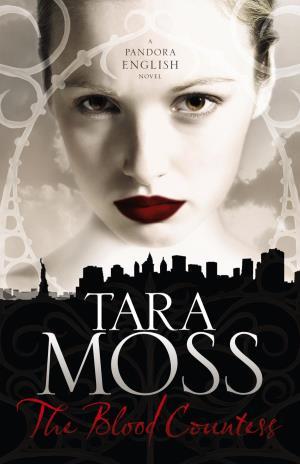
The Blood Countess by Tara Moss

Cross posted from here.


I decided to grab this book for a few reasons. In no particular order: Tara Moss is awesome (decided based mainly on her blog), I don’t mind the occasional vampire/urban fantasy/paranormal book, it was on sale (on iTunes/iBooks), and I could use it towards the Australian Women Writers Challenge (not that I’m desperately short of books for that, but excuses make the book-buying world go ‘round). Some of the reviews on iTunes and LibraryThing lead me to not expect very much of this book. Even if they hadn’t the blurb was not misleading, so I wasn’t disappointed.

You know what? I really enjoyed The Blood Countess by Tara Moss. It wasn’t super-deep (it’s about fashion and magazines in New York), and it wasn’t brooding and angst-ridden. It was fun, entertaining and amusing.

The main character, Pandora, comes to New York from some tiny hicksville town, to stay with her great aunt. She was desperate to get away from said small town partly because of the hicks and partly because it’s her dream to be a writer and work at a New York magazine. Back home, where she lived with her aunt since her parents died in her teens, she spent her time living in books because there wasn’t much else to do and because she didn’t have any friends. She was the town weird kid thanks to her ability to see and speak to ghosts (strongly discouraged by her parents when they were still alive).

She arrives in New York to be greeted by her great aunt’s mysteriously mute chauffeur, who then takes her to her great aunt’s home in a tiny suburb of Manhattan that doesn’t appear on any maps. Also, her great aunt’s building is haunted. Also, vampires, many of which are jolly (seriously, it makes a nice change from the brooding kind).

The story follows Pandora’s attempts to find a job and to start building a career in New York. Suspicious things are happening in the fashion world, mostly centred around a revolutionary new face cream, sinister models and, well, general supernatural shadiness.

To be honest, it’s not the plot that makes this book. Really, the villain of the piece is named in the title, so I don’t think it was supposed to be a surprise. What makes this book book stand out is the voice of the protagonist. In her childhood, her parents and shrink convinced her there was no such thing as ghosts and effectively trained her into keeping quiet and ignoring her “vivid dreams”. That said, once strange things start happening and she starts searching for and getting some answers, she doesn’t spend very long running around in a haze of denial like in some books I won’t mention (and she was quite quick to accept the ghosts back into her life).

More importantly, her inner monologue and her interactions with her great aunt are funny and quirky and really made the book for me. It cheered me up during a stressful week. The digs at pop culture, of varying degrees of unsubtlety also helped.

A small thing that I liked was the way Moss described Pandora’s clothes and didn’t superfluously describe every item of clothing every model who walked past was wearing. As someone not very au fait with the fashion world (shocking revelation, I know), it was nice to have clothing described in a straight forward way with a minimum of slang. I’ve read too many books which expected me to know more clothes/fashion terms than I do, including books not actually about fashion. It was an appreciated touch.

I definitely recommend this book for some light, pleasant reading. So long as you’re not expecting a deep exploration of supernatural lore and human psychology, you shouldn’t be disappointed.

Rating: 4.5 / 5 stars