Showing posts with label deborah biancotti. Show all posts

Saturday, 3 March 2018

Waking in Winter by Deborah Biancotti

Waking in Winter by Deborah Biancotti is a science fiction horror novella, which I would not have guessed from the cover. I actually procrastinated on reading this novella for quite a while because the cover gave me the impression of a very different type of book. I have previously read the short story collection Bad Power by the same author, which is quite different to Waking in Winter (and about superheroes).

On a far, frozen desert world, Muir the pilot discovers an ancient artefact in the ice. She sees a mermaid at first, but later comes to wonder if it is Ningyo, a fish god from her homeland in Japan. A god that brings misfortune and storm. A god that—by all means possible—should be returned to the sea. The rest of Base Station Un see something else. Bayoumi the lab rat sees Sekhmet the lioness goddess, daughter of the sun god. Partholon the creep finds in its shape a ‘good, old-fashioned cruxifix’. But all of them want to possess it. All of them want it for themselves.

The setting of this novella is an icy alien planet currently being explored and studied by scientists. The main character, Muir, is a pilot for an expedition in which there isn’t a good relationship between the science and support staff. One day, out flying a bit off her mandated survey route, Muir sees a giant mermaid buried under the ice. When one of her colleagues comes to check it out, he instead sees a giant lotus flour. Where Muir saw a missing hand, he saw a missing petal. What is the object beneath the ice? Why is part of it missing? Aliens? The story of the novella answers some of these questions while others remain ambiguous. As well as the story of the investigations of the artefact, we also get some background on Muir and the other characters, including why they’re on this alien planet in the first place.

The horror elements in this novella are fairly mild; it's creepy rather than gory. It's definitely more science fiction and a bit weird. Also, while the basic premise — humans studying a weird alien artefact — has been done before, it's the specific characters that Biancotti brings to Waking in Winter which really make it. I quite enjoyed reading this novella, especially since it was much more my kind of thing than the cover suggested it would be.

This is a character-driven story, with the reactions and coping mechanisms of the characters a main strength of the novella. I recommend Waking in Winter to fans of creepy science fiction and (light) horror. It's not a book for readers who only enjoy hard SF since it leans a lot on the non-scientific mystery elements of the discovery on the ice planet.

4.5 / 5 stars

First published: 2016, PS Publishing
Series: no
Format read: ebook
Source: review copy courtesy of author

Saturday, 16 March 2013

Ishtar edited by Amanda Pillar and KV Taylor

Ishtar, edited by Amanda Pillar and KV Taylor, is a collection of three novellas about the Assyrian and Babylonian goddess of love and war, Ishtar. The three novellas cover the past, the present and the future and together tell an overarching story of Ishtar's trail through thousands of years of humanity. Overall, I was impressed at how well the three novellas hung together and told a cohesive overarching story.


"The Five Loves of Ishtar" by Kaaron Warren is a story spanning thousands of years in the Mesopotamian region. Told from the perspectives of a series of Ishtar's washerwomen — each the daughter of Ishtar's previous washerwoman — it focuses partly on the men in Ishtar's life and partly on life generally at that time. From a god to Gilgamesh to kings, Ishtar's loves are broad and at times it seems her life revolves around them. At times war is her central concern and her army.

I liked the younger Ishtar, before she grew quite so jaded and belligerent, when she was still unsure of herself and cared at least a little about others (which is an ironic statement if you read the story). It was interesting to watch her and her concerns change through the eyes of a succession of servants.

What I also found interesting was how this story served to showcase the broadness of Warren's writing abilities. "The Five Loves of Ishtar" is very different to her other work that I've read; not only vastly different in setting to Through Splintered Walls and Slights, but also different in tone, theme and types of characters. It makes me excited to see what sort of writing I will encounter from her next.

"And the Dead Shall Outnumber the Living" by Deborah Biancotti is similar in tone and setting (modern Sydney) to the stories in Bad Power but with Ishtar, rather than superheroes, of course. It follows Adreienne, a detective given an unusual set of homicides to investigate. Of course we know the supernatural origins of the bodies — since Ishtar has to show up at some point — but it was still a compelling story. I enjoyed watching Adreienne slowly uncover the truth. The extra characterisation Biancotti throws in, particularly around Adreienne's sister, was a nice touch that added depth to the story.

Interestingly enough, it was this story that convinced me to classify the collection as horror. Going in I was definitely expecting fantasy and dark fantasy elements, but when Warren's story wasn't as horrifying as some of her other work I assumed the collection overall might not quite count as horror. It does.

"The Sleeping and the Dead" by Cat Sparks is a post-apocalyptic tale set in a world with not much left in it other than sand. Doctor Anna is the protagonist and works at a fertility clinic in a desert with only strange death and sex worshipping nuns for company. There don't seem to be many men left in the world and when a few stumble upon the clinic, Anna and the nuns set out to find their leader.

My favourite aspect of this story was all the allusions to earlier events, particularly to Ishtar's roots. It relies on knowledge of the previous stories more than one would expect from an ordinary collection, but in this context it works beautifully. I enjoyed having more of an idea of what was going on than Anna did most of the time, and watching her come towards her own realisations.

~

Overall, this is a strong collection. I like what Morrigan (the publisher) have been doing with themed collections (see also Grants Pass and The Phantom Queen) and I think Ishtar is an excellent example of how communal story-telling can work to great effect. I recommend Ishtar to fans of dark fantasy and horror.

4 / 5 stars

First published: 2011, Gilgamesh Press (an imprint of Morrigan Books)
Format read: ebook on my Kobo and iPad (yay for not DRM)
Source: Purchased from Smashwords
Challenges: Australian Women Writers Challenge, Australian Horror Reading Challenge

Wednesday, 15 February 2012

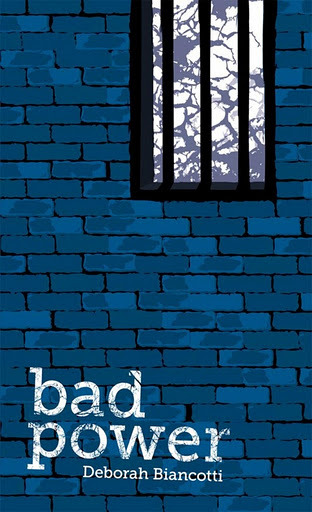
Bad Power by Deborah Biancotti

This book is part of Twelfth Planet Press’s “Twelve Planets” series. It is a collection of five short stories all set in a common world. I bought the ebook version and it’s also available in paperback and for Kindle.


Bad Power is set (mostly) in modern Sydney in a world where some people have an inexplicable power: talking to dead people, seeing the future, immortality, and a few less common powers. And, although most of the protagonists have super powers, none of them are heroes (well, with one possible exception).


A few words about each of the stories:


Shades of Grey


The first thing that struck me about Biancotti’s writing when I started reading this story was the cinematic quality of the mental images it conjured up. The opening story grabbed me from the first paragraph and thrust me into the collection.


In “Shades of Grey” we meet Esser Grey, a wealthy businessman who recently discovered his power and is testing the limits (and not really finding any). We also meet detective Palmer, a recurring character throughout the collection who keeps being given the weird cases. (I enjoyed the continuity of seeing Palmer in later stories and also the mentions of Grey later on.) This story really sets the scene for the rest of the collection.


Palming the Lady


In this story, a young medical student, Matthew Webb, goes to the police and is directed to detective Palmer. He is being stalked by a homeless woman who knows where he’s going to be and gets there before he does. But his future isn’t he only future she sees.


Web of Lies


We meet Matthew again, this time just after his father’s death when he and his mother and discovering how to live again, free from the old man’s dictatorship. They both struggle with it in different ways and both learn there is more power in their family than they had realised.


As a side note, Matthew is mentioned in passing the last two stories. After the tumultuous stories in which he played a central role, it was nice to read that he had a slightly more stable future ahead of him. A neat way of letting us know that it was all OK in the end.


Bad Power


This is the only story not set in modern Sydney and also the only one written in first person. It also stood out for me as being the one story with a less thoroughly described setting — I was slightly confused about the time period it was set in, but turns out my first instinct was correct.


It’s a story about someone with a self-described “bad” power and about the horrible things people do to each other. This was easily the most horrific story in the collection and, for that reason, my least favourite. However, the link the previous and subsequent stories made it a relevant and integral part of the collection. I think without this story, the whole collection would have felt slightly more bland. (And it does make a good title for the collection as a whole.)


Cross That Bridge


This was the story that, when I heard a brief description on Galactic Suburbia, made me want to read the whole collection. Max works for the police. His power is the ability to find lost children, even when there is no discernible trail. As one might imagine, people find his talent creepy and he is constantly under suspicion.


~


It’s hard to choose a favourite story in this collection. Aside from “Bad Power”, they read almost like chapters from the same book (except with resolutions and different protagonists). The idea of normal people discovering superpowers isn’t a new one (cf Heroes), nor is the idea of an organisation such as the Grey Institute hinted at in the background throughout the collection (cf X-Men, Union Dues, etc). However, Biancotti pulls the world off uniquely and fascinatingly.


I really enjoyed the exploration of human nature and the wildly different coping mechanisms the powered characters employ. My favourite take home message? Power is not always empowerment.


4.5 / 5 stars