Showing posts with label australian authors. Show all posts

Sunday, 4 December 2022

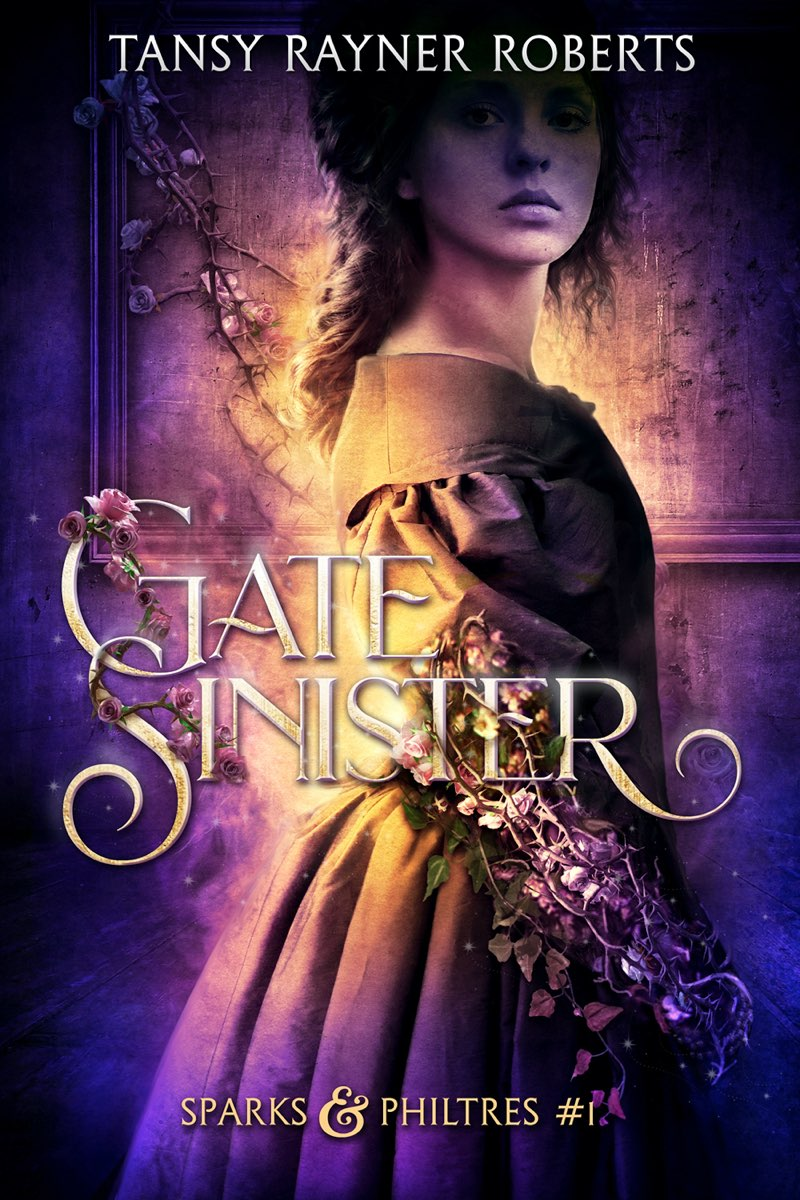
Gate Sinister by Tansy Rayner Roberts

Gate Sinister by Tansy Rayner Roberts is the first in the new novella series, Sparks and Philtres. It's set in a fae and magic secondary world based loosely on Victorian Britain (but with a Queen Isolde instead of Victoria).

Disguised as a governess, the last fairy in Britannia infiltrates the household of the Gloucester family to fulfil a vital mission on behalf of her exiled people.

On the run after offending the Royal family, two infamous magical engineers set out to commit the crime of the century on behalf of a wicked enchantress.

For one night only, the Gate Sinister can be opened between worlds, clearing the way to the long-lost Forest of Arden. For one night only, all things are possible…

This was an enjoyable and reasonably quick read. The story follows two sets of characters and it took me a little bit longer to warm to the second set, as is often the case with any piece of fiction; we get attached to the first characters we meet and then want to get back to their story as soon as possible! Of course, once both threads of the story started to come together, I found myself enjoying both sides of the narrative.

I appreciated that this novella stands alone fairly well. It does a lot of worldbuilding for later stories (I assume), but the story itself is self-contained. While our characters decide at the end to go off to do various things, it's not entirely obvious (to me, anyway) what story or path the next novella in the series will follow. That said, there are a lot of interesting possibilities and I am up for reading a story about any of them and curious about where the author will take the series.

Gate Sinister is an interesting start to what promises to be an enjoyable series. It is generally lighthearted but contains some darker themes and choices for the characters. It's a case of things getting darker the more you dwell on them, so there are some layers to the story and worldbuilding. I recommend Gate Sinister to fans of fairies, the ethics of love spells and novellas.

4 / 5 stars

First published: January, 2023
Series: Sparks and Philres, book 1
Format read: eARC
Source: the author
Disclaimer: Although the author is a friend, I have endevoured to write an unbiased review.

Monday, 19 July 2021

She Who Became the Sun by Shelley Parker-Chan

She Who Became the Sun by Shelley Parker-Chan is the first book in the Radiant Emperor series. Since I try not to remember blurbs, I did not realise until partway through that it was based on a historical person. This does mean that Wiki can tell you where the story is going, but this isn't much of a spoiler since the journey is very open to interpretation, as Parker-Chan shows us.

She’ll change the world to survive her fate . . .

In Mongol-occupied imperial China, a peasant girl refuses her fate of an early death. Stealing her dead brother’s identity to survive, she rises from monk to soldier, then to rebel commander. Zhu’s pursuing the destiny her brother somehow failed to attain: greatness. But all the while, she feels Heaven is watching.

Can anyone fool Heaven indefinitely, escaping what’s written in the stars? Or can Zhu claim her own future, burn all the rules and rise as high as she can dream?

I enjoyed this book a lot. Set shortly before the fall of the Yuan Dynasty, it follows a peasant girl, Zhu, who grew up in a famine and extreme poverty. Her sheer determination to survive and not  have an insignificant "nothing" destiny, sees her take on her brother's identity and join a monastery. Unlike many stories with the girl-dresses-as-boy trope, it does not involve a romance with her best monk friend but rather takes a more complicated and queer direction. I really enjoyed reading about Zhu and I appreciated the lengths she was willing to go to for her goal/dream/destiny.

The other protagonist is a eunuch general on the Yuan side (as opposed to the people who are sick of being ruled over by the Yuan, which is the side Zhu is on). He is bitter and vengeful against the Yuan but in an interesting position, since he genuinely likes the Prince he serves. He and Zhu have a few run-ins, which were quite dramatic, despite the fact that they both want similar things. I didn't enjoy his point of view sections as much, especially in the first part of the book, but they got more interesting as we learnt more about him and as events progressed. In any case, he was a good foil for Zhu.

I highly recommend this book to people who enjoy historic fantasy, especially people looking for books set in Asia. She Who Became the Sun did not end on a cliffhanger, but did leave the story unfinished, so I am very much looking forward to reading the next book, when it comes out.

5 / 5 stars

First published: July 2021, Tor Books
Series: The Radiant Emperor book 1 of ?
Format read: eARC
Source: Publisher via Netgalley

Friday, 14 August 2020

Flyaway by Kathleen Jennings

Flyaway by Kathleen Jennings is a novella from an Australian author whose short fiction I have previously enjoyed. She is, perhaps, most well-known for her artwork, including book covers such as the one for Flyaway, among others.

In a small Western Queensland town, a reserved young woman receives a note from one of her vanished brothers—a note that makes question her memories of their disappearance and her father’s departure.

A beguiling story that proves that gothic delights and uncanny family horror can live—and even thrive—under a burning sun, Flyaway introduces readers to Bettina Scott, whose search for the truth throws her into tales of eerie dogs, vanished schools, cursed monsters, and enchanted bottles.

In these pages Jennings assures you that gothic delights, uncanny family horror, and strange, unsettling prose can live—and even thrive—under a burning sun.

Going through the tags for this review, I couldn't not include "Australian gothic". This book is a tangle of fairytales brought by settlers into the unique Australian landscape, all of them twisted and variously creepy. Flyaway is, above all, a story composed of many other stories, told as flashbacks or asides. The layers are slowly peeled back as our unreliable narrator, Bettina Scott, slowly learns more of her recent past and starts to realise what she's forgotten.

The fact that part of the story is told as Bettina's memories unfurl means that we come at the main story — for lack of a better term, I mean the story most important to Bettina — from an oblique angle. We know something strange has happened, but the pieces don't come together until very close to the end. But in the meantime, Jennings keeps the reader entertained and/or horrified with the extra stories peppered throughout the narrative.

I recommend Flyaway to readers who like weird narratives and who don't mind feeling creeped out by the bush or western Queensland. I think non-Australian readers will also find much to connect with in this book, since a lot of the fairytales are recognisably based on European folklore, despite the strong presence of the Australian landscape in the book.

4 / 5 stars

First published: July 2020, Tor.com
Series: No, I don't think so
Format read: eARC
Source: Publisher via NetGalley

Sunday, 15 March 2020

Songwoman by Ilka Tampke

Songwoman by Ilka Tampke is set during the time of the Roman invasion of Britain, around the 40s AD. It is technically a sequel to Skin, but actually both books stand alone fairly well. They follow the same protagonist, but the two stories are separate, if sequential. I read Skin during a blog hiatus, so there is only a mini review of it, alas.

Haunted by the Roman attack that destroyed her home, Ailia flees to the remote Welsh mountains in search of the charismatic war king, Caradog, who is leading a guerrilla campaign against the encroaching army.

Ailia proves herself an indispensable advisor to the war king, but as the bond between them deepens, she realises the terrible role she must play to save the soul of her country.

Set in Iron-Age Britain, Songwoman is a powerful exploration of the ties between people and their land and what happens when they are broken.

I started reading Songwoman after a day trip to northern Wales, during which a friend and I visited a few castles (built more than a millennium after this book was set), and drove through Snowdonia with some breathtaking views, even in winter. So I was excited to start reading a book set in roughly the same area. The setting of Songwoman did not disappoint. The plot, however, was a little slow.

The bulk of the story involves Ailia being part of the inner circle of Caradog's resistance army. Her personal journey is split between learning the mystical arts, her relationship with Caradog, conflict with some of Caradog's other advisors, and the actual war. The war is mostly a series of small skirmishes and recruitment negotiations, and hence felt like it moved slowly, but in a realistic way. I actually found the relationship with Caradog the most drawn out. I don't want to spoil too much, but I will say that it was interesting that he was portrayed in a way that could be read as bipolar, but that was the most interesting thing about him. I did not quite understand Ailia's emotional attachment to him, especially since I spent a chunk of the start of the book hoping a key character from Skin would make an appearance (he did not).

So on the one hand, Songwoman was a little slow — though not unpleasant to read, aside from a few brief atrocities — but on the other hand, I was actually surprised at how little time was covered in the book. Near the end, there's a scene in which Ailia returns somewhere and notes that it's been a year since she was last there, at the start of the book. I was honestly shocked that only a year was supposed to have passed. This is maybe because, as the author mentions in the afterword, a few years of historical events were compressed  into one year for expediency. However, given my other reaction, I'm wondering whether that was the best choice. That said, I actually liked certain events around the ending a lot. (Being vague to avoid spoilers.) It added an extra dimension to the story, confusing timing aside.

Anyway, I mostly enjoyed Songwoman, even though it took me a while to get through. I recommend it to fans of historical fantasy and, particularly, Welsh settings. While it makes sense to read after Skin, it's not entirely necessary. While I don't expect a sequel, I am broadly interested in the author's future works.

4 / 5 stars

First published: 2018 Text Publishing, with US edition March 2020
Series: sequel to Skin
Format read: eARC
Source: Publisher via Edelweiss

Sunday, 9 February 2020

Maternal Instinct by Rebecca Bowyer

Maternal Instinct by Rebecca Bowyer is a near future science fiction novel that examines a future in which the process of having children is highly regulated in Australia. The extreme system could be read as either dystopian or utopian, depending on you point of view, but the plot pushes it towards dystopian.

Australia 2040. No child lives in poverty and every child is safe. But at what cost?

19-year-old Monica never wanted a baby but the laws require her to give birth twice before she can move on with her life.

Now that her first son, Oscar, has arrived she's not so sure she wants to hand him over to be raised by professional parents: the Maters and Paters.

When Monica turns to her birth mother, Alice, for help, she triggers a series of events that force Alice to confront her own dark past. Alice must decide - help her daughter break the law, or persuade her to accept her fate and do what's best for the nation's children?

The two protagonists in this book are Monica, 19 and currently in the breastfeeding for six months portion of her national service, and her biological mother, Alice, who is 40 and just returning to work after time off for cancer treatment. The book alternates between the two women's perspectives, giving us a broad view of the future society. The fact that Alice works for the government department in charge of reproduction and genetic diversity allows us to see a couple of different governmental views on the system. And of course, when things start to go not according to plan, that very same government position is the cause of extra tension.

I found the social worldbuilding presented in this novel interesting but also sort of implausible. All the events that took place in the context of a society where children were raised communally more or less made sense, but I couldn't quite fathom how, in just twenty years, society would get to that point. Also, the book leaned into the horror of having to give up your babies after six months to be raised by professional parents (with biological parents allowed to visit them on Sundays). But for me the more horrific thing was being forced to bear children at 19ish. In the book we see this situation as the status quo, but I cannot imagine that the first set of kids being forced into maternity homes after graduating high school would have gone quietly. On the bright side, young men also had to do baby-related national service with their roles involving doing all the cooking and cleaning for the expectant and young mothers in their maternity homes. That aspect I can get behind. But the rest was a bit off-putting.

Overall, I found aspects of this novel interesting, but found that it was a bit slow to keep me consistently excited about the ideas in it. While the plot definitely engaged with the worldbuilding, it didn't quite go far enough, in some aspects, for my personal tastes. I don't think I've read a dystopian novel where the unusual baby-making practices were due to social pressures only (and not some sort of infertility plague), so it is an interesting concept from that perspective. But of course others might feel differently. I recommend reading this book if the blurb and premise sound interesting.

3.5 / 5 stars

First published: Story Addict, 2019
Series: Don't think so
Format read: eARC
Source: Author via NetGalley

Friday, 10 January 2020

Daughter of Lies and Ruin by Jo Spurrier

Daughter of Lies and Ruin by Jo Spurrier is the second book in the Tales of the Blackbone Witches, following on (in an episodic way) from A Curse of Ash and Embers, which I previously reviewed and which introduces the main characters. Although the second book follows on from the first, the stories in both are entirely self-contained.

There's something strange brewing in this tinder-dry forest - a girl with a sword and a secret, a troupe of vicious bandits vanished without a trace, beasts that don't belong and a witch with a macabre plan.

Elodie hasn't been learning witchcraft for long, but she knows enough to be worried, and the fact that her mentor Aleida wants to pack up and leave in short order isn't helping to settle her nerves.

Elodie just hopes to get everyone out of this mess unharmed, but it's looking more unlikely with every passing hour. And when the strange witch's ire falls on her, Aleida's wrath sparks a fire that threatens to scorch the earth itself ...

In Daughter of Lies and Ruin we see Dee and Aleida on the road, tending to some business in another region, when they start noticing strange magical things happening around them. When Aleida says they shouldn't get involved... well what stories would there be if protagonists could ignore trouble when they stumbled upon it?

In this book the dynamic between Dee and Aleida is very different to the first book. They are no longer getting to know each other and have fallen into a stable teacher-apprentice relationship, wherein both characters influence the other. So while Aleida teaches Dee magic, it's also nice to see Dee's empathy starting to rub off (a tiny bit) on Aleida. I also appreciated the aspect of magical worldbuilding whereby different witches have different strengths and Dee does not have the same strengths as her teacher so can't necessarily be taught directly in all forms of magic.

And then there's the new characters we meet in this book. We get another spunky teenaged girl, but one who is spunky in a different way to Dee (and introduces her to the concept of trousers on women), there's a surprising number of bandits, and an antagonist who isn't even doing it out of malice. I won't say more for fear of spoiling too much, but the combination made for an enjoyable read.

I enjoyed Daughter of Lies and Ruin and I recommend it to anyone who enjoyed the first book or who enjoys epic fantasy. I believe this series is being marketed as YA, however, although the protagonist is sixteen, it feels more like a BFF (big fat fantasy) book to me than a YA book (lengthwise it's probably somewhere between BFF and YA). Jo Spurrier continues to be one of my favourite Aussie fantasy writers, and I will continue buying every book she writes.

4.5 / 5 stars

First published: 2019, Harper Voyager
Series: Tales of the Blackbone Witches book 2 of ?
Format read: ePub
Source: Purchased from Kobo

Saturday, 30 November 2019

Keep Calm and Kill the Chef by Tansy Rayner Roberts

Keep Calm and Kill the Chef by Livia Day is the third book in the Café La Femme series of cosy culinary crime novels. Chronologically, it follows on from A Trifle Dead and Drowned Vanilla, but in practice you don’t have to have read the earlier books to follow this one.

Scones, tea, and a stabbing…

When Tabitha Darling entered Cafe La Femme in a reality TV show hosted by an infamous “bad boy” Chef, she never expected to be a suspect in his murder.

When Xanthippe Carides quit working in a cafe to become a private detective, she never expected one of her first cases would be keeping Tabitha out of jail…

These two friends have a mystery to solve, and only one of them is telling the whole truth.

Keep Calm and Kill the Chef is told from two points of view and two timelines: we get Tabitha's point of view from before the murder and Xanthippe's from after the murder. Since Tabitha is a potential suspect in the eyes of some of the police (though otherwise a sympathetic character), and Xanthippe is investigating the murder, this sets up an interesting dynamic, especially since they're best friends. I also enjoyed the way in which this setup conveyed information to the reader — in pieces from both ends of the timeline.

Because the plot of this book is centred around a reality TV cooking competition show, there are more descriptions of ridiculous food (for various definitions of ridiculous) than the previous books in the series, and fewer descriptions of more realistic foods. This worked better for me personally since I have a lot of food problems and descriptions of delicious desserts I can't eat were less fun for me than descriptions of ridiculous desserts that most people won't get the opportunity to eat. What kind of ridiculous? Well let's just say the cover is only the half of it.

I don't usually read crime or mystery books, but I like this series for its light-heartedness (most of the time) and the geekiness of the characters. If you enjoy cosy crime books, particularly those set in locations less frequently seen in fiction (Hobart, in this case) and especially if you liked the earlier books in the series, I highly recommend Keep Calm and Kill the Chef.

4.5 / 5 stars

First published: September 2019, Twelfth Planet Press
Series: Cafe La Femme, book 3 of 3 (so far...)
Format read: ePub
Source: Bought as a Kickstarter add-on
Disclaimer: The author is a friend, but I have endeavoured to write an impartial review

Sunday, 22 September 2019

Hobgoblin Boots by Tansy Rayner Roberts

Hobgoblin Boots by Tansy Rayner Roberts is a short novella set in the world of the Mocklore chronicles. It stands alone and you do not have to have read any of the other books to pick this one up. I previously reviewed Ink Black Magic and I’ve also read Splashdance Silver, but more than a decade ago, long before this blog came into existence.

At the age of thirteen, half-hobgoblin Bounty Fenetre found herself on her own, which was fine by her. There was a cute chainmail number at the smithy's she had her eye on, once she figured out how to fix it so it bared her midriff. Then Ma Fortuna adopted her and she met Luc, her new foster brother.

Four years later, at the age of seventeen, Bounty is older and wiser, and really wants to Seek Her Fortune. She and Luc ambush a hero and steal his armor, because as everyone knows, the first step to becoming a hero is to look like one. The second step is to be recognized as a hero by the world at large, which surprisingly, isn't as hard as it sounds. Mocklore is a land where magic crashes and smashes through the landscape, exploding with abrasive sounds and colors, the ideal place for a clever half-hobgoblin fosterling and a charismatic hero-in-progress to make their names.

The story follows Bounty as she grows up (reaches her late teens) and goes off to seek her fortune. First with her adopted brother, then alone. She encounters a variety of fantasy world scenarios and experiences somewhat of a coming of age narrative.

This was a short and entertaining read. The author doesn’t shy away from mocking fantasy tropes, but without mocking the entire fantasy genre. It’s a little reminiscent of early Pratchett, or perhaps Douglas Adams, but also not quite. Roberts has a voice all her own.

I recommend this novella to fans of Roberts’ writing and particularly the Mocklore books. If you haven’t read any of that series, this is a reasonable introduction and sample.

4 / 5 stars

First published: 2004, recent re-/self-published
Series: Mocklore universe, a standalone story
Format read: ePub
Source: Tansy Rayner Roberts' Patreon or possibly newsletter
Disclaimer: Although the author is a friend, I have endeavoured to write an unbiased review

Tuesday, 16 July 2019

Memento by Amie Kaufman and Jay Kristoff

Memento by Amie Kaufman and Jay Kristoff is a prequel novella set in the Illuminae Files world. I have previously reviewed the first two books in the series, Illuminae and Gemina. While I have read the third book, Obsidio, I have not reviewed it since I did not get a chance to read the final fancy typeset version, which is now on another continent. (I read an earlier version for science-checking purposes.) The printed booklet version of Memento is the only version I have read and came as a preorder bonus for the authors' new book.

December, 2574. Forty-three days before the BeiTech attack on Kerenza IV.

This is the story of my first friendship.

This is the tale of my first murder?

Some monsters are born.

But I?

< ERROR >

I was made.

I won't say this was a fun read per se, but as with the main books in the series it was presented in a fun way, with transcripts of conversations and a few pages of strange word art. I did not think I remembered the main characters (other than AIDAN) from the main series and, given the series, it was not hard to guess the shape of the ending. I enjoyed the new protagonist, Olivia, who had an interesting story arc.

Memento does not contain any significant spoilers for the series. Being a prequel meant that certain events were set in stone, but we did see them from a new perspective. The events that overlap between the novella and the first book, Illuminae, happen near the very start of Illuminae, so I would not consider them to be spoilers. It's reasonable read for someone wanting a sampler of the series (although it might not be easy to obtain — I'm not entirely sure how broadly it will ultimately be distributed).

This was an interesting read and I recommend it to fans of the Illuminae Files as well as new readers who can get their hands on it. It's a reasonable introduction to the series, and is a quick and self-contained read. I also like the way in which it was presented — although I generally prefer ebooks, the unique formatting of this series lends itself better to print and the staple-bound booklet of Memento was kind of cute.

4.5 / 5 stars

First published: Alfred A Knopf (US), 2019
Series: Illuminae Files, prequel/volume 0.5
Format read: Paper!
Source: Preorder bonus with Aurora Rising

Saturday, 6 April 2019

Perihelion Summer by Greg Egan

Perihelion Summer by Greg Egan is a standalone science fiction novella from Tor.com. The combination of author I like and imprint of consistently good novellas meant that I was definitely going to read this at some point. Happily I got an early copy, so I can share this review just before release.

Greg Egan's Perihelion Summer is a story of people struggling to adapt to a suddenly alien environment, and the friendships and alliances they forge as they try to find their way in a world where the old maps have lost their meaning.

Taraxippus is coming: a black hole one tenth the mass of the sun is about to enter the solar system.

Matt and his friends are taking no chances. They board a mobile aquaculture rig, the Mandjet, self-sustaining in food, power and fresh water, and decide to sit out the encounter off-shore. As Taraxippus draws nearer, new observations throw the original predictions for its trajectory into doubt, and by the time it leaves the solar system, the conditions of life across the globe will be changed forever.

The premise of this book is a fairly technical apocalypse, involving black holes. There are some maths and physics details near the start, but it’s not opaquely technical, in my opinion. Most of the story focuses on the characters dealing with the disaster and its aftermath and observing and interacting with others doing the same. There were a lot of thoughtful little bits included, which made the read more delightful. For example the headlines from various newspapers (which will be most appreciated by Australian and British readers, I think) and comments about Australian spying in Timor-Leste.

I found Matt’s relationship with his mother both interesting, in the difficulties it added to the book, and a bit incomprehensible, with regards to her attitude. I ended up thinking about her attitude a lot and I think it comes down to this: I can understand apocalypse-denial, but not once the apocalypse is actually happening. As a child of refugees, the idea of not leaving a doomed home to save yourself when you have the ability to just baffles me. I know the mother character’s feelings are reflecting real people’s attitudes but somehow it’s even worse when shown in such an extreme situation. Anyway, that part — Matt’s interactions with his family — gave me a lot of feelings, in the way that good books often do.

This was an excellent read and I couldn’t put it down, even though I had to sleep. I highly recommend it to fans of realistic (ish) apocalypse fiction and Greg Egan’s other books. It’s a brilliant combination of character dynamics and accessible science. I really must get around to reading more Greg Egan.

5 / 5 stars

First published: April 2019, Tor.com
Series: No.
Format read: Paper ARC *gasp*
Source: Won in a Twitter competition

Thursday, 21 February 2019

Aurealis Awards Shortlist Announced

It's that time of year when the Aurealis Awards finalists are announced. You can read the official announcement here, and I have reproduced the lists below. The links below go to my reviews where those exist (albeit a little sparse this year). A lot of books already on my TBR and some new ones to add.

(PS If you're interested, the Nebula Award Finalists have also been announced.)

Best Science Fiction Novel

Scales of Empire (Kylie Chan, Voyager)
Obsidio (Amie Kaufman & Jay Kristoff, A&U)
Lifel1k3 (Jay Kristoff, A&U)
Dyschronia (Jennifer Mills, Picador)
A Superior Spectre (Angela Meyer, Ventura Press)
The Second Cure (Margaret Morgan, Vintage)

Best Fantasy Novel

Devouring Dark (Alan Baxter, Grey Matter Press)
Lady Helen and the Dark Days Deceit (Alison Goodman, HarperCollins)
City of Lies (Sam Hawke, Bantam)
Lightning Tracks (Alethea Kinsela, Plainspeak Publishing)
The Witch Who Courted Death (Maria Lewis, Piatkus)
We Ride the Storm (Devin Madson, self-published)

Best Horror Novel

The Bus on Thursday (Shirley Barrett, A&U)
Years of the Wolf (Craig Cormick, IFWG Publishing Australia)
Tide of Stone (Kaaron Warren, Omnium Gatherum)

Best Graphic Novel/Illustrated Work

Deathship Jenny (Rob O’Connor, self-published)
Cicada (Shaun Tan, Lothian)
Tales from The Inner City (Shaun Tan, A&U)

Best Children’s Fiction

The Relic of the Blue Dragon (Rebecca Lim, A&U)
The Slightly Alarming Tales of the Whispering Wars (Jaclyn Moriarty, A&U)
The Endsister (Penni Russon, A&U)
Secret Guardians (Lian Tanner, A&U)
Ting Ting the Ghosthunter (Gabrielle Wang, Puffin)
Ottilie Colter and the Narroway Hunt (Rhiannon Williams, Hardie Grant Egmont)

Best Young Adult Novel

Small Spaces (Sarah Epstein, Walker)
Lifel1k3 (Jay Kristoff, A&U)
Catching Teller Crow (Ambelin Kwaymullina & Ezekiel Kwaymullina, A&U)
His Name was Walter (Emily Rodda, HarperCollins)
A Curse of Ash and Embers (Jo Spurrier, Voyager)
Impostors (Scott Westerfeld, A&U)

Best Collection

Not Quite the End of the World Just Yet (Peter M Ball, Brain Jar Press)
Phantom Limbs (Margo Lanagan, PS Publishing)
Tales from The Inner City (Shaun Tan, A&U)
Exploring Dark Short Fiction #2: A Primer to Kaaron Warren (Kaaron Warren, Dark Moon Books)

Best Anthology

Sword and Sonnet (Aiden Doyle, Rachael K Jones & E Catherine Tobler, Ate Bit Bear)
Aurum (Russell B Farr, Ticonderoga Publications)
Mother of Invention (Rivqa Rafael & Tansy Rayner Roberts, Twelfth Planet Press)
Infinity’s End (Jonathan Strahan, Solaris)
The Best Science Fiction & Fantasy of the Year (Jonathan Strahan, Solaris)

Best Science Fiction Novella

‘I Almost Went To The Library Last Night’ (Joanne Anderton, Aurum, Ticonderoga Publications)
The Starling Requiem (Jodi Cleghorn, eMergent Publishing)
Icefall (Stephanie Gunn, Twelfth Planet Press)
‘Pinion’ (Stephanie Gunn, Aurum, Ticonderoga Publications)
‘Singles’ Day’ (Samantha Murray, Interzone #277, TTA Press)
Static Ruin (Corey J White, Tor.com)

Best Science Fiction Short Story

‘The Sixes, The Wisdom and the Wasp’ (E J Delaney, Escape Pod)
‘The Fallen’ (Pamela Jeffs, Red Hour, Four Ink Press)
‘On the Consequences of Clinically-Inhibited Maturation in the Common Sydney Octopus’ (Simon Petrie & Edwina Harvey, A Hand of Knaves, CSFG)
‘A Fair Wind off Baracoa’ (Robert Porteous, A Hand of Knaves, CSFG)
‘The Astronaut’ (Jen White, Aurealis)

Best Fantasy Novella

‘This Side of the Wall’ (Michael Gardner, Metaphorosis Magazine, January 2018)
‘Beautiful’ (Juliet Marillier, Aurum, Ticonderoga Publications)
‘The Staff in the Stone’ (Garth Nix, The Book of Magic, Voyager)
Merry Happy Valkyrie (Tansy Rayner Roberts, Twelfth Planet Press)
‘The Dressmaker and the Colonel’s Coat’ (David Versace, Mnemo’s Memory and Other Fantastic Tales, self-published)
The Dragon’s Child (Janeen Webb, PS Publishing)

Best Fantasy Short Story

‘Crying Demon’ (Alan Baxter, Suspended in Dusk 2, Grey Matter Press)
‘Army Men’ (Juliet Marillier, Of Gods and Globes, Lancelot Schaubert)
‘The Further Shore’ (J Ashley Smith, Bourbon Penn #15)
‘Child of the Emptyness’ (Amanda J Spedding, Grimdark Magazine #17)
‘A Moment’s Peace’ (Dave Versace, A Hand of Knaves, CSFG Publishing)
‘Heartwood, Sapwood, Spring’ (Suzanne J Willis, Sword and Sonnet, Ate Bit Bear)

Best Horror Novella

‘Andromeda Ascends’ (Matthew R Davis, Beneath the Waves – Tales from the Deep, Things In The Well)
‘Kopura Rising’ (David Kuraria, Cthulhu: Land of the Long White Cloud, IFWG Publishing Australia)
‘The Black Sea’ (Chris Mason, Beneath the Waves – Tales from the Deep, Things In The Well)
Triquetra (Kirstyn McDermott, Tor.com)
‘With This Needle I Thee Thread’ (Angela Rega, Aurum, Ticonderoga Publications)
Crisis Apparition (Kaaron Warren, Dark Moon Books)

Best Horror Short Story

‘The Offering’ (Michael Gardner, Aurealis #112)
‘Slither’ (Jason Nahrung, Cthulhu Deep Down Under Volume 2, IFWG Publishing Australia)
‘By Kindle Light’ (Jessica Nelson-Tyers, Antipodean SF #235)
‘Hit and Rot’ (Jessica Nelson-Tyers, Breach #08)
‘Sub-Urban’ (Alfie Simpson, Breach #07)
‘The Further Shore’ (J Ashley Smith, Bourbon Penn #15)

Best Young Adult Short Story

‘A Robot Like Me’ (Lee Cope, Mother of Invention, Twelfth Planet Press)
‘The Moon Collector’ (D K Mok, Under the Full Moon’s Light, Owl Hollow Press)
‘The Sea-Maker of Darmid Bay’ (Shauna O’Meara, Interzone #277, TTA Press)
‘Eight-Step Koan’ (Anya Ow, Sword and Sonnet, Ate Bit Bear)
‘For Weirdless Days and Weary Nights’ (Deborah Sheldon, Breach #08).

Wednesday, 30 January 2019

Meet Me at the Intersection edited by Rebecca Lim and Ambelin Kwaymullina

Meet Me at the Intersection edited by Rebecca Lim and Ambelin Kwaymullina is an anthology filled with intersectional Australian voices. The idea being to highlight all sorts of marginalised writers. Taken as a whole, this results in a very broad and diverse anthology. Although I am familiar with the two editors from the spec fic books they've authored, most of the stories did not have a speculative bent, although there were a few.

Meet Me at the Intersection is an anthology of short fiction, memoir and poetry by authors who are First Nations, People of Colour, LGBTIQA+ or living with disability. The focus of the anthology is on Australian life as seen through each author’s unique, and seldom heard, perspective.

With works by Ellen van Neerven, Graham Akhurst, Kyle Lynch, Ezekiel Kwaymullina, Olivia Muscat, Mimi Lee, Jessica Walton, Kelly Gardiner, Rafeif Ismail, Yvette Walker, Amra Pajalic, Melanie Rodriga, Omar Sakr, Wendy Chen, Jordi Kerr, Rebecca Lim, Michelle Aung Thin and Alice Pung, this anthology is designed to challenge the dominant, homogenous story of privilege and power that rarely admits ‘outsider’ voices.

Some of the stories were fun to read, some were intentionally uncomfortable, other fell somewhere in between those two extremes and made me think. Note that I use "stories" here in a generic sense to refer to all the pieces in the anthology, even though it included poetry and memoir. My two favourite stories gained that status for very different reasons. ‘Stars in our Eyes’ by Jessica Walton was a delightful celebration of geek culture, while including queer and disabled characters and refreshingly supportive characters. ‘The Last Stop’ by Alice Pung was not at all what I expected from the opening and is a story that firmly fell into the "made me think" category. It tells of the journey of a teen boy who starts off ignorant of Chinese culture but ends up learning that Chinese teenagers are just like him (but live in China). His experiences were starkly contrasted with those of various people around him.

I enjoyed a lot of the other stories too, but since I've written mini reviews of them all, I'll leave them for you to read below if you haven't already seen them in one of my #ReadShortStories posts. I will add, however, that I was a bit sad that the ebook I read didn't include the back cover art, since the (full) cover art is apparently also one of the intersectional pieces making up the whole. It wouldn't have been hard to include the full artwork inside the book (either near the start or at the back) and I'm disappointed that the publisher didn't bother.

Overall, this was a great read. I definitely recommend it to anyone looking to read more diverse voices or stories of Australia's chequered history. I liked how the anthology was structured, with stories grouped thematically, so that it opened with stories by indigenous people, and ended with stories of the migrant experience, with stories about characters who are queer and/or disabled (or overlapping with one of the other groups) in groups in the middle. The whole book is like a thematic rainbow, shading from one group to another, with overlapping stories in between.

~

‘Night Feet’ by Ellen van Neerven — A story about a teenaged girl playing soccer. And a bit how poverty and family circumstances are hurdles to that end. I expect the story would be more exciting for people who are into soccer, which I am not.

‘Dream’ by Graham Akhurst — A poem with formatting that didn’t work on my phone screen and was much more powerful when I was able to read it on the iPad. It’s also the kind of poem that becomes clearer with subsequent readings.

‘Dear Mate’ by Kyle Lynch — A distressing story, in some ways, about a young person who wants a job but has little idea how to get one. Although I didn’t realise how young he was until near the end, which did make it a bit less distressing.

‘Embers’ by Ezekiel Kwaymullina — A sad, short poem about dyslexia.

‘Harry Potter and the Disappearing Pages’ by Olivia Muscat — An essay/memoir about the author going blind at the start of high school and the frustrations of being disabled in modern society.

‘Fragments’ by Mimi Lee — The story of a young Chinese Australian dealing with her grandfather’s death and a difficult family situation. This was an interesting read but in some ways (the mental illness ways more than the grief ways) felt like it ily scratched the surface. I wouldn’t have minded it being longer but I can see why it made sense to leave it where it was. 4/5 30/12

‘Stars in our Eyes’ by Jessica Walton — A wonderful story about geeky teens and adults that made me laugh. Certainly the most fun story so far.

‘Trouble’ by Kelly Gardiner — A story of non-conforming girls in 1950s Melbourne. I enjoyed the local colour even if the end was not quite as I had hoped/shipped.

‘Sheer Fortune’ by Jordi Kerr — A more Australian story that I would have expected from a short summary of it, with some strong New Zealish elements thrown in via the second character. Shifters, lesbians, high school. A nice read.

‘Telephone’ by Yvette Walker — A timey-wimey story in which the main character receives a phone call from her teenage self. As she talks to this version of herself that had been trying to call and LGBT support hotline, she reflects on her life and how she got to where she is now (happily living with her wife). A sweet story, overall.

‘DNA’ by Melanie Rodriga — A story about a queer teenage girl and her interactions with her family and one of her teachers. I found it to be a slightly unusual story, full of direct questions and teen anger but not as many answers as I might have expected.

‘Almitra Amongst Ghosts’ by Rafeif Ismail — A kind of depressing story about not fitting in due to race, religion and queerness, all at once. Written in a lovely style.

‘The Other Son’ by Omar Sakr — An autobiographical story about a father’s death and meeting a half brother for the first time, told by the middle eastern author.

‘School of Hard Knocks’ by Amra Pajalic — A Bosnian girl moves to Australia and starts high school in a rough suburb, where she is bullied. Another autobiographical story.

‘Autumn Leaves’ by Wendy Chen — A nice, if bittersweet, story about a Chinese family in Melbourne around the time of Federation. I quite liked it.

‘How to Be Different’ by Michelle Aung Thin — An autobiographical essay about being different, especially as a young child in primary school.

‘The Last Stop’ by Alice Pung — This story wasn’t at all what I expected. Told from the point of view of a bogan or “feral” teenage boy who enters a competition for a laugh and wins a Rotary Club trip to China. Discovering that the ordinary high school kids in China are just like him significantly changes his world view and opens his eyes to racism. A really good read, in the end, though you had to get past some racism near the start to appreciate the change in the character’s perspective.

‘Border Crossings’ by Rebecca Lim — Another autobiographical essay, this morning me focusing on our interactions and reactions to the world, especially with respect to language.

4 / 5 stars

First published: 2018, Fremantle Press
Series: No
Format read: ePub
Source: Purchased from Apple Books

Thursday, 24 January 2019

Nevermoor by Jessica Townsend

Nevermoor: The Trials of Morrigan Crow by Jessica Townsend is a book I started hearing a lot of good things about right from when review copies first went out to reviewers, some time in 2017. Back then, when I saw how well-received it was, I started kicking myself for not reviewing it when I had the chance. Fast forward to this past Christmas and I bought a copy for my niece, then decided I should also read it and bought another copy. And here we are.

Morrigan Crow is cursed. Having been born on Eventide, the unluckiest day for any child to be born, she's blamed for all local misfortunes, from hailstorms to heart attacks--and, worst of all, the curse means that Morrigan is doomed to die at midnight on her eleventh birthday.

But as Morrigan awaits her fate, a strange and remarkable man named Jupiter North appears. Chased by black-smoke hounds and shadowy hunters on horseback, he whisks her away into the safety of a secret, magical city called Nevermoor.

It's then that Morrigan discovers Jupiter has chosen her to contend for a place in the city's most prestigious organization: the Wundrous Society. In order to join, she must compete in four difficult and dangerous trials against hundreds of other children, each boasting an extraordinary talent that sets them apart--an extraordinary talent that Morrigan insists she does not have. To stay in the safety of Nevermoor for good, Morrigan will need to find a way to pass the tests--or she'll have to leave the city to confront her deadly fate.

This was a fun book to read. It's a quirky read that I expect will appeal to young (and some older) Harry Potter fans. It's full of all sorts of fantasy tropes, especially children's fantasy tropes, but then so was Harry Potter and that turned out fine. And Harry didn't have a giant cat (a magnificat) for a friend, so in many ways Morrigan is ahead.

Nevermoor is full of magic and adventure and peril, all mostly centred on the fact that Morrigan is cursed. To rescue her from an early death, her benefactor, Jupiter, takes her to Nevermoor and enrols her in the Trials to enter the Wundrous Society. Hundreds of children apply each year and only nine get in, so Morrigan is understandably anxious when she learns that if she doesn't get in she will be deported back to her homeland, where death awaits. The trials are also a bit bonkers, in the quirky and magical way that sets the tone of the whole book.

As I said, this was quite a fun read. Even the episodes of mild peril were enjoyable. I wasn't always in the mood for quirky fantasy while I was reading this book, but when I picked it up anyway (choosing something else to read is too hard), I invariably enjoyed it. I highly recommend this book to young readers and older readers who can see past the existence of a few popular tropes.

4.5 / 5 stars

First published: 2017, Hachette Australia
Series: Yes. Book 1 of 2 (so far?)
Format read: Paper, gasp!
Source: Purchased at Target because it was so cheap (but I bought the copy I gave away at a proper bookshop)

Monday, 14 January 2019

Catching Teller Crow by Ambelin Kwaymullina and Ezekiel Kwaymullina

Catching Teller Crow by Ambelin Kwaymullina and Ezekiel Kwaymullina is a very thoughtful and deliberate YA novel. It tells the story of three girls, Catching, Beth Teller, and Crow and deals with some brutal issues. However, the worst parts of the story and told with symbolism and only partly explained plainly, so I suspect younger readers could read the book without having to deal with the specifics of those parts.

Nothing's been the same for Beth Teller since she died. Her dad, a detective, is the only one who can see and hear her - and he's drowning in grief. But now they have a mystery to solve together. Who is Isobel Catching, and what's her connection to the fire that killed a man? What happened to the people who haven't been seen since the fire? As Beth unravels the mystery, she finds a shocking story lurking beneath the surface of a small town, and a friendship that lasts beyond one life and into another. 

Most of the story is told from the point of view of Beth, a ghost of a girl who recently died in a car accident. She spends her time following around her father, the only person who can now see and hear her. Her father, aside from not coping well with her death, is a detective and is working on a case involving an orphanage burning down and some connected adults being missing. Beth rags along helping him and providing a sounding board. The pivotal moment comes with they interview a witness, Catching, and the book starts having sections from her point of view.

I don’t want to spoil anything, but some aspects of the story were predictable. However, this was more than made up for by the unique way in which the story was told. Beth wasn’t a ghost seeking vengeance for her death and Catching told her story very symbolically. Catching’s version of her story was true, but so was the decoded version Beth’s dad later summarised. While this was a story about horrible things, Beth’s dad always made sure to protect his daughter from what he could (like not letting her see dead bodies), even though she was already dead. On the other hand, Beth and the reader aren’t shielded from discussions of racism and the Stolen Generations, just the more immediate crimes.

This is quite a short book and that meant it moved very quickly through the story. I read it in only two sittings (with a few pages grabbed at other times). I expect the length makes it more accessible to its intended YA audience, especially younger readers and those that might be daunted by thick books. I liked Catching Teller Crow. It was an enjoyable read (without being “fun”) and the story was expertly told in a creative way. I highly recommend it to YA readers who don’t mind a bit of realistic darkness in their books. I also wouldn’t hesitate to give it to most teens; in fact, I can imagine finding it on a high school reading list.

4.5 / 5 stars

First published: 2018, Allen & Unwin
Series: No
Format read: Paperback (gasp!)
Source: Purchased from Dymocks

Tuesday, 18 December 2018

Tea and Sympathetic Magic by Tansy Rayner Roberts

Tea and Sympathetic Magic by Tansy Rayner Roberts is a short novella set in a new fantasy world that I believe the author is planning to come back to. I actually started reading this in the middle of the night after finishing my previous book and having a bout of insomnia. It's so short I finished it the same night and even managed to get some sleep afterwards. (Not enough, but still.)

Meet Miss Mnemosyne Seabourne, the one lady in the Teacup Isles who doesn't want to marry the Duke. Meet Mr Thornbury, a spellcracker whose job is protecting the Duke from the love charms of eligible ladies. Together, they fight elopements!

Featuring croquet, libraries, enchantresses, teacups, portals and cake.

We have a protagonist who has no interest in marrying her ducal cousin but who is unfortunately in possession of a mother who is very keen on the idea. We also have a magic steeped world, with croquet reminiscent of the Disney Alice in Wonderland cartoon (but without the Red Queen), and portals for men to travel through (but not women). And of course there's the non-landed spellcracker who Mneme finds far more interesting than the cousin her mother wants her to marry.

All in all, a very fun read. The climax was dramatic, to say the least, and the plot was exciting when it needed to be and amusing most of the time. I am certainly interested in reading more stories in this world.

I highly recommend Tea and Sympathetic Magic to fans of Roberts' other light-hearted fantasy stories. It's a new setting, but I don't think anyone will be disappointed, except, perhaps, by the fact there isn't more.

4.5 / 5 stars

First published: December 2018, via Patreon
Series: Yes? I think so.
Format read: ePub
Source: Tansy Rayner Roberts' Patreon
Disclaimer: Although the author is a friend, I have endeavoured to write an unbiased review

Saturday, 15 December 2018

Marry Me Mischa McPhee by Kate Gordon

Marry Me Mischa McPhee by Kate Gordon is a contemporary Christmas romance novella. It's not my usual genre (seeing as I'm not a fan of Christmas nor Romance) but I was drawn in by the promise of a queer romance and not too much Christmas. Also, I enjoyed Girl Running, Boy Falling, so why not.

When Maddy discovers a love note scrawled on the toilet cubicle wall at work, she decides to go on a quest to find out who wrote it and to see if, just maybe, it was intended for her.

This sweet Christmas holiday romance set in Hobart, Tasmania, is just the thing you need to ease into the festive season this year. BYO cup of hot chocolate and slice of cake!

This was a quirky fun read with a diverse cast and a bisexual protagonist. I admit that part of my amusement when reading this book was at some of the silly things Maddy did or didn't notice other people doing. In some books this sort of thing annoys me, but it worked well in this one since it was very clear when and with what Maddy was being distracted.

Although we only see Maddy over a short period, we get enough background context to see how much she's grown as a person over the past few years. Her mix of confidence and insecurity underscores this, also, her general character traits mesh well with the story and its development. And I was amused with how she kept going back and forth on the gender of the mystery person she was trying to track down.

This was a fun read and I recommend it to anyone who likes light and fluffy romance stories with a bit of a Christmas theme. I'm not about to immerse myself in the genre, but I enjoyed reading Marry Me Mischa McPhee and it made me laugh a few times. I will certainly be keeping an eye on Gordon's future output.

4 / 5 stars

First published: December 2018, Twelfth Planet Press
Series: No.
Format read: ePub
Source: ARC from Publisher
Disclaimer: Note that the author and publisher are friends of mine. Nevertheless, I have endeavoured to write an unbiased review.

Saturday, 24 November 2018

The Subjugate by Amanda Bridgeman

The Subjugate by Amanda Bridgeman is a science fiction crime novel and the first book of the author's that I've read. Although it has intrinsic science fiction elements, it felt a more like a crime book with most of the story revolving around a series of religiously-charged rape-and-murders of women.

Two troubled homicide detectives race to find a serial killer in a town filled with surgically reformed murderers, in this captivating near-future SF thriller.

In a small religious community rocked by a spree of shocking murders, Detectives Salvi Brentt and Mitch Grenville find themselves surrounded by suspects. The Children of Christ have a tight grip on their people, and the Solme Complex neurally edit violent criminals - Subjugates - into placid servants called Serenes. In a town where purity and sin, temptation and repression live side by side, everyone has a motive. But as the bodies mount up, the frustrated detectives begin to crack under the pressure: their demons are coming to light, and who knows where that blurred line between man and monster truly lies.

This was very much a crime novel with the trappings of science fiction. Yes, some of the science fictional elements were essential parts of the plot, but the murder-solving part of the story would have worked just as well without them, with only minor tweaks. The premise of religiously-motivated murders in a small and insular religious town would have worked just as easily with an ordinary prison next door instead of a brain-washing facility. The idea of brain washing criminals to make them contributing members of society is an interesting one to explore, but I didn't feel that this book explored it in much depth. The impracticality of the system was only touched upon, ditto the morality. In the end it felt more like window-dressing than an integral part of the story.

When I was reading, I thought this book started out OK with a tolerably interesting premise an a seemingly rapid pace. But it wasn't long before I started to feel bogged down in the repetitive writing style (a lot of people spent a lot of time looking at things and each other in various ways) and not that interested in the plot. Sure, the murders needed to be solved and the culprit wasn't super obvious (there was a small pool of possibilities but it seemed like they all had roughly equal means and opportunity for much of the book), but the protagonist spent a lot of time being distracted by less likely possibilities and also her own past problems.

(Also, a thing that annoyed me quite a bit was that the author talked about AR (augmented reality) and VR (virtual reality) but then fixated on AR when it was quite clear from the story that VR was what was actually happening. And then there were the haptic VR suits which made no sense as described. The gory details of how they could even function as described were completely skipped over (and given how many other extraneous details we got, that seemed particularly egregious). The whole section with the detectives investigating in "AR" struck me as both sloppy writing and a bit gratuitous.)

As you can probably surmise from the rest of this review, I did not enjoy this book. By the end, it was a trial to finish. Even ignoring the plot and science fictional aspects I mentioned above, a stronger editorial hand would have made a big difference. I can't recommend this book, but I'm sure less picky readers who enjoy reading crime could find something to enjoy.

2.5 / 5 stars

First published: November 2018, Angry Robot
Series: Don't think so
Format read: eARC
Source: Publisher via NetGalley

Saturday, 17 November 2018

Merry Happy Valkyrie by Tansy Rayner Roberts

Merry Happy Valkyrie by Tansy Rayner Roberts is a Christmas-themed novella set in a strange small town in Tasmania. I'm not usually one for Christmas-themed stories or capital-R Romance but I made an exception because I wanted something lighthearted and I am a fan of Roberts' work. As it transpired, it's heavier on the fantasy than the romance, so that worked out well for me.i

Norse myth and magic collides with a small town Tasmanian Christmas in this festive romantic fantasy!

Lief Fraser has mixed feelings about returning home to Matilda, the only Australian town where it always snows at Christmas. As a TV weather presenter, it’s her job to report on the strange holiday phenomenon… but as a local, it’s her duty to preserve Matilda’s many magical secrets.

Then pretty Audrey Astor rolls into town to shoot the ultimate romantic Australian Christmas movie with her film crew. Sparks fly, secrets unravel… and soon everyone will know exactly how Mt Valkyrie got its name.

This was a fun read. Lief is a meteorologist who has been sent to cover the freak weather that frequently strikes her home town. Except she knows that the snow in northern Tasmania in December is more due to magic than any natural meteorology. (Northern hemisphere readers should remember that it is summer during December in southern Australia.) Lief's job isn't so much to cover the strange weather but to stop anyone noticing just how strange the weather really is. And there are camera crews to dodge and carefully direct.

This was a really enjoyable tale. Aside from the inherently amusing premise of trying to hide magic snow from reporters, Lief has family obligations to feel guilty about and exes too feel awkward (or not) around. The underlying premise of why there is weird snow was also really interesting, though I won't spoil it here.

I highly recommend this novella to fans of feel-good fantasy stories. I think fans of Christmas stories will also enjoy it, but I think those who feel ambivalently or negatively about Christmas will still find much to enjoy here. It's not sappy and any Christmas cheesiness is relatively minor.

4.5 / 5 stars

First published: End of November 2018, Twelfth Planet Press
Series: No
Format read: eARC
Source: Publisher
Disclaimer: Although the author is a friend, I have endeavoured to write an unbiased review

Tuesday, 13 November 2018

Halloween is Not a Verb by Tansy Rayner Roberts

Halloween is Not a Verb by Tansy Rayner Roberts is the latest novella in the Fake Geek Girl universe. It seems to be set later than other other existing stories and, as is probably obvious from the title, is Halloween themed.

Young Aussie witches Hebe and Holly Hallow are bringing their friends home to meet their mums for Halloween! What terrible life choices will Sage and Jules make around the bonfire? Why is Ferd flipping out about poetry? What’s with all the butternut pumpkins?

Epic friendship and festive shenanigans with the magical students from Belladonna University.

Credit where credit’s due, Halloween is Not a Verb does include several discussions in how impractical Halloween traditions are when transposed to the Southern Hemisphere and the middle of spring. That said, it’s also a book about witches that embraces the tradition with the in-story debates focussed on the details. I, however, fall into the third category of people that Roberts lists in the book: the Halloween denialist/Americanisation-of-Australian-culture-is-ruining-everything category. In light of that, the rest of the review will focus on the actual story.

I think this is one of my favourite Fake Geek Girl stories. As usual, it involves more character development than you might expect for this type of ongoing series, making for an engaging read. There’s also more peril than usual (in my opinion, which is not to say the other stories have all been peril-free). It’s also tightly written with a lot of funny bits and a dearth of boring bits. The only negative thing I can say about it is that sometimes I wasn’t paying enough attention at the start of a chapter and got a bit lost as to whose point of view we were following now, but that generally because clear eventually. There are a lot of characters to follow though, so if you haven’t read any of the earlier stories this might not be the best place to be introduced to the series.

Overall this was another fun read from Tansy Rayner Roberts and exactly the kind of story I was in the mood for when I picked it up. I think it was one of the best Fake Geek Girl stories and while I don’t especially recommend it as a starting point, I do highly recommend the series as a whole to anyone who enjoys humorous contemporary fantasy. And if you have read some of the other Fake Geek Girl stories, you can jump right in to Halloween is Not a Verb.

4.5 / 5 stars

First published: October 2018, Self-published
Series: Fake Geek Girl story 4 of 4ish (excluding a prequel)
Format read: ePub
Source: Tansy Rayner Roberts' Patreon
Disclaimer: Although Tansy is a friend I have endeavoured to give an unbiased review

Sunday, 28 October 2018

Retribution by Jennifer Fallon

Retribution by Jennifer Fallon is the second book in the War of the Gods trilogy, preceded by The Lyre Thief which I have also read and reviewed. As you might guess from the series title, this is a big fat fantasy book. And, being the second in the series, is not a good place to start reading. I definitely recommend starting with The Lyre Thief, or even the earlier two series: The Hythrun Chronicles and the Demon Child Trilogy.

Since fleeing Winternest to avoid King Hablet's wrath when he discovers the truth about her parentage, leaving her slave, Charisee, to take her place, Rakaia has been on quite an adventure. She has met the demon child, traveled the continent with the charming minstrel, Mica the Magnificent, enjoying more freedom than she ever imagined trapped in the harem in Talabar.

But her freedom has come at a cost. Mica has committed an unthinkable crime, worse even, than stealing the golden lyre, and she is now his unwilling accomplice, sailing the high seas on a Tri-lander pirate ship, doing everything she can to avoid upsetting the man she once thought she loved, but has now realised is quite insane.

Meanwhile, Charisee, still pretending to be Rakaia, is trying to make the best of her new life as the Lady of Highcastle. But Rakaia's past will catch up with her, even as her own lies are in danger of being exposed.

As Adrina struggles to hold Hythria together, and Marla tries to deal with the fallout from the shocking events that take place in the Citadel during the treaty negotiations, Wrayan Lightfinger and the apprentice sorcerer, Julika Hawksword, must travel to Sanctuary to find out why the fortress is back. What they will discover is shocking and will affect the entire world, even though they don't realize it.

I have been a fan of Fallon's writing for many years now (much longer than this blog has been in existence) and this latest instalment set in her longest-running universe does not disappoint. Fallon continues to masterfully connect the plot threads of many characters in ways that feel organic rather than contrived. There's a lot going on in this book and each set of characters have their own motivations for following their own paths. To the point where events that are genuinely coincidental (from the reader's relatively omniscient perspective) seems suspicious to characters inside the story.

The complexity of the intertwining storylines is something I have always enjoyed in Fallon's writing. Retribution picks up the same groups of characters that we came to know in The Lyre Thief and continues their stories. I would not expect this book to make sense without having read the previous volume. I imagine that having read the earlier series is also helpful since there are some references to earlier events and some minor characters in Retribution who were central to the stories in the Demon Child Trilogy and/or the Hythrun Chronicles. Although The War of the Gods is a separate series it is also a continuation of ideas and characters introduced earlier.

I really enjoyed Retribution and am looking forward to the next book in the series (although I fear it will be a longer wait than I would like). I recommend this series to fans of intrigue and fantasy books with large casts of characters. And especially to fans of Fallon's earlier works, especially the two series set in the same universe.

4.5 / 5 stars

First published: 2017, HarperVoyager
Series: War of the Gods, book 2 of 3
Format read: eARC
Source: Publisher via NetGalley