Saturday, 30 March 2019

#ReadShortStories (36 to 40)


A mixed bag here, from flash to long novella to getting back into New Suns to starting a new (to me) issue of Uncanny. I really enjoyed "Geometries of Belonging" by Rose Lemberg and I am definitely going to read more stories set in that universe. On the other hand, I was stuck part way through "Blood and Bells" for a long time which is one reason why my progress on New Suns has been so slow of late. The book is already out so I will try to get through the last few stories quickly and get my full review written up and posted soon.


Please [redacted] My Last E-mail by Kurt Pankau — A flash in the form of an email about an earlier email that was definitely not full of factual information about a robot army. Source: https://www.nature.com/articles/d41586-019-00797-4

Geometries of Belonging by Rose Lemberg 
Although I was warned, I was still surprised at how long this story was. It’s a novelette but it must be close to the upper limit. It took me a few days of reading in short- to medium-sized bursts to get through it. But I really enjoyed it. 

The world building is quite substantial so it did take me a little bit to get fully immersed in the world, but once I did I was hooked. The attitudes of the main character are deftly used to highlight the way the world works and even allow us to learn about other countries in this world. There were significant elements of both trans and autistic (I think) experiences, though not named as such, because fantasy world. I found these were presented in a very compelling way that left much scope to empathise with the protagonist. 

I gather there are other stories set in the same world and I am now very keen to read them and plan to track down what I can. 

Blood and Bells by Karin Lowachee — This story was a slog to get into and I ended up setting it aside for quite a while. When I came back to it and read further it was more interesting (to see the actual plot develop). Gang warfare and a father trying to protect his kid in the middle of a murder investigation. Source: New Suns edited by Nisi Shawl

Give Me Your Black Wings Oh Sister by Silvia Moreno-Garcia — An enticing story about a witch living in a city and attempting to lead a normal life. I enjoyed the time and writing style especially. Source: New Suns edited by Nisi Shawl

The House on the Moon by William Alexander — A mostly fun story but an unsubtle one. A kid with a cane on the moon, a field trip to a castle, some depressing recent (future) history. Quite readable, though the ending was a little confusing, with an element out of left field. Source: https://uncannymagazine.com/article/the-house-on-the-moon/

Wednesday, 27 March 2019

The True Queen by Zen Cho

The True Queen by Zen Cho is set after the events of Sorcerer to the Crown, but is not a direct sequel since it follows a different group of characters. I enjoyed Sorcerer to the Crown and generally recommend starting there to get a delightful introduction to the world, but if you can't get your hands on it, I don't see a problem with starting with The True Queen (especially if you don't mind being spoiled for the end state of Sorcerer to the Crown).

Fairyland’s future lies in doubt

The enchanted island of Janda Baik, in the Malay Archipelago, has long been home to witches. And Muna and her sister Sakti wake on its shores under a curse, which has quite stolen away their memories. Their only hope of salvation lies in distant Britain, where the Sorceress Royal runs a controversial academy for female magicians. But the pair travel via the formidable Fairy Queen’s realm, where Sakti simply disappears.

To save her sister, Muna must learn to navigate Regency London’s high society and trick the English into believing she’s a magical prodigy. But when the Sorceress Royal’s friends become accidentally embroiled in a plot – involving the Fairy Queen’s contentious succession – Muna is drawn right in. She must also find Sakti, break their curse and somehow stay out of trouble. But if fairyland’s true queen does finally return, trouble may find her first . . .

This was an excellent read. I had put off starting it for a little while because I wanted to finish other books I was part way through first. But (eventually) putting them aside and starting The True Queen was an excellent decision. I remember enjoying Sorcerer to the Crown very much when I read it, but that was a few years ago and in audiobook form, so my memory of it was hazier than I would have liked. I need not have worried, though since The True Queen follows a new character and gives us a good grounding in the world — and the Malaysian side of the world, at that — before introducing us to most of the recurring characters.

Muna starts off the book with no memory of who she is or why she washed up on a beach. She and her sister are taken in by a powerful local witch and, when little progress is made in curing them of the mysterious curse, they are sent to England to find out more. That's where things go wrong and also where the main connection to the earlier book lies.

I really enjoyed The True Queen. It made me laugh with its incidental humour and told an intriguing story which was captivating even though we, the reader, were given more than enough information to make connections that the protagonist overlooked for perfectly understandable reasons. And through the second most prominent character, Henrietta, we got a closer look at English society, the ways in which Prunella — the first Sorceress Royal — had changed society and the ways in which she hadn't.

I highly recommend The True Queen to anyone who enjoys fantasy with a dollop of humour or regcency-ish settings or Malaysian settings, for that matter. I continue to adore Zen Cho's writing (have you read her short stories?) and I will avidly read anything else of hers that I come across.

5 / 5 stars

First published: March 2019, Macmillan
Series: Sorcerer Royal, book 2 of 2 (so far)
Format read: eARC
Source: Publisher via NetGalley

Sunday, 24 March 2019

More Awards News - Aurealis Series and Tiptree


I am a little slow posting this news, but I didn't want it to pass without mention. Not long ago, I posted about the Aurealis Awards short list. The shortlist for the Sara Douglass series award came out a bit later and, though I missed it at the time, I wanted to share it with you all. This is only the second time the Best Series Aurealis will be awarded, so it's very interesting to look at the composition of the shortlist. (You can see the first shortlist at the bottom of this page.) I've included this year's shortlist below, and you can also see it here.

The other award which was recently announced is the Tiptree Award. This one is a bit unusual in that they announce the winner, an honour list and a long list all in one go. The winner this year is Gabriela Damián Miravete for her short story “They Will Dream In the Garden”. You can read the Honour and Long List at the Tiptree website.

2018 Sara Douglass Book Series Award shortlist


Blackthorn & Grim [Dreamer’s Pool (2014), Tower of Thorns (2015), Den of Wolves (2016)], Juliet Marillier (Pan Macmillan Australia)

Captive Prince [Captive Prince (2014), Prince’s Gambit (2014), Kings Rising (2016)], C S Pacat (Penguin Random House)

Electric Empire [The Diabolical Miss Hyde (2015), The Devious Dr Jekyll (2015), The Dastardly Miss Lizzie (2017)], Viola Carr (HarperCollins Publishers)

The Fire Sermon [The Fire Sermon (2015), The Map of Bones (2016), The Forever Ship (2017)], Francesca Haig (HarperCollins Publishers)

Zeroes [Zeroes (2015), Swarm (2016), Nexus (2017)], Deborah Biancotti, Margo Lanagan & Scott Westerfeld (Allen & Unwin)


Friday, 15 March 2019

#ReadShortStories (31 to 35)


More progress on the New Suns anthology in this batch of short stories, plus a detour to a couple of other stories. I now have a Nature subscription, so I expect to be reading each week's Nature Futures story in paper when the magazine/journal arrives. I imagine that will increase the proportion of flash fiction featured here.


Burn the Ships by Alberto Yáñez — A story of conquerors from the east colonising an empire in southern America. There is oppression and slaughter and vengeful magic. I think the setting is an alternate world rather than a precisely real historic setting. It was a longer story and featured culture that I have not come across too frequently in stories. Source: New Suns edited by Nisi Shawl

The Freedom of the Shifting Sea by Jaymee Goh — One of my favourite stories in the collection. A multigenerational epic featuring a mermaid/mermillipede (any description from me isn’t going to do her justice, I suggest just reading the story). I liked the twist on the traditional mermaid idea and the way the story spanned many years, in bursts. Source: New Suns edited by Nisi Shawl

Three Variations on a Theme of Imperial Attire by E. Lily Yu — As the title says, variations on the story of the Emperor’s new clothes. It adds to the obvious take and was written in a very readable voice. Source: New Suns edited by Nisi Shawl

The Last Child by L R Conti — A flash about artificial life that grows and learns but is programmed to end when its task is finished. This one rubbed me the wrong way a bit. I wasn’t a fan. Source: https://www.nature.com/articles/d41586-019-00749-y

Emergency Landing by Seanan McGuire — I was promised this would ruin flying for me, but it wasn’t at all what I expected on that front. Horror, yes, but not centred around the actual plane part. Source: Seanan McGuire’s Patreon

Wednesday, 13 March 2019

A Memory Called Empire by Arkady Martine

A Memory Called Empire by Arkady Martine is a story of galactic empire and the author’s debut. I was drawn to it by two blurbs: the summary from the publisher and the recommendation from Ann Leckie. Combined they gave the impression that the book would appeal to fans of the latter, and I don’t think that impression was wrong.

Ambassador Mahit Dzmare arrives in the center of the multi-system Teixcalaanli Empire only to discover that her predecessor, the previous ambassador from their small but fiercely independent mining Station, has died. But no one will admit that his death wasn't an accident--or that Mahit might be next to die, during a time of political instability in the highest echelons of the imperial court.

Now, Mahit must discover who is behind the murder, rescue herself, and save her Station from Teixcalaan's unceasing expansion--all while navigating an alien culture that is all too seductive, engaging in intrigues of her own, and hiding a deadly technological secret--one that might spell the end of her Station and her way of life--or rescue it from annihilation.

The story in A Memory Called Empire follows the Ambassador from a small space station colony and she begins her placement in the grand galactic empire. Her people, the Lsel, use brain recorders to preserve knowledge and before Mahit leaves she receives the memories of the previous ambassador. Except they’re fifteen years out of date and no one knows what actually happened to the previous ambassador. Finding out is her main motivation.

On the one hand, this is the story of someone alone in a foreign planet. On the other hand, she’s not entirely alone, since she has Yskander, the previous ambassador, in her head, and it’s not entirely a foreign world since she’s been studying their language and in love with their culture for a long time. Of course, things are not so clear cut, which is also the source of much of the tension in the book. That and a series of events entirely out of Mahit’s purview.

I found this to be an interesting and entertaining read. At times it would drag for a minute, but then there’d be a funny quip or a dramatic event and the story would pick up again. That aspect did emphasise how long this book was, which I hadn’t entirely expected, but since it was enjoyable, I also didn’t mind.

A Memory Called Empire explores empire and dominant culture. How to resist it and the extent to which that isn’t entirely possible. The more we learn about Mahit’s predecessor’s approach to his job, and the more more we see of the citizenry’s reactions to Mahit, the more dominant the empire seems. The political intrigue aspect of the plot was well done also (and I always like political intrigue in my stories), and included some unexpected turns.

I highly recommend this book to all fans of space opera, interstellar empires and politics seen from a person and outsider perspective. While the general style of the book has some similarities to Ann Leckie’s works, I feel most comfortable comparing it with Provenance rather than Ancillary Justice for the tone evoked. A Memory Called Empire is the first of a series but it tells a self-contained story. I want to know more of this world and how certain events develop, but we, the readers are not left in the lurch to wait for a sequel.

4.5 / 5 stars

First published: March 2019, Tor
Series: Teixcalaan book 1 of 2 announced
Format read: eARC
Source: Publisher via NetGalley

Tuesday, 5 March 2019

#ReadShortStories from varied sources (26 to 30)


Another random batch here. It's been a period of slow reading for me, of late. Too much other stuff going on, particularly with important and potentially life-changing deadlines hanging over me. Such is academia. In any case, I have scraped together some stories from various sources (five sources for five stories), all of them interesting reads.


unkind of mercy by Alex Jennings — A slightly creepy story. It reminded me of the episode of Doctor Who with the ghost angels that was part of the Tenth Doctor’s last season finale. With a very different ending, of course. Source: New Suns edited by Nisi Shawl

The Day Girl by Rivqa Rafael — A sort of steampunk story about a woman working in a factory that makes a healing potion. A well written and interesting read that I would not have minded having more of. Source: http://escapepod.org/2019/01/24/escape-pod-664-the-day-girl/

Valentine's Day by Xia Jia — A short and horrifying science fiction story about a Valentine’s Day date gone viral, in a future with minimal privacy in public. Horrific thought, good story. Source: https://motherboard.vice.com/en_us/article/wnj7p4/valentines-day

Ten Things Sunil and I Forgot to Prepare for, When Preparing for the Apocalypse by Shane Halbach — The title is an accurate description of the story. As well as the list of forgotten things, there is normal prose detailing the situation. Note that it’s a YA story and also that the plan wasn’t very good. Source: http://www.castofwonders.org/2019/01/cast-of-wonders-343-staff-picks-2018-ten-things-sunil-and-i-forgot-to-prepare-for-when-preparing-for-the-apocalypse/

The Tentacle and You by John Wiswell — A flash story about what to expect upon implantation of your new tentacle. It escalated in a compelling way. Source: https://www.nature.com/articles/d41586-019-00684-y

Saturday, 23 February 2019

#ReadShortStores while travelling (20 to 25)


A mixed bag of stories this batch. I did a lot more reading of stories that interested me in the moment than I usually do. It can be fun to read without much obligation.

Articulated Restraint by Mary Robinette Kowal — A short piece about a training session intensified by a life-or-death situation in orbit and a sprained ankle. It was nice to get back to the Lady Astronaut world, even for a brief read. I can’t tell how well this story stands without the background reading, though. Source: https://www.tor.com/2019/02/06/articulated-restraint-mary-robinette-kowal/

Come Home to Atropos by Steven Barnes — Told in the form of a horrifyingly unsubtle infomercial, this story is about assisted dying and euthanasia tourism. The overtones of historic and modern slavery seemed a bit gauche for an infomercial but certainly added to the plausibility of the story overall. (Also, the story was more a a take on racism than an interrogation of the concept of assisted dying.) Source: New Suns edited by Nisi Shawl

The Fine Print by Chinelo Onwualu — The premise of the story was a bit unpleasant (from a feminist point of view) and I didn’t feel the story itself really made up for that, despite acknowledging it. The writing was fine but I didn’t really enjoy the plot. Source: New Suns edited by Nisi Shawl

Threnody for Little Girl, with Tuna, at the End of the World by Seanan McGuire — A story about the last tuna in the world and the woman that got to name him. I hadn’t been sure what to expect from the title, but I got an interesting read, set in a not so distant future. Source: Seanan McGuire’s Patreon

A House by the Sea by P H Lee — A weird story. Not sure what it’s meant to be about, other than open to some interpretation. And probably something sinister like abuse. Source: https://uncannymagazine.com/article/a-house-by-the-sea/

Thursday, 21 February 2019

Aurealis Awards Shortlist Announced

It's that time of year when the Aurealis Awards finalists are announced. You can read the official announcement here, and I have reproduced the lists below. The links below go to my reviews where those exist (albeit a little sparse this year). A lot of books already on my TBR and some new ones to add.

(PS If you're interested, the Nebula Award Finalists have also been announced.)

Best Science Fiction Novel

Scales of Empire (Kylie Chan, Voyager)
Obsidio (Amie Kaufman & Jay Kristoff, A&U)
Lifel1k3 (Jay Kristoff, A&U)
Dyschronia (Jennifer Mills, Picador)
A Superior Spectre (Angela Meyer, Ventura Press)
The Second Cure (Margaret Morgan, Vintage)

Best Fantasy Novel

Devouring Dark (Alan Baxter, Grey Matter Press)
Lady Helen and the Dark Days Deceit (Alison Goodman, HarperCollins)
City of Lies (Sam Hawke, Bantam)
Lightning Tracks (Alethea Kinsela, Plainspeak Publishing)
The Witch Who Courted Death (Maria Lewis, Piatkus)
We Ride the Storm (Devin Madson, self-published)

Best Horror Novel

The Bus on Thursday (Shirley Barrett, A&U)
Years of the Wolf (Craig Cormick, IFWG Publishing Australia)
Tide of Stone (Kaaron Warren, Omnium Gatherum)

Best Graphic Novel/Illustrated Work

Deathship Jenny (Rob O’Connor, self-published)
Cicada (Shaun Tan, Lothian)
Tales from The Inner City (Shaun Tan, A&U)

Best Children’s Fiction

The Relic of the Blue Dragon (Rebecca Lim, A&U)
The Slightly Alarming Tales of the Whispering Wars (Jaclyn Moriarty, A&U)
The Endsister (Penni Russon, A&U)
Secret Guardians (Lian Tanner, A&U)
Ting Ting the Ghosthunter (Gabrielle Wang, Puffin)
Ottilie Colter and the Narroway Hunt (Rhiannon Williams, Hardie Grant Egmont)

Best Young Adult Novel

Small Spaces (Sarah Epstein, Walker)
Lifel1k3 (Jay Kristoff, A&U)
Catching Teller Crow (Ambelin Kwaymullina & Ezekiel Kwaymullina, A&U)
His Name was Walter (Emily Rodda, HarperCollins)
A Curse of Ash and Embers (Jo Spurrier, Voyager)
Impostors (Scott Westerfeld, A&U)

Best Collection

Not Quite the End of the World Just Yet (Peter M Ball, Brain Jar Press)
Phantom Limbs (Margo Lanagan, PS Publishing)
Tales from The Inner City (Shaun Tan, A&U)
Exploring Dark Short Fiction #2: A Primer to Kaaron Warren (Kaaron Warren, Dark Moon Books)

Best Anthology

Sword and Sonnet (Aiden Doyle, Rachael K Jones & E Catherine Tobler, Ate Bit Bear)
Aurum (Russell B Farr, Ticonderoga Publications)
Mother of Invention (Rivqa Rafael & Tansy Rayner Roberts, Twelfth Planet Press)
Infinity’s End (Jonathan Strahan, Solaris)
The Best Science Fiction & Fantasy of the Year (Jonathan Strahan, Solaris)

Best Science Fiction Novella

‘I Almost Went To The Library Last Night’ (Joanne Anderton, Aurum, Ticonderoga Publications)
The Starling Requiem (Jodi Cleghorn, eMergent Publishing)
Icefall (Stephanie Gunn, Twelfth Planet Press)
‘Pinion’ (Stephanie Gunn, Aurum, Ticonderoga Publications)
‘Singles’ Day’ (Samantha Murray, Interzone #277, TTA Press)
Static Ruin (Corey J White, Tor.com)

Best Science Fiction Short Story

‘The Sixes, The Wisdom and the Wasp’ (E J Delaney, Escape Pod)
‘The Fallen’ (Pamela Jeffs, Red Hour, Four Ink Press)
‘On the Consequences of Clinically-Inhibited Maturation in the Common Sydney Octopus’ (Simon Petrie & Edwina Harvey, A Hand of Knaves, CSFG)
‘A Fair Wind off Baracoa’ (Robert Porteous, A Hand of Knaves, CSFG)
‘The Astronaut’ (Jen White, Aurealis)

Best Fantasy Novella

‘This Side of the Wall’ (Michael Gardner, Metaphorosis Magazine, January 2018)
‘Beautiful’ (Juliet Marillier, Aurum, Ticonderoga Publications)
‘The Staff in the Stone’ (Garth Nix, The Book of Magic, Voyager)
Merry Happy Valkyrie (Tansy Rayner Roberts, Twelfth Planet Press)
‘The Dressmaker and the Colonel’s Coat’ (David Versace, Mnemo’s Memory and Other Fantastic Tales, self-published)
The Dragon’s Child (Janeen Webb, PS Publishing)

Best Fantasy Short Story

‘Crying Demon’ (Alan Baxter, Suspended in Dusk 2, Grey Matter Press)
‘Army Men’ (Juliet Marillier, Of Gods and Globes, Lancelot Schaubert)
‘The Further Shore’ (J Ashley Smith, Bourbon Penn #15)
‘Child of the Emptyness’ (Amanda J Spedding, Grimdark Magazine #17)
‘A Moment’s Peace’ (Dave Versace, A Hand of Knaves, CSFG Publishing)
‘Heartwood, Sapwood, Spring’ (Suzanne J Willis, Sword and Sonnet, Ate Bit Bear)

Best Horror Novella

‘Andromeda Ascends’ (Matthew R Davis, Beneath the Waves – Tales from the Deep, Things In The Well)
‘Kopura Rising’ (David Kuraria, Cthulhu: Land of the Long White Cloud, IFWG Publishing Australia)
‘The Black Sea’ (Chris Mason, Beneath the Waves – Tales from the Deep, Things In The Well)
Triquetra (Kirstyn McDermott, Tor.com)
‘With This Needle I Thee Thread’ (Angela Rega, Aurum, Ticonderoga Publications)
Crisis Apparition (Kaaron Warren, Dark Moon Books)

Best Horror Short Story

‘The Offering’ (Michael Gardner, Aurealis #112)
‘Slither’ (Jason Nahrung, Cthulhu Deep Down Under Volume 2, IFWG Publishing Australia)
‘By Kindle Light’ (Jessica Nelson-Tyers, Antipodean SF #235)
‘Hit and Rot’ (Jessica Nelson-Tyers, Breach #08)
‘Sub-Urban’ (Alfie Simpson, Breach #07)
‘The Further Shore’ (J Ashley Smith, Bourbon Penn #15)

Best Young Adult Short Story

‘A Robot Like Me’ (Lee Cope, Mother of Invention, Twelfth Planet Press)
‘The Moon Collector’ (D K Mok, Under the Full Moon’s Light, Owl Hollow Press)
‘The Sea-Maker of Darmid Bay’ (Shauna O’Meara, Interzone #277, TTA Press)
‘Eight-Step Koan’ (Anya Ow, Sword and Sonnet, Ate Bit Bear)
‘For Weirdless Days and Weary Nights’ (Deborah Sheldon, Breach #08).

Sunday, 17 February 2019

Do You Dream of Terra-Two? by Temi Oh

Do You Dream of Terra-Two? by Temi Oh is a YA book set in a world in which there is a very nearby Earthlike exoplanet and a very fast (compared with reality) spaceship engine has been invented. The story is about a group of teenagers who were trained up from the age of 13 and forced to compete against each other for a place in the British expedition to claim and start colonising Terra-Two.

A century ago, scientists theorised that a habitable planet existed in a nearby solar system. Today, ten astronauts will leave a dying Earth to find it. Four are decorated veterans of the 20th century’s space-race. And six are teenagers, graduates of the exclusive Dalton Academy, who’ve been in training for this mission for most of their lives.

It will take the team 23 years to reach Terra-Two. Twenty-three years spent in close quarters. Twenty-three years with no one to rely on but each other. Twenty-three years with no rescue possible, should something go wrong. And something always goes wrong.

I have mixed feelings about this book overall. (That seems to be a bit of a developing trend with the new British science fiction I’ve read over the past year or so.) It won’t surprise my regular readers that some of the science annoyed me a little bit. But the way it played out in this book, there was only one annoying physics thing in the first two-thirds (or more maybe) of the book, which was some confusion and nonsensical imprecision about the artificial gravity. But I was willing to overlook it since everything else that could have been a problem was vague enough to not be glaringly wrong. Fine. But I should have realised that it was a harbinger of errors to come. These things generally are. The most climactic scene and its aftermath were unfortunately also the most scientifically baffling and inconsistent. I went from being kept awake by the excitement to being kept awake by my annoyance, and had to read something else for a bit.

The thing is, I didn’t hate this book, but there were a lot of other small factors that annoyed me and I want to mention them since they might be relevant to other people. One is that near the start one of the characters was sort of set up as being asexual — or at least on that spectrum — but it’s not really explored or interrogated at all and in the end might not be what the author intended. Another is that the UK Space Agency seemed to have much less regard for mental health than any real-world space agencies. There were sections of the book when I was amazed that they didn’t have proper contingencies in place for depression and the inevitable loneliness of being confined with the same nine other people for forty years. Given the number of psychological studies around long term space missions, this was strange and unjustified.

But overall, this wasn’t a terrible book. There was a focus on the character dynamics and I quite liked how the point of view moved between characters. Rather than rotating in a fixed way, we tended to get a focus on one character while something interesting was going on with them, with maybe a few interludes about other characters, before moving on to focus on another character. It was a method that worked very well for the large cast of six point of view characters. The background details of worldbuilding were also interesting and added flavour to the story. The launch took place in 2012 and there are a few mentions of the London Olympics while they’re on. There was also a pleasing awareness of the space programmes other countries were running, which had some impact on the story, albeit not as much as I sometimes wanted. For example, just as I thought we were going to learn more about the Chinese mission, the book skipped ahead and ended, so that was a bit disappointing, for all that it was a sensible place to end.

Overall, I recommend this book to fans of science fiction, though perhaps not those who get as or more annoyed as I do about physics in books. I’ve called this a YA book at the start and it does focus on young people. But for most of the book they’re around 20, which might be stretching some people’s definitions. The plot structure also differs from a lot of speculative fiction YA, so your mileage may vary if you care about age bracket designations.

3.5 / 5

First published: March 2019, Simon & Schuster
Series: No.
Format read: eARC
Source: Publisher via NetGalley

Friday, 15 February 2019

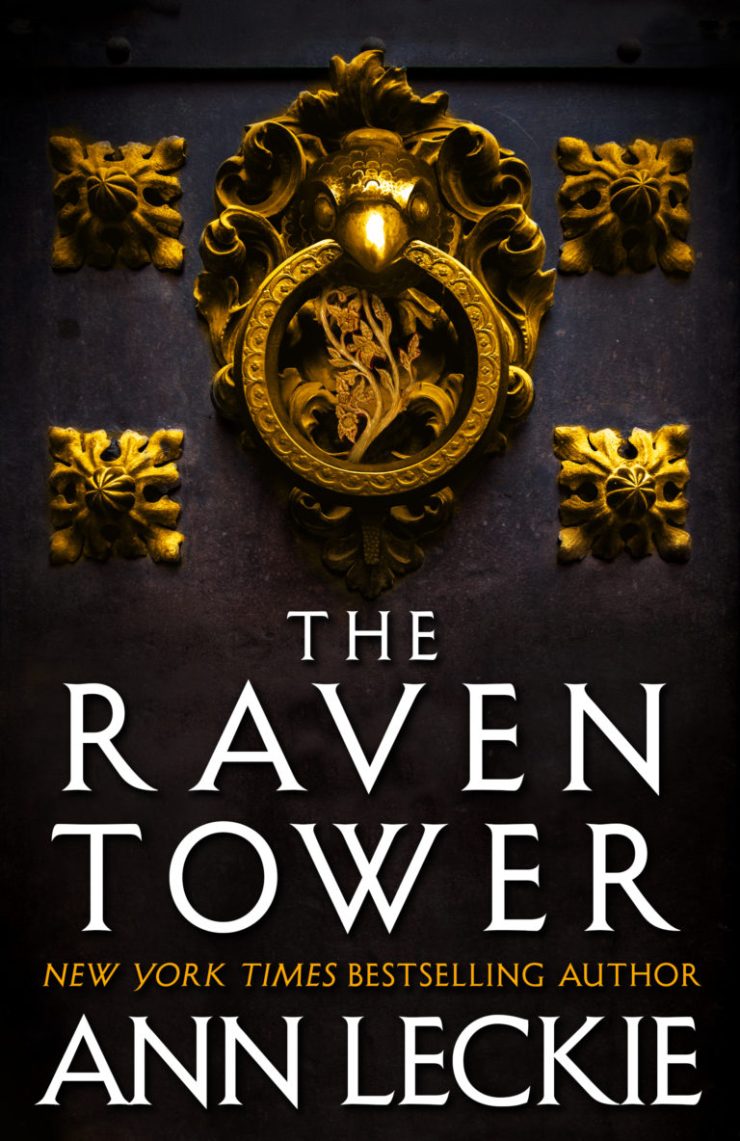
The Raven Tower by Ann Leckie

The Raven Tower by Ann Leckie was not at all what I expected. When I first heard that there would Leckie had written a fantasy book, I was ambivalent. I like her SF, but haven’t recently felt the need for new fantasy series in my life. But then some friends with early review copies started gushing about and I figured I might as well join their ranks.

For centuries, the kingdom of Iraden has been protected by the god known as the Raven. He watches over his territory from atop a tower in the powerful port of Vastai. His will is enacted through the Raven's Lease, a human ruler chosen by the god himself. His magic is sustained via the blood sacrifice that every Lease must offer. And under the Raven's watch, the city flourishes.

But the power of the Raven is weakening. A usurper has claimed the throne. The kingdom borders are tested by invaders who long for the prosperity that Vastai boasts. And they have made their own alliances with other gods.

It is into this unrest that the warrior Eolo--aide to Mawat, the true Lease--arrives. And in seeking to help Mawat reclaim his city, Eolo discovers that the Raven's Tower holds a secret. Its foundations conceal a dark history that has been waiting to reveal itself...and to set in motion a chain of events that could destroy Iraden forever.

There are two main storylines in this book and both are told from the point of view of a god, in a world where there are many gods of different powers. One story tells the god’s history — first awareness, how the world has changed since then, learning to communicate with humans, etc — while the other story follows a human in the “present day”. The latter story is also told by the god so it’s actually I second person as though the god is speaking to the other protagonist.

At first I was happy to go along with the interesting premise, before I had a clear idea of where the story was going. But then, once the threads started to come together, it became rather difficult to put the book down. Especially as it ramped up towards the end because gosh was that a dramatic ending that I’m not going to spoil (!!!).

The easiest book to compare The Raven Tower to is Terry Pratchett’s Small Gods, but only really because of the shared subject matter. The ideas of small gods are very similar, but aside from that the two books have little in common. I’m not sure I’ve read anything else similar to The Raven Tower. The intertwining of the two stories was expertly done, with many of the transitions leaving me wanting more, only to start reading the next section and be reminded that I had wanted more of that one too.

I highly recommend The Raven Tower to fantasy fans, especially those who enjoy reading about different types of gods and different systems for the existence of said gods. I also recommend it to readers who are looking for standalone fantasy books. While it's possible more stories could be written in this world in the future, I think it's unlikely and would lessen the impact of this one.

4.5 / 5 stars

First published: February 2019, Orbit
Series: Don't think so
Format read: eARC
Source: Publisher via NetGalley